
Plot Summary
Whenever I think back to the first time I experienced Clint Eastwood’s unforgettable sports drama, Million Dollar Baby, I’m instantly pulled into a world that’s equal parts grit, heartbreak, and hard-won tenderness. The film’s deliberate pacing drew me in, deftly blurring the line between a conventional underdog boxing epic and a deeper meditation on loss, resilience, and the search for worth. Without giving away key turns—because some moments should land unexpectedly—it’s safe for me to say that I followed Hilary Swank’s Maggie Fitzgerald, a determined, working-class woman with raw talent and ambition coursing through her veins, as she pressed her way into the orbit of Frankie Dunn, a prickly, emotionally guarded boxing trainer portrayed by Eastwood himself. Their relationship quickly became the heartbeat of the story for me: a hard-edged mentorship evolving into something much more familial and profound.
As the film unfolded, I was taken with how Eastwood balances the visceral brutality of boxing with the aching tenderness between these two isolated souls. Morgan Freeman’s character, Eddie “Scrap-Iron” Dupris, offered his own world-weary gravitas, grounding the story as both witness and conscience. I noticed early on that Eastwood’s direction eschews the glamor of fast-paced, stylized boxing for a lived-in realism, where every bruise and every silence carries weight. The world he crafted felt honest—sometimes bleak, sometimes hopeful, but never contrived.
Spoiler warning: If you’ve never seen the film and wish for its emotional punches to hit without warning, I urge you to stop here, as the film packs a devastating narrative twist that completely recontextualizes everything that came before. While at its core, the story seems to be about Maggie’s unlikely rise in the ring and the growing bond between trainer and fighter, the latter half of the movie transitions to a morally fraught, deeply emotional drama. That shift, to me, is what cements its legacy—it refuses to follow the expected blueprint, instead interrogating what it means to fight, to let go, and to love at great personal cost.
Key Themes & Analysis
I’ve always admired films that pack a punch beyond the literal. Million Dollar Baby, in my eyes, is less a boxing movie than a quietly devastating study of human longing and the weight of second chances. One theme that stayed with me long after the credits was the search for dignity—both in struggle and in defeat. Maggie’s steadfast determination to claim a piece of self-worth, even as she faces ridicule, poverty, and near-insurmountable odds, struck me as a universal quest recognizable far beyond the confines of sport.
The dynamic between Maggie and Frankie is where the film’s emotional power concentrates. Each is running from something: Maggie from the neglect and limitations of her upbringing; Frankie from painful memories and unresolved estrangements. Their slow-burning, almost unspoken bond became, for me, a meditation on chosen family—how two broken souls can, in spite of scars, carve out a place of trust. In the process, the film refuses to sentimentalize their relationship; I appreciated how Eastwood’s script (adapted from the stories of F.X. Toole) lets small gestures and quiet moments say more than swelling music or monologues ever could.
I noticed how the film situates boxing as both metaphor and reality. Every training montage, every bruised hand, seemed to communicate that life’s most significant battles often take place far from any cheering crowd. The ring became, in my reading, a crucible for transformation. Watching Maggie and Frankie confront the limits of their bodies, their courage, and their capacity for care made boxing feel not just like a sport, but a language of pain, hope, and sacrifice.
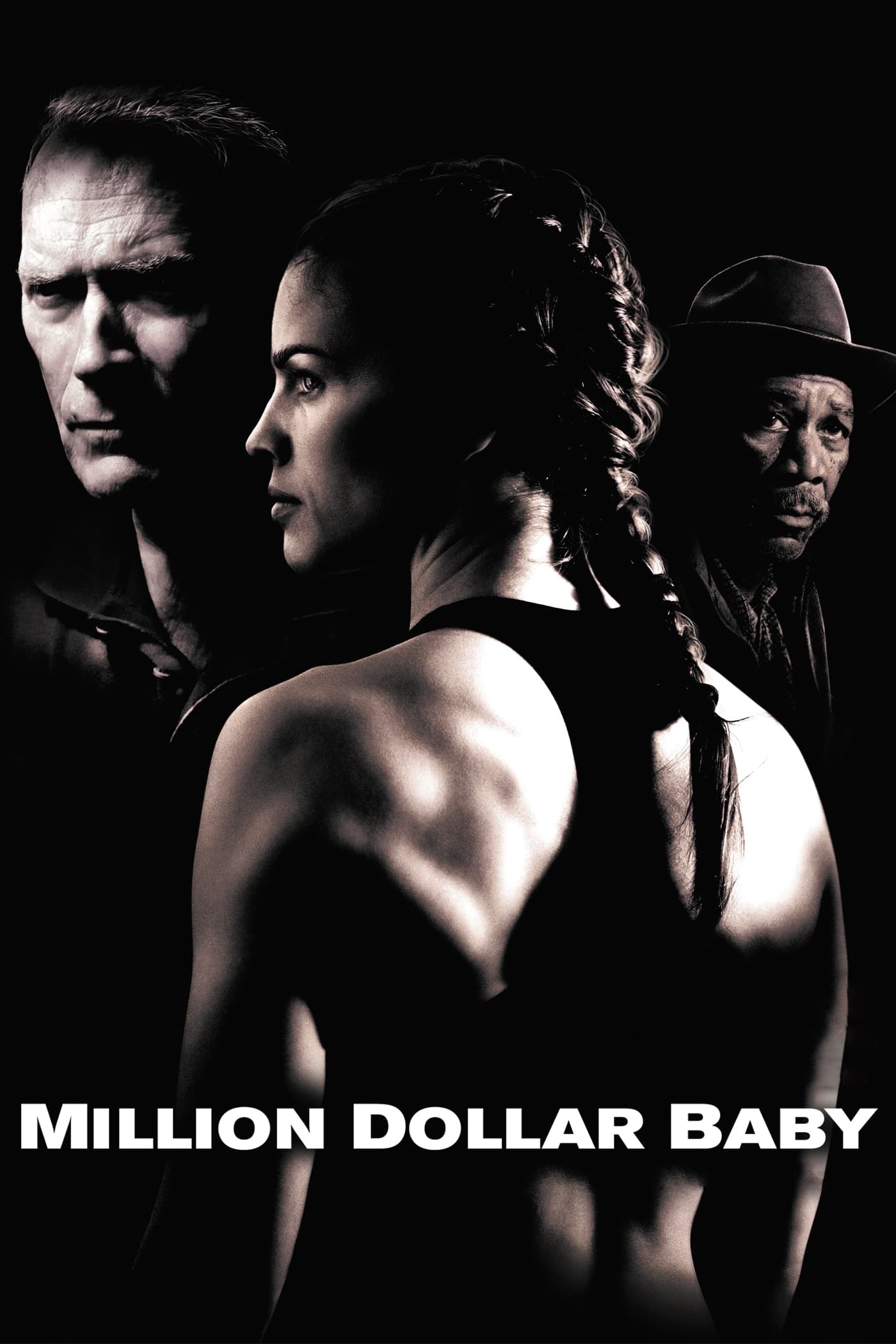
From a visual perspective, I found myself drawn to Eastwood’s austere, shadow-drenched cinematography, courtesy of Tom Stern. The film’s palette is almost monochrome, all washed-out blues and browns, lending scenes a lived-in physicality. I saw this as more than merely stylistic—Eastwood uses darkness and stillness to amplify the isolation felt by each character. There’s little glamour here, only the unadorned reality of dim gyms and battered bodies. The fight choreography, too, refuses spectacle for authenticity. The camera lingers on exhaustion, on the quicksilver shifts between violence and vulnerability.
I want to highlight the performances as truly transformative. Hilary Swank’s turn as Maggie is, in my mind, one of the most fully realized portrayals of ambition and brokenness I’ve seen. Every movement, every glance telegraphs hope fighting against history. Eastwood, meanwhile, gives Frankie a core of tenderness barely masked by cynicism. I was moved by the smallest cracks in his gruff exterior—a line muttered, a glance a beat too long. Morgan Freeman inhabits Scrap-Iron as the film’s conscience, warmth, and wisdom, and I found his narration to be both elegiac and grounding, providing thematic cohesion to a story that could easily tip into melodrama. Together, this trio built a world where struggle feels holy and love costs more than it gives back.
Lastly, what truly took me aback was how the film engages with ethical and existential questions—about agency, mercy, and what we owe ourselves and others. The second half asks more of the viewer than most sports films dare. I found myself ruminating on choice, dignity, and the freedom to decide one’s fate even when victory seems out of reach.
My Thoughts on the Historical & Social Context
Looking at Million Dollar Baby through the lens of its early-2000s release, I recognize a film unafraid to challenge both cinematic convention and cultural expectations. The turn of the millennium was a period marked by skepticism towards easy victories—audiences seemed ready, even hungry, for stories that acknowledged that triumph and tragedy might live side-by-side. In a cinematic landscape increasingly dominated by high-concept franchises, I valued how this film slowed down, daring to linger with difficult choices and ambiguous endings. It reflected a growing collective anxiety: that no amount of willpower could protect us from loss, aging, or the arbitrary workings of fate.
From my perspective, the emergence of a strong, working-class woman at the center of the narrative felt vital in a Hollywood that so rarely committed to such a character. I remember thinking how rare it was to witness a film that not only centered a woman in the patriarchal world of boxing but treated her journey seriously, without objectification or condescension. That resonated especially in the context of ongoing discussions around gender, representation, and socioeconomic mobility in America. I believe the film’s portrayal of a woman fighting—literally and figuratively—for a seat at the table connects broadly to cultural conversations about access and agency that remain relevant today.
I also found the film’s approach to trauma, disability, and end-of-life choices notably resonant. Released a year before America’s deeply divisive debate over the Terri Schiavo case, I saw Eastwood’s film as treading directly into the minefield of dignity and euthanasia, without preaching or exploitation. That willingness to wrestle with taboo topics still feels urgent and compassionate years later. I sense that audiences—myself included—were left wrestling not with easy answers, but with the complexity of love and the limits of heroism, both in and out of the ring.
To me, Million Dollar Baby endures because it complicates the very idea of victory. The story’s social undertones, from economic hardship to familial estrangement, have remained uncomfortably familiar in the decades since, fueling its continued relevance. In a time when stories of resilience risk becoming clichés, this film offers something starker and truer.
Fact Check: Behind the Scenes & Real History
In my research into the making of Million Dollar Baby, I was struck by several fascinating layers that deepen its impact. For starters, I learned that Hilary Swank trained over six months, gaining nearly 20 pounds of muscle through grueling workouts and a diet of 210 grams of protein per day. She reportedly spent over four hours daily in the ring, striving for genuine authenticity; her dedication radically shaped the physicality and toughness I observed in Maggie on screen.
Equally intriguing to me is the film’s origin: its story is based on a collection of short stories by F.X. Toole (the pen name of fight trainer Jerry Boyd), which ground the movie in the lived realities of people at the margins of the sport. However, I noticed that the core events of the plot are not drawn from any single real-life case. While Maggie Fitzgerald is a composite, Maggie’s journey reflects aspects of various underdog fighters and the gritty, overlooked reality of lower-tier boxing—deliberately contrasting the mythologized heroism I often see in sports films.
I was also fascinated to learn that Eastwood stepped into the lead role only after several other major actors declined. Both Paul Haggis and Morgan Freeman reportedly encouraged Eastwood to direct and star, which led to one of his most restrained and evocative performances as Frankie. This casting serendipity, I think, was instrumental in forging the specific, understated rhythm that defines the film’s best scenes.
Why You Should Watch It
- You’re drawn to films that blend raw emotion with ethical complexity: This isn’t just a sports movie; it’s a profound meditation on love, dignity, and sacrifice that asks its audience to grapple with difficult truths.
- You appreciate unvarnished realism in performance and setting: From Hilary Swank’s transformative embodiment of Maggie to Eastwood’s minimalist direction, the film’s authenticity is felt in every frame.
- You want a story that upends the classic underdog arc: If you’re tired of predictable endings and facile triumphs, you’ll find this film’s risk-taking narrative and emotional twists both bracing and unforgettable.
Review Conclusion
Whenever I revisit Million Dollar Baby, I’m reminded of cinema’s power to both challenge and comfort. This film lands its heaviest blows not in the ring, but in the quietest exchanges, the hardest choices, and the enduring ache of hope. For me, the combination of Swank’s shattering performance, Eastwood’s deft restraint, and a script unafraid of complexity makes it far more than a typical sports drama—it’s a meditation on humanity itself. The questions it raises may be unanswerable, but that persistent, restless unease is exactly why I keep coming back. This is a film I treasure for its courage, its compassion, and its willingness to let heartbreak coexist with grace. My rating: 5/5 stars.
Related Reviews
-
Rocky (1976)
I find Rocky deeply connected in its focus on an underdog’s journey and its unflinching look at the working-class struggle, but while Rocky leans toward hope and perseverance, Million Dollar Baby interrogates the cost of ambition and defeat. -
The Wrestler (2008)
If you’re moved by stories of faded athletes and raw vulnerability, The Wrestler offers a similarly intimate exploration of bodily and emotional wear—its narrative grit and character focus are as painfully authentic as Eastwood’s film. -
Terms of Endearment (1983)
For those as affected as I am by stories where family and loss intertwine around powerful performances, Terms of Endearment wields emotional force through wrenching parent-child dynamics, echoing the understated heartache at the core of Million Dollar Baby. -
Creed (2015)
Like Million Dollar Baby, Creed blends legacy, mentorship, and physical trial, but brings a modern sensibility and relevance to race and heritage, expanding the boxing film’s social context in powerful new directions.
If you want to explore this film beyond basic facts, you may also be interested in how modern audiences respond to it today or whether its story was inspired by real events.
🎬 Check out today's best-selling movies on Amazon!
View Deals on Amazon