
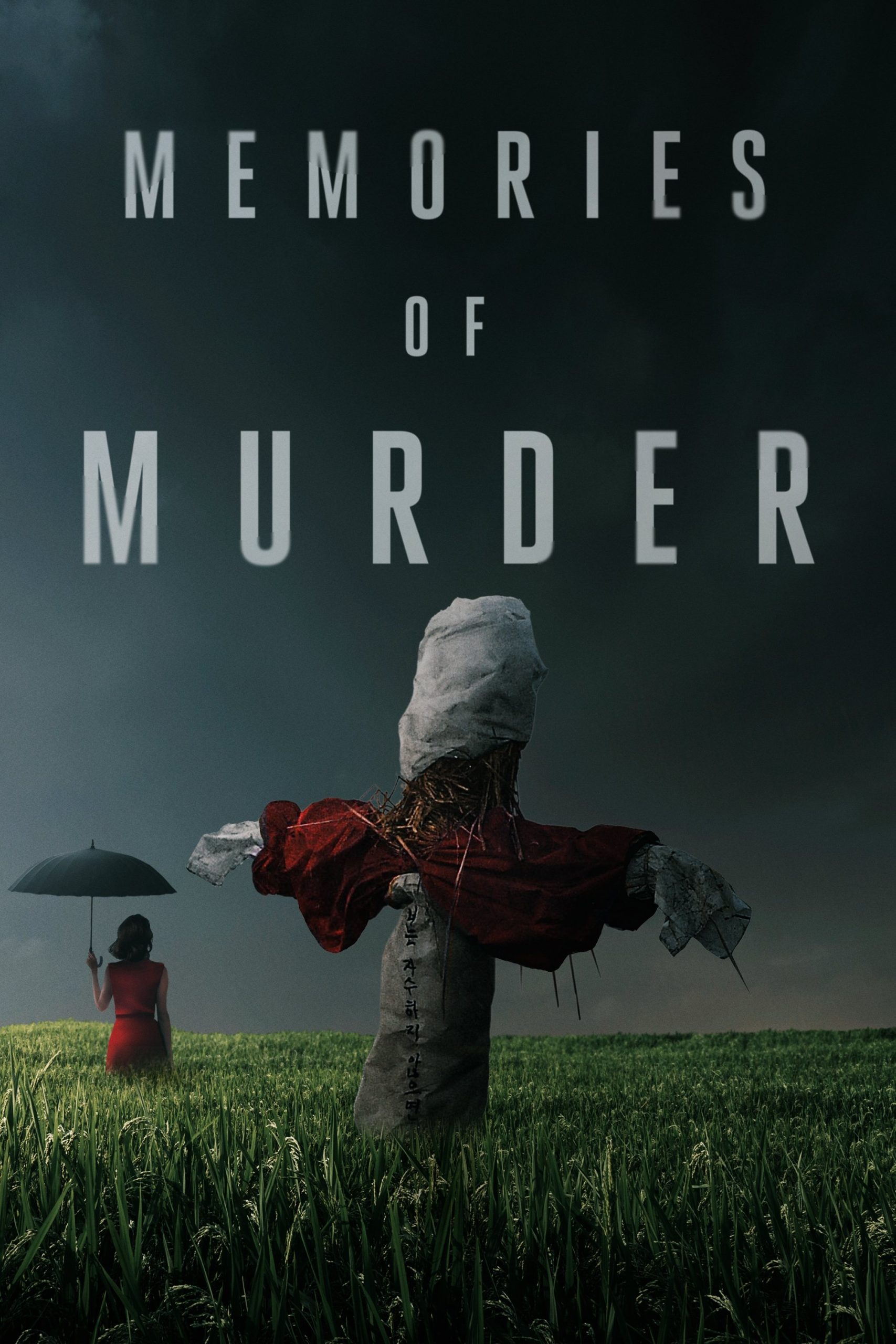
Plot Summary
From the very first frames of Memories of Murder, I found myself gripped by a sense of tension that barely let up over the course of its running time. Directed by Bong Joon-ho, this Korean crime drama masterfully blurs the lines between the procedural and the personal, and I’ve always been struck by how the film’s stark, almost indifferent landscapes reflect the messy chaos of a case that refuses neat resolution. Set in 1980s rural South Korea, the story follows two detectives—one local and stubbornly provincial, the other sophisticated and by-the-books from Seoul—who are thrown together when a series of brutal, seemingly random murders of young women shocks the countryside.
Without divulging any key plot twists or the film’s notorious ending (consider this a warning for those who wish to remain unspoiled), what most amazed me was how deftly Bong Joon-ho plays with the conventions of the crime genre. Rather than moving in a straight line from crime to solution, I watched the investigation spiral into a maelstrom of false leads, failed interrogations, and personal failures. The police, often inept and haunted by their own prejudices, repeatedly pursue the wrong men while an invisible killer slips through their fingers. For me, the film’s genius lies in how every clue feels tantalizing yet slippery, and every allegation is tainted by desperation. This isn’t a whodunit crafted to satisfy; it’s a meditation on uncertainty, failure, and the crushing weight of expectation—encapsulated by its unresolved, haunting final moments.
Key Themes & Analysis
What struck me most about Memories of Murder is its relentless exploration of institutional failure and the human cost of obsession. As I watched, I couldn’t help but draw comparisons to American crime thrillers—but what sets Bong’s vision apart for me is how intimately the film lingers with the detectives’ mounting frustrations and flaws. It’s not simply about evil lurking in the shadows, but about what happens to those tasked with confronting it amid flawed systems and suffocating bureaucracy.
Bong Joon-ho uses his camera in a way that I found almost clinical at times—long, steady takes that force me to sit with uncomfortable truths. These unglamorous visual choices linger on the faces of suspects, authorities, and ordinary villagers, pushing me to see not just their fear, but their confusion and impotence. The director’s signature black humor also surfaces in darkly ironic moments that catch me off guard, reminding me that the absurdity of life does not pause for tragedy.
As far as performances go, I was blown away each time by Song Kang-ho’s portrayal of Detective Park. He weaves together bluster, vulnerability, and heartbreak in a way that makes the character feel startlingly real. His evolving dynamic with Kim Sang-kyung’s Detective Seo—the outsider whose faith in procedure falters—reveals the core of the film: the unraveling of certainty. Each technique they try to bring the killer to justice—coercion, intuition, evidence—exposes more about their own limitations than about the mystery itself.
Another thing I find endlessly fascinating is how the rural Korean setting becomes an inescapable character. Tangles of muddy fields, mist-shrouded roads, and claustrophobic offices lock everyone into a world that feels both timeless and inescapable. Through low, moody lighting and steady rain, Bong crafts an atmosphere that holds a palpable sense of dread. The film’s color palette—muted greens and browns—seeps into my memory whenever I picture unresolved anxieties and unsolved crimes.
Beyond the technicalities, I felt drawn into deeper questions about justice and memory. The unresolved nature of the crimes—the way the investigation stretches across years without catharsis—sets this apart from nearly every other crime story I’ve seen. It prompts me to reflect on how societies choose whom to blame, how quickly we settle into patterns of scapegoating, and what we’re willing to do—or ignore—in our desperation for closure. Rather than soothing my nerves, Bong leaves me haunted, asking whether true justice is ever possible when systems and people are so irreparably flawed.
My Thoughts on the Cultural Impact & Legacy
Personally, Memories of Murder changed how I view the intersection of popular cinema and history. When I first encountered it, I was floored by how it dared to use a real-life crime (the Hwaseong serial murders, which went unsolved for decades) as a lens to explore the national psyche of 1980s Korea. What hit closest to home was how Bong Joon-ho intertwined the trauma of a community with the trauma of a nation in transition, turning a local tragedy into a potent allegory for collective doubt and longing.
On a wider scale, I have seen how this film paved the way for a new era in South Korean cinema. It seemed to signal—not just to audiences in Korea, but to filmgoers around the globe—that genre films could deliver harrowing social commentary without sacrificing entertainment or emotional engagement. For me, Bong’s ability to blend suspense, satire, and sorrow proved that cinema could be both thrilling and thought-provoking. Nearly every contemporary Korean crime drama I admire owes something to Memories of Murder’s pioneering tone and ambition: its refusal to provide simple catharsis, its empathy for flawed protagonists, and its willingness to complicate the pursuit of truth. Even in global releases, I still sense the echoes of its influence whenever I see stories that dwell not on answers, but on the human debris left behind by unanswered questions.
More personally, I keep returning to this film because it refuses to let me be a passive consumer. Every time I watch, I notice new details that reshape my understanding: a glance exchanged by detectives, the muddy tracks of a suspect’s shoes, a passing train that seems to mock the illusion of progress. Memories of Murder remains timeless in my mind because it’s not really about solving a mystery—it’s about acknowledging the mysteries that refuse to be solved, both in society and within ourselves.
Fascinating Behind-the-Scenes Facts
Learning about the film’s creation deepened my appreciation of its artistry. What stands out most is the intense research Bong Joon-ho invested, obsessively pouring through police records and even interviewing real detectives connected to the original case before crafting the script. He wanted actors to inhabit a world felt as authentic as possible, so much so that filming took place in actual rural locations similar to those where the murders happened. The cast and crew spent long stretches in these remote areas, frequently working in adverse weather which heightened the on-screen atmosphere of mud, rain, and claustrophobia.
I was surprised to discover that Song Kang-ho, whose performance as Detective Park is now iconic, did not originally see himself as the lead. The role was written with another actor in mind, but Song’s improvisational ability—especially his knack for conveying sudden shifts from comedy to despair—inspired Bong to reshape the character around him. This is one reason why so many moments feel lived-in, spontaneous, and utterly unpredictable.
On the technical side, Bong and his cinematographer Kim Hyung-koo faced significant hurdles in capturing the now-famous tracking shot of the detectives chasing a suspect through the fields. The single-take sequence demanded intricate planning, countless re-shoots, and the cooperation of dozens of extras traversing uneven terrain. Every split-second misstep—fallen actors, missed cues—meant resetting and starting over. Watching this scene today, I always marvel at how its authenticity and chaos seem completely natural, never over-stylized. It’s the kind of attention to detail that, for me, elevates the film’s sense of unnerving realism.
Why You Should Watch It
- If you are drawn to crime thrillers that transcend genre conventions, this film offers a unique blend of suspense and unsettling ambiguity that few others can match.
- The performances—especially Song Kang-ho’s—achieve a rare, lived-in authenticity, making each character’s journey feel heartbreakingly tangible.
- Bong Joon-ho’s direction crafts an atmosphere so tactile and immersive that you’ll find yourself haunted by its imagery and unresolved questions long after the credits roll.
Review Conclusion
No matter how many times I revisit Memories of Murder, I am always left reeling—not from the brutality of its crimes, but from the subtle devastation of its unanswered questions. Bong Joon-ho achieves the rare feat of blending meticulous craft with deep moral inquiry, offering a film that is as rewarding intellectually as it is emotionally bruising. The performances, especially by Song Kang-ho, invite true empathy for people bruised by forces beyond their control. For me, this isn’t just modern Korean cinema at its finest; it’s a landmark work that continues to shape how I think about truth, memory, and the purpose of storytelling itself.
Rating: 5/5
Related Reviews
- Mother (2009): Directed by Bong Joon-ho as well, this film similarly examines the lengths to which individuals will go for justice amid institutional apathy. I recommend this if you appreciate complex, morally ambiguous thrillers where social critique is inseparable from personal drama.
- Cure (1997): This Japanese serial killer film by Kiyoshi Kurosawa shares a relentless psychological intensity and a hypnotic sense of ambiguity. It shakes me in ways that Memories of Murder does—especially with its focus on obsession and the unknowability of criminal motivation.
- Zodiac (2007): David Fincher’s American procedural resonates strongly for me alongside Bong’s work. Both films are more interested in the emotional and psychological toll unsolved cases take on their pursuers than in neat solutions.
- The Chaser (2008): Another South Korean thriller rooted in real events, The Chaser offers frantic pacing and a critique of police ineptitude that reminded me of Bong’s unique interplay between suspense and social commentary.
For readers looking to go deeper, these perspectives may help place the film in a broader context.
🎬 Check out today's best-selling movies on Amazon!
View Deals on Amazon