
Plot Summary
From the very first frame, I found myself struck by the sobering honesty with which Clint Eastwood depicted the Battle of Iwo Jima. “Letters from Iwo Jima” isn’t just another war film—it’s a deeply personal look at conflict from the Japanese perspective during World War II, a point of view that Hollywood almost never centers. The narrative follows General Kuribayashi and his men as they brace themselves for the inevitable American invasion. Through letters and moments of reflection, I learned about the hopes, doubts, and disillusionments of soldiers who know their chances of survival are slim. Eastwood’s direction peels away the abstraction of “enemy soldier” and reveals a tapestry of individual ambitions, fears, and regrets.
I appreciated that while the plot’s trajectory—preparation, battle, aftermath—was familiar from other war films, here it felt uniquely intimate. Each character, especially Saigo, the conscripted baker, and Baron Nishi, the Olympic equestrian, became more than just historical footnotes. Instead, their day-to-day decisions, the camaraderie and small acts of rebellion, and even flashes of dark humor lent an authenticity that drew me in. The film’s structure, filtered through the letters sent home, allowed me to experience these fading hopes alongside the characters, without resorting to melodrama or patriotic cliché.
As a warning for those sensitive to plot details: this review avoids major spoilers, but moments and themes from the middle of the film are discussed in depth, as they are crucial to understanding both the artistry and message Eastwood and his team intended.
Key Themes & Analysis
Watching “Letters from Iwo Jima,” I realized just how rarely a war film asks its audience to see the conflict through the ‘other’ side’s eyes. Instead of being choked by propaganda or simplistic dichotomies, I saw a meditation on the shared pain and dignity that persists even in war. For me, the central theme was the humanity that persists within the machinery of conflict. By focusing on a handful of soldiers—Saigo’s resilience, Kuribayashi’s honor, Nishi’s compassion—I glimpsed not caricatures, but people wrestling with impossible choices.
Honor and futility became twin motifs. Kuribayashi’s moral struggle, torn between defending his homeland and preserving his men’s lives, resonated long after the credits rolled. The question hangs: “What does loyalty mean when victory is impossible?” I admired Eastwood’s refusal to glorify battle. The fighting sequences were harrowing but never celebratory; mud-caked trenches swallowed up hope as surely as bullets did.
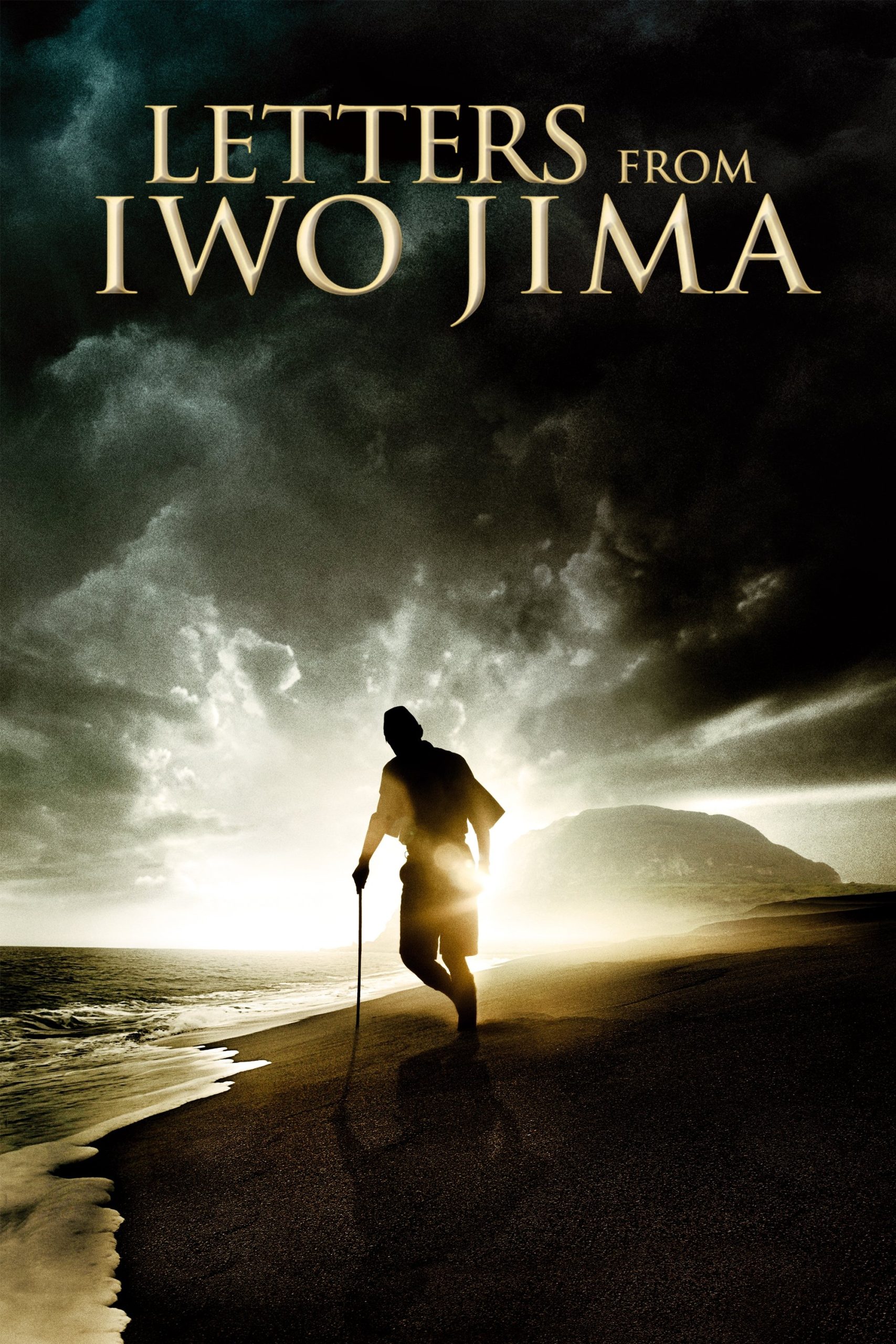
The film’s muted color palette — grays, browns, ashen greens — contributed to a sense of suffocating desolation I hadn’t expected from a Pacific theater epic. I think this stylistic choice amplified the feeling of isolation, both geographic and emotional. The cinematography lingered on faces: the flicker of fear in Saigo’s eyes, Kuribayashi’s quiet resolve, or the shock of loss as close friends fell. These visual moments carried a weight I can still feel, highlighting Eastwood’s command of visual storytelling.
Language and cultural barriers are not just narrative details; they become thematic pillars. Watching the Japanese characters misunderstand or misjudge their American adversaries—and vice versa—I was reminded of how war dehumanizes both those wielding and those facing the weapons. The notion of “the enemy” proved porous. One scene in which a captured American is treated with dignity lingers in my mind, evoking the possibility of mutual respect even in carnage.
The performances are understated but magnificent. Ken Watanabe’s General Kuribayashi is a masterclass in subtlety and emotional intelligence. His longing for home, anguish over terrible decisions, and wry humor make him unforgettable. Kazunari Ninomiya, as Saigo, acts as my surrogate in this world—bewildered, sometimes cowardly, resourceful, and desperately human. The supporting cast, like Tsuyoshi Ihara as Nishi, lend the film shades of compassion and inner conflict that distinguish it from one-dimensional war scripts.
As I reflected, I admired that Eastwood, an American director, took extraordinary care to present his Japanese subjects with dignity and empathy. “Letters from Iwo Jima” does not let any side off the hook, nor does it weaponize suffering for emotional manipulation. Instead, the film invites me to ask what is lost—on every side—when ideology trumps empathy.
My Thoughts on the Historical & Social Context
“Letters from Iwo Jima” arrived in 2006, at a time when debates about war—particularly the Iraq invasion—cast a long shadow over American and global consciousness. For me, the film became a mirror reflecting the universal costs of conflict. I saw Eastwood wrestling with America’s own discomfort about foreign wars, the daily price paid by those on all sides, and the perilous ease with which we flatten “the enemy” into a faceless threat.
The decision to tell Iwo Jima’s story from the Japanese perspective felt both radical and urgent when it was released. In the mid-2000s, when stories about “the other side” often fell into caricature, I appreciated Eastwood’s willingness to engage with history through empathy rather than ideology. The film draws directly on Japanese letters discovered in the island’s caves—real voices speaking across time about hope, guilt, love, and betrayal.
Watching the film today, I’m struck by its ongoing resonance. Xenophobia remains a living issue, and wars continue to be waged with disastrous costs to everyday people. By centering Japanese characters as nuanced, conflicted, and honorable, Eastwood offers a necessary corrective not only to war cinema but to how we process the past. I see the film as an invitation: to listen, to imagine, to question what we think we know about people labeled “enemies.”
I also think about how the film challenges the myth of the “noble death.” So often, war films glorify sacrifice, but here the question is left open-ended. Is there dignity in dying for a lost cause? Or, as embodied by Saigo’s yearning for survival and to return home, is it braver to question these expectations? The film’s power lies in these messy spaces, pushing me as a viewer to wrestle with the values I sometimes take for granted.
At its release, the film spoke to a global audience on the brink of yet more conflict, asking us to look beyond dogma and remember our shared vulnerability. Its lessons—the futility of hate, the universality of longing—remain relevant, if not even more pressing, in today’s fractured world.
Fact Check: Behind the Scenes & Real History
I love digging into the real stories that shaped this film. First, I discovered that Clint Eastwood originally intended “Letters from Iwo Jima” as a companion piece to his American-focused “Flags of Our Fathers,” shot almost back-to-back. What fascinated me was Eastwood’s insistence on authenticity: the vast majority of the script is in Japanese, performed by a primarily Japanese cast, which is nearly unheard of for a major Hollywood studio project of that era. This linguistic commitment required unique direction and trust between Eastwood and his cast, especially since he does not speak Japanese. The crew relied on cultural advisors to bridge communication gaps and ensure respectful, accurate portrayals of Japanese customs and military protocol.
On the historical side, I found that many of the film’s key moments sprang directly from actual letters written by Japanese soldiers discovered decades after the battle. General Kuribayashi’s real correspondence was especially pivotal; his writings revealed a leader tormented by the impossible task before him. The depiction of Kuribayashi refusing traditional banzai charges and adapting the island’s defensive tactics was based closely on historical records. While some fictionalization was inevitable—Saigo is a composite character, not an exact historical figure—the spirit of the letters reliably informed the narrative arc.
One technical detail that fascinated me was the film’s location work. Because shooting on Iwo Jima itself was restricted by the Japanese government, the cast and crew recreated its volcanic terrain on black sand beaches in California and Iceland. The recreation was so convincing that many veterans and historians later remarked on the film’s uncanny sense of authenticity. The set construction, from claustrophobic tunnels to battered fortifications, gave the production a haunting realism that amplified the story’s power.
Why You Should Watch It
- A rare, empathetic look at war from the perspective of the ‘other side,’ breaking with Hollywood convention to deliver a powerful human story
- Exceptional performances, led by Ken Watanabe and Kazunari Ninomiya, that breathe life and depth into characters seldom seen in mainstream cinema
- Stunning cinematography and immersive production design that place you in the filth, fear, and fragility of wartime existence
Review Conclusion
As I reflect, “Letters from Iwo Jima” stands out as one of the most moving, mature war films I’ve ever seen. Its refusal to demonize, its careful, somber pacing, and its poetic visual language keep echoing in my head. This is a director with nothing left to prove, taking a creative risk not for spectacle, but for truth.
I left the film haunted by the images of ruined landscapes and haunted eyes, but also grateful for its honesty. “Letters from Iwo Jima” asks questions that are all too rare in American war cinema, forcing me to think about whose stories get told, and how easily war can rob us not just of lives but of complexity and compassion.
For its bravery, artistry, and emotional intelligence, I rate this film 5 out of 5 stars.
Related Reviews
- Grave of the Fireflies (1988) – This animated masterpiece shares Eastwood’s willingness to depict Japanese perspectives on WWII with unflinching realism. I recommend it for the way it humanizes civilian suffering and complicates the notion of ‘victory.’
- Come and See (1985) – Like “Letters from Iwo Jima,” this harrowing Soviet film refuses sentimentality in its depiction of war’s brutality. I think it’s essential viewing for anyone drawn to unsparing, character-driven explorations of conflict.
- Flags of Our Fathers (2006) – As the American counterpart to “Letters from Iwo Jima,” this Eastwood-directed film offers a fascinating comparative experience. Watching both, I found the dialogue between them deepens every theme: memory, mythmaking, and the blurring of heroism.
If you want to explore this film beyond basic facts, you may also be interested in how modern audiences respond to it today or whether its story was inspired by real events.
🎬 Check out today's best-selling movies on Amazon!
View Deals on Amazon