
Plot Summary
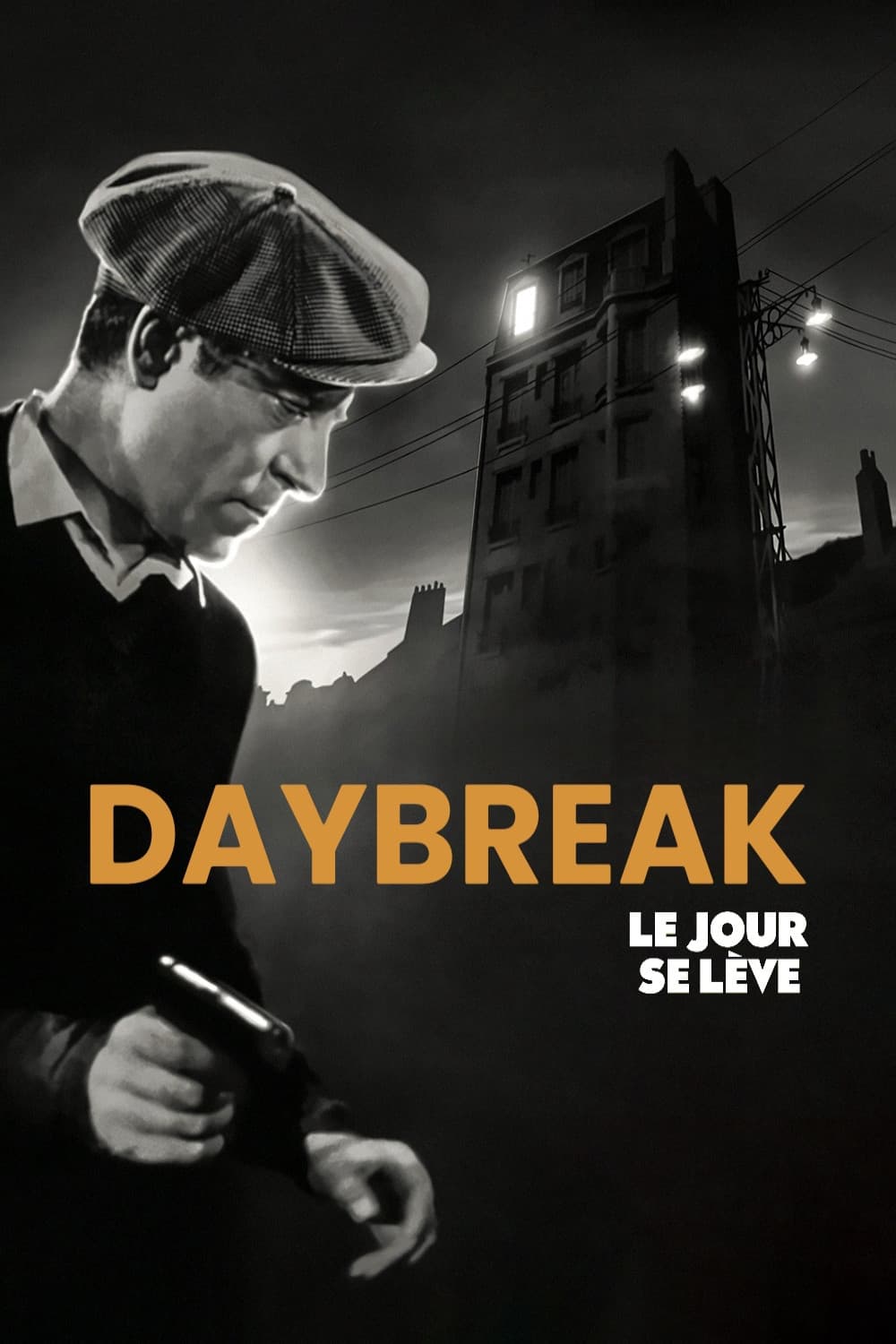
Walking into “Le Jour Se Lève,” I felt as though I was entering a confined room of tension, fatalism, and haunting beauty—the kind Jean Renoir might appreciate but Marcel Carné could transform into something entirely unique. Directed with exquisite melancholy by Carné, this 1939 French film unfolds in a haze of nocturnal dread. I watched as Franҫois, played by the inimitable Jean Gabin, finds himself barricaded in a cramped apartment after shooting a man. Through a meticulous series of flashbacks, I became immersed in the chain of events and failed connections that led to this desperate moment. Watching Franҫois struggle through love, jealousy, and existential futility, I felt suspended in time: every gesture, every glance loaded with tragic inevitability.
Without revealing every pivotal twist—though the film’s climax is both shocking and inexorable—what stayed with me was the suffocating proximity between desire and doom. “Le Jour Se Lève” never lets me forget that the past is a prison, its walls closing in even as Franҫois recounts his doomed attempts at human connection. Instead of offering a linear plot, Carné dares me to piece together fragments of longing, betrayal, and impossible choices, each contributing to the grim tableau framed by the looming dawn. The result is a patchwork of encounters: a pure-hearted florist, a manipulative showman, a world-worn lover—each reveal filtered through Gabin’s haunted eyes. The suspense isn’t from what might happen but from the inevitability of fate; I found myself bracing for impact, even as I yearned for hope.
Key Themes & Analysis
Watching “Le Jour Se Lève,” I am most struck by how distinctly and powerfully it captures the sense of fatalism that defined French poetic realism. Carné creates a world where hope flickers like a candle guttering in a drafty stairwell, and every character is shaped as much by their circumstances as by their choices. The very structure—its intricate use of flashbacks—reflects this: the narrative coils back on itself, every memory returning to that claustrophobic room, every regret echoing through its shadowy corners. To me, this is not just technical bravura—for all the much-praised art direction by Alexandre Trauner and moody cinematography by Curt Courant and Philippe Agostini—it’s an emotional philosophy. Life, in Carné’s vision, is as much about confinement as it is about longing.
I am fascinated by how Jean Gabin embodies the soul of the “everyman,” fractured by the irreconcilable desires and injustices swirling around him. His performance is a masterclass in economy and intensity; every twitch in his jaw, every glance at a closed window tells volumes about masculine vulnerability and working-class frustration. Next to him, Arletty and Jacqueline Laurent offer differing faces of femininity: worldly, wounded, and gently defiant versus innocent but drawn into the inevitable sturm und drang of doomed love. Jules Berry’s manipulative Valentin was, for me, the perfect antagonist—not a villain in any classic sense, but a catalyst for the central tragedy, an embodiment of self-serving charisma who uses affection as a weapon.
Carné’s directorial choices linger in my mind. The pervasive chiaroscuro, streets shrouded in fog and dust, and those iconic staircases enclosing and isolating the apartment—these elements make the film feel almost suffocatingly real, while still shimmering with the artifice of poetry. I noticed how the camera lingers not just on faces, but on mundane objects: a suit jacket, dusty windows, fragile flowers. These details become metaphors for stifled hope. Even the sound design, minimal and haunting, contributes to an atmosphere where the moral pressure never lifts.
Running beneath the film is a current of existential fatigue—a sense that ordinary people live at the mercy of forces too tangled or indifferent to resist. Here, love is not just redemptive, but also destructive; innocence doesn’t protect, it exposes. Watching “Le Jour Se Lève,” I was reminded how closely despair and tenderness can coexist. Every visual and narrative choice seems to say: tragedy is not always a matter of grand passions, but often of failed opportunities and casual cruelties.
My Thoughts on the Historical & Social Context
Whenever I revisit “Le Jour Se Lève,” I am immediately conscious of the specter of 1939 Europe hovering in the background. The sense of claustrophobia and impending doom coursing through the film feels, to me, like a cinematic echo of the anxieties swirling around pre-war France. When Carné made this film, France was sliding into crisis: the collapse of the Popular Front, rising political polarization, and the ever-increasing threat of fascism. I see Franҫois’ predicament as more than just a personal drama—it’s a microcosm of the working-class experience, as well as a statement on the hopelessness that political and economic turmoil can breed.
What makes the film so resonant for me today is how it dramatizes the crushing effects of social determinism, power imbalances, and emotional isolation. The world outside Franҫois’ window is hostile, even before the final violence erupts. The film’s deep empathy for its working-class protagonist made it both timeless and, in its day, politically fraught—so much so that it was banned by the Vichy government for being “demoralizing.” I can’t help but interpret that as a mark of genuine subversiveness. The timing of its release meant that audiences would have seen in it not only a story of personal downfall but an allegory for a society careening toward catastrophe.
Personally, I find “Le Jour Se Lève” uncannily relevant even now. I recognize its commentary on hopeless labor and moral ambiguity reflected in contemporary struggles with precarity, institutional injustice, and the search for meaning. While the particulars may have changed, I see in Franҫois’ confinement the pressures that so many people still face—feeling boxed in by forces they can neither entirely understand nor defeat. The film’s legacy, for me, is another haunting reminder of how art can crystallize the social anxieties of a given moment while offering a compass for later generations searching for explanation, or catharsis.
Fact Check: Behind the Scenes & Real History
Digging into the production history of “Le Jour Se Lève” always sends me down a rabbit hole of fascinating stories and contradictions. For one, I learned that Jean Gabin was not Carné’s first choice for Franҫois; allegedly, studio executives wanted a younger, more conventionally romantic lead. It was only at the insistence of Carné and screenwriter Jacques Prévert that Gabin—then already a star with a famously tough demeanor—was given the role. Gabin’s performance ultimately redefined the archetype of the doomed protagonist in French cinema. Watching it now, I can’t imagine anyone else bringing such authenticity and gravitas to the part; Carné’s gamble paid off in the most profound way.
I’m also intrigued by the film’s technical innovations. The set design by Alexandre Trauner was an artistic triumph. Since Trauner was Jewish and working secretly under a false name (due to the rising threat of anti-Semitic laws in France), this set became a kind of clandestine act of creative resistance. The building’s oppressive geometry—its twisting stairwells and boxed-in landings—was hand-built at the Billancourt Studios and proved so eerily convincing that audiences at the time assumed it had been filmed on location. This, to me, gives the film an extra layer of urgency and subtext about the hidden risks that contributed to its artistry.
Another bit of cinematic legend I discovered: For many years, “Le Jour Se Lève” was suppressed in France. The Vichy regime banned it for its “morally destructive” content, considering its bleak vision of working-class life and fatalistic narrative a direct threat to their preferred ideals. In fact, after the war, the original negatives were nearly lost; only through painstaking restoration efforts in the late twentieth century did the film regain its place as a cornerstone of French cinema. This saga of suppression and survival mirrors the story’s own themes of resistance and remembrance—and makes every frame feel all the more precious.
Why You Should Watch It
- The film showcases Jean Gabin’s mesmerizing performance, which remains one of the most iconic portrayals of inner turmoil and working-class despair in cinematic history.
- Its haunting atmosphere and poetic visuals offer a masterclass in mood and style, making it an essential watch for anyone drawn to psychological realism or noir aesthetics.
- The themes of social isolation, political anxiety, and existential fate are as relevant today as they were in 1939—giving viewers a unique lens on both personal and collective anxieties.
Review Conclusion
For me, “Le Jour Se Lève” is more than an essential classic; it’s a work of rare empathy and unfiltered sorrow, as epic in its emotions as it is claustrophobic in its execution. Every time I return to it, I find myself asking new questions about freedom, fate, and the choices we make under pressure. Carné and Prévert didn’t just capture a moment in French history—they delivered a cinematic prophecy whose echoes I still hear in modern existential dramas. I give “Le Jour Se Lève” a 5/5 for its performances, artistry, and enduring social resonance. For anyone interested in how cinema can confront both individual despair and collective trauma, this film stands as a luminous touchstone.
Related Reviews
- Pépé le Moko (1937) – I recommend this because, like “Le Jour Se Lève,” it plunges into the existential shadows of French poetic realism, with Jean Gabin portraying another doomed antihero struggling against the inescapable forces of fate and obsession in a world both vibrant and lethal.
- The Asphalt Jungle (1950) – If you responded to the meticulously observed sense of entrapment and moral ambiguity, John Huston’s noir masterpiece explores similar terrain, swapping Parisian stairwells for the grimy alleyways of American crime, yet delivering a strikingly resonant message about desperation and systemic corruption.
- La Haine (1995) – I see a spiritual successor in Mathieu Kassovitz’s modern urban drama, which transforms the poetic fatalism of “Le Jour Se Lève” into a searing, contemporary urban parable. The film’s claustrophobic tension and commentary on alienation powerfully echo Carné’s legacy for a new generation.
If you want to explore this film beyond basic facts, you may also be interested in how modern audiences respond to it today or whether its story was inspired by real events.
🎬 Check out today's best-selling movies on Amazon!
View Deals on Amazon