
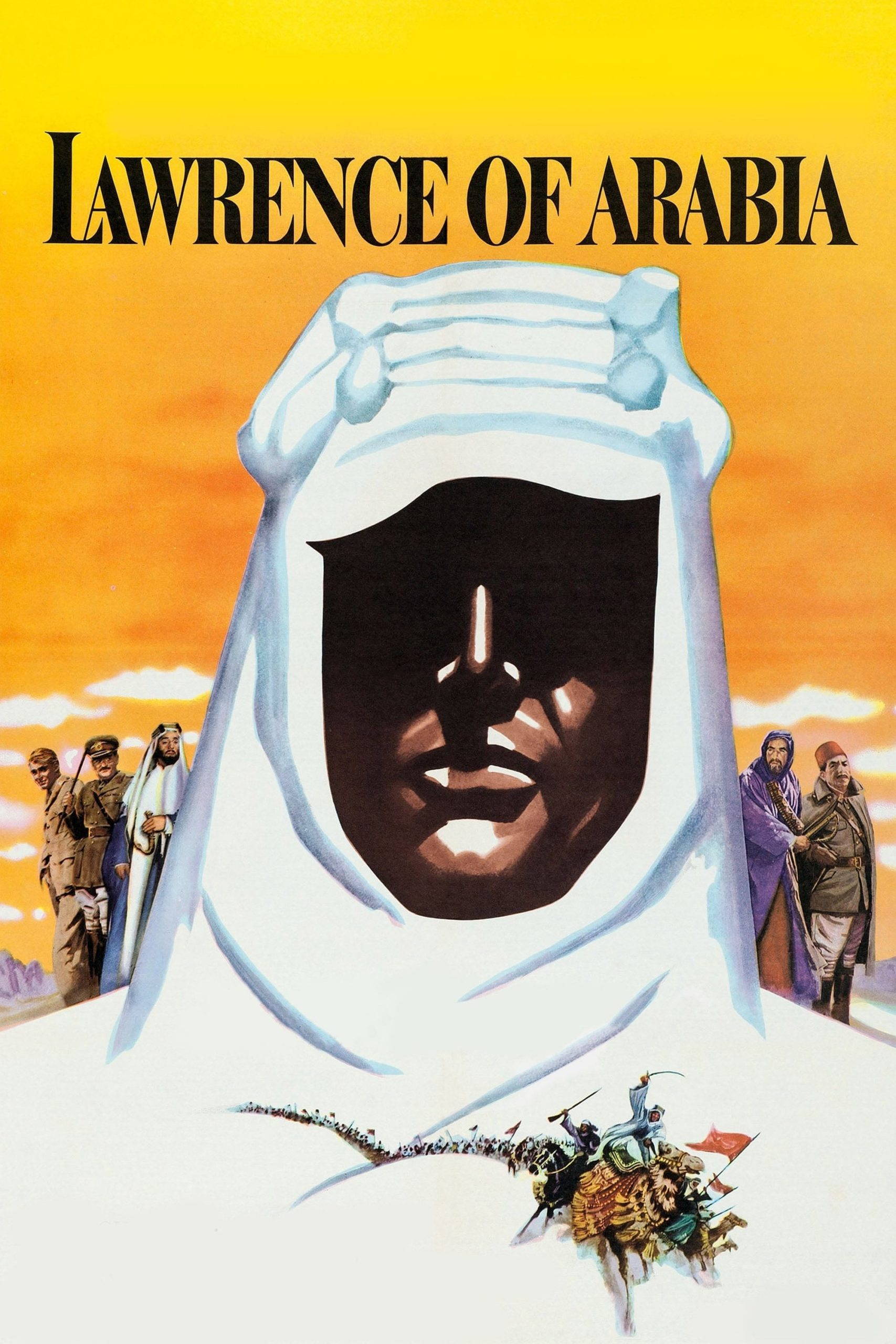
Plot Summary
I still remember my first time experiencing David Lean’s mastery in directing epic cinema, as showcased in “Lawrence of Arabia.” I was instantly swept away into the vast, sun-bleached deserts and felt as if I, too, were embarking on an impossible journey into the unknown. From the bustling chaos of British military headquarters in Cairo to the haunting, wind-swept silence of the Arabian desert, the film follows T.E. Lawrence—an enigmatic British officer—tasked with liaising between the British government and the disparate Arab tribes rising against Ottoman rule during World War I.
In tracing Lawrence’s path, I became immersed in not just geopolitical strategy and battlefield glory, but also the internal voyage of a man at war with his identity, ambition, and conscience. The story unfolds as a kaleidoscope of alliances and betrayals, of beautiful illusions and harrowing reality, as Lawrence’s exploits grow more daring and his legend spreads. The deeper he becomes entwined with the Arab cause, the more the lines between liberator and occupier, between hero and outsider, become dangerously blurred.
For readers wishing to avoid major spoilers, be aware: the film’s latter acts delve into the heavy cost of ambition, pride, and the intoxicating allure of heroism. While the first half celebrates Lawrence’s seemingly miraculous victories and unifying charisma, the narrative eventually turns a more critical eye on how those same traits spiral into personal and political crisis. What struck me most is how the film refuses to rest on easy answers or neat resolutions, opting instead for a sprawling character study that exposes the contradictions and complexities beneath the myth.
Key Themes & Analysis
What has always captivated me about “Lawrence of Arabia” is how it transforms vast landscapes into reflections of inner wilderness. For me, the endless expanse of the desert doesn’t just serve as a backdrop; it becomes a living metaphor for Lawrence’s own search for identity, torn between cultures and allegiances. Alienation pulses through the film, both in Lawrence’s icy sense of detachment and in the light and shadow of Freddie Young’s celebrated cinematography. Each frame, from the blinding white heat to the inky, chilling blue of night, evokes powerful shifts in mood and meaning. It’s as if the environment itself becomes a collaborator in Lean’s storytelling.
The ambiguity of Lawrence’s character is another element I return to over and over. There is a deeply unsettling charisma to Peter O’Toole’s performance, which I see as the foundation on which the film’s complex exploration of leadership, self-invention, and the dark pull of greatness rests. I find myself haunted by how O’Toole can shift from magnetic warmth to glazed isolation from shot to shot. This is not the story of a typical war hero, but of a man who both creates and destroys his own legend, and the camera never lets us settle comfortably; it’s always asking, “Who is Lawrence, really?”
For me, the sequence that best captures Lean’s methodical, epic direction is the legendary mirage scene. The emptiness is suffocating until, almost imperceptibly, a figure emerges in the shimmering heat. This moment not only showcases optical mastery but distills all of the film’s central tensions: the slow march of fate, the seductive draw of myth, and the relentless uncertainty at the heart of human endeavor.
I’ve also been struck by how the film refuses simple dichotomies. Heroes and villains blur together; imperialism and liberation are interrogated at every turn. As someone fascinated by the intersection of individual agency and historical forces, I appreciate how the story resists passive celebration of conquest and instead continuously prompts uncomfortable questions about responsibility and consequence. The film’s social commentary is both subtle and unsparing—it doesn’t explicitly lecture, but the dreadful toll of war and cultural misunderstanding resonates throughout every major character arc.
On a technical level, I can’t think of a better case study for what defines the epic film. Maurice Jarre’s sweeping score underpins both grandeur and isolation. John Box’s production design conjures not just an era, but an almost mythic sense of place—whether in the ornate interiors of Cairo or the wind-whipped encampments of the Bedouin. Every key moment—every journey, every confrontation—feels at once intimately personal and explosively large-scale. I find this fusion of scale and depth one of the film’s enduring achievements.
My Thoughts on the Cultural Impact & Legacy
For me, the aftershocks of “Lawrence of Arabia” are still reverberating through cinema—and through my own understanding of what epic storytelling means. Few films have so defined the blueprint for historical drama, adventure, and the biopic genre all at once. This isn’t just an artifact of the early 1960s; it’s a living influence that I see echoed everywhere, from the sweeping landscapes of “The English Patient” to the conflicted heroes of modern war films.
What makes “Lawrence of Arabia” truly meaningful to me as a film curator is its ability to spark conversation and debate decades after it first premiered. It’s more than a technical marvel or a showcase for bravura acting. It’s a film that interrogates the cost of mythology—what it means to be both the author and the subject of your own legend. I’m often reminded, watching modern films struggle to balance spectacle with substance, how Lean’s masterpiece manages both. The grandeur and the intimacy aren’t at odds—they reinforce each other, making the character study richer and the adventure more immersive.
Personally, the film stands out as a rare example of large-scale cinema that is both enthralling and reflective. Its legacy, to me, rests not on any particular battle or piece of historical trivia, but in the questions it raises about power, identity, and the limits of vision. I keep finding new depths each time I rewatch, particularly in how it addresses the ambiguity—and the danger—of trying to remake the world in one’s own image. This film doesn’t just entertain; it demands engagement, challenging me as a viewer to look deeper, question more sharply, and appreciate the ambiguity of history. It’s why “Lawrence of Arabia” will always hold a special place in my personal canon, not just as a spectacle, but as a conversation partner across generations.
Fascinating Behind-the-Scenes Facts
Delving into the production history of “Lawrence of Arabia” is almost as rewarding as watching the film itself. I’m continually fascinated by how the incredible on-screen magic was forged through real-world challenges and creative ingenuity.
One of the stories that genuinely made me gasp involves the casting of Peter O’Toole. He wasn’t the original choice for the role—Marlon Brando and Albert Finney were both approached and, for various reasons, declined. O’Toole, at that point a relative unknown, was ultimately chosen after Lean saw his electrifying stage performances. What interests me most is how Lean’s faith in O’Toole’s ability to project both arrogance and vulnerability paid off, creating a performance that I now consider one of the greatest in film history. The fragility and fervor O’Toole brought to Lawrence wasn’t just acting—it was the result of a director betting everything on a fresh face.
An equally riveting piece of trivia for me is the film’s legendary use of the real desert rather than studio sets. Filming across Jordan, Morocco, and Spain, the crew was subjected to punishing heat, sandstorms, and a near-mythical list of logistical nightmares. There’s a well-known story that many of the technical crew suffered heatstroke, and a crane camera famously melted under the desert sun because of the record-breaking temperatures. This relentless dedication to authenticity is, I believe, why the film’s landscape feels so physically immersive and psychologically charged.
I also love the anecdote about the iconic mirage reveal of Sherif Ali (Omar Sharif). The shot took days to coordinate and execute, and actually risked losing authenticity due to technical restrictions. To achieve the effect, Lean used a special 482mm lens—one of the longest ever used at the time—and carefully staged the approach so that Sharif’s appearance seemed to materialize from nothingness. To this day, I consider it one of the most technically breathtaking and metaphorically resonant introductions in any film.
Why You Should Watch It
- Cinematic grandeur at its peak: If you love films that transport you entirely into their world, few works achieve the sweeping immersion or visual splendor that “Lawrence of Arabia” delivers.
- Unforgettable character study: I rarely see character-driven writing on such an epic scale—if you crave a portrait of ambition, self-doubt, and conflicting loyalties, you won’t find better.
- A landmark in film innovation: For anyone curious about how movies push the boundaries of technique—whether cinematography, editing, or score—this film is an essential touchstone.
Review Conclusion
Every time I return to David Lean’s “Lawrence of Arabia,” I’m struck anew by the deliberate care, the awe-inspiring artistry, and the relentless drive for something timeless. This is more than a war epic or a historical biopic—it’s a searching exploration of humanity’s light and shadow, told through the lens of one unforgettable journey. Whether it’s O’Toole’s riveting performance, the shocking beauty of the cinematography, or the questions it’s willing to pose without easy answers, this film continues to remind me why I care so deeply about the cinematic form.
I can say with confidence, based on both artistic impact and personal resonance, that “Lawrence of Arabia” earns an emphatic 5/5 stars in my book—an unmissable cinematic legend I return to year after year.
Related Reviews
- “The Bridge on the River Kwai” (1957): I recommend this for its equally epic treatment of war, psychological drama, and the conflicted morality of its central characters. Directed by David Lean, it shares both scale and nuance with “Lawrence of Arabia.”
- “The English Patient” (1996): This film delivers similar visual poetry and a haunting meditation on love, loss, and identity amidst historical chaos. I see clear echoes of Lean’s storytelling in Minghella’s direction.
- “Doctor Zhivago” (1965): Again helmed by David Lean, this sweeping romantic epic explores individuality and ideology against the backdrop of war—perfect for those moved by the emotional and visual scope of “Lawrence of Arabia.”
- “Patton” (1970): For viewers intrigued by biographical war epics with complex, larger-than-life protagonists, “Patton” mirrors Lawrence’s blend of brilliance and volatility—making for an excellent thematic pairing.
- “Aguirre, the Wrath of God” (1972): Werner Herzog’s film also plunges into the heart of obsession, leadership, and the dangers of myth-making—set in an environment as untamable as Lean’s desert.
For readers looking to go deeper, these perspectives may help place the film in a broader context.
🎬 Check out today's best-selling movies on Amazon!
View Deals on Amazon