
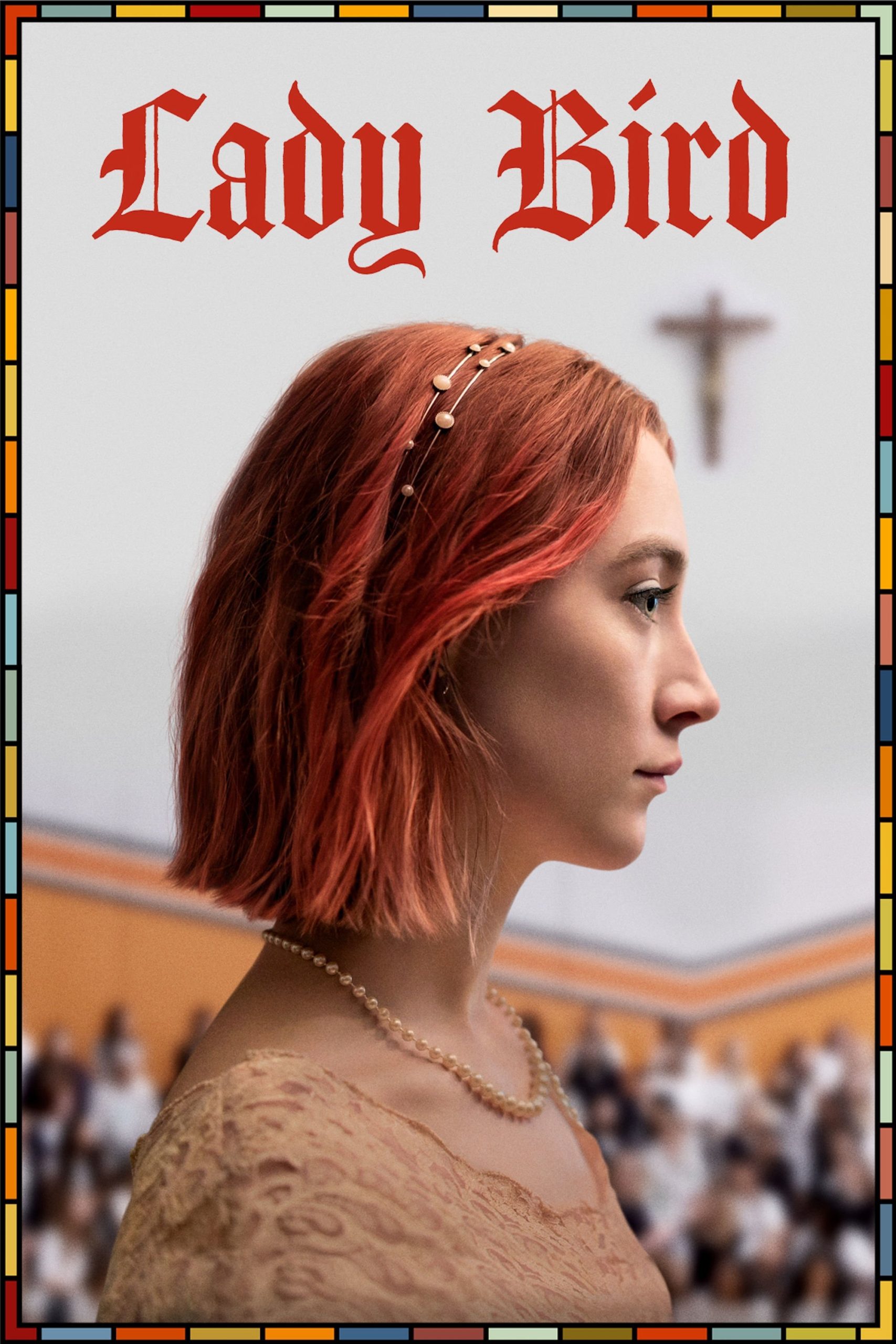
Plot Summary
From the first few frames of “Lady Bird,” I felt swept up in a wave of adolescent longing and contradiction that almost made me forget the camera was even there. The story orbits Christine “Lady Bird” McPherson, a restless high school senior fiercely determined to distinguish herself from her hometown of Sacramento and her forceful—but loving—mother, Marion. Greta Gerwig’s direction, paired with her razor-sharp script, pulls me deep into this intimate world of family tension, friendship, and self-discovery without ever resorting to melodrama or caricature. While the narrative follows Lady Bird through her final year of Catholic school—balancing academic drudgery, first loves, theater rehearsals, and quarrels at home—the main thrust is not found in the details of her daily routine. Rather, I found the true heart of the film in its remarkably honest observation of adolescence itself, with all its contradictions and quiet heartbreaks.
Throughout, Gerwig walks a careful line: she lets Lady Bird’s story unfurl in unvarnished vignettes—a homecoming dance here, a college application conversation there—never spoon-feeding me “big moments,” but trusting I’ll put the emotional pieces together myself. Much of what “happens” is lived out in gestures, silences, and glances: a mother tidying clothes with unconscious resentment, a daughter quietly worrying about where she’ll end up, both desperate to be understood. I became so invested in the emotional tug-of-war that I often forgot I was watching a movie at all. The dynamic between Lady Bird and her mother forms the film’s gravitational center, offering one of the rawest and most relatable parent-child conflicts I’ve ever seen on screen.
Without giving away late-movie revelations (spoilers would rob the organic unfolding of their impact), I’ll say that “Lady Bird” moves at a steady, unhurried pace—by the end, I felt less like I’d witnessed a plot and more that I’d inhabited a fully lived-in chapter of someone’s life, flaws and all.
Key Themes & Analysis
What drew me most deeply into “Lady Bird” was not its plot, but how it uses every scene as a lens through which to scrutinize ambition, identity, mother-daughter relationships, and the bittersweet tension between loyalty to home and the urge to escape it. Gerwig, with a director’s precision and a writer’s vulnerability, constructs each frame to underscore Lady Bird’s yearning without ever belittling or oversimplifying her experience. This gentle but incisive gaze felt powerfully fresh—at once empathetic and unsparing.
Coming-of-age films so often fall into nostalgia traps or ‘after-school special’ preaching. Here, I felt the aches of awkwardness and the sting of failed first attempts, whether in theater auditions or tentative romances. Ronan’s performance as Lady Bird hit me hardest in her moments of uncertainty—her glances when Dan’s affection fades, her scenes with best friend Julie, her hollered arguments with her mother. There’s a wildness to her emotions that I found almost physically familiar. The supporting cast—Laurie Metcalf as Marion especially—embody the complicated ways we try and fail to love one another. Metcalf’s every gesture feels weighted with history, her compassion flickering beneath impatience like a concealed flame.
Gerwig’s approach to cinematography subtly elevates the emotional stakes. Cinematographer Sam Levy employs a slightly desaturated palette and gentle, low-key lighting, which gave me the feeling of looking at my own old family snapshots. There’s a sense of place woven into every shot: the leaf-dampened lawns of Sacramento, the modest homes, the Catholic school uniforms. Each visual choice situates Lady Bird’s longing not just as personal, but as heartbreakingly universal. Even scenes that seem mundane vibrate with the gravity of characters’ inner lives.
The direction avoids showiness, inviting me to sit with each interaction and notice what goes unsaid. I loved how Gerwig allows silences to bloom; in a dinner scene or a drive home, I could almost hear the roaring thoughts behind Lady Bird’s and Marion’s eyes. The editing—quick but never rushed—echoes the fraught rhythms of teenage life, where breakthroughs and breakdowns come in unpredictable waves.
In short, “Lady Bird” isn’t just a film about growing up; it’s a film about how we negotiate love and identity while learning to inhabit spaces—both emotional and geographic—that often feel insufficient or even suffocating. This relentless authenticity, guided by Gerwig’s clear-eyed vision and the actors’ unwavering commitment, makes every emotional beat feel earned rather than imposed.
My Thoughts on the Historical & Social Context
Set in 2002, but released in 2017, “Lady Bird” immediately resonated with me as a story not just about a teen in the early 2000s, but as a wider reflection on the pre-social-media, pre-globalized adolescence I remember. At a time when the American cultural landscape was on the cusp of seismic change (just after 9/11, before the economic crash, and before smartphones became omnipresent), Lady Bird’s longing to break free from Sacramento feels like a stand-in for a generation’s hope—and restlessness. There’s a quiet yearning in every scene, one that mirrored my own memories of wanting to escape small-town limits and seek something bigger, while fearing what that might cost at home.
Gerwig wrote and directed the film in an era marked by renewed debates about women’s creative voices in Hollywood, the struggle for authenticity in storytelling, and a reevaluation of gendered generational conflicts. I couldn’t help but notice how the film’s focus on Lady Bird’s agency—her unapologetic hunger for self-definition—felt radical, even celebratory, against the broader canvas of a film industry finally beginning to center female points of view. Marion, too, is seen not as a passive foil or villain, but as a fully formed woman negotiating her own disappointments.
From my perspective, “Lady Bird” also connects to wider social issues: the economic anxieties faced by middle-class families, the unvarnished depiction of Catholic education, and the navigation of class boundaries among high schoolers. In 2017, with U.S. politics and culture again in tumult, Lady Bird’s story of anxious hope, questioning of authority, and longing for acceptance felt as sharply relevant to me as any contemporary drama. To this day, its refusal to romanticize hardship or demonize flawed parents stands as a quiet act of cultural resistance. I left the film reminded that the struggle to define oneself—while embracing the complicated people who shape us—remains as urgent now as ever.
Fact Check: Behind the Scenes & Real History
Digging into the origins and making of “Lady Bird,” I was fascinated to discover just how personal the film is to its creator. Although not strictly autobiographical, Gerwig drew heavily from her own Sacramento upbringing. She has described the film as “a love letter to where I’m from,” rather than a recreation of her life—a nuance I really felt in the specificity and warmth of its setting. The film’s Catholic school background and local references have a ring of lived experience, lending Lady Bird’s world an authenticity that many coming-of-age films lack.
In a remarkable bit of behind-the-scenes trivia that grabbed me, Gerwig shot “Lady Bird” in just 33 days, an extraordinarily tight schedule for such a richly detailed production. That urgency is perhaps why the film’s pacing feels so organic and immediate—the cast and crew had to move quickly, trusting their instincts and collaborating closely. Saoirse Ronan and Laurie Metcalf, for instance, reportedly spent extra rehearsal time together to develop the mother-daughter dynamic, often riffing on conversations or even arguments they’d had with their real families.
Finally, I’m struck by the film’s painstaking attention to period details, right down to the music, wardrobe, and even the moment Lady Bird’s father gifts her a compilation CD—an ode to the pre-digital era. While some symbolic liberties are taken with dialogue and structure, the emotional tenor of Lady Bird’s journey remains deeply faithful to the historical context Gerwig was evoking. Unlike many “period” films, which use the past as mere backdrop, “Lady Bird” feels genuinely inhabited—it’s made with the specificity that can only come from memory transformed into art.
Why You Should Watch It
- For a deeply relatable, emotionally honest portrait of growing up, “Lady Bird” offers the kind of raw, unsentimental storytelling that stays with me long after the credits roll.
- Every performance is note-perfect, but the chemistry and friction between Saoirse Ronan and Laurie Metcalf is a masterclass in screen acting—you’ll see your own family reflected, for better and worse.
- Gerwig’s direction blends nostalgia, wit, and unflinching vulnerability, making this not just a standout coming-of-age film but a touchstone for anyone who’s ever longed for more than what their hometown could offer.
Review Conclusion
Frankly, few films have hit me as hard or felt as fundamentally true as “Lady Bird.” It’s not that I see my own story mapped perfectly onto Lady Bird’s, but that her anxieties—her need to define herself, her aching to escape and to belong—echo the essential, perpetual turbulence of growing up. Gerwig’s debut as a solo director is remarkable for its empathy, precision, and refusal to pass judgment; every character emerges whole, each flawed but worthy of understanding. The result is a bittersweet but ultimately hopeful meditation on love, identity, and home that I cannot recommend passionately enough.
If you’ve ever argued with your mother on the drive home, stared at a skyline and wondered what you’re missing, or quietly dared to rename yourself, this film will find you. My rating: 4.5/5 stars.
Related Reviews
- The Edge of Seventeen – For me, this 2016 film resonates as a kindred spirit to “Lady Bird,” exploring the turbulent landscape of female adolescence with warmth, honesty, and humor. Like Gerwig, writer-director Kelly Fremon Craig crafts a lead character whose mistakes and triumphs feel intensely real, making both films a two-sided tribute to outsider girls trying to chart their own paths.
- Frances Ha – I can’t help but connect “Lady Bird” to this earlier Gerwig collaboration with Noah Baumbach. While “Frances Ha” tracks quarter-life uncertainty rather than high school, both share a lyrical, unadorned style and a fascination with female friendship, ambition, and the bittersweet toll of leaving home. If you want to follow Gerwig’s artistic evolution, this film is essential.
- Boyhood – Richard Linklater’s chronicle of one boy’s slow journey to adulthood uses the passage of real time as its canvas. Like “Lady Bird,” it’s deeply invested in the granular details of family, class, and place. Both movies refuse easy answers, asking me not just to observe but to feel the quiet victories and small tragedies of ordinary lives.
- Eighth Grade – Bo Burnham’s raw, empathetic look at contemporary girlhood is, in many ways, the post-social-media heir to “Lady Bird.” Both films dig beneath surface plot to explore core anxieties about belonging, identity, and parent-child relationships. If what moved you in Gerwig’s film was its openness and vulnerability, “Eighth Grade” is a natural follow-up.
If you want to explore this film beyond basic facts, you may also be interested in how modern audiences respond to it today or whether its story was inspired by real events.
🎬 Check out today's best-selling movies on Amazon!
View Deals on Amazon