
Plot Summary
My first experience watching La Strada felt less like encountering a film and more like discovering a forgotten photograph in an old family album—a visual keepsake that invited me in with its battered edges and haunting familiarity. Directed by Federico Fellini, whose name I would later associate with filmmaking’s most poetic ambitions, this film swept me into a genre that seemed outside any neat label: a blend of neorealism with the yearning of a mythic fable, where road dust is as present a character as the people trudging through it.
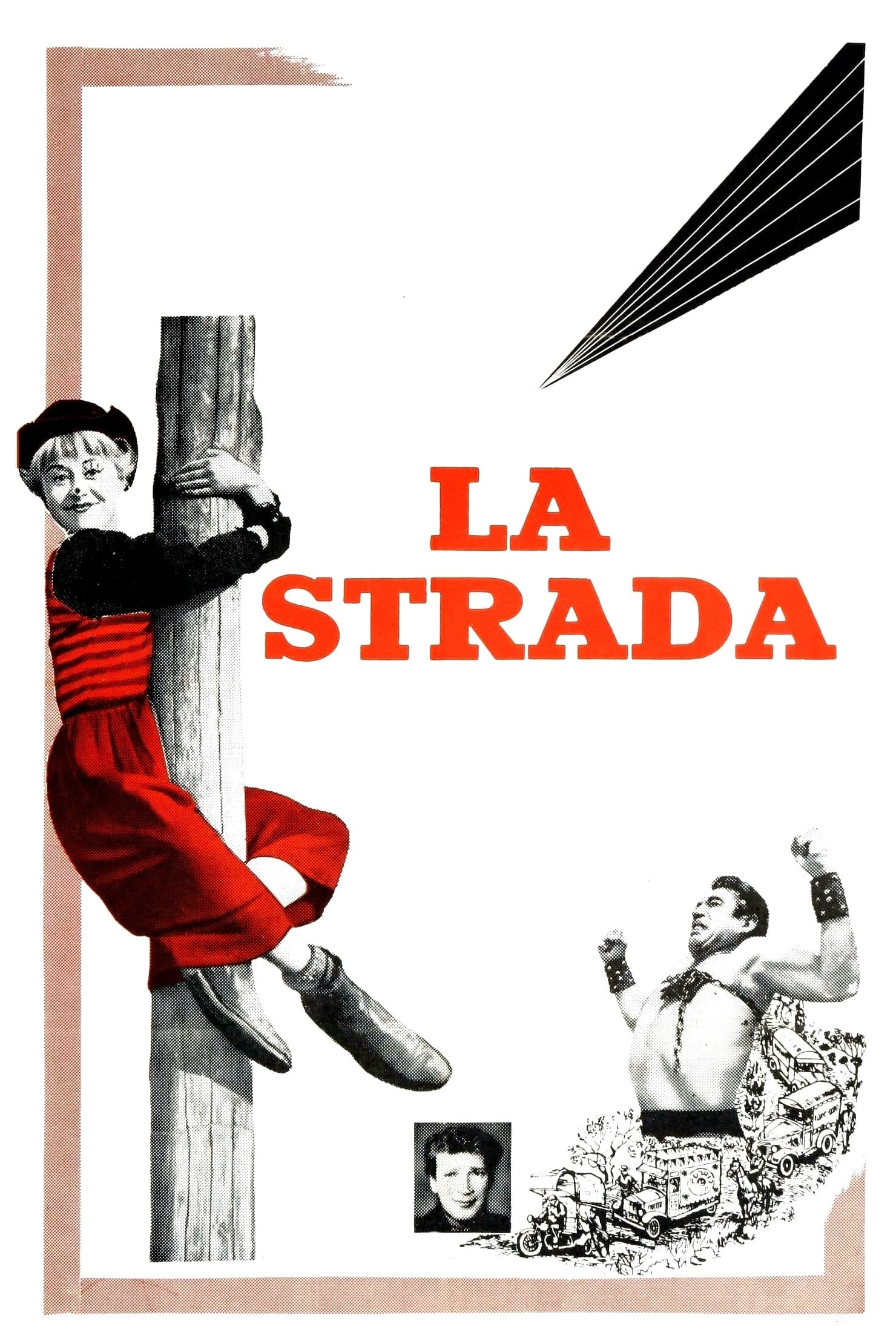
The journey at the heart of La Strada hinges on Gelsomina, a guileless young woman sold by her desperate mother to Zampanò, a traveling strongman who performs brutish feats of physical power across the Italian countryside. As Gelsomina is swept away from the only life she’s known, I felt a growing ache—her curiosity and resilience clashing with a sense of displacement and sorrow. Zampanò is not merely her employer, but her captor and indifferent master, bringing a bruised tenderness to each of their interactions. The road, winding and unpredictable, pushes Gelsomina into encounters that question what it means to belong, to hope, and to survive indignity. Among the most vivid episodes for me is Gelsomina’s interactions with Il Matto, the Fool—a clownish figure whose philosophical humor acts as a counterweight to Zampanò’s violence.
Major plot twists unfold gradually, so if you prefer to avoid spoilers, skip the following sentence: The shifting alliance between these three shapes the film’s emotional tensile strength, forcing each character—and me as a viewer—to confront the meaning of mercy, loyalty, and personal transformation as the road unwinds to a conclusion as quietly devastating as it is cleansing.
Ultimately, though these broad brushstrokes summarize the road Gelsomina and Zampanò travel, what lingers for me isn’t the sequence of events but the emotional resonance, the way the journey exposes the raw underside of human need. Every time I revisit the film, I see less a story about circus performers and more a meditation on identity and dignity in a world that often discards the most vulnerable.
Key Themes & Analysis
What struck me most from the opening frames of La Strada is how Fellini weaves loneliness and grace together into a single tapestry. For me, this film functions almost as a parable about souls adrift on the margins of society. Gelsomina’s innocence, underscored by Giulietta Masina’s extraordinary performance, becomes a lens for understanding the urgency of compassion in a hostile world. I am continually moved by how the film empathizes with weakness—Gelsomina’s wide-eyed naivete is never mocked, but instead treated with fierce tenderness.
Throughout, the theme of the outsider echoes—not just in Gelsomina, but in Zampanò’s brute isolation and Il Matto’s philosophical detachment. When Il Matto playfully questions the point of life’s apparent meaninglessness, I find the film wrestling with existential doubt. Yet, what I find so enduring is the way Fellini allows hope and despair to coexist: even as Zampanò’s cruelty seems without end, moments of unexpected beauty—a simple tune played on a trumpet, a kindness from a stranger—pierce the darkness.
Cinematographically, I’m captivated by Otello Martelli’s sharp black-and-white photography, which gives the roadside towns and barren landscapes a lyric quality. The camera lingers on faces, tracing lines of experience and exhaustion that, to me, become a silent language. This close observation blurs the line between realism and allegory; I feel the influence of Italian neorealism in the casting of non-professionals and the use of authentic locations, yet at every turn, Fellini injects notes of visual lyricism that signal his break toward a new, more poetic style.
From a directing standpoint, I’m always impressed by Fellini’s balance of grit and fantasy. His touch is both empathetic and unsparing—he shows us Gelsomina’s humiliation, her fleeting joys, and never allows sentimentality to erode the harshness of her world. Even Zampanò, who might have been rendered as a villain, is painted with strokes of weariness and self-loathing. Anthony Quinn’s performance is all the more devastating for its refusals to apologize or explain; I found myself recoiling at his actions, yet unable to fully condemn him.
Giulietta Masina, meanwhile, brings a Chaplin-esque elasticity to Gelsomina—part clown, part saint. Her expressive face carries the film; for me, her subtle shakes and searching glances reveal an inner world that words could never capture. The supporting presence of Richard Basehart’s Il Matto is like a rush of air through a closed room: witty, tragic, unpredictable. His haunting wisdom—that even the smallest stone has meaning—still echoes in my thoughts.
Another aspect that elevates the film is Nino Rota’s musical score. The motif for Gelsomina’s trumpet, echoing like distant memories, underscores the film’s emotional core. The music doesn’t simply accompany—it’s a character, a heartbeat, a voice crying out for connection.
As I think back on La Strada, what I value most is how the film resists tidy moralizing. It confronts the viewer with the stubborn messiness of human relationships and insists on the redemptive potential of those considered expendable. In each viewing, I discover new shades of meaning in the silences and stolen glances—a testament to the film’s layered craftsmanship and emotional depth.
My Thoughts on the Cultural Impact & Legacy
I’ve always regarded La Strada as a bridge between old and new—an essential moment when world cinema dared to reveal life’s misfits and stragglers as epic figures. It’s impossible for me to separate the film’s influence from my own passion for cinema itself. Without La Strada, Fellini might have remained merely a regional talent, but with this work, he announced a new language of film—one that privileges emotion, memory, and visual metaphor above conventional narrative.
From a personal perspective, I return again and again to La Strada’s resonance with the themes of empathy and self-worth that so many later filmmakers would echo. For me, the archetypal story of a lost soul searching for meaning paved the way for countless films—from Kurosawa’s “Ikiru” to Chaplin’s “Limelight” and even modern tales like “Paris, Texas.” What keeps the film vital isn’t just its historical importance, but the raw immediacy I feel every time Gelsomina gazes out at the sea, her hope and heartbreak undimmed by the intervening decades.
Fellini’s work opened doors for both Italian cinema and broader world cinema, legitimizing the blend of the magical and the mundane. Filmmakers from Martin Scorsese to Jane Campion have cited this film as a formative inspiration. I see its legacy every time a director chooses compassion over cynicism, or when the outcasts at the edge of the narrative step into their full subjectivity. Curation for me isn’t just about collecting great films—it’s about tracing the through-lines of empathy and craft. In that sense, La Strada is a cornerstone not just of Italian film history, but of how I interpret and champion the power of cinema to awaken moral imagination.
Even today, the central image—the clown, the brute, and the Fool on a dusty road—feels as current and potent as anything in contemporary screens. La Strada endures because it asks not only whether we can endure suffering, but whether we can transform it into meaning.
Fascinating Behind-the-Scenes Facts
What astonishes me every time I delve into La Strada’s production stories is how much ingenuity and risk were required to bring such raw honesty to the screen. For instance, I learned that Giulietta Masina nearly lost her role after suffering a miscarriage during early filming. Fellini, who was both her director and husband, fought for her recovery and eventual return, believing that no other actress could embody Gelsomina’s blend of innocence and resilience. I find that dedication deeply moving—not just for its personal undertones, but because Masina’s performance truly became the linchpin of the entire film.
Another behind-the-scenes detail I find remarkable is Anthony Quinn’s experience on set. Quinn recalled feeling adrift in a foreign language and production culture, uncertain he could deliver what Fellini wanted. Fellini communicated his vision more through gesture and emotion than formal direction, which forced Quinn to shed artifice and rely on instinct. That tension, for me, is visible in every frame—his Zampanò radiates unpredictability, never entirely present in any one emotional register.
And then there’s the now-legendary music. Nino Rota’s score was composed rapidly, with Fellini and Rota reportedly working deep into the night to perfect the recurring musical motif. I find it fascinating that what feels so inevitable and iconic was born out of near-improvisational creativity. The film’s shoestring budget and guerrilla-style location shoots only heightened its authenticity. Every technical challenge became a virtue, sharpening the spare, elemental atmosphere that draws me in each time.
Why You Should Watch It
- It’s a masterclass in transforming the ordinary into the universal—turning the struggles of outcasts into an unforgettable fable.
- The performances, especially Giulietta Masina’s, reveal emotions that transcend language and era, leaving an indelible mark on the viewer.
- Every technical element—from cinematography to score—serves a larger vision of empathy and dignity, making this film a key touchstone for anyone interested in the art of human storytelling.
Review Conclusion
When I think about what makes La Strada worth championing, I return to the way it disarms my expectations with its humility and then delivers truths that feel epic in scope. Fellini’s masterpiece remains for me a testament to the power of cinema to humanize the forgotten, to ask difficult questions about suffering and meaning, and to craft unflinching beauty from harsh reality. The performances will haunt you, the images will linger, and the questions it raises will echo far longer than the credits roll. For all of these reasons, and for how it shaped both my viewing habits and critical sensibility, I would rate it 5/5 stars—a rare, vital experience I return to for inspiration, challenge, and emotional renewal.
Related Reviews
- The Bicycle Thieves (1948): This Italian neorealist masterpiece, directed by Vittorio De Sica, shares La Strada’s focus on ordinary people and piercing empathy. I always recommend it for viewers drawn to raw urban landscapes, father-child relationships, and stories where hope fights with hardship.
- Ikiru (1952): Akira Kurosawa’s exploration of mortality and redemption feels spiritually connected to La Strada. Both films ask, in their own ways, how we give meaning to suffering and what traces we leave behind in the lives of others.
- Wings of Desire (1987): Wim Wenders’ poetic fantasy about angels observing human longing resonates for me with Fellini’s blend of realism and magic. It, too, is a deeply humanistic meditation on loneliness and compassion, perfect for viewers enchanted by introspective cinema that bends genre boundaries.
- Persona (1966): Ingmar Bergman’s intense exploration of identity, vulnerability, and the blurred line between self and other makes for a provocative companion piece. For me, the psychological depth and minimalism echo the intimacy of La Strada’s encounters.
For readers looking to go deeper, these perspectives may help place the film in a broader context.
🎬 Check out today's best-selling movies on Amazon!
View Deals on Amazon