
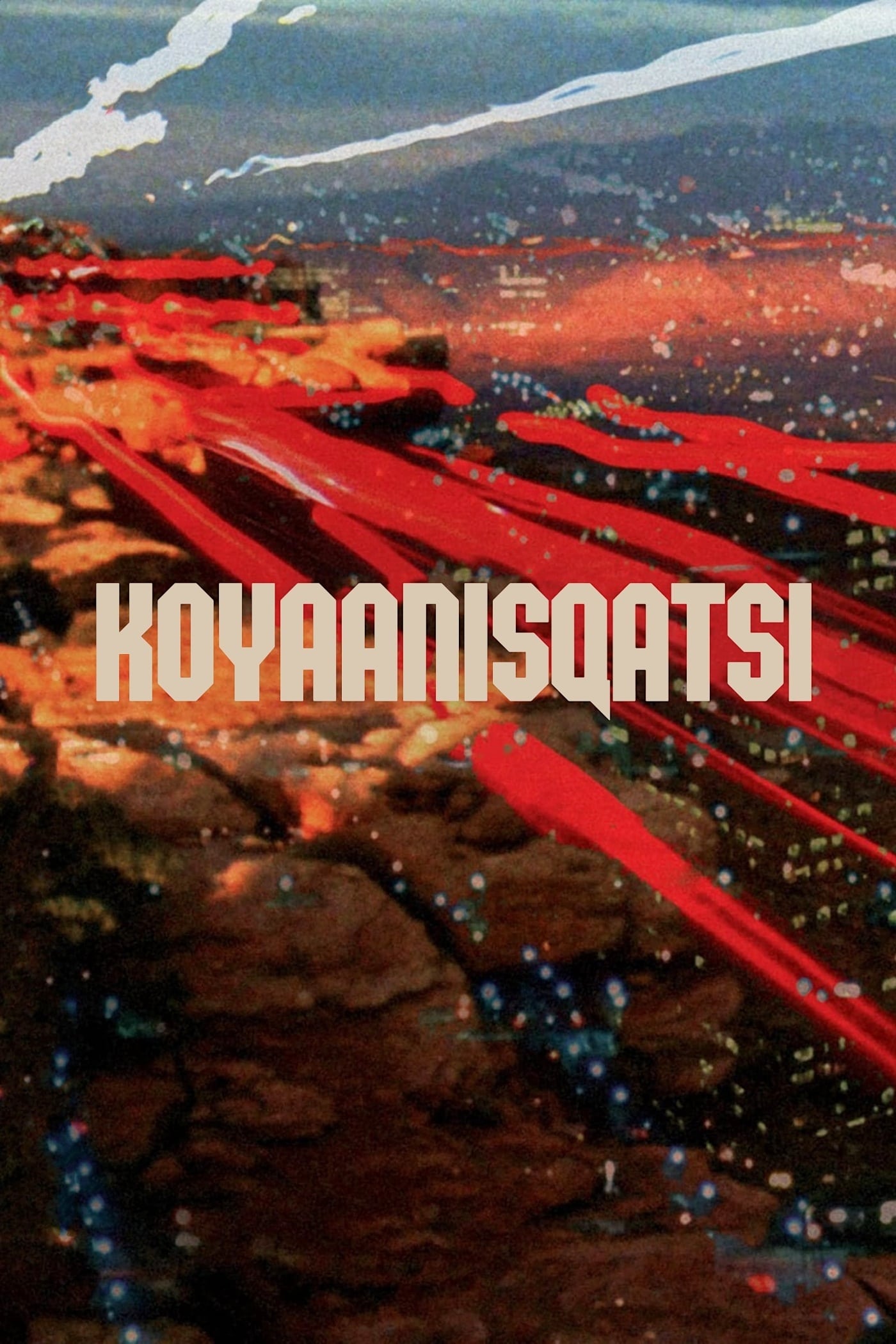
Plot Summary
From the instant the screen fills with haunting Hopi chants and time-lapse vistas, I knew I was about to embark on a film journey unlike anything I’d previously experienced. Koyaanisqatsi, directed by Godfrey Reggio, doesn’t tell a story in the traditional sense. Instead, I found myself awash in a wordless, meticulously orchestrated symphony of visuals and music. It’s a documentary, yes, but it tears away from narration and dialogue, relying instead on a succession of images—natural wonders, urban cacophonies, and everything in between—artfully married to Philip Glass’s hypnotic score.
There isn’t what I’d call a structured plot with characters or conflict. What unfolds is a visceral, non-linear meditation on humanity’s relentless development and its impact on the environment. Watching the juxtaposition of ancient deserts and bustling cityscapes, I felt I was witnessing history evolve before my eyes, all wordlessly told through Reggio’s lens. Each segment flows seamlessly into the next, colliding the serenity of nature with the pulse of modern civilization.
Spoiler Alert: For viewers who want to preserve every surprise, be cautious from here. Some visual motifs and transitions could be considered mild spoilers, but I’ll avoid major revelations about the film’s arc and key turning points.
Key Themes & Analysis
What captured me most in Koyaanisqatsi is how deeply it dives into the tangled relationship between humankind and planet Earth. To me, the film isn’t just about the world we see; it’s about what we lose when we rush forward without looking back. Reggio’s camera lingers on the tranquil geometry of clouds and canyons, only to smash us into the frantic energy of highways and assembly lines. In these kaleidoscopic juxtapositions, I saw a warning: progress has a price.
The way the film unfolds—always in motion, always shifting—reminded me that life today rarely stands still. I was especially struck by the accelerated shots of city life: streams of cars mimicking rivers, crowds surging like tides, electric grids flickering like constellations. These visuals aren’t just visually stunning; to me, they’re a pointed commentary on technology’s consuming grip on humanity. The fast-forwards and slow-motions force us to see the hidden rhythms of modernity—patterns that shape and sometimes upend our existence.
For me, Reggio’s directorial choices are nothing short of audacious. By abandoning conventional storytelling, he invites a unique kind of participation from the viewer: I wasn’t following a character’s arc, but rather questioning my own place in the world. The lack of spoken words felt liberating, even meditative, as I found myself constructing meaning from the fragments and collisions on the screen. Every frame seemed carefully curated, as if each shot was asking, “What does it mean to be alive right now?”
Philip Glass’s score deserves its own analysis. Minimalist yet emotionally relentless, it pulses in tandem with the film’s tempo. My pulse quickened with each crescendo, my mind lulled during softer sequences. The music doesn’t just accompany the images—it interrogates them. I found that, together, sound and image form a hypnotic tapestry that is equal parts mesmerizing and unsettling.
No actors populate this film, at least not in the traditional sense. Instead, the “performances” I witnessed were those of the world’s inhabitants in their unguarded, daily routines. From factory workers to pedestrians, their motions felt ritualistic, automated—sometimes with a beauty, other times with an eerie detachment. I realized the absence of traditional acting only sharpened the film’s message. The protagonists here are anonymous, stressing the collective nature of humanity’s journey and its consequences.
Through this lens, Koyaanisqatsi becomes a canvas for reflection rather than exposition. I saw the entire arc of modern civilization painted in stark visual metaphors—in the dynamism of rockets and the quiet collapse of buildings. It’s a cinematic meditation on imbalance (which is what the Hopi title translates as: “life out of balance”), and I came away fixated on the cost of so-called progress and the fragility of the natural world.
What I truly admire is how the film doesn’t sermonize or offer easy answers. It opens doors to contemplation, leaving me with as many questions as revelations about the inherent tension between nature and industry, chaos and order, growth and decay. That, to me, is the hallmark of a significant work of art.
My Thoughts on the Cultural Impact & Legacy
I can’t recount how many moments from Koyaanisqatsi have etched themselves into my cinematic imagination. When I first saw it, I felt like I was encountering a new language for film—a visual dialect that communicates ideas about civilization, technology, and the environment without a single spoken word. The shockwaves of Reggio’s experiment have reverberated through countless documentaries, music videos, and visual essays I’ve analyzed since. I find the film’s cultural legacy inseparable from its technical innovations and its audacious commitment to an immersive experience.
From a curator’s perspective, I treasure the way Koyaanisqatsi has shifted expectations of what non-narrative cinema can achieve. I’ve witnessed fellow filmmakers cite its influence when discussing their approach to editing, rhythm, and the use of music. For me, seeing those time-lapse sequences superimpose human behavior onto the natural order was a watershed moment: it fundamentally changed my understanding of how film could not just observe, but interpret reality. It’s clear to me that this film opened doors for daring documentaries and avant-garde visual storytellers—think of the city symphonies and ecological essay films that have followed.
But the legacy isn’t only technical. On a personal level, Koyaanisqatsi’s warning feels ever more urgent in our current era of environmental anxiety and digital overload. Every time I revisit it, the film pushes me to reconsider my own relationship with technology and nature. It’s astonishing how relevant its message remains. The sense of awe and unease the film inspired in me decades ago still resonates; it has become a touchstone for conversations about sustainable living and human progress. As someone who curates, reviews, and champions documentary film, I see Koyaanisqatsi as essential—not just for its historical importance, but for the way it continues to challenge and provoke each new generation of viewers.
Fascinating Behind-the-Scenes Facts
Part of my fascination with Koyaanisqatsi comes from discovering the extraordinary lengths its creators went to achieve such immersive visuals. One fact that stands out is that Godfrey Reggio’s vision almost never made it to the screen. Budget constraints were immense. The film was largely funded through grants and donations, with Reggio at one point living in near-poverty to keep the project alive. I learned that he spent years crafting shots across the American Southwest, often with just a skeleton crew, trying to catch the perfect light or cloud formations. The patience and perseverance required were as epic as the imagery itself.
Another piece of behind-the-scenes trivia that amazed me is the sheer technical innovation of the film’s time-lapse and slow-motion photography. Ron Fricke, who later became a director in his own right, painstakingly engineered custom camera rigs to execute the signature sequences—most notably the rush-hour flows and skyscraper ascents. Sometimes, they would shoot for days just to create a few seconds of footage. These innovations set a new standard for how nonfiction filmmaking could use technology to expand our visual vocabulary.
What I didn’t expect was that Philip Glass’s music was initially composed in isolation. Glass famously developed the score without viewing finished footage, instead working from descriptions and storyboards. Only in post-production did the filmmakers weave music and images together—yet the fit is so organic that I’m still in awe of their creative synchronicity. The collaborative trust and intuition on display here makes the final result feel all the more miraculous.
Why You Should Watch It
- You’ll experience a cinematic journey unlike traditional films, driven entirely by visuals and an unforgettable score.
- It challenges you to contemplate the complex relationship between humanity, technology, and the natural world through thought-provoking imagery.
- The film’s technical mastery and artistic ambition set a high water mark for experimental nonfiction cinema, offering inspiration to filmmakers and casual viewers alike.
Review Conclusion
As someone who lives and breathes film and culture, Koyaanisqatsi is one of those rare, transformative experiences that redefines what cinema can be. I find myself returning to it as both a touchstone and an enigma—an audiovisual poem, a philosophical puzzle, and a cautionary fable all at once. With its audacious editing, hypnotic score, and crystal-clear environmental themes, I see it as a work that demands engagement, reflection, and a willingness to surrender preconceptions about narrative filmmaking.
If I must reduce my feelings to numbers, my personal rating is 5/5 stars. No other film has made me so acutely aware of the world’s beauty and its perils, nor left me pondering so many questions about my own place within it.
Related Reviews
- Samsara (2011) – This film, directed by Ron Fricke (Koyaanisqatsi’s cinematographer), offers a similarly stunning visual journey around the globe, examining cycles of nature and human ritual without dialogue. I recommend it for its spiritual kinship and breathtaking scope.
- Baraka (1992) – Like Koyaanisqatsi, Baraka fuses world-spanning images and a mesmerizing score to reflect on the human condition and our environmental impact. Watching it, I saw a direct line of influence in both cinematic language and philosophical depth.
- The Qatsi Trilogy (Koyaanisqatsi, Powaqqatsi, Naqoyqatsi) – If Koyaanisqatsi resonates, the other films in Reggio’s trilogy are essential. Each offers a distinct meditation on humanity’s trajectory, technology, and the tensions between progress and preservation.
- Chronos (1985) – A breathtaking, wordless time-lapse film, Chronos stands out for exploring both natural and built environments around the world, providing perspective and visual innovation for fans of Koyaanisqatsi’s style.
For readers looking to go deeper, these perspectives may help place the film in a broader context.
🎬 Check out today's best-selling movies on Amazon!
View Deals on Amazon