
Plot Summary
When I first sat down to experience “Joker,” directed by Todd Phillips, I was immediately struck by how deliberately it distances itself from the typical superhero origin archetype. Instead of high-octane action, I found myself immersed in a slow-burning psychological drama, rooted deeply in the discomfort—and sometimes horror—of one man’s unraveling mind.
The film invites us into the troubled existence of Arthur Fleck, a failed stand-up comedian grappling with mental illness in a decaying, unforgiving Gotham City. Through my eyes, the story unfolds as a personal journey haunted by relentless alienation and societal neglect. Arthur’s day job as a clown contains a biting irony: he brings smiles to others while harboring bottomless sadness. His world seems to press in tighter with every scene, creating a sense of suffocation that I found almost physical. Neighbors are distant, social workers are overburdened, and public services are drying up, leaving Arthur without a safety net.
What captivated me most was how the film’s plot doesn’t just chronicle Arthur’s transformation into the infamous Joker; it explores the tension between his yearning for connection and the city’s cold indifference. Relationships, whether imagined or real, anchor his fragile sense of self. As the tension escalates, I could feel the distinction between the man Arthur is and the clown-faced icon he would become begin to blur.
Spoiler Warning: If you haven’t seen the film and hope to remain surprised, be mindful—while I’ll be careful not to reveal major turning points, some elements of Arthur’s journey may hint at pivotal moments. The film’s narrative spiral crescendos with acts of violence and spectacle, reframing how the public perceives Arthur (and, by extension, those who are marginalized) in ways that felt deeply unsettling and hauntingly plausible to me.
Key Themes & Analysis
From the outset, I was pulled into the way the film examines alienation, mental illness, and the search for identity. What struck me most is how “Joker” refuses to present Arthur as either a pure victim or a traditional villain; instead, Phillips and star Joaquin Phoenix work in tandem to craft a figure both deeply sympathetic and deeply disturbing.
Phoenix’s performance is a revelation. I was mesmerized by his physical transformation—both the gaunt frame and the contorted, forced laughter, which manages to oscillate between heartbreaking and terrifying. He uses every part of his body to communicate Arthur’s fragility and pent-up rage. I kept noticing the way his laughter morphs from a symptom of illness to a defense mechanism, and eventually, to a weapon.
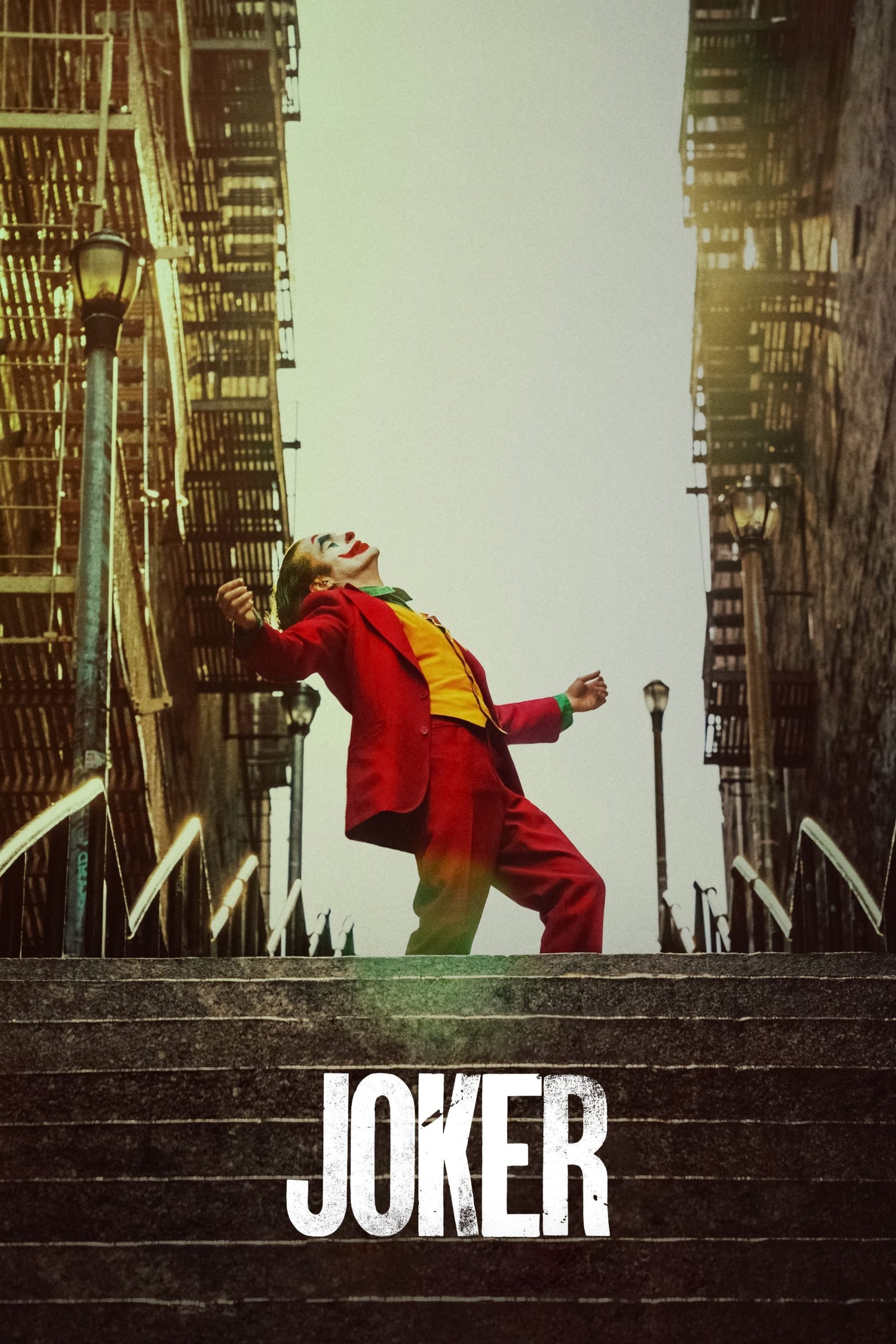
Cinematography plays a crucial role in amplifying the film’s themes. I found the color palette—dominated by washed-out grays and bleak yellows—highly effective at mirroring both Arthur’s inner turmoil and the city’s decay. Lawrence Sher’s cinematography traps Arthur in cramped apartment rooms and echoing city corridors, visually reinforcing his sense of isolation and disconnection from the world. The way the camera lingers on Phoenix’s face kept me uncomfortably close to his pain, reminding me that “Joker” is ultimately a character-driven tragedy.
What’s personally fascinating to me is how the film turns Gotham City into more than just a setting. It becomes a toxic organism, suffocating its weakest citizens and turning their struggles into a kind of public spectacle. I kept questioning whether Arthur’s breakdown was inevitable—or whether it was a direct response to a society with no capacity for empathy. This forces viewers, myself included, to confront the uncomfortable possibility that systemic neglect can create the very monsters society fears.
The score by Hildur Guðnadóttir is unsettling in its own right. I found the discordant cello compositions set the mood for Arthur’s spiral, shaping my emotional response with each note. It’s impossible for me to imagine the film’s most pivotal scenes without this oppressive, brooding soundtrack underlining the psychological collapse at the story’s center.
Above all, I see “Joker” as a movie that blurs moral boundaries. It never lets me forget Arthur’s crimes or allow me to fully excuse them, but it insists on showing the accumulation of small cruelties that precede them. Phillips’ direction is remarkably controlled: he knows when to linger, when to cut away, and how to invite empathy without validation. The film never becomes a polemic, but it refuses to let me leave the theater unchanged.
My Thoughts on the Historical & Social Context
As I reflect on why “Joker” resonated so powerfully in 2019, I believe it’s a film uniquely attuned to its era. That year, it felt as though the world was teetering on the edge—grappling with widespread political disenchantment, rising economic inequality, and a growing conversation about mental health. Watching Arthur Fleck’s story unfold, I couldn’t help but draw parallels between his alienation and the real-world frustrations I witnessed in the headlines. From my perspective, “Joker” holds up a mirror to a society increasingly divided, where resentment can fester in the silence left by cut social programs and the erosion of community.
I found it particularly impactful how the film addresses the stigma of mental illness. Arthur’s uphill battle against an indifferent system mirrored contemporary critiques of underfunded healthcare and a collective reluctance to talk openly about psychological suffering. At times, I saw Gotham as an exaggerated blueprint for any city forced to function in austerity, with individuals like Arthur bearing the brunt.
This isn’t just a period piece set in a retro Gotham; it’s a story that amplifies very modern anxieties. For viewers like me, struggling with the post-recession climate and the erosion of once-stable social agreements, “Joker” lands like a warning as much as an origin story. It holds contemporary relevance because it asks uncomfortable questions about who we overlook and who we choose to blame, and why the line between desperation and chaos can be so perilously thin.
In my view, “Joker” matters not just because of its shock value or controversial subject matter, but because it dares to ask, “What are we complicit in when we look away?” A few years have passed since its release, but the questions it raises about isolation, economic vulnerability, and anger remain more urgent to me now than ever.
Fact Check: Behind the Scenes & Real History
One of the elements that fascinates me most about “Joker” is the unusual approach to casting and production. Joaquin Phoenix initially hesitated to take on the role, partially because he was wary of joining the superhero genre. From my research, I learned that the film’s team courted Phoenix before a script was even finalized, demonstrating just how crucial his participation was to the story they wanted to tell.
Another behind-the-scenes detail that caught my attention is the influence of classic cinema on the film’s style. Todd Phillips has openly acknowledged that he drew inspiration from Martin Scorsese’s “Taxi Driver” and “The King of Comedy,” both starring Robert De Niro (who appears here as talk show host Murray Franklin). Rather than merely copying those films’ aesthetics, Phillips weaves their spirit into “Joker” as a tribute and a challenge: he asks us to see Arthur Fleck alongside cinematic antiheroes who functioned as mirrors for their own troubled times.
From a historical accuracy standpoint, I know “Joker” doesn’t trace a real-life figure or event, but its depiction of Gotham’s decay accurately reflects the atmosphere of 1970s and 1980s New York—the city’s garbage strikes, rising crime, and widening social gaps all make their way into the film’s DNA. This commitment to authenticity extended to production design, with location shoots in gritty corners of New York and New Jersey to build a believable world. I was particularly impressed by the choice to film many scenes in practical locations rather than sound stages, which added to the movie’s lived-in feel and visual realism.
Why You Should Watch It
- Joaquin Phoenix’s transformative performance offers an unforgettable portrayal that anchors every scene with raw vulnerability and intensity.
- The film’s unflinching exploration of mental illness and social alienation challenges viewers to confront uncomfortable truths about our world.
- Its bold visual and narrative style sets it apart from other comic book adaptations, providing a fresh, provocative perspective on an iconic character’s origins.
Review Conclusion
Reflecting on my experience, I see “Joker” as a rare achievement in character-driven cinema. Instead of following the predictable beats of a superhero saga, it immerses viewers in a haunting psychological portrait that’s as relevant today as it was upon release. Phoenix’s performance, Phillips’ direction, and the film’s potent social commentary combine to create a film that lingers in my thoughts long after the credits roll. Although its violence and depiction of mental health may spark debate, that very discomfort is what makes the film so essential, in my opinion. I can only recommend it to viewers prepared for a challenging and emotionally charged journey.
My rating: 4.5/5 stars.
Related Reviews
- “Taxi Driver” (1976) – I revisit this Scorsese classic whenever I want to explore the boundaries between alienation and violence on film. Like “Joker,” it offers an intense character study of a troubled outsider swallowed by a hostile city.
- “You Were Never Really Here” (2017) – For those drawn to Phoenix’s immersive work, this film provides another tour-de-force performance, exploring trauma and redemption through uncompromising narrative style and stark visuals.
- “Nightcrawler” (2014) – I found this film’s exploration of media manipulation and social detachment strikingly similar in tone. Both movies place viewers uncomfortably close to protagonists who reflect (and distort) contemporary anxieties.
- “Requiem for a Dream” (2000) – When I crave movies that unflinchingly deal with mental anguish and societal decay, this title comes to mind for its stylistic bravura and raw emotional impact.
- “Fight Club” (1999) – The descent into madness and the literal and figurative masks worn by antiheroes connects these films thematically; both challenge viewers to confront uncomfortable truths about their era’s discontents.
If you want to explore this film beyond basic facts, you may also be interested in how modern audiences respond to it today or whether its story was inspired by real events.
🎬 Check out today's best-selling movies on Amazon!
View Deals on Amazon