
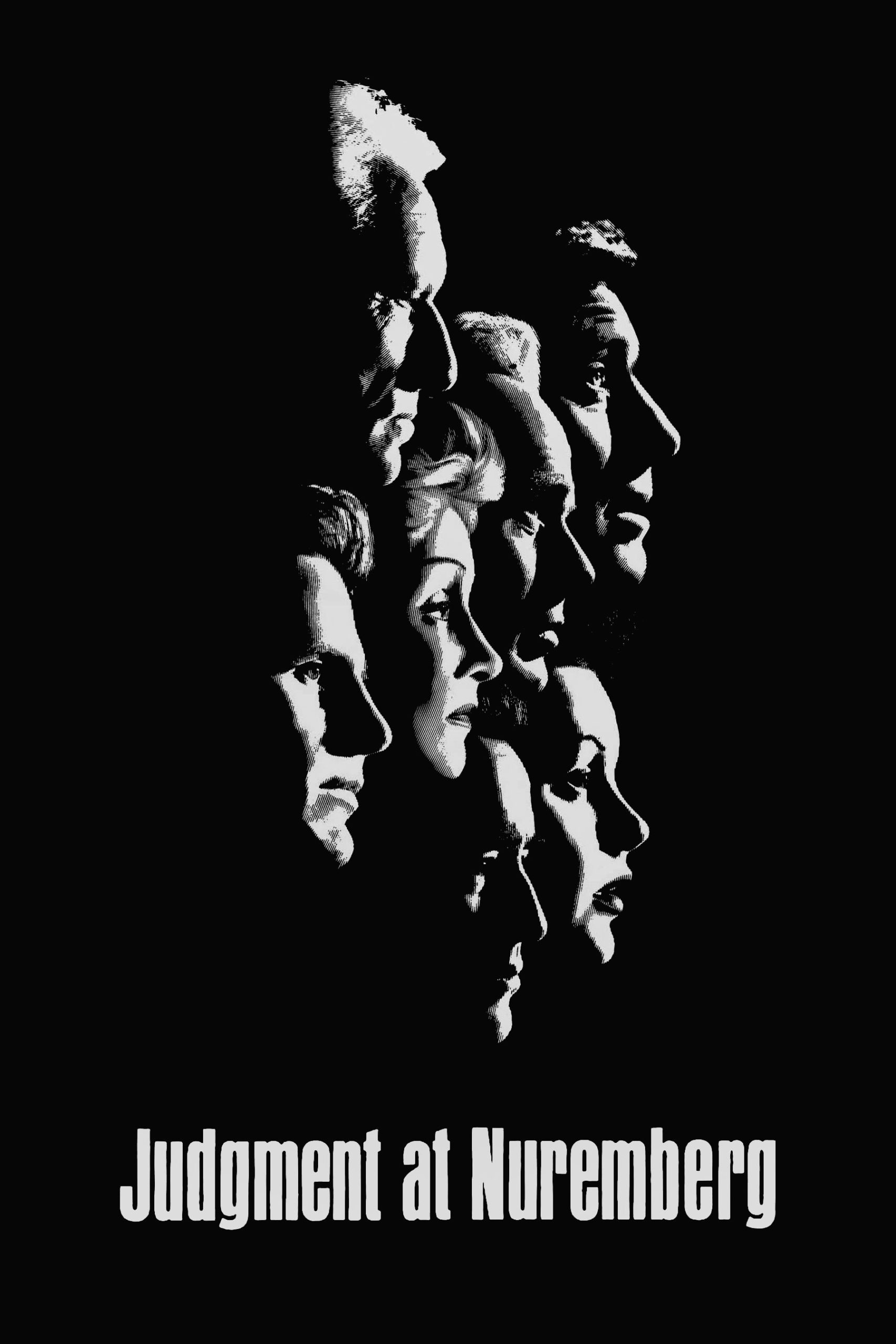
Plot Summary
The first time I watched Judgment at Nuremberg, I was struck by the deliberate pacing and profound sense of responsibility woven through every line of dialogue. Stanley Kramer, a director whose work consistently challenges me to re-examine my own beliefs and assumptions, helms this courtroom drama with undeniable gravitas. Set in post-World War II Germany, the story follows an American tribunal, led by Judge Dan Haywood (played with understated compassion by Spencer Tracy), as he presides over the trial of four German judges accused of enforcing Nazi war crimes. What intrigued me most—and kept me deeply engaged—is how the film never lets the audience settle into simple black-and-white moral judgments. Instead, I found myself grappling with the personal histories, cultural justifications, and soul-searching admissions of everyone called to testify.
Early on, I realized this isn’t a film about the atrocities themselves so much as a confrontation with complicity—the choices and silence that enable such horrors. The drama unfolds almost entirely within the rigid confines of the courtroom, which might sound limiting, but I was riveted by the psychological tension simmering beneath the surface. As testimonies build, layers of denial, guilt, and rationalization begin to peel away, sometimes slowly, sometimes with explosive intensity. The revelations throughout the film feel like blows—not only to the characters, but also to my own sense of moral certainty. (Major spoilers are avoided here, but be aware: the emotional impact comes as much from what’s withheld as what’s revealed by the end.)
Key Themes & Analysis
What stood out to me most about Judgment at Nuremberg is its fierce commitment to examining justice in the aftermath of senseless tragedy. The film is not content to offer easy villains; instead, it demands that I confront the uncomfortable reality that ordinary people can participate in or turn a blind eye to extraordinary evil. The strength of its script—penned by Abby Mann—lies in its refusal to paint its subjects with a broad brush. Each defendant is given a human face, a history, and a rationale, even as their actions remain indefensible. This ambiguity is where I find the film’s greatest power: it compels introspection rather than delivering clear-cut answers.
From a technical perspective, Kramer’s direction is masterfully subtle. He employs mostly static, unembellished camera work, letting the performances and words dominate. But I noticed, on my latest viewing, how the lens isolates and frames characters during moments of revelation or shame, highlighting the inescapable intimacy of moral reckoning. I’m always drawn back to the way key cross-examinations are staged—with the camera lingering on silence, tracing the lines of anguish or defiance etched into every face. Ernest Gold’s haunting, minimal score underscores these quiet, brutal moments, never intruding but deepening the emotional undertow.
No discussion of this film is complete for me without recognizing the astonishing cast. Maximilian Schell’s breakneck defense of his clients is a study in controlled fury—his Oscar-winning performance never feels exaggerated, even when he’s unleashing blistering monologues on the hypocrisies of the occupation or the blurred culpability of entire societies. Spencer Tracy anchors the story, his understated approach complementing the swirl of emotion around him. Judy Garland, in a rare screen role, left me deeply shaken—her testimony contains a vulnerability that feels almost too raw for words. Montgomery Clift, as the tormented former laborer, brings empathy to a character whose agony quietly indicts everyone in the courtroom, myself included as a viewer. These portrayals stopped me in my tracks, making the abstract horror of history heartbreakingly specific. Every time I watch, I find myself drawn to new layers in each character—a testament to the script’s complexity and the actors’ craft.
What I find most striking, though, is the way the film interrogates the meaning of justice when collective guilt is at stake. Rather than grandstanding, the script asks: when does following orders become a crime? Is ignorance—or complicity enforced by fear—an alibi for atrocity? These are not merely historical questions; they keep reverberating in my imagination, reminding me that the line between justice and retribution, between understanding and condemnation, is often perilously thin. There’s a humility at the heart of the film that I rarely see elsewhere—the recognition that the judgments rendered in that courtroom are as much about the victors’ own need for moral clarity as they are about actual accountability.
My Thoughts on the Cultural Impact & Legacy
From my perspective as a film curator and critic, Judgment at Nuremberg reshaped what I expect from courtroom dramas and historical epics. When I first encountered it, I was accustomed to films that chose sides quickly and delivered catharsis by reaffirming the righteousness of the jury. Here, I found no such comfort. The questions raised by Kramer and his cast reverberate across generations, warning against complacency while also recognizing the burdens we bear—collectively and individually—in the wake of collective trauma.
I see echoes of this film’s uncompromising moral inquiry throughout cinema: from Sidney Lumet’s “12 Angry Men,” with its obsession over individual conscience, to Steven Spielberg’s “Schindler’s List,” which explores complicity on a deeply personal scale. But “Judgment at Nuremberg” is unique to me for its willingness to dramatize gray areas and ethical stalemates—it’s a cinematic reflection on how democracies fail and recover, and how justice can’t always heal the wounds of the past. In a world that still grapples with state-sponsored violence, and as we continue to argue over the role of civic responsibility, I find this film more urgent now than ever before.
On a personal level, it taught me to approach film criticism (and history itself) with a deep sense of humility. I can’t help but see myself mirrored in Judge Haywood’s uncertainty and self-doubt; like him, I am haunted by the realization that knowledge and judgment are never truly complete. Even as a repeat viewer, I find myself asking: would I have acted any differently, in the face of societal pressure or fear? Few films have left me with so many unresolved emotions—hardly any have inspired me to probe so deeply into my own notions of justice, forgiveness, and culpability. This is a film that changed how I see the world, and I think it continues to shape the way Hollywood approaches both historical truth and moral ambiguity.
Fascinating Behind-the-Scenes Facts
The stories behind the making of Judgment at Nuremberg are as riveting to me as the film itself. One detail that has always fascinated me is the casting process: Maximilian Schell, who played German defense attorney Hans Rolfe, was originally considered for a different, much smaller role. But after reading the script, Schell passionately lobbied for a more central part, feeling a personal connection to the nuances of postwar German identity. The studio initially hesitated, but director Stanley Kramer was so impressed by Schell’s audition that he gave him the pivotal role—leading, of course, to an Academy Award for Best Actor.
I’m also endlessly intrigued by how Kramer managed the logistics of assembling such a distinguished cast, including Spencer Tracy, Burt Lancaster, Marlene Dietrich, Judy Garland, and Montgomery Clift. Shooting the film was a massive technical undertaking due to the extended courtroom scenes, which required the actors to deliver lengthy monologues before dozens of extras for sometimes 8–10 hours a day. To keep performances sharp and authentic, Kramer shot many of these scenes in uninterrupted takes, encouraging improvisation and genuine emotional reactions.
Another detail that’s stuck with me: Judy Garland’s presence on set during her testimony scenes was reportedly so powerful that the entire cast and crew fell silent. Garland, working through significant personal challenges at the time, poured her real-life vulnerability into her performance. Members of the production team recounted feeling emotionally drained after filming her scenes—her agony was not just acted, but lived.
Why You Should Watch It
- The film’s fearless examination of moral responsibility will challenge your own assumptions. If, like me, you seek movies that refuse easy answers, this is essential viewing.
- The ensemble cast delivers some of the most powerful performances I’ve ever seen. Each actor brings humanity and complexity to their role, making the story’s dilemmas resonate on a deeply personal level.
- The film’s reverberations in contemporary discussions of justice and accountability are striking. Viewing it today, I’m reminded that the questions it raises are far from resolved.
Review Conclusion
Every time I revisit Judgment at Nuremberg, I discover new depths in its layered characters and haunting moral quandaries. Stanley Kramer’s direction, combined with a script that refuses to simplify or sentimentalize history, transforms a specific historical moment into a timeless meditation on justice and humanity. For me, this film remains a touchstone: a masterclass in acting, writing, and socially conscious storytelling. Its relevance endures because it bravely names the fears I would rather ignore, inviting not only empathy but ongoing reflection. On the strength of its performances, narrative ambition, and its unwavering search for truth, I rate it 5/5 stars—an undisputed classic that always leaves me changed.
Related Reviews
- “12 Angry Men” (1957) – I recommend this film for how it similarly dissects moral responsibility and individual courage within the courtroom, using tension and character work to force viewers into the heart of ethical debate.
- “A Man for All Seasons” (1966) – This resonates with me as a companion piece due to its focus on personal conscience versus political power, exploring the cost of integrity in the face of overwhelming external pressure.
- “The Verdict” (1982) – I consider this an essential follow-up for those moved by the ethical complexity of Nuremberg’s proceedings; Paul Newman’s flawed protagonist faces his own demons in search of redemption inside (and outside) the legal system.
- “Paths of Glory” (1957) – For its unflinching depiction of the military tribunal process and the tragic consequences of institutional injustice, Stanley Kubrick’s anti-war classic strikes a similar nerve for me—particularly in its blending of personal cost and bureaucratic cruelty.
For readers looking to go deeper, these perspectives may help place the film in a broader context.
🎬 Check out today's best-selling movies on Amazon!
View Deals on Amazon