
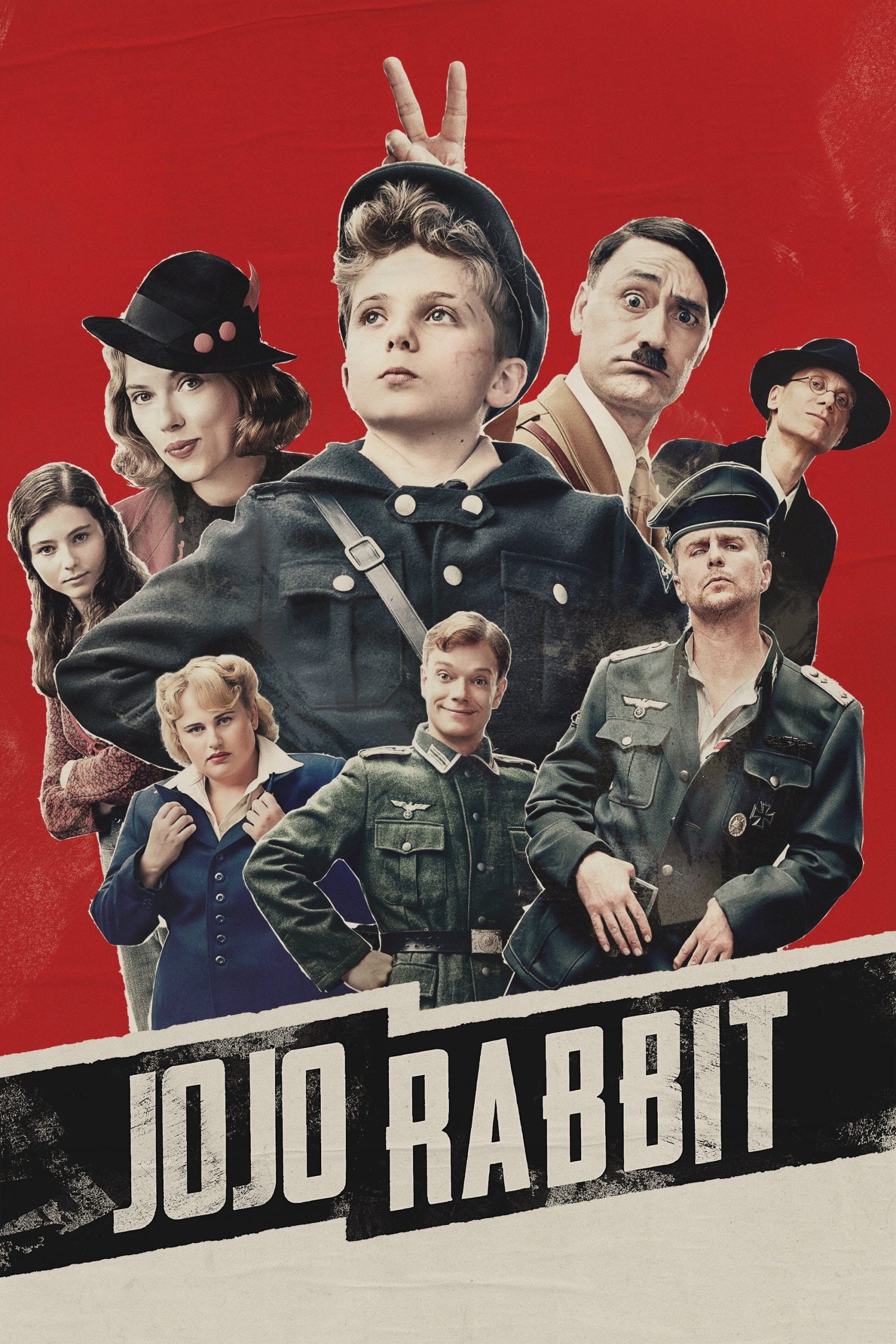
Plot Summary
Right from the film’s opening beats, I was drawn into the absurdly skewed world that Taika Waititi orchestrates in his unique satirical vision. Presented as an “anti-hate satire,” the story revolves around young Jojo, a fervent Hitler Youth member in Nazi Germany whose imaginary best friend happens to be a buffoonish version of Adolf Hitler, played by Waititi himself. What caught my attention was the way the film establishes Jojo’s worldview as shaped by a regime’s indoctrination, blending dark history with gleeful, childlike delusion. As Jojo idolizes Nazi ideals, his reality unravels when he discovers his mother (the remarkable Scarlett Johansson) has been hiding a Jewish girl in their attic—a revelation that challenges everything he’s been led to believe.
The plot unfolds almost like a fairy tale distorted by historical nightmare; Jojo’s internal conflict deepens, and the boundary between childish innocence and the brutality of war becomes distressingly thin. While the film’s early moments play for laughs, Waititi slowly peels back the farcical layers, exposing a core of heartbreak and humanity.
Warning: Very mild spoilers ahead. Jojo’s journey becomes a test of conscience, empathy, and self-identity, as he finds himself torn between the propaganda that has defined his world and the lived realities of those he has been taught to fear. The interactions between Jojo and Elsa—the Jewish girl in hiding—anchor the movie’s arc, gently guiding Jojo toward genuine understanding. Each encounter is laced with wit and tension, drawing out both the comedy and the terror of a childhood warped by cruelty.
Key Themes & Analysis
What struck me most about Jojo Rabbit is its fearless handling of contradiction. This film is incredibly risky for how it collides the horrors of one of history’s darkest periods with the fantastically naive perspectives of youth. To me, the film’s most potent theme is the absurdity of hate—how it is manufactured, learned, and, ultimately, can be unlearned. Jojo’s fantastical friendship with an imaginary, clownish Hitler pinpoints the ludicrous nature of ideological extremism. By making evil both ridiculous and seductive, Waititi offers an unforgettable lesson about the power of empathy to pierce through even the thickest walls of propaganda.
In terms of cinematography, I appreciated how the visual design subverts expectations. Instead of the drab, desaturated tones we often associate with World War II dramas, cinematographer Mihai Mălaimare Jr. crafts a vibrant color palette—primary hues and whimsical frames—that reminded me of storybooks or Wes Anderson’s oddball worlds. This isn’t just for visual pleasure; it reinforces the jarring mismatch between the surface innocence of Jojo’s playground existence and the sinister threats lurking beneath.
What stands out as a triumph is Waititi’s directorial balancing act. Turning a premise like this into an effective and respectful comedy could have easily tipped into disastrous bad taste. Personally, I found the film to be both inventive and emotionally disarming because it never lets levity undermine the stakes; every joke that made me laugh also made me think about the horror it was undercutting. Moments of sudden violence or loss are absolutely shocking in their juxtaposition to the humor, and for me, that tonal whip-lash is precisely the point—the world was, for so many, both unpredictable and surreal.
The performances left a deep impression. Young Roman Griffin Davis delivers a breakthrough role as Jojo, imbuing the character with vulnerability and steel in equal measure. His chemistry with Thomasin McKenzie (Elsa) is delicately layered—both actors convey a tangled mixture of distrust, curiosity, and mutual respect. Scarlett Johansson is luminous as Jojo’s mother, infusing her with rebellious courage and aching tenderness. And I have to single out Sam Rockwell and Rebel Wilson for their splendid support, both slyly lampooning blind patriotism with comedic zeal. But above all, Waititi’s own go-for-broke turn as imaginary Hitler is a singular act of creative risk-taking; he’s never just a cartoon, but a persistent, seductive inner voice that grows increasingly desperate as Jojo’s heart wins out over dogma.
Beyond the characters, I felt the script demonstrates a remarkable trust in the intelligence of its audience. It’s not afraid to let humor and horror sit side by side, and it constantly encourages viewers, including myself, to question what we accept as “truth” in the face of propaganda or collective denial. That’s a lesson relevant well beyond the film’s historical contours.
My Thoughts on the Cultural Impact & Legacy
What lingers for me, years after first seeing Jojo Rabbit, is how boldly it reimagined what historical satire could look like. For such a thematically daring film to find its way into the heart of mainstream cinema—and even to win the Academy Award for Best Adapted Screenplay—signals a sea change in how audiences are willing to contend with the past. As a critic deeply invested in the evolution of the war film and satire genres, I found myself thrilled by the way Waititi and his collaborators harnessed humor as a survival mechanism. The film’s central message—that love and empathy are acts of resistance against indoctrination and hate—resonated powerfully with me, especially as a curator hoping to highlight stories that challenge the old guard.
I often return to this film when I think about the ongoing debate over how cinema should approach historical trauma. Jojo Rabbit is bravely revisionist without trivializing the suffering it depicts; it walks a razor’s edge, and what I admire most is Waititi’s refusal to simplify either evil or innocence. The movie’s success spurred more directors to experiment with genre hybridity—inviting audiences to process heavy material through unconventional perspectives. I’ve seen its influence echo in subsequent works tackling hate, extremism, or childhood against a backdrop of political tumult.
On a personal level, the movie’s playful approach to uncomfortable subject matter makes me optimistic about cinema’s capacity to connect across boundaries. It’s the sort of film I reference when arguing for the necessity of risk-taking in art; it proves audiences will embrace complexity if storytellers are brave enough to offer it. As new generations confront the resurgence of old prejudices, Jojo Rabbit remains, for me, a vivid testament to the transformative power of kindness, imagination, and satire.
Fascinating Behind-the-Scenes Facts
Digging into the film’s creation often enhances my appreciation of its artistry, and Jojo Rabbit offers some behind-the-scenes stories that, to me, are as compelling as anything onscreen.
First, I was fascinated to learn that Taika Waititi wrote much of the screenplay years before the film was greenlit, and he spent a long time doubting whether such an audacious idea could ever make it to the screen. It was only after several successful projects (including “Thor: Ragnarok”) that studios embraced his vision, giving him not just creative freedom but the confidence to cast himself as Hitler. The irony, he has said in interviews, is that “the only person ridiculous enough to play Hitler was me.”
Another production detail that stood out for me was the casting of Roman Griffin Davis in his first-ever film role. Davis was only ten years old when he auditioned, and the filmmakers reportedly saw hundreds of young actors before discovering his ability to convey both humor and pain. The performance never feels precocious or cloying—it’s nuanced in ways that belie his age, and crew stories cite Waititi’s playful, improvisational style as key to coaxing those honest reactions out of him.
I also found it particularly moving to hear about Scarlett Johansson’s involvement. Johansson fought for the role, drawn by the themes of resistance and motherhood. She reportedly collaborated on refining her character’s small, everyday acts of rebellion—infusing the role with personal touches like the impromptu dance scene, which was not originally scripted but became an emotional centerpiece of the film. This attention to lived detail gives her performance a weight and warmth that’s hard to forget.
Finally, from a technical standpoint, the decision to use an unusually vibrant color palette was no accident. Waititi and director of photography Mihai Mălaimare Jr. modeled the look after actual color photographs of pre-war Germany to subvert the default drabness of WWII films. This creative decision doesn’t just set Jojo Rabbit visually apart but also foregrounds the loss of innocence when those bright, playful tones are eventually disrupted.
Why You Should Watch It
- A daring, original take on history—I’ve rarely seen a film that uses satire to tackle difficult themes with such inventiveness and humanity.
- Memorable characters and performances—The acting is top-notch, infusing the narrative with depth, vulnerability, and bite.
- A thought-provoking, timely message—If you value stories that challenge conventional thinking around prejudice, conformity, and the power of compassion, this is essential viewing.
Review Conclusion
On every viewing, I’m left astonished by how Jojo Rabbit soars to emotional heights without ever diluting the complexities of its subject matter. I genuinely feel it’s a film that will reward repeat visits, revealing new layers—of satire, heartbreak, and hope—each time. Taika Waititi’s bold direction, matched by the entire cast’s commitment, marks the film as a lasting contribution to modern cinema. Blending comedy and tragedy is never easy, but here, it results in something both cathartic and necessary. For its courage, compassion, and creative risk-taking, I rate Jojo Rabbit 4.5 out of 5 stars. It’s a cinematic journey I’ll revisit for years to come.
Related Reviews
- Life is Beautiful (1997) — Watching Jojo Rabbit immediately brought to mind Roberto Benigni’s “Life is Beautiful,” a film that similarly uses humor and childlike innocence to confront the unspeakable horrors of the Holocaust. Much like Waititi, Benigni crafts a narrative that’s simultaneously heartwarming and heartbreaking, showing how fantasy can shield and ultimately liberate during unimaginable circumstances.
- The Great Dictator (1940) — Charlie Chaplin’s masterful satire about a lookalike who stands up to a fascist dictator was one of the earliest films to lampoon Hitler and totalitarianism. I believe its blending of slapstick comedy with sharp political critique paved the way for works as daring as Jojo Rabbit.
- Hunt for the Wilderpeople (2016) — For those who appreciated Waititi’s distinctive fusion of comedy and pathos, I strongly recommend this earlier film of his. It’s not set during wartime, but shares a focus on unlikely kinship, mischievous youth, and using humor to heal trauma. The tone and directorial flair are unmistakably Waititi.
- Son of Saul (2015) — While dramatically more somber, László Nemes’ Holocaust drama offers a visceral, immersive look at the individual’s struggle within systemic horror. Watching Son of Saul after Jojo Rabbit made me appreciate the necessity of multi-angled storytelling when tackling difficult history on screen.
For readers looking to go deeper, these perspectives may help place the film in a broader context.
🎬 Check out today's best-selling movies on Amazon!
View Deals on Amazon