
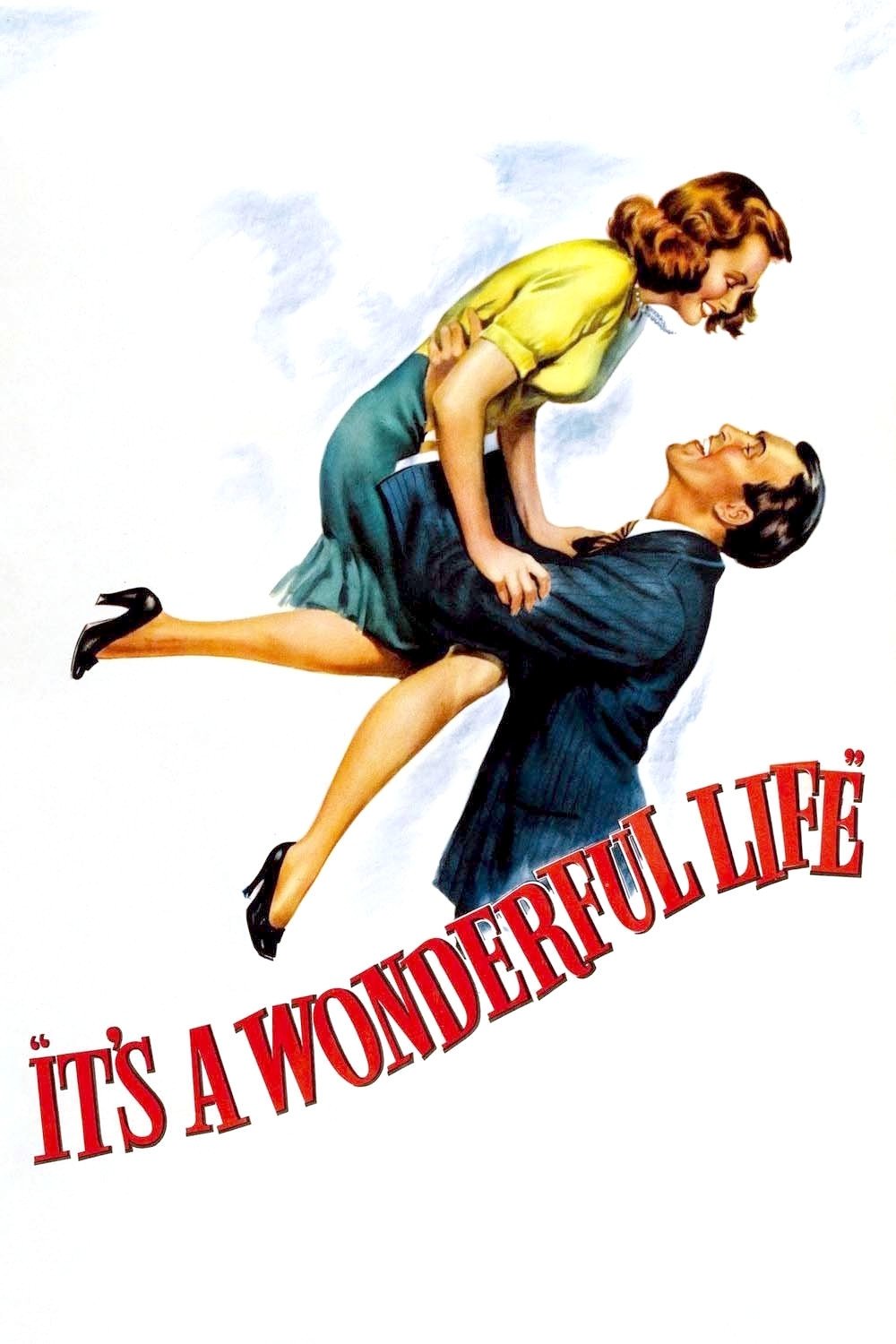
Plot Summary
Every time I revisit this classic, I find myself immediately swept up in the world that director Frank Capra weaves with such deft assurance. “It’s a Wonderful Life”, for me, isn’t just another 1940s drama; it’s a deeply affecting portrait of hope, sacrifice, and redemption, masterfully rooted in small-town Americana. The narrative centers on George Bailey, whose lifetime of selfless choices slowly chips away at his personal dreams. I experience his escalating frustration and sense of entrapment, watching him wrestle with the feeling that every step he takes is for others and not himself—an emotional conflict so quietly universal that I can’t help but see shades of my own life reflected there.
The film carefully unspools George’s journey, from his childhood ambitions through a series of missed opportunities and, ultimately, to his darkest hour beside that famous icy bridge. Without diving into spoilers, I’m constantly struck by how organically Capra ties together the consequences of George’s choices and the interconnectedness of the Bedford Falls community. As someone invested in stories of human frailty and resilience, I find it remarkable how the script allows us to empathize deeply with a protagonist on the brink, without ever lapsing into sentimentality or didacticism. The “what if I’d never been born?” proposition isn’t just a speculative device; in my view, it’s a mirror for anyone who has ever doubted their own worth in the world.
Note: Spoilers ahead for those who wish to preserve every secret of George’s journey—read with care. The narrative twist involving an ordinary man confronting his despair and being granted the chance to see the world as if he’d never existed is, for me, one of the most powerful cinematic setups ever conceived. I’m always moved by this central turn, because it transforms what could have been a simple holiday fable into an urgent exploration of what makes life valuable.
Key Themes & Analysis
What compels me most in “It’s a Wonderful Life”—and why I consider it essential viewing—are its enduring themes of sacrifice, community interconnectedness, and individual significance. George Bailey’s life, so full of small, unseen heroics, drives home the idea that ordinary acts can produce seismic change. I’m often floored by how gracefully the script navigates these existential questions; I see the film as a challenge to our culture of individualism, reminding me that a person’s true legacy is measured not in personal achievements, but in lives touched and made better.
Frank Capra’s direction is, in my opinion, impossibly warm and immersive. I’ve always admired how the cinematography by Joseph Walker uses soft light and deep focus to render Bedford Falls as both inviting and faintly mythic. The black-and-white palette is more than an aesthetic choice—it deepens the film’s sense of timelessness. Cinematic compositions linger on the faces of townspeople, capturing collective anxieties, joys, and sorrows; I often notice the careful groupings and framing that reinforce the closeness of this community.
James Stewart’s performance as George Bailey is, to my mind, one of the great achievements in American film acting. Stewart never overplays the role; his approach is grounded, vulnerable, and ineffably sincere. I’m constantly drawn to the way he modulates between affability and anguish, especially in moments where George’s composure cracks just slightly. Donna Reed, as Mary Hatch Bailey, provides more than just a warm counterpart—her quiet strength is the axis around which George’s life turns. Her scenes with Stewart pulse with understated intimacy, and I find myself repeatedly drawn to the film’s depiction of partnership as both comfort and crucible.
The supporting cast is formidable—Lionel Barrymore’s Mr. Potter delivers a villainy so subtle, I feel genuine dread every time he appears, not because he’s cartoonish, but because his self-interest and cold rationality are so distressingly real. I’m also struck by the way Capra resists simple moralism: even as the film embraces ideas of second chances and renewal, it doesn’t shy away from showing the weight of regret or the murkiness of good intentions gone awry.
On each viewing, I find the film’s social commentary startlingly resonant. The financial panic, the threat of bank collapse, and the tension between big business and community banks all feel startlingly relevant. Capra deftly illustrates that the fight for justice and kindness is constant, woven into the everyday fabric of small-town life. Even the film’s angelic intervention, which in lesser hands could veer toward schmaltz, is handled with a restrained blend of whimsy and gravity; Clarence is endearing not just as a plot device but as a vessel for exploring human frailty and hope.
Technically, I’m impressed by the film’s ability to blend genres. It feels rooted in rich drama, yet carries undercurrents of fantasy, romance, and even screwball comedy. The tonal balance is impeccable, and every choice seems motivated by a sincere desire to honor the complexities of American family life in the mid-20th century. From the evocative score to the lived-in production design, every detail contributes to a world that feels both familiar and enchanted.
My Thoughts on the Cultural Impact & Legacy
Having watched, studied, and recommended hundreds of films, I honestly believe that few films have shaped the language of American cinema quite like “It’s a Wonderful Life.” Its influence extends well beyond its initial box office performance (which, surprisingly, was underwhelming at first). For me, the film’s lore is inseparable from its afterlife: broadcast annually, rediscovered by new generations, and referenced throughout popular culture. I see its impact in everything from episodic TV (countless shows owe the “what-if” concept to Capra and Bailey) to the very idea of a “holiday movie” as a vehicle for serious moral reflection.
If I’m being candid, my own relationship with the film is deeply personal. Every time I watch it, I find a new facet of humanity illuminated—whether it’s the ache of lost dreams, the soothing balm of human connection, or the reminder that sometimes simply being present in the world is a radical act of faith. When curating retrospectives or writing about postwar American cinema, I always return to this film as the north star for heartfelt storytelling that never underestimates its audience’s intelligence or emotional acuity. Capra’s vision of small-town interdependency feels, to me, like an antidote to alienation, a quietly radical declaration that every life touches other lives in ways both grand and invisible.
What matters most, in my estimation, is the way the film continues to provoke deep questions about worth, despair, and redemption. It’s not just nostalgia that keeps it relevant; rather, it’s the enduring emotional honesty and generosity that make each revisit feel urgent and fresh. For those who care about the evolution of the family drama, or about representations of masculinity under pressure, this film sets the template—and then complicates it, in ways that echo throughout the decades.
Fascinating Behind-the-Scenes Facts
One of the things I love most about researching this film are the textured, sometimes magical details that lie beneath its well-worn surface. For instance, I learned that the iconic snow in Bedford Falls wasn’t made with the usual painted cornflakes, but through an innovative mix of foamite, water, and soap, a technical leap for Hollywood at the time. I’m fascinated by how this choice provided such a more realistic visual and auditory backdrop—so much so that the film won a technical award for this achievement. As someone who’s spent time on sets, I know how important those tiny sensory touches are to building immersion.
Another fact that continually piques my curiosity is the difficulty Frank Capra faced in casting George Bailey. James Stewart had recently returned from World War II and was unsure about his place in Hollywood, contemplating quitting acting altogether. Capra himself was anxious about how Stewart’s vulnerability—fresh from the trenches—would play onscreen. I find this intersection of personal and artistic uncertainty gives the performance a palpable rawness; there’s a lived experience visible in Stewart’s eyes that no amount of rehearsal could manufacture.
And finally, I’m captivated by the way Bedford Falls itself was constructed. The set was an enormous, fully built town sprawled over four acres, including live oak trees and working stores. I’m reminded every time I watch the film that this painstaking attention to the environment—rather than opting for obvious soundstage trickery—provided an authenticity that anchors the movie’s fantasy elements in tangible reality. Details like these help me understand why the film feels so much “bigger” than its modest premise first suggests.
Why You Should Watch It
- The film offers a profound meditation on what defines a life well-lived—and how small acts of kindness can have a generational impact.
- James Stewart’s performance is a career-defining turn that brings unparalleled psychological depth and vulnerability to the archetypal “everyman.”
- Frank Capra’s direction and innovative technical choices make the film visually and emotionally immersive, while its themes around community and resilience remain every bit as urgent today.
Review Conclusion
If I had to distill my feelings about “It’s a Wonderful Life” into a single statement, it’s that the film remains, to me, the rare classic that actually deserves its reputation. Every time I revisit it, I find a new secret, a freshly resonant motif, or a line I want to remember for those lonely moments when hope feels far away. Its embrace of empathy, mutual responsibility, and the possibility of redemption never feels cloying or simplistic; instead, it weaves a tapestry of ordinary courage that speaks louder than any speechifying ever could. I’m confident in awarding this film a 5/5 star rating, not just for its historic significance, but for its ongoing power to move, inspire, and comfort—and for the way it compels me, year after year, to reflect on what really matters.
Related Reviews
- “Meet John Doe” (1941, dir. Frank Capra): I recommend this film for its similarly incisive exploration of idealism, mass influence, and the capacity for one person to inspire communal action, all delivered with Capra’s trademark blend of wit and sincerity.
- “A Tree Grows in Brooklyn” (1945, dir. Elia Kazan): Like “It’s a Wonderful Life,” this drama foregrounds small triumphs, familial resilience, and coming-of-age adversity within a specific American community, offering an equally sensitive yet unsentimental approach to hope amidst hardship.
- “The Shop Around the Corner” (1940, dir. Ernst Lubitsch): As another showcase for James Stewart, this warmhearted romantic comedy shares the themes of longing, self-discovery, and the transformative power of simple gestures.
- “Tokyo Story” (1953, dir. Yasujirō Ozu): Though stylistically distinct, I see a thematic kinship in its meditation on generational sacrifice, the passage of time, and the way ordinary lives silently shape those around them.
For readers looking to go deeper, these perspectives may help place the film in a broader context.
🎬 Check out today's best-selling movies on Amazon!
View Deals on Amazon