
Plot Summary
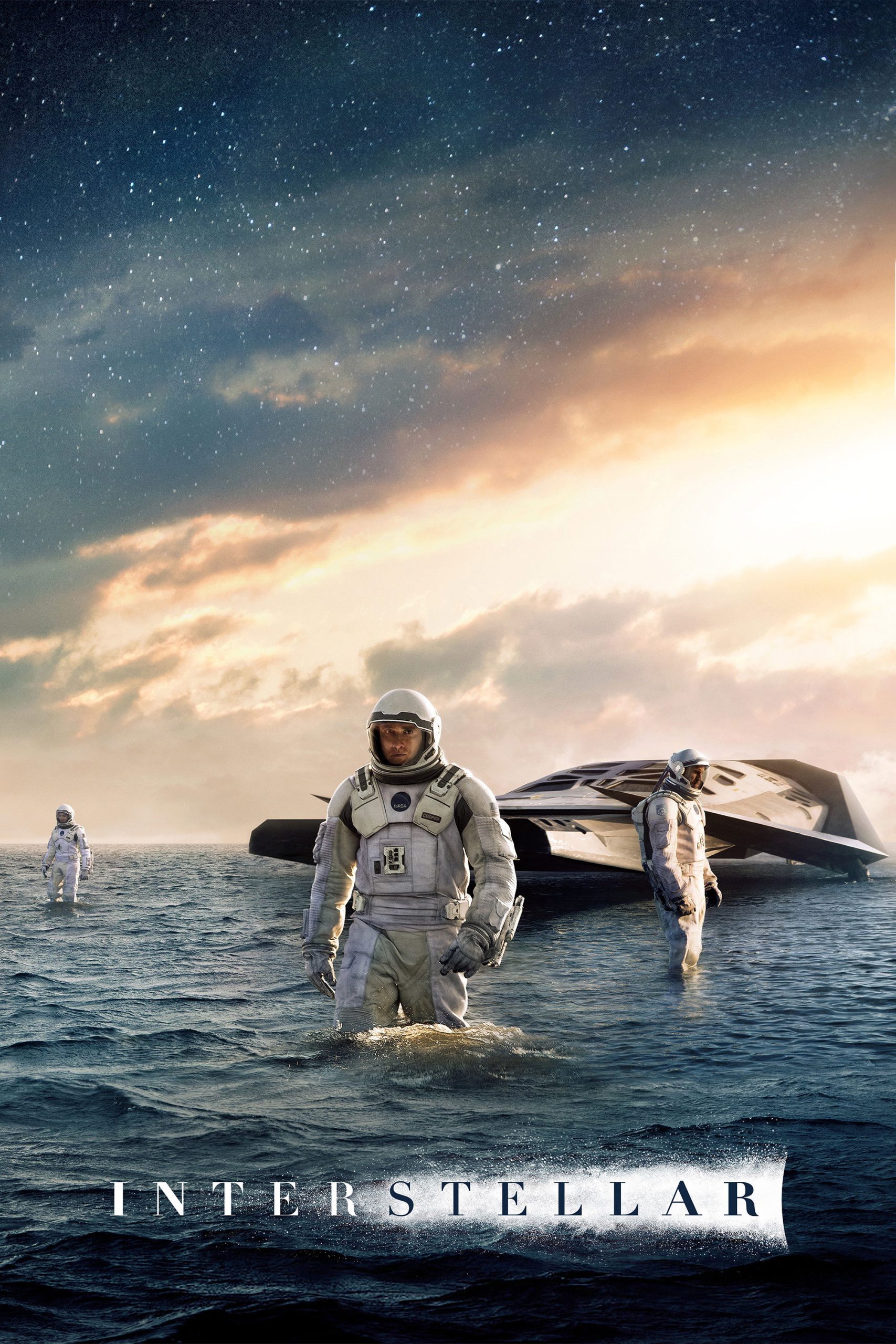
Right from my initial viewing, “Interstellar,” helmed by Christopher Nolan, struck me as so much more than a science fiction film—it’s a meditation on the human spirit draped in the sweeping spectacle of space. For those yet to experience it, let me thread a careful line and offer a glimpse without unraveling its most guarded secrets. The story orbits around Cooper, a former NASA pilot turned reluctant farmer, fighting for survival in a world blighted by famine and environmental collapse. What first captivated me was not just the scale of the mission—a desperate voyage through a mysterious wormhole in search of a new home for humanity—but the intensely personal stakes wrapped up in every decision. The ache of family separation, particularly the fractured bond between Cooper and his daughter Murph, provided unexpected emotional ballast.
Though the narrative ventures across planets governed by unknown physics and time itself proves malleable, the heart of the story remains agonizingly earthly—anchored by love, regret, sacrifice, and hope. To go further is to wade into spoiler territory, but I have to note how each planet’s challenges serve as mirrors for the characters’ inner conflicts. If you haven’t seen it, rest assured that Nolan rewards curiosity, but demands your full attention as he slyly weaves together quantum theories and heartstrings alike.
Key Themes & Analysis
What fascinates me most about “Interstellar” is how it wields the infinite canvas of outer space to ask fiercely intimate questions. To my eye, the central theme is the tension between survival and love—do we endure merely to persist, or is our ability to care, to connect across gulfs of space and time, what truly endows us with meaning? I found myself utterly absorbed by the film’s assertion that love is a force as potent and mysterious as gravity. Watching Cooper and Murph’s relationship stretched and strained by relativity—decades passing in minutes, messages lost and found across light years—delivered a kind of cinematic heartbreak I rarely encounter in blockbusters.
From the very first frame, the cinematography by Hoyte van Hoytema drew me in. What elevates “Interstellar” above its peers is the intricate dance between expansive vistas—dust storms rolling across dying fields, the cold elegance of Saturn’s rings—and the claustrophobic interiors of battered spacecraft. I remember how the camera would linger on Cooper’s face, registering the weight of choices with subtle nuance. There’s a precision in the way the film blends practical effects and IMAX photography that, for me, makes the physical reality of space feel immediate and tactile. Nolan’s penchant for realism—eschewing the glossy artificiality often found in sci-fi—roots even the most fantastical sequences in an elemental believability.
What truly captured my attention was Nolan’s direction, as he orchestrates ensemble performances and speculative science with a blend of control and ambition I rarely see in mainstream cinema. The acting deserves its own mention. Matthew McConaughey, delivering a performance raw and soulful, made Cooper’s longing and determination utterly believable. Other standouts for me included Jessica Chastain as the grown Murph—her resilience and complexity grounding the film’s more esoteric moments in deeply human pain. Anne Hathaway’s portrayal of Dr. Brand managed to be both cerebral and emotionally vulnerable, especially as the film’s ethical dilemmas reached their crescendo.
Strong writing, particularly in the film’s scientific dialogues, reminded me how rare it is to see philosophical questions about physics, time, and morality rendered both accessible and emotionally resonant. The film’s use of real-world theories, such as wormholes and relativity, isn’t just window dressing; instead, it underpins a story about legacy, hope, and the willingness to take leaps into the unknown. I often think that “Interstellar’s” grandest achievement lies in its refusal to settle for easy answers—each sequence bristles with ambiguity, curiosity, and the persistent urge to reach for something beyond our grasp.
My Thoughts on the Cultural Impact & Legacy
For me, “Interstellar” reshaped my understanding of what big-budget cinema could aspire to. In an age of sequels and comic book adaptations, Nolan dared to make a film that was both a mind-bending puzzle and a raw, emotional journey. I consider its influence tangible, not only through the slew of science-driven films that followed—each trying to replicate its cerebral tone—but also in how the conversation about physics and humanity seeped into popular media. I recall endless debates with friends about the nature of time, love, and destiny, all sparked by a single viewing. Its partnership with real scientists, particularly Kip Thorne, sparked genuine interest in complex astrophysical concepts among audiences who might never have glanced at a physics textbook.
On a personal level, “Interstellar” helped me reevaluate how speculative fiction could be a force for not just wonder, but self-examination. Unlike other films that dazzle and fade, this one lingers. Whenever I wrestle with questions about my own legacy, or find myself grasping for connection over distance and time, I remember those silent, sweeping shots of Cooper drifting—alone, hopeful, determined to do right by those he loves. This film cemented for me the idea that the most enduring science fiction blends cosmic possibility with the oldest human fears and hopes. It occupies a permanent place in my top tier not just for its technical artistry, but for its insistence that our smallest emotions matter on the largest stage imaginable.
Fascinating Behind-the-Scenes Facts
What always impresses me about “Interstellar” is how the boundary between technical rigor and creative ambition blurs behind the scenes. The first fact that jumps out: Kip Thorne, the Nobel Prize-winning physicist, wasn’t just a consultant, he co-created the film’s scientific backbone. I remember reading about the months spent deriving mathematical equations to accurately depict black holes and wormholes on screen. In fact, the visualization tools developed for the film proved so revolutionary, they led to separate scientific papers on black hole lensing effects—a rare example of filmmaking directly advancing scientific understanding.
The commitment to authenticity spills over into casting as well. I found it fascinating that Matthew McConaughey was not Nolan’s obvious first pick. In early development stages, the role of Cooper was eyed by other Hollywood stars but once McConaughey came on board, he brought an understated warmth and urgency that, in my mind, is utterly irreplaceable. His approach infused the film’s often cerebral narrative with grounded, genuinely moving moments—especially those now-iconic scenes watching old video messages or gazing wordlessly at distant planets.
One more behind-the-scenes fact I love sharing with fellow cinephiles: the majority of the spacecraft interiors and even planetary settings were practical builds, not just CGI. Nolan had full-scale spaceships constructed so the actors could physically interact with their environment—this choice enabled the cast’s reactions to feel visceral and unforced. I recall stories from the set describing the day-long treks to remote locations in Iceland to shoot the ice planet sequences—those howling winds and barren vistas weren’t post-production tricks, but the real, raw world brought into Nolan’s vision. It’s these details, to me, that elevate “Interstellar” from impressive spectacle to unforgettable, lived-in journey.
Why You Should Watch It
- The emotional depth—I believe few science fiction films have ever made me care so much about their characters’ fates, blending hard science with real, aching love and loss.
- Its visual and technical mastery—Every frame is crafted for maximum impact, immersing me in convincingly rendered cosmic phenomena (those black hole shots haunt me still).
- The thought-provoking questions—”Interstellar” made me ponder the future of humanity, our relationship with technology, and the mysteries of the universe in ways few movies ever have.
Review Conclusion
After more than a dozen viewings, I still find new layers in “Interstellar”—it remains one of the few films that has moved me both emotionally and intellectually every single time. There are moments, especially in the haunting score by Hans Zimmer and the breathless quiet of its spacewalk scenes, that stop me in my tracks. If pressed, I’d say “Interstellar” achieves that rarest of cinematic feats: it makes me feel small and limitless, lonely and deeply connected all at once. I enthusiastically rate it 4.5 out of 5 stars—the .5 withheld only for the rare narrative stumble as it reaches for transcendence. It’s an experience I think about long after the credits fade, and one I believe is essential viewing for anyone who’s ever looked up at the night sky and wondered what might be waiting just beyond our reach.
Related Reviews
- “Arrival” (2016) – I recommend this for viewers who crave science fiction grounded in complex emotional journeys and linguistics rather than spectacle. Much like “Interstellar,” it investigates love, time, and loss through human connections that transcend conventional storytelling.
- “Ad Astra” (2019) – To me, this is a spiritual companion to “Interstellar,” placing a lone astronaut at the center of a vast cosmic mystery with a story deeply rooted in paternal relationships and existential anxiety. Its meditative pace and grand visuals echo many strengths found in Nolan’s vision.
- “Contact” (1997) – If “Interstellar” lit a fire for science-driven drama, “Contact” is another film where cosmic wonder and personal faith intersect. I often think about how both films use the language of astrophysics as a metaphor for seeking connection across impossible distances.
- “Gravity” (2013) – Alfonso Cuarón’s near-real-time survival thriller is a technical showcase, rich with startling, immersive visuals and a focus on individual resilience. For viewers who loved the practical, tactile feel of “Interstellar’s” space sequences, “Gravity” delivers another unforgettable voyage.
For readers looking to go deeper, these perspectives may help place the film in a broader context.
🎬 Check out today's best-selling movies on Amazon!
View Deals on Amazon