
Plot Summary
Every time I revisit Wong Kar-wai’s masterful meditation on longing and restraint, I am caught off guard by how quietly the story unfolds, pulling me into a universe built from the smallest gestures and briefest exchanges. Set in Hong Kong during the early 1960s, the film follows the neighboring lives of Su Li-zhen and Chow Mo-wan, played by Maggie Cheung and Tony Leung Chiu-wai. Both characters are married, though their respective spouses remain mostly absent, a deliberate choice that to me amplifies the thematic sense of loneliness and unfulfilled desire. As suspicion over their partners’ fidelity grows, I watched Su and Chow’s lives begin to intersect in increasingly intimate ways; their bond, rather than offering easy comfort, is charged with the bittersweet knowledge that their connection is both a balm and a wound.
The plot is not driven so much by major actions as by what is left unsaid and undone—a concept I found absolutely magnetic. While they attempt to unravel the truth about their spouses, what really unfolds is a delicate, slow-burning emotional story I could feel in the smallest movements: a shared bowl of noodles, a brush of hands as they pass in a narrow hallway. Before I share a key spoiler, know that much of the film’s tragic poetry resides in its restraint and unanswered questions: the sense of inevitability is only reinforced as Su and Chow strive to maintain their dignity and moral boundaries, even as they drift ever closer together.
With every rewatch, I notice new layers in this mosaic of daily routine and subtle ache. Rather than providing neat resolutions, the plot instead immerses me in the ache of what cannot be—leaving the endings not so much open as hauntingly incomplete.
Key Themes & Analysis
What struck me most from the first viewing was the film’s singular focus on unspoken desire. More than a love story, “In the Mood for Love” allows silence, glances, and half-turns to do the heavy lifting. For me, this isn’t only about personal heartbreak, but about the way societal expectations can become prisons—a recurring motif explored through the film’s oppressive settings and the characters’ careful interactions.
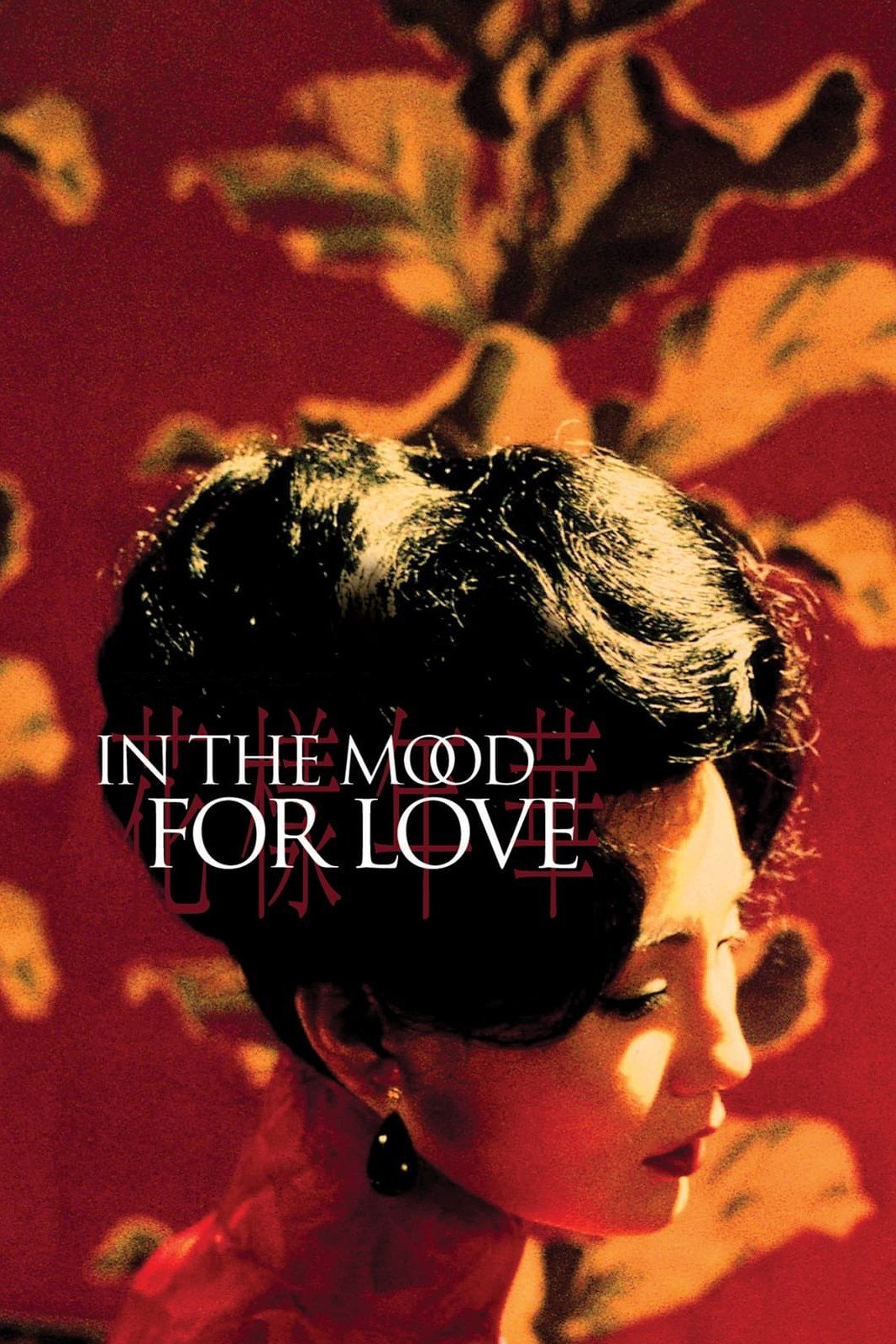
Wong Kar-wai constructs mood as meticulously as he arranges visuals. He employs Christopher Doyle’s cinematography to transform narrow corridors, rain-soaked alleyways, and patterned wallpaper into active participants in the drama. Again and again, I found myself hypnotized by how the film’s palette of reds, browns, and deep shadows amplifies the repressed passions simmering under the surface. Every frame is elegantly choreographed: the camera lingers on the characters’ backs, focuses on subtle movements, and often leaves faces in soft focus, emphasizing absence and yearning over direct confrontation. The result is an exquisite visual language that suggests yearning without ever declaring it.
I can’t discuss this film without highlighting the power of Maggie Cheung’s and Tony Leung’s performances. Cheung, in particular, delivers heartbreak almost entirely with her posture, wardrobe, and averted gaze. At every turn, I could read her internal conflict in the way she moves through her tiny apartment or adjusts her cheongsam. Leung offers a study in restrained pain, his smiles and soft interrogations hiding a soul battered by disappointment.
Sound design and score are central to why the film lingers in my memory. Repeated motifs—the haunting waltz of Shigeru Umebayashi’s “Yumeji’s Theme,” the muffled radio broadcasts, the repetition of “Quizás, Quizás, Quizás”—wrap the story in nostalgia and melancholy. Editing choices, such as the elliptical cuts and slow-motion sequences, compound this mood. To me, these technical details underline the theme that the greatest dramas often take place internally, unseen by the outside world. “In the Mood for Love” isn’t just about a love that nearly was, but about the very nature of missed connections and the small, relentless ache of ‘what if?’ that shapes entire lives.
Beyond technical choices, what I find most affecting is the film’s fearless commitment to ambiguity and atmosphere. Wong Kar-wai is not interested in providing answers or catharsis. Instead, he dares us to linger in the discomfort of unresolved emotions, and I find that extraordinarily brave as a directorial move.
My Thoughts on the Cultural Impact & Legacy
When I reflect on the legacy of “In the Mood for Love,” I see a film that shattered my assumptions about romance in cinema. Wong Kar-wai redefined how mood, color, and negative space could carry emotional weight; this went on to influence an entire wave of international directors, but its real significance for me lies in how it rewired my own understanding of cinematic storytelling.
For someone who curates and critiques films for a living, “In the Mood for Love” stands out as a turning point—not just in Asian cinema, but globally. It demonstrated that audiences could be trusted to sit with discomfort and ambiguity, something often avoided in mainstream film. Its lingering influence is visible, in my view, every time I come across a film that considers silence as important as dialogue, or one that trusts color temperature and music to express what cannot be spoken.
I believe the film’s resonance endures because it taps into universal experiences—the fleeting connections, the choices left unmade, the way societal rules constrain even the most private wishes. My own appreciation for “In the Mood for Love” has deepened with each decade. It’s a film that I return to not for answers, but for the beauty of its questions and the mirror it holds up to my own memories of longing, regret, and self-concealment. It’s not hyperbole to say that its impact on the romance/drama genre is seismic; countless films have borrowed from its visual palette or narrative subtlety, but few have achieved the same sense of aching intimacy.
Fascinating Behind-the-Scenes Facts
Delving into the production history of “In the Mood for Love” has, for me, only increased its mystery and appeal. One fact that fascinates me is Wong Kar-wai’s famously improvisational approach to shooting. The film’s production extended over a year, with scripts and scenes often rewritten on location. This method, while demanding, led to an organic sense of discovery for both cast and crew—something I believe is vividly present in the final product’s atmosphere of uncertainty and spontaneity.
Another extraordinary detail I’ve uncovered involves Maggie Cheung’s iconic wardrobe. The director and actress collaborated closely on the design of her cheongsams, resulting in over 20 unique dresses crafted for Cheung’s character. Each pattern and color was carefully chosen to mark the passage of time and to subtly signal the emotional states of Su Li-zhen. For me, these sartorial choices are as expressive as any line of dialogue, and they are indelibly tied to the film’s unique sense of time and place.
I was also intrigued to learn that initially, the story was conceived as a trilogy. Wong Kar-wai originally planned to make a series of films tracing the characters over decades, but the complexity of production and the dense, evocative narrative steered him towards completing just this one. The open-ended feeling I get from the final sequence makes even more sense knowing this—to me, there’s a sense of vast, unseen stories lingering just beyond the final frame.
Why You Should Watch It
- If you crave films that reveal character through nuances rather than plot twists, this is a masterclass in emotional storytelling.
- The cinematography offers some of the most exquisite visual poetry I’ve encountered, rewarding any viewer who treasures atmosphere and visual detail.
- You’ll experience a rare film that trusts its audience with ambiguity, inviting you to invest emotionally rather than spoon-feeding clear answers.
Review Conclusion
For me, “In the Mood for Love” is the kind of film that changes shape each time I watch it; it’s never the same experience twice. Its genius lies in its ability to evoke potent emotions from restraint and absence rather than grand declarations. Wong Kar-wai’s vision, paired with Tony Leung and Maggie Cheung’s unforgettable performances, achieves what only the greatest films can: lingering long after the credits roll. I would rate it an undeniable 5/5—not just as a masterwork of romantic cinema, but as one of the most delicately impactful films I’ve had the pleasure to analyze and recommend.
Related Reviews
- 2046 (2004) – I see this as the spiritual follow-up to “In the Mood for Love,” resonating with those of us haunted by lost time and impossible romances. Wong Kar-wai pushes his meditative style even further, making it an essential companion piece.
- Portrait of a Lady on Fire (2019) – I found echoes of subtle longing and visual lyricism in Céline Sciamma’s portrait of unspoken love and the limits of expression. The film’s restrained passion and focus on fleeting moments make it especially meaningful for fans of Wong’s style.
- Tokyo Story (1953) – Watching Ozu’s classic, I’m reminded of how stillness and formality can hold powerful emotions at bay—much like in Wong’s film. The quiet melancholy and focus on relationships across time give it a similar, contemplative texture.
- Call Me by Your Name (2017) – Luca Guadagnino’s sensual, sun-drenched tale of first love speaks to the aching, transformative nature of longing and memory that I value in “In the Mood for Love.” Both films rely less on plot and more on emotional mood to deliver their impact.
For readers looking to go deeper, these perspectives may help place the film in a broader context.
🎬 Check out today's best-selling movies on Amazon!
View Deals on Amazon