
Plot Summary
From the very first frame of “Ikiru,” directed by Akira Kurosawa—a filmmaker whose genius has influenced global cinema—I felt a strange tugging at my own sense of purpose. Classified as a humanist drama, this postwar Japanese classic drew me into the life of Kanji Watanabe, a bureaucrat whose existence feels as mechanical as the paperwork piling on his desk. The movie isn’t about thrilling plot twists; rather, it’s about the piercing ache of time slipping through our fingers. Watanabe’s routine is abruptly upended by a grim medical diagnosis, and suddenly, his quiet desperation leaps off the screen. His quest to reclaim meaning in his remaining days is depicted with such honesty that I couldn’t help but see pieces of myself in his struggle.
“Ikiru” draws us into the drab corridors of Tokyo’s city office, where Watanabe has spent decades rubber-stamping documents and barely living. When he realizes he hasn’t truly experienced joy or left a mark, his journey toward fulfillment becomes quietly heroic. Each encounter—with his estranged son, with colleagues who barely know him, with a free-spirited young woman—forces him, and vicariously, me, to confront the weight of wasted years. I marveled at how Kurosawa suspends the film in moments of silence, suggestion, and introspection, delivering a story where small acts become seismic.
Spoiler Warning: The film’s pivotal project—Watanabe’s determined efforts to transform a neglected, sewage-filled lot into a children’s park—forms the backbone of his redemption and the movie’s emotional crescendo. But to Kurosawa’s credit, even as the redemption arc unfolds, he denies us any simplistic catharsis. The movie closes not with fanfare, but with lingering questions about the nature of legacy and the societal forces that grind down the individual spirit.
Key Themes & Analysis
“Ikiru” speaks to me in a way few films ever have about the universal dread of mortality and the human desire to live meaningfully. What elevates it is Kurosawa’s refusal to offer easy answers. Instead, he paints life as messy and bureaucratic, full of missed opportunities and half-remembered connections. Every frame seems imbued with the director’s own questioning of how one should spend one’s precious time. The city office, with its labyrinthine files and indifferent coworkers, felt to me like a metaphor for all the ways that institutional inertia can slowly snuff out our optimism.
I was struck by how Kurosawa’s sharp composition uses urban settings and tight interiors to reflect the protagonist’s isolation. The cinematography, with its haunting use of shadow and framing within frames, creates a psychological prison I could almost feel closing in around me. This is most apparent in the scenes where Watanabe sits silently, lost in thought, the world oblivious to his inner turmoil. The camera lingers on his face with such patience that I had to confront my own discomfort with being still and truly looking at another person’s suffering.
Kurosawa’s directing choices are, to my eyes, nothing short of masterful. His pacing is deliberate, making every quiet exchange and sidelong glance matter. The film’s second half, structured as a series of recollections by Watanabe’s coworkers after his death, took me by surprise. It’s here that the movie’s central questions of legacy and recognition are turned upside down; those who survive Watanabe simultaneously lionize and diminish him, their own self-deceptions on full display. Never has bureaucracy felt more sinister—or more darkly comedic—than in this sequence of self-serving speeches and quiet admissions.
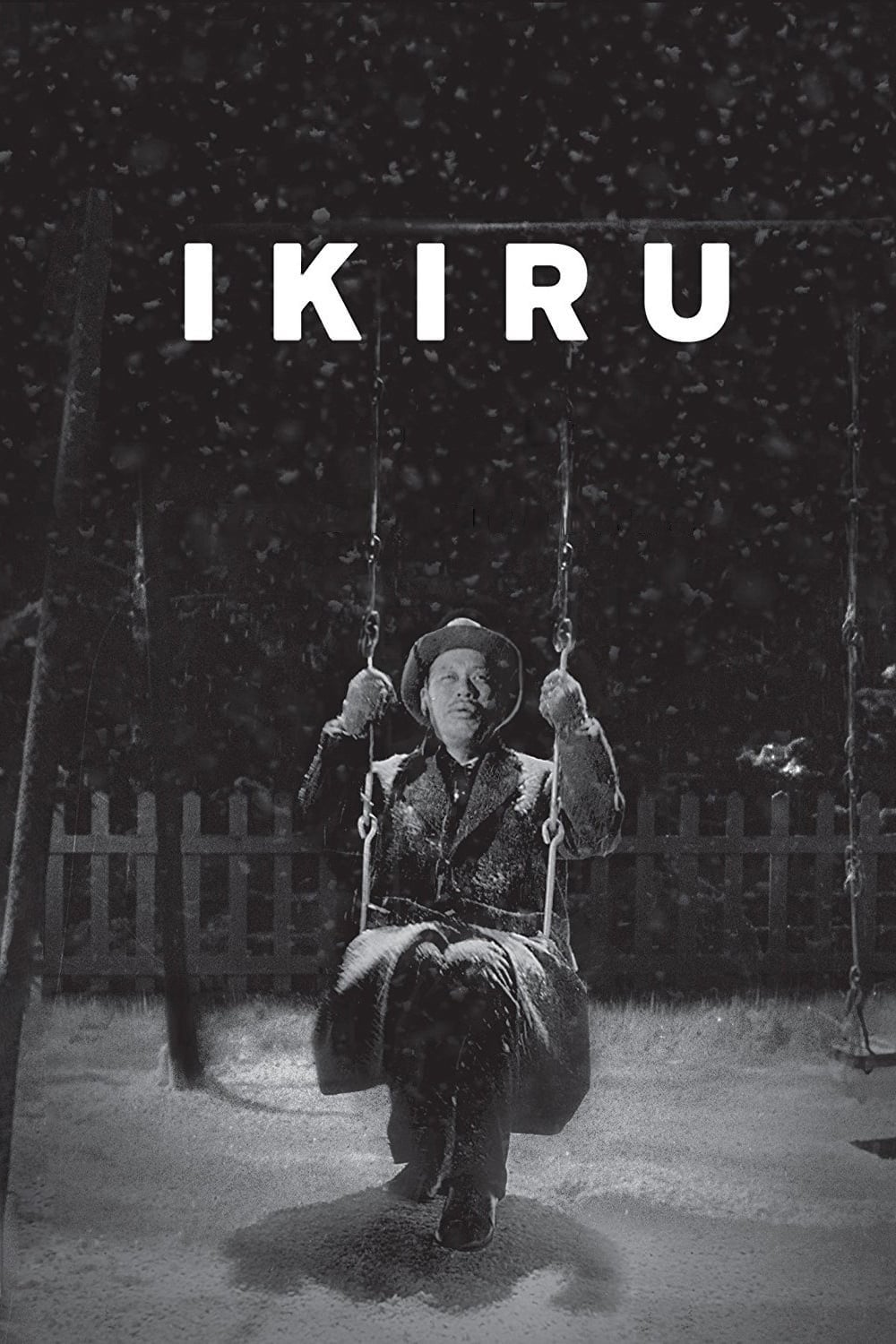
I have to single out Takashi Shimura’s portrayal of Watanabe as one of the most heartbreakingly honest performances I’ve ever seen. His haunted eyes convey volumes of regret, wonder, and finally, a fragile sense of peace. There’s a moment, late in the film, when Watanabe sits on a swing in the park he has championed, singing gently to himself—an image that has stayed with me for days. Shimura exposes the raw, trembling humanity at the heart of Kurosawa’s philosophy: the radical assertion that even the meekest life, if lived with intention, can ignite beauty in the world.
Throughout, I felt the film asking me, personally, “What will you do with the time that is left?” It’s a quietly shattering question, and one that repeated in my thoughts long after the credits rolled.
My Thoughts on the Historical & Social Context
What truly fascinates me is how “Ikiru” grew out of the anxieties and challenges of postwar Japan. When I reflect on the era—Tokyo in 1952—it’s clear that Japanese society was grappling with a crisis of identity and purpose. People were rebuilding not just infrastructure but also their sense of national and individual meaning. I can’t help but read Watanabe’s bureaucratic malaise as an allegory for Japan’s own soul-searching in the wake of World War II. The relentless paperwork and dehumanizing hierarchy reflected a society struggling to reconcile tradition with the dizzying pace of modernization.
There’s something very moving to me about how Kurosawa frames the struggle to find purpose as both a personal and a collective challenge. Audiences in 1952, having lived through loss, defeat, and occupation, would have immediately recognized the forces of alienation that threaten Watanabe’s spark. At the same time, the film’s gentle critique of government inertia feels uncannily prescient to me today. Whether I’m watching the frustration of citizens trying to get their voices heard, or the indifference of middle managers, I’m reminded that the same social forces that can smother individual initiative still exist in our institutions today.
For me, “Ikiru” endures because it balances its historical specificity—this deep sense of weariness in a recovering nation—with a timeless call for personal authenticity. Every time I watch, I can’t help but reflect on my own complicity in systems that prioritize comfort over courage. If anything, Kurosawa’s masterpiece challenges me to ask: am I, too, simply going through the motions, or will I insist on doing something, however small, that brings light to someone else?
Fact Check: Behind the Scenes & Real History
My research into the background of “Ikiru” has always turned up riveting tidbits. For one, I’m endlessly fascinated by Kurosawa’s inspiration for the script. While many assume the story sprang directly from his imagination, Kurosawa himself publicly acknowledged the influence of Leo Tolstoy’s novella, “The Death of Ivan Ilyich.” What amazes me is how he adapts the Russian existential torment to the unique rhythms and anxieties of urban Japan, transforming what could have been mere homage into a profound original work.
Another striking fact I unearthed: Trouble with casting Watanabe almost upended production. Takashi Shimura was not Kurosawa’s first or only choice—legend has it the director considered several established actors but returned to Shimura for his ability to embody both the weight of despair and the spark of hope. The gamble paid off; Shimura’s performance is now widely regarded as one of the greatest in cinema history, and I have to agree with that assessment after seeing how he breathes real gravitas into every moment on screen.
Finishing with a detail that always boggles my mind: The film’s bureaucratic settings were meticulously recreated using reference photos and government building plans from Tokyo’s real city offices. I’ve read how Kurosawa insisted on inauthentic lighting and set dressings to create a sense of oppressive monotony—the dirty windows, endless stacks of paperwork, and harsh shadows were all designed to evoke the real soul-crushing environments of public life. It’s authenticity not for its own sake, but in service of a deeper emotional truth.
Why You Should Watch It
- It’s a deeply personal meditation on mortality and meaning that may change the way you look at your own life.
- Kurosawa’s direction and Takashi Shimura’s performance together create a level of authenticity and poignancy rarely matched in cinema.
- The film’s critique of bureaucracy and search for purpose are just as relevant today as they were seventy years ago, making it urgently modern in its emotional power.
Review Conclusion
I walked away from “Ikiru” feeling quietly transformed. What I thought would be a somber meditation on death turned out, for me, to be an invitation to rediscover gratitude and intentional living. I was moved by the depth of compassion running through Kurosawa’s direction, and even more so by how Takashi Shimura turned internal crisis into an epic of understated courage. The emptiness of bureaucratic life, the ache of time passing, the stubborn insistence on hope—they’re all here, rendered with a clarity that made me rethink not just cinema, but my own values.
For its humanistic punch, technical craftsmanship, and emotional resonance, I have to rate “Ikiru” a 5/5. There are few films I would call essential viewing—this is, to my mind, one.
Related Reviews
- Tokyo Story (1953, directed by Yasujirō Ozu): Ozu’s masterpiece, like “Ikiru,” interrogates generational tension and the quietly devastating effects of everyday life. I recommend it for its humane look at family bonds and urban change—themes that echo Kurosawa’s but are handled with Ozu’s uniquely minimalist touch.
- Wild Strawberries (1957, directed by Ingmar Bergman): Watching Bergman’s exploration of an elderly man’s search for significance, I was reminded of Watanabe’s odyssey. Both films transform the fear of death into a journey toward acceptance, delivered with piercing psychological insight.
- Still Walking (2008, directed by Hirokazu Kore-eda): Kore-eda’s delicate family drama takes place in present-day Japan but, to me, captures the same spirit of regret, reconciliation, and understated beauty found in “Ikiru.” It’s a film about legacy, memory, and how the smallest actions shape our deepest relationships.
- The Death of Mr. Lazarescu (2005, directed by Cristi Puiu): I suggest this Romanian film for anyone fascinated by the bureaucracy and medical systems that “Ikiru” exposes. Its black humor and raw realism make it a compelling modern companion piece for Kurosawa’s classic.
If you want to explore this film beyond basic facts, you may also be interested in how modern audiences respond to it today or whether its story was inspired by real events.
🎬 Check out today's best-selling movies on Amazon!
View Deals on Amazon