
Plot Summary
When I first watched Howl’s Moving Castle, I was drawn in by an ethereal atmosphere that makes it feel like you’re stepping into a world where whimsy and danger coexist. Directed by Hayao Miyazaki, a name that immediately conjures an expectation of magic and depth, this film lands firmly within the fantasy genre, but I quickly realized that it offers so much more than just spellcasting and flying castles.
The heart of the story revolves around Sophie, a modest young woman whose comfortable life working in her family’s hat shop is upended by a fateful encounter with the enigmatic wizard Howl. After a brief but significant run-in with the Witch of the Waste, Sophie is cursed with an elderly body—a transformation that forces her to journey out into the world, seeking both a cure and a sense of self she’d never had to confront before.
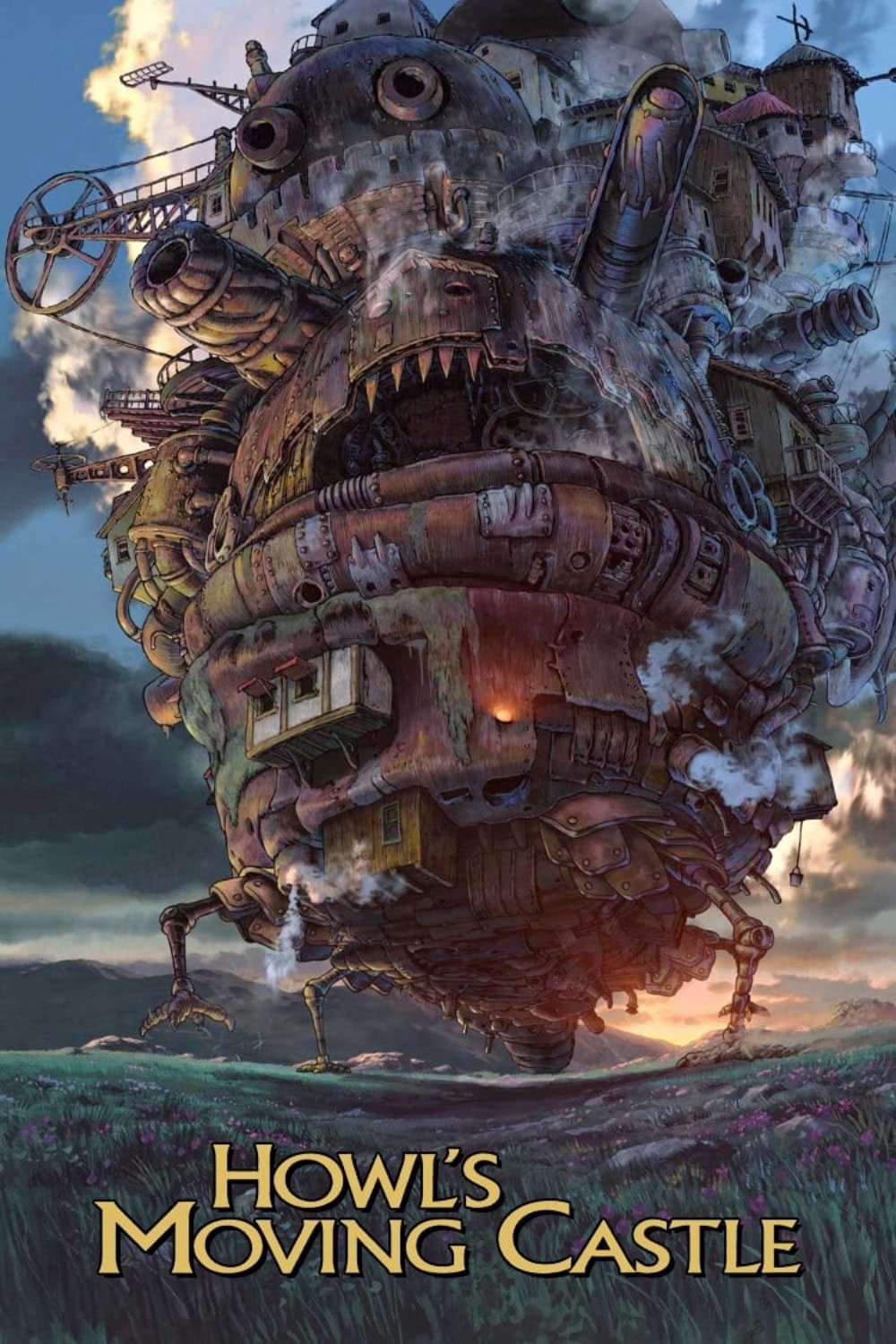
It’s in the titular moving castle, an impossibly ramshackle structure brimming with surprises, that Sophie finds herself drawn into a conflict that’s much larger than herself: war clouds looming over the land, magical contracts with dangerous implications, and above all, the inscrutable heart of Howl himself. The film follows her navigation through this world, offering moments of bittersweet vulnerability alongside inventive visual spectacle. Avoiding major spoilers, I can say that Sophie’s journey is as much about inner strength and purpose as it is about breaking curses.
For those sensitive to spoilers: a central reveal about the nature of Howl’s heart and the war’s destructive arc reframes the entire narrative in dramatic fashion, but I won’t delve into those secrets here—I believe the emotional resonance is strongest when discovered unspoiled.
Key Themes & Analysis
What struck me most while watching Howl’s Moving Castle was its meditation on transformation: external, internal, and even environmental. The transformation of Sophie from youth to old age is immediately apparent, but what lingers is seeing how this shift frees her rather than confines her. I found it profoundly moving how the film suggested that releasing oneself from societal expectations—beauty, timidity, or passivity—can catalyze true growth. As I watched Sophie navigate her new form, I was reminded of how change, even when forced upon us, can unexpectedly unlock our latent strengths.
Visually, the film weaves together painterly backgrounds and bustling, kinetic animation; everything seems touched by the wind, imbued with a transience that makes the world feel alive. Miyazaki’s attention to tactile details—the clacking machinery of the castle, the bubbling of a domestic kitchen shared by odd companions—reminded me of my own emotional response to tactile memory, grounding the fantasy with lived-in authenticity. The castle itself becomes a character, its shifting configuration reflecting the tumultuous emotions of its inhabitants.
As a viewer who gravitates toward stories with nuance, I appreciated that the war setting isn’t presented as noble or romantic, but as devastating, chaotic, and utterly senseless. Miyazaki’s pacifist leanings emerge in how the violence is shown more as loss than glory. It’s easy to see the older Sophie as a commentary on the wisdom gained through hardship—and also as a plea for empathy and compassion, particularly in a world tilting towards unrest. I found myself reexamining how we define heroism when courage quietly manifests as perseverance rather than outright defiance.
Cinematography plays a subtle but critical role. The use of color—the golden haze of sunsets, the dense mist hiding distant cities—mirrors the characters’ emotional states. I was captivated by how the animation lingers on small gestures: Sophie’s cautious footsteps, Howl’s flight through a war-torn sky, the gentle flickering of Calcifer, the fire demon who warms both castle and soul. These choices build a world that feels personal and immediate, despite its magical trappings.
On the acting front, the voice performances (both in Japanese and the English dub) stand out. When I listen to Chieko Baisho’s Japanese performance, I’m struck by the reflective wisdom she imparts to Sophie. Christian Bale’s English Howl offers a wistful, almost haunted flavor that deepens Howl’s contradictions. The supporting cast—especially Jean Simmons as the English Sophie—bring warmth and melancholy, infusing what could easily be broad archetypes with subtlety. I frequently found myself connecting to Sophie not through her grand speeches, but her small sighs and pauses—the kind of quiet resilience that feels so rare in animation.
More than anything, I walked away from Howl’s Moving Castle convinced that Miyazaki uses fantasy to critique real-world anxieties: the destruction wrought by needless conflict, the precariousness of youth as it meets adulthood, and the hope that compassion can heal even when the world seems fractious. That blend of gentle optimism and clear-eyed realism is what keeps the film lingering in my memory, long after the credits roll.
My Thoughts on the Cultural Impact & Legacy
Looking back, Howl’s Moving Castle holds a personal fascination for me not just as a fantasy film, but as a catalyst that redefined what animated movies could accomplish. When the film first screened outside Japan, I remember the way it sparked a seismic shift in the way audiences—and I—perceived animation’s potential for addressing adult themes. Its success at international festivals, including an Academy Award nomination, felt like validation for those of us who already saw animation as a legitimate cinematic art form, not merely children’s entertainment.
It’s stayed with me because Miyazaki’s vision resonates far beyond aesthetic beauty; it’s a pointed, urgent anti-war statement layered in allegory. In a time when so many blockbusters glorified conflict, Howl’s Moving Castle insisted instead on showing its costs: upended families, battered landscapes, and the fragility of everyday peace. For me, this gentle but insistent message opened the door for other filmmakers—in animation and live action alike—to craft stories that challenge dominant narratives about heroism and violence. It’s no coincidence that in the years following its release, I saw a visible rise in films that used fantasy to explicitly critique real-world pain.
Beyond sociopolitical commentary, I’m convinced that the film’s nuanced portrayal of aging and self-acceptance has made it a touchstone for viewers of all ages. I see its legacy every time a new generation finds comfort and inspiration in Sophie’s journey. Even now, years removed from my first screening, I pull from the film’s central lesson: that embracing change, even when frightening, is often the bravest and most necessary act. It’s difficult to overstate the degree to which Howl’s Moving Castle shaped my standards for what fantasy films can achieve—artistically, emotionally, and ethically. That’s why, every time I rewatch it, I feel I’m returning home, guided by a director who trusted his audience to find complexity in even the simplest gestures.
Fascinating Behind-the-Scenes Facts
One of the most fascinating discoveries for me was learning that Miyazaki hadn’t originally planned to direct the adaptation. Studio Ghibli co-founder Toshio Suzuki had approached director Mamoru Hosoda, who left the project due to creative differences with the studio. Only then did Miyazaki step in, bringing with him not only a new script but a completely different interpretation of the source material by Diana Wynne Jones. Knowing this, I can now spot the singular vision and deeply personal motifs that distinguish Miyazaki’s take from a straightforward adaptation.
Another production story that captivates me is the use of traditional, hand-drawn animation techniques at a time when much of the film industry was transitioning to digital. Studio Ghibli, under Miyazaki’s guidance, chose to animate Howl’s complex moving castle almost entirely by hand. The castle’s clockwork legs, shifting turrets, and endless array of tiny moving elements required enormous dedication and ingenuity. When I rewatch those sequences, with the castle lurching across the landscape, I’m struck by just how tactile and alive it feels—evidence of untold hours of painstaking craftsmanship.
I also can’t get over the fact that the look of the landscapes was directly inspired by Miyazaki’s travels through the European Alps, particularly Switzerland and Alsace. These vibrant backgrounds, drenched in the colors of spring and autumn, create a dreamlike nostalgia that seeps into every frame. When I see Sophie wander into flower-filled meadows or gaze out over craggy vistas, it’s clear to me that the natural world holds a sacred significance in Miyazaki’s films, both as a physical setting and a source of spiritual renewal.
Why You Should Watch It
- It offers a rare blend of enchantment and emotional realism, weaving together fantasy adventure with deeply human struggles over identity, love, and resilience.
- The animation stands as some of the most inventive and beautiful work Studio Ghibli has ever produced, offering scenes you’ll want to pause and inhabit.
- Its thoughtful critique of war and celebration of empathy make it a profoundly relevant story that feels even more urgent with time.
Review Conclusion
Every time I revisit Howl’s Moving Castle, I find new layers—it refuses to be pinned down as a simple children’s tale or just another fantasy epic. Instead, it has become for me a living tapestry of transformation, defiance against senseless conflict, and hope grounded in human connection. Miyazaki’s direction pulls me into a world both familiar and extraordinary, challenging me to reconsider what courage, beauty, and peace mean in a chaotic world. There are faults—some narrative detours and dense plot points—but the emotional impact and artistic innovation far outweigh them. I don’t hesitate to give it 4.5 out of 5 stars. If you’re searching for a film that touches both your imagination and your heart, this is an experience you should not let pass by.
Related Reviews
- Spirited Away – I recommend this not just because it’s another Miyazaki masterpiece, but because it shares Howl’s sense of wonder and emotional honesty. Both films center on young female protagonists thrust into transformative journeys, finding courage in magical, perilous worlds.
- The Tale of the Princess Kaguya – Isao Takahata’s delicate, painterly story is, like Howl’s, a meditation on change, identity, and the passage of time. The animation evokes folklore while reaching existential depths similar to those that moved me in Howl’s Moving Castle.
- Kiki’s Delivery Service – This film offers a lighter but resonant counterpart, exploring coming-of-age through the lens of everyday magic and belonging. For me, Kiki’s urban landscape and whimsical storytelling provide a softer echo of Howl’s themes of self-acceptance and independence.
- Children Who Chase Lost Voices – Directed by Makoto Shinkai, this film dives into complex emotions surrounding loss and moving on, with fantasy elements and vivid world-building that remind me of the depth and scale found in Howl’s Moving Castle.
For readers looking to go deeper, these perspectives may help place the film in a broader context.
🎬 Check out today's best-selling movies on Amazon!
View Deals on Amazon