
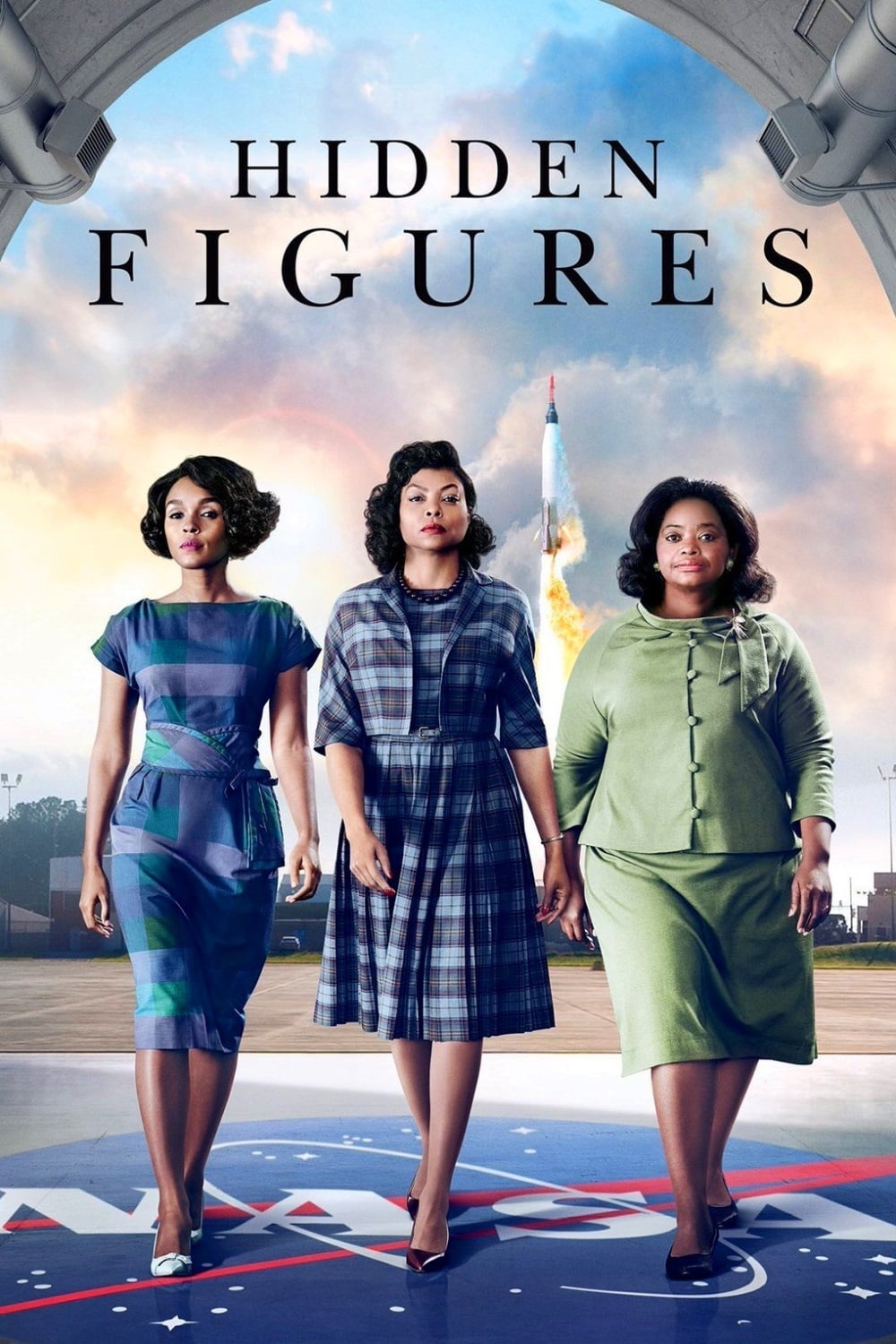
Plot Summary
When I first sat down to watch Hidden Figures, I knew it was based on true events, but I had no idea how deeply it would draw me into a world of both inspiration and frustration. Directed by Theodore Melfi, this biographical drama tells the story of three African-American women—Katherine Johnson, Dorothy Vaughan, and Mary Jackson—whose mathematical genius helped shape NASA’s historic space missions. Set against the backdrop of early 1960s Virginia, the film immerses viewers in a pivotal moment when the United States was scrambling to catch up to the Soviet Union in the race to space.
I was immediately drawn into the quiet confidence of Katherine (Taraji P. Henson), whose mind seemed to solve equations even as she was reminded, at every turn, that her presence in the white, male-dominated world of NASA was unwelcome. Dorothy (Octavia Spencer) fights to earn the title—and respect—of supervisor, despite routinely taking on responsibilities beyond her official role. Mary (Janelle Monáe), bold and witty, strives to become NASA’s first Black female engineer, challenged by both archaic laws and skeptical colleagues.
The film focuses on small, nearly invisible acts of resistance as the trio navigates segregation, condescension, and bureaucratic inertia. The story hinges on a handful of pivotal events in NASA’s Mercury program without delving into heavy-handed drama, balancing workplace realism with moments of disarming warmth and humor. If you want a spoiler-free experience, I’ll stop there—trust me, the satisfaction of watching these women’s personal victories unfold is well worth preserving.
Key Themes & Analysis
For me, the most powerful theme of Hidden Figures is resilience—the way each woman refuses to let institutionalized racism and sexism define her worth. It’s not a film that asks for pity; instead, it highlights an unyielding sense of agency. I was struck by how these women balanced duty to their professions, families, and larger societal progress, often at great personal cost.
On a thematic level, the film unpacks the dualities of brilliance and invisibility. When I watched Katherine, reduced to scurrying across the NASA campus just to find a “colored” bathroom, I felt how talent is often forced to work double—first proving ability, then battling for recognition. There’s an uneasy tension in scenes where equations that could send men to space are still less scrutinized than the hands solving them. I couldn’t help reflecting on how laborers of progress are sometimes deliberately obscured so the status quo can remain unchallenged.
From a cinematographic standpoint, the film’s style isn’t flashy. Instead, it uses warm lighting and composed shots to recreate the hope and anxiety of the Space Race era. The camera lingers on Katherine’s handwritten calculations, on Dorothy’s quiet determination, on Mary’s buoyant defiance; Melfi’s direction invites empathy with subtle visual cues, not melodramatics. The pacing felt brisk without ever losing focus on character over spectacle. The score, co-composed by Hans Zimmer and Pharrell Williams, adds layers of period authenticity and emotional immediacy.
As for acting, I don’t think I can overstate how much Taraji P. Henson, Octavia Spencer, and Janelle Monáe carry the film’s emotional core. Each delivers a performance marked by quiet power and profound vulnerability. Spencer’s turn as Dorothy is particularly noteworthy—not just as comic relief or a plucky underdog, but as a master class in understated leadership. When conversations about on-screen representation come up, I always think of how Henson handles scenes of humiliation and triumph with equal measure; she manages to communicate years of frustration and hope in just a glance. Kevin Costner, as Katherine’s (sometimes unwitting) ally, adds a steady presence; but for me, it’s the women’s scenes together—often in the carpool, trading stories or poking fun at their adversity—that offer the heartbeat I found most moving.
Ultimately, Hidden Figures succeeds not just as an inspirational story, but as an interrogation of who gets to be called a genius. It challenges the audience to consider the untold contributions that build our collective history, and does so without resorting to sentimentality or didacticism.
My Thoughts on the Historical & Social Context
Every time I rewatch Hidden Figures, it hits me how much the film’s impact is shaped by the era in which it was released. When it hit theaters in 2016, the world was already embroiled in renewed discussions on social justice, diversity, and representation. The Black Lives Matter movement had been forcing the entertainment industry to reckon with stories previously overlooked or undervalued; Hidden Figures felt like a direct answer to that call. For me, its release was perfectly timed—a reminder that progress is always built on the uncredited labor of the marginalized.
This film invites reflection on how easily the true architects of progress can be written out of history when their experiences don’t match the prevailing narrative. I’m personally moved by how Hidden Figures doesn’t just demand recognition for these women within history—it also interrogates why that recognition was denied in the first place. The segregated bathrooms and coffee pots, the casual dismissal in staff meetings, the silent trade-offs these women make between ambition and belonging—these moments all feel chillingly familiar even now.
For me, the film’s thematic core is not only about white supremacy and patriarchy in the 1960s, but also about the quiet, continued resistance facing communities of color today. Watching it, I’m reminded that “firsts” are often less about individual achievement and more about collective endurance. The movie still resonates with audiences who see themselves—or their parents and grandparents—in its depiction of relentless hope and the struggle to occupy spaces that were not built to include them. Even now, the questions this film raises about equity, recognition, and whose contributions are deemed valuable still feel pressing and unresolved. That’s why, despite its 1960s setting, I find Hidden Figures deeply relevant and emotionally urgent in the present day.
Fact Check: Behind the Scenes & Real History
I’ve always been fascinated by how true stories make their way onto the screen, and Hidden Figures has a production background as compelling as its plot. One fact that stood out to me is how Katherine Johnson herself was actively involved in the making of the movie: Taraji P. Henson met with Johnson before filming to study her mannerisms, ensuring the portrayal felt authentic and grounded in firsthand experience. The filmmakers sent Johnson a pre-release cut; her emotional reaction—reportedly tearful at seeing her own legacy honored—affirmed the film’s commitment to truth.
There are, however, some deliberate simplifications for narrative clarity. For example, the infamous “colored” ladies’ room scene—a core metaphor for the obstacles Katherine faced—was dramatized. While Johnson truly had to walk across the NASA campus due to segregation, the signage and logistics were likely merged or altered for dramatic effect. The emotional truth remains, but the specifics are shaped for cinema’s sake. Similarly, while Dorothy Vaughan’s journey toward programming and leadership is condensed, her pioneering role with the IBM mainframe and as NASA’s first Black supervisor is historically sound.
I was intrigued to learn that the creative team went to lengths to reconstruct the period’s look and feel. Costume designer Renee Ehrlich Kalfus sourced authentic vintage clothing and accessories, taking cues from actual NASA archives and photographs. The costuming isn’t just period-appropriate; it becomes a subtle form of resistance, signaling each woman’s growing confidence as she asserts her place at the table.
Why You Should Watch It
- Outstanding performances from Taraji P. Henson, Octavia Spencer, and Janelle Monáe anchor every scene and bring authenticity to the narrative.
- A timely exploration of systemic barriers and resilience, making the story powerful for contemporary audiences invested in social change.
- Evocative depiction of unsung heroes whose contributions to science and equality challenge viewers to rethink history through a more inclusive lens.
Review Conclusion
For me, Hidden Figures isn’t just a feel-good underdog story—it’s a rare example of a film that reminds us that genius and progress are often ordinary, hard-won, and stubbornly invisible until someone forces the world to notice. I always walk away from it both angry at what was denied and deeply hopeful because of the perseverance on display. The direction is quietly confident, the script wisely avoids heavy-handedness, and the performances make history feel deeply personal. I give it a 4.5/5 for its impact, craftsmanship, and enduring relevance.
Related Reviews
- Selma (2014): If you found the social and political context of Hidden Figures compelling, Ava DuVernay’s Selma offers another emotionally charged, character-driven look at pivotal moments in the civil rights movement. Like Hidden Figures, Selma focuses on resilience in the face of systemic injustice, with a riveting ensemble and rich period details.
- Apollo 13 (1995): For those drawn to the tension and teamwork of NASA’s early days, Apollo 13 dramatizes a mission beset by crisis and ingenuity. Its focus on unsung heroes—engineers, astronauts, and ground crew—makes it a great match for anyone moved by stories of collaboration and scientific daring.
- The Imitation Game (2014): Much like Hidden Figures, this film centers on a brilliant outsider (Alan Turing) whose groundbreaking work changed history. Both films interrogate what makes someone a “genius” and probe the price of exclusion and prejudice on pioneering minds.
- The Help (2011): If you’re interested in the dynamics of race, gender, and hidden labor in 1960s America, The Help shares Hidden Figures’ mix of heartbreak and humor in its portrayal of African-American maids navigating racism and limited opportunity in the South.
If you want to explore this film beyond basic facts, you may also be interested in how modern audiences respond to it today or whether its story was inspired by real events.
🎬 Check out today's best-selling movies on Amazon!
View Deals on Amazon