
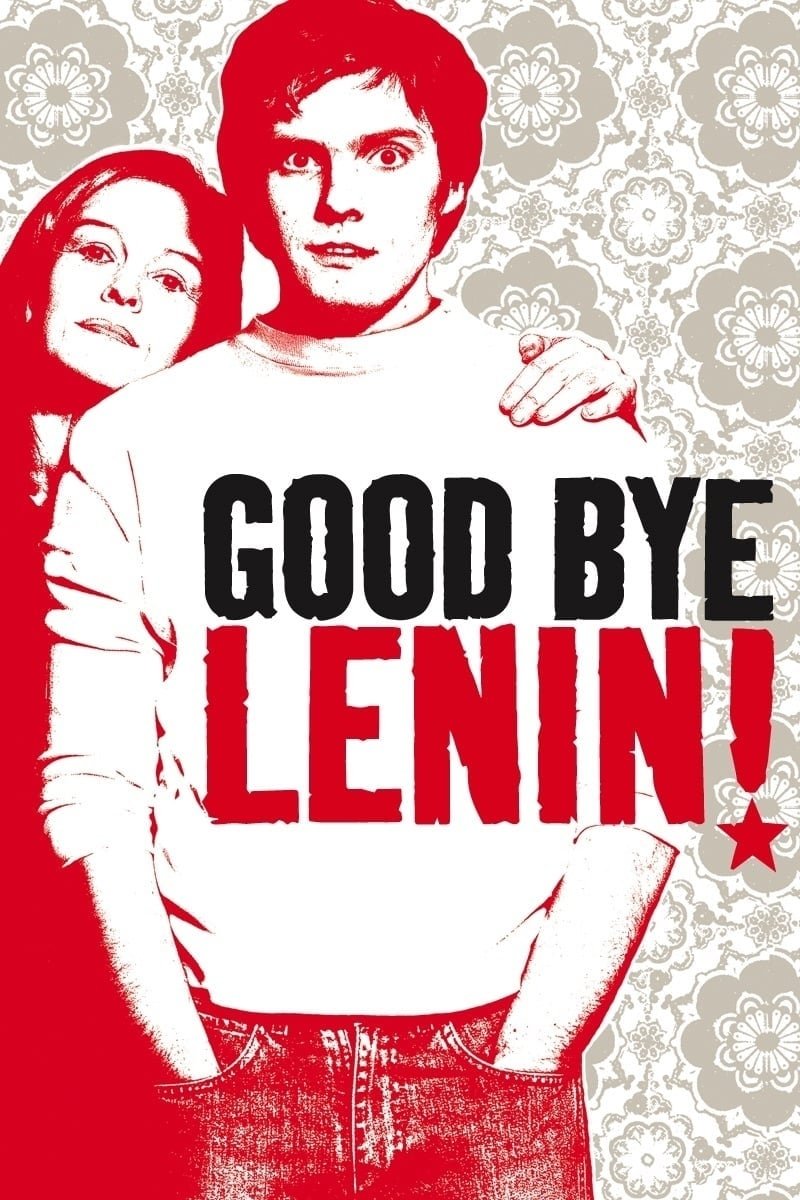
Plot Summary
Looking back on my first encounter with Wolfgang Becker’s “Good Bye, Lenin!”, I remember immediately being swept up in its bittersweet humor and the unique warmth pulsing beneath its tragicomic exterior. The film quietly slipped under my skin, luring me into East Berlin just before and after the fall of the Berlin Wall—a period I’d only ever read about in history books, now bursting to life on screen with palpable anxiety and hope. This historical setting isn’t just background noise; the narrative is utterly shaped by it, making it impossible for me to separate the characters’ emotional journeys from the tide of history that sweeps through their lives.
The film follows Alex, a young man whose life is upended when his devoted, fiercely patriotic mother suffers a heart attack and slips into a coma, missing the collapse of the GDR. Eight months later, she wakes up in a world transformed—her beloved East Germany is gone. What grabbed me most about the plot isn’t just how Alex crafts an elaborate web of lies to shield his mother from the seismic changes around them, but the inventive, deeply human lengths to which he goes. He fills their apartment with relics of the old regime, forges news stories, and rallies friends and neighbors to pretend that nothing has changed. I rarely see such reciprocal irony—rather than a predictable “coming to terms” story, this one spins itself as a funny, poignant look at truth, nostalgia, and the shades of gray in between.
I want to avoid spoiling the film’s final turns, so I won’t dig into the conclusion. What I will say is that the tension steadily builds as Alex’s lies grow more elaborate and the world outside circles ever closer to their doorstep. The film walks a tightrope between heartbreak and hilarity, balancing the personal with the political in ways that kept me invested long after the credits rolled.
Key Themes & Analysis
What strikes me most about “Good Bye, Lenin!” are its layers of meaning, unpeeled so subtly through Becker’s hands. On the surface, it functions as a dark comedy—moments of slapstick are just as prevalent as quiet despair. But dig deeper, and I see a poignant critique of nostalgia and the ways we cling to the past to protect ourselves from a future that feels uncertain or threatening.
I’m often fascinated by how the film twists the concept of Ostalgie—that peculiar longing for life under socialism, even with all its flaws. Instead of simply romanticizing the GDR, Becker explores how memorabilia, familiar brands, and ritualistic behaviors offer fragile comfort, even as the world outside is reinvented. For me, this goes beyond political satire; it’s a meditation on memory, self-deception, and the mercy of white lies told in the name of love.
Directorially, I found Becker’s choices both inventive and understated. He uses news footage, grainy home movies, and clever set design to blur the line between daydream and documentary. I was captivated by the way he plays with color—the drabness of pre-unification grays evaporating into the bright, sometimes garish palette of the West. The apartment itself becomes a microcosm, sealed off from change, with Alex orchestrating every detail as both savior and unreliable narrator.
Daniel Brühl’s performance as Alex is, in my view, the emotional core of the movie. His mixture of exasperation, tenderness, and desperation feels completely real; he carries the burden of a son’s impossible love with quiet intensity. Katrin Saß, as his mother, brings a gentleness and vulnerability that kept me caring for her well-being even as the contrivances multiply. The supporting cast has their standout moments too, but Brühl and Saß anchor the entire piece in something deeply human.
Cinematically, I remain impressed by Becker’s use of montage. Scenes jump from slapstick deception—such as Alex and his sister scrounging for now-defunct East German groceries—to haunting montages of everyday life dissolving in the face of progress. The score, composed by Yann Tiersen, is similarly effective. The way the music tugs between whimsy and melancholy echoes the story’s tonal tightrope, never letting me settle too comfortably in either joy or sadness.
Another theme that stands out for me is the elasticity of truth. What Alex constructs isn’t just a kind lie—it’s a complete parallel reality, one with its own internal logic and growing contradictions. Watching him, I found myself asking: “How much are any of us complicit in the stories we build to cope?” For me, the film becomes an allegory of denial—not just on a personal level, but collectively, as families, as societies, in how we narrate our pasts and imagine our futures.
All these layers make “Good Bye, Lenin!” more than just a period piece. To me, it is an examination of generational trauma, loyalty, and the cost of shielding those we love from harsh truths. And in Becker’s world, the line between fiction and affection is always blurring, often to heartbreaking—yet oddly hopeful—effect.
My Thoughts on the Cultural Impact & Legacy
Reflecting on the film’s wider impact, I keep returning to how it reshaped my understanding of the “post-1989” film genre. Before encountering “Good Bye, Lenin!”, my knowledge of German cinema’s handling of reunification was by turns melodramatic or grimly realistic. Becker’s film forged a new path—one that felt accessible, emotionally honest, and unexpectedly funny.
What still resonates with me is the film’s ability to make the political personal. Rather than depicting the reunification of Germany as an abstract historical event, it collapses seismic change down to the scale of a family living room. This intimacy had a ripple effect far beyond German-speaking audiences. I see echoes of its tone and structure in later films that explore sweeping change through deeply private trauma and resilience. The film’s success at numerous international festivals, and the way audiences responded to Alex’s universal predicament, testify to its cross-cultural reach and enduring appeal.
Personally, the film deepened my appreciation for stories about memory—not just individual, but collective. As someone who curates films and tries to discern broader historical patterns in cinema, I see “Good Bye, Lenin!” as a touchstone for the subgenre I call “personal histories of rupture”—those films that use one family’s struggles to map out the anxieties and joys of an entire epoch. Every time I return to it, I’m reminded that satire doesn’t have to be mean-spirited or cynical; it can be warm, searching, and packed with empathy.
Its influence lingers in how it made “Ostalgie” an international talking point, stirring debate about nostalgia, historical memory, and the mixed legacies of Eastern Bloc countries. For me, it lays the groundwork for younger filmmakers to grapple with recent European history without leaning on didacticism. I often recommend it as a primer for viewers interested in the intersection of comedy and history, and as encouragement to future storytellers who want to weave humor through heartbreak.
Fascinating Behind-the-Scenes Facts
No matter how many times I revisit the movie, I always find myself equally fascinated by what happened behind the camera. For one, the casting of Daniel Brühl as Alex stands out. At the time, Brühl wasn’t the international star he would become, but Becker saw in his audition the ability to balance vulnerability with dry wit—qualities absolutely essential to keep the story’s lighter moments from tipping into farce. What many don’t realize is that Brühl actually kept a journal during shooting to log his character’s emotional development, further deepening his nuanced performance.
Another production nugget I love: The filmmakers faced serious logistical hurdles trying to authentically recreate East Berlin as it was in 1989-90, especially since much of the city had already changed or been modernized. I learned that they sourced vintage furniture, food packaging, and appliances from local collectors and prop houses, painstakingly dressing the set to ensure historical accuracy. The attention to period detail wasn’t just for show—it was crucial to immersing the audience in Alex’s fictional world.
One more detail I find intriguing is the use of actual archival footage interwoven into Alex’s homemade “GDR news programs.” These sequences were coordinated with former East German cameramen, giving the mock-broadcasts an eerily authentic feel. I particularly appreciate the blending of invented and real history—it’s a sly, meta nod to the very act of storytelling that’s central to the film’s plot.
Why You Should Watch It
- Because it delivers a spectacular, genre-bending mix of humor and heartbreak that I rarely find in films about historic upheaval.
- Because it offers a nuanced, visually rich portal into recent European history—one that makes political change feel personal and immediate.
- Because Daniel Brühl’s lead performance, directed with wit and empathy by Wolfgang Becker, makes even the most far-fetched deceptions feel achingly real.
Review Conclusion
Weaving all my thoughts together, “Good Bye, Lenin!” remains for me a benchmark of smart, sensitive filmmaking. I revisit it not just for its humor or inventive structure, but for the compassion at its heart—the idea that reality can be kinder, or at least more bearable, when filtered through the stories we tell. Its resonance with audiences across eras and countries is, in my eyes, a testament to Becker’s vision and the universal truths at the film’s core. From its pitch-perfect performances to its layered exploration of history, memory, and love, I enthusiastically rate it 4.5 out of 5 stars.
Related Reviews
- The Lives of Others – This film delves into themes of surveillance and personal transformation in East Germany, but with a more suspenseful, psychological tone. I love how both works humanize the complexities of life behind the Iron Curtain, though from distinctly different angles.
- Roma – While set in a completely different cultural context (Mexico City in the 1970s), I see a kinship in how Alfonso Cuarón blends sweeping political change with an intimate family narrative. Both films excel at drawing out universal emotions from specific historical moments.
- Perestroika – This lesser-known drama offers a personal take on Russia’s own era of upheaval. What connects it to “Good Bye, Lenin!” is its focus on fractured memory, longing, and the difficulties of transitioning from one societal system to another.
- Sunshine – Not to be confused with the sci-fi film, this historical epic traces a single family through the major revolutions of 20th-century Hungary. For viewers who are drawn to sweeping historical narratives filtered through the lens of family, the parallels are rich and rewarding.
For readers looking to go deeper, these perspectives may help place the film in a broader context.
🎬 Check out today's best-selling movies on Amazon!
View Deals on Amazon