
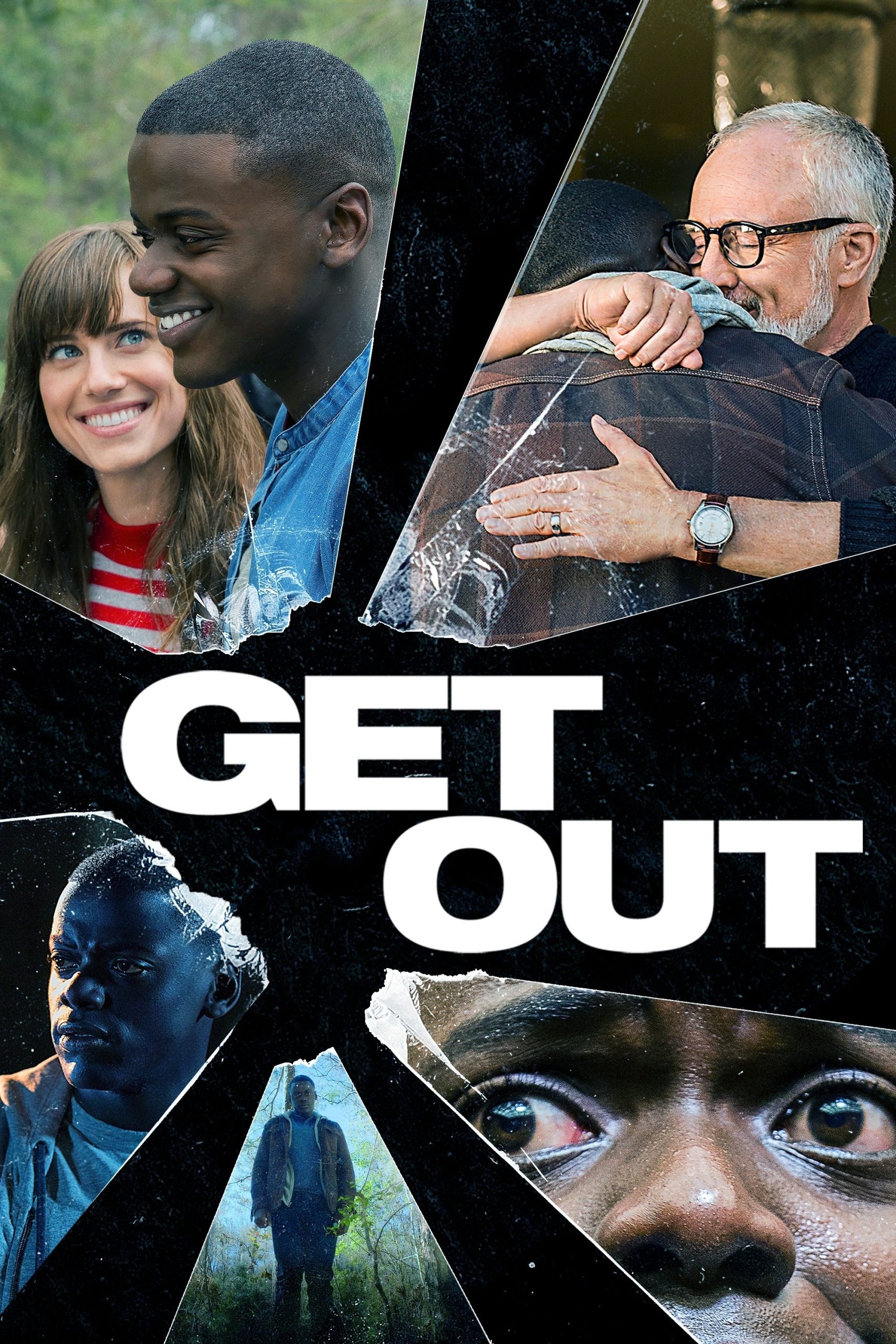
Plot Summary
The very first time I sat in a packed theater, staring up at the screen while the opening chords of Michael Abels’ eerie score filled the air, I found myself bracing for a ride unlike any I’d experienced. Jordan Peele’s Get Out caught me off guard not just with its unsettling mood, but with how quickly it burrowed beneath my skin. It’s hard to neatly categorize this film—on the surface, it’s meticulously dressed as psychological horror, but I felt it seep into all the blurry gray zones between satire, social thriller, and razor-edged suspense.
For anyone new to the film, I want to preserve the most shocking elements, but here’s what I can share without spoilers: Get Out follows Chris Washington, a young Black photographer visiting the affluent family estate of his white girlfriend, Rose. The initial awkwardness of the interracial relationship takes a darker turn the longer Chris spends with Rose’s family and their bizarre friends. What starts as benign unease—tone-deaf jokes, over-solicitous hospitality—steadily coalesces into something more sinister. I found myself wading deeper into a sense of discomfort along with Chris, as off-kilter social cues gradually become the clues to something much more disturbing.
The film keeps its cards close to the chest for most of its runtime, expertly layering moments of microaggression, isolation, and suspicion. By the mid-point, there’s an inescapable storm brewing, and when the full truth emerges (I strongly warn—major spoilers ahead if you seek them out), it’s the kind of rug-pulling twist that makes you want to rewatch the film immediately just to pick up all the early breadcrumbs. For me, the ending represented both a culmination of mounting dread and a deeply cathartic exhale—a rare combination in contemporary horror.
Key Themes & Analysis
As a film lover intent on interpreting cinema’s subtext, what struck me most about Get Out wasn’t just the elegant tension, but the bracing clarity of its social commentary. This wasn’t a story that drew horror merely from jump scares or gore, but rather from social realities I recognized and, at times, felt personally implicated by. The film brilliantly dissects insidious, everyday racism—those subtle, performative gestures of approval or “wokeness” that mask deeper, more sinister intentions. I found Peele’s lens to be unflinching and deeply empathetic, examining how Black individuals navigate spaces where the threat isn’t a monster, but the suffocating grip of privilege, tokenization, and systemic power.
From a cinematography perspective, I was intensely drawn to the recurring motif of eyes and sight. Shots linger on Chris’s anxious, darting gazes; the camera turns its focus to mirrors, old photographs, and visual distortions. The now-iconic “Sunken Place” sequence, in particular, left me breathless—Chris falling through space, paralyzed and unable to scream, underlined a sense of helplessness I found both thematically and visually devastating. The precision in transitions, visual symmetry, and the use of color—especially the chilling, clinical whites of the Armitage family home—heighten the sense of dislocation and eeriness.
Daniel Kaluuya’s performance was revelatory to me. He captured Chris’s gradual unraveling with minute, believable changes in posture, voice, and facial expression. In the famous hypnosis scene, I could feel every drop of his panic and confusion. Equally haunting was Betty Gabriel’s portrayal of Georgina, balancing placid domesticity with an undercurrent of fear and repression. Every actor felt meticulously directed to reinforce the story’s central tension—when characters smile, I found nothing reassuring in it, only menace.
Yet it’s Jordan Peele’s directorial choices that lingered with me long after the credits. I admire how he confidently oscillates between biting satire and genuine terror, making audiences laugh an uneasy laugh before gut-punching them with reality. The humor never undermines the gravity of what’s on screen; instead, it deepens the discomfort. Peele’s script weaponizes microaggressions and coded language, flipping daily awkwardness into the seeds of psychological horror. In that, I saw a blueprint for how genre film can interrogate cultural anxieties with urgency and artistry.
For me, Get Out isn’t content to simply thrill and scare. It demands engagement—to notice, to question, and to confront. Even scenes that appear straightforward, like garden parties and family dinners, pulsate with charged subtext. What’s especially powerful is how Peele never loses sight of Chris’s subjectivity. I felt embedded in his spiral, forced to parse signals, decipher meaning, and ultimately, fight for agency.
My Thoughts on the Cultural Impact & Legacy
Reflecting on the years since I first watched Get Out, I can’t overstate just how seismic its impact has been—on me as a film critic, and on cinema at large. I remember the shift it triggered in mainstream film discourse. Suddenly, genre boundaries didn’t feel so rigid; horror became not just a vessel for scares, but a sharp, urgent commentary on race and power. For me, Get Out proved that audiences were hungry for films that didn’t flinch from uncomfortable truths, and that smart, risk-taking storytelling could find massive success.
As someone passionate about curation, I found Get Out to be a rare piece that resonated with both audiences and critics, sparking conversation from classrooms to dinner parties. It has inspired a new wave of filmmakers to use horror as a way to explore societal ills, much in the way films like “Rosemary’s Baby” and “Night of the Living Dead” redefined the possibilities of horror decades earlier. Get Out broke box office records, garnered a historic Best Original Screenplay Oscar for Peele, and became a touchstone in pop culture, even for those who don’t typically watch scary movies. For me, it’s the interplay between personal horror and collective experience that makes it evergreen; every re-watch unlocks some new, chilling detail.
What’s most meaningful to me is how the film opened doors for conversations about representation on and behind the camera. Get Out didn’t just reset expectations for the horror genre—it challenged Hollywood’s gatekeepers to rethink what kinds of stories (and storytellers) get prioritized. I’ve witnessed firsthand its influence in the emergence of what some now call “elevated horror”—films that deliver visceral thrills while probing real-world anxieties. With each year, its legacy feels only more cemented. For viewers seeking a richer, more layered experience, I always return to this film as a prime example of what’s possible when personal vision meets genre innovation.
Fascinating Behind-the-Scenes Facts
Delving into Get Out’s backstory reveals just how much intention shaped every aspect of production. One detail I find especially compelling is that Jordan Peele drew from his own observations and interviews when writing the script, grounding the horror in real experiences of racial discomfort. That authenticity pulses through every interaction, making the film’s unease feel genuine rather than exaggerated.
I’m also fascinated by the casting process—particularly how Daniel Kaluuya landed the lead role. During his audition for Chris, Kaluuya delivered the critical hypnosis scene impeccably, even managing to summon real tears five different times in exactly the same spot. For Peele, that emotional specificity convinced him Kaluuya was the only choice. Watching that sequence in the finished film, I could see why—it’s both technically flawless and heartbreakingly raw.
Finally, I often share with fellow film lovers that the now-classic “Sunken Place” sequence was achieved with subtle practical effects rather than elaborate CGI. The floating sensation was created by suspending Kaluuya with a slow-motion camera rig, then playing with light and focus. For me, this practical approach didn’t just add authenticity; it intensified the feeling of isolation and helplessness that defines Chris’s journey.
Why You Should Watch It
- It sets a new standard for socially conscious horror, using suspense and fear to illuminate issues often left unsaid.
- The performances are absolutely transformative, with Daniel Kaluuya delivering one of the most memorable turns in contemporary film.
- Every frame is loaded with meaning, making it a film that rewards repeat viewings and deep discussion long after the credits roll.
Review Conclusion
Whenever I reflect on what makes a film indispensable, I look for work that not only entertains, but challenges, provokes, and occasionally even unsettles me. Get Out remains a benchmark in every way—tightly plotted, immaculately performed, and ruthlessly clever in its commentary. I walked away both moved and shaken, eager to dive into discussions with anyone willing to peel back the layers of its message. On my scale, it’s an easy 5/5 stars. I can’t recommend it highly enough, especially for anyone ready to engage with horror that’s as intellectually invigorating as it is spine-tingling.
Related Reviews
- Us (2019) – I recommend this one because Jordan Peele builds on the themes of duality and American identity introduced in Get Out, but amps up the allegory and the ambition. Like Get Out, it’s equal parts unsettling and intellectually rich, making for intense, memorable viewing.
- The Invitation (2015) – This slow-burn thriller shares Get Out’s mastery of social unease inside a privileged environment. I found their atmosphere of barely-contained dread and trust-eroding suspense to be close cinematic cousins.
- Parasite (2019) – While very different in setting, Bong Joon Ho’s dark satire about class warfare uses genre conventions in a way that recalls Get Out’s blend of anxiety and humor. I kept thinking about how both films leverage tension to expose larger societal structures.
- Sorry to Bother You (2018) – This offbeat social satire, like Get Out, critiques assimilation, code-switching, and commodification through surreal twists, leaving a similarly lasting impression with its bold visual storytelling.
- The Stepford Wives (1975) – Watching this proto-feminist thriller, I recognize its influence on Get Out’s depiction of sinister conformity hiding beneath the surface of idyllic suburbia. It’s a perfect pairing for fans of subversive suspense.
For readers looking to go deeper, these perspectives may help place the film in a broader context.
🎬 Check out today's best-selling movies on Amazon!
View Deals on Amazon