
Plot Summary
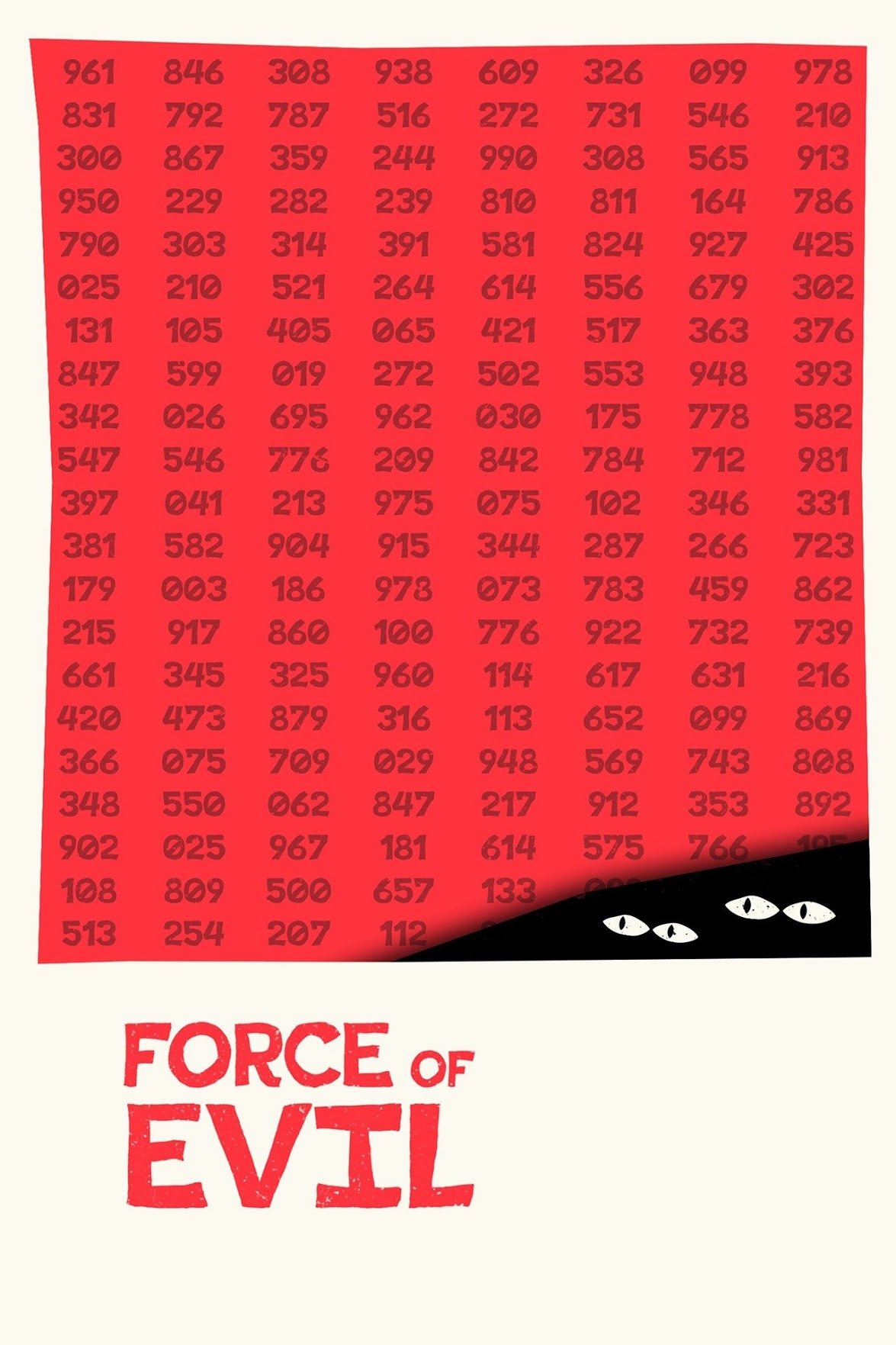
From the moment I first watched “Force of Evil,” I found myself deeply unsettled by its haunting portrayal of personal and systemic corruption, all staged within the noir-drenched streets of New York City. Directed by Abraham Polonsky, this film noir unspools a story that’s as tightly wound as the hearts of its characters. While I won’t reveal every intricacy, I can say this is the story of Joe Morse, a slick attorney played by John Garfield, who becomes entwined in the operations of the city’s illegal lottery racket. For me, what makes “Force of Evil” compulsively watchable isn’t just the criminal activity or the sharply-written dialogue — it’s how Joe’s drive for success collides with his tangled loyalty to his older brother, Leo, whose own moral precariousness is constantly on display.
The narrative is a slow-burning descent that I found particularly effective. Tensions mount as Joe seeks to consolidate the numbers racket for his influential boss, Tucker, but complications bubble up as doing so risks destroying small-time operators — including Leo. This personal stake transforms the legal maneuverings from abstract crimes into urgent ethical crises. While certain pivotal twists could spoil the emotional journey, suffice it to say that what begins as a clever scheme fast becomes a study in guilt and desperation. The deeper Joe plunges into the criminal underworld, the more he’s forced to confront not just legal dilemmas but a profound crisis of conscience and identity. That, for me, is where this story’s real power lies.
Key Themes & Analysis
What grabbed me most about “Force of Evil” wasn’t simply the story, but the way Polonsky crafts overwhelming moral ambiguity through every element of the film. The conflict between capitalism’s promise and its exploitative underbelly pulses through every scene. I read Joe’s journey as a stunning indictment of how ambition—especially in postwar America—can warp even the most familial and tender bonds. This is not a gangster film of shootouts and heists; it’s a meditation on how easy it is to rationalize away the gradual loss of your soul.
The visual design had a hypnotic effect on me. Each frame—full of slanting shadows and dizzying cityscapes—mirrors the characters’ psychological turmoil. Cinematographer George Barnes plays with darkness and light in a way that won’t let you look away. There’s a constant push and pull in the visuals, suggesting that the American dream itself is dappled with shadows of compromise and despair. The effect is beautifully claustrophobic, as if the city is pressing in on Joe as tightly as his conscience presses in on him.
John Garfield’s performance is the emotional anchor of the film for me. He brings an aching vulnerability to Joe, allowing us to see both his bravado and his barely-suppressed panic. It’s a performance sharp enough to cut glass, especially in scenes with his brother, Leo (Thomas Gomez), whose gentle decency is slowly crushed beneath systemic greed. Their relationship is the soul of the film, and the actors never let you forget it. The supporting cast—including Marie Windsor and Beatrice Pearson—turn in classically restrained performances that keep the emotional core simmering.
If I had to single out the most innovative aspect, it would be Polonsky’s commitment to ambiguity. The film refuses to offer tidy redemption or punishment. Instead, it paints the world in strokes of gray: crime isn’t just something that happens in alleys or backrooms; it is woven into the very fabric of business, law, and—unavoidably—family. I appreciate that the dialogue is loaded with poetry and venom in equal measure, granting each character voice and depth.
My Thoughts on the Historical & Social Context
Whenever I revisit “Force of Evil,” I find myself stunned by how resonant its social critique feels—even decades after its release. The late 1940s in America were full of anxiety and hope. World War II had just ended, and there was this intoxicating promise of prosperity. And yet, as the film unflinchingly reveals, not everyone benefited equally. The backdrop of corrupt rackets in “Force of Evil” is, for me, an allegory of real-world postwar anxieties: who gets left behind when society worships the free market?
What strikes me most is how the film’s anger at unchecked capitalism translates directly to my own unease about contemporary society. The obsession with profit—laid bare in the film’s criminal enterprise—feels scarily similar to current headlines about financial misconduct and exploitation. Watching Joe wrestle with his ambition, I can’t help but reflect on the way economic pressures still erode families and communities today. “Force of Evil” shows how economic and legal systems protect the powerful while turning the working class into collateral. That feels as urgent now as it did in 1948.
The blacklist that hit Polonsky and Garfield after the film’s release is another reason why I see “Force of Evil” as such a brave creation. You can sense the director’s rage at the system in every frame. The McCarthyist paranoia that shut down so many careers was already looming, and the film’s willingness to question authority and the American dream was a risky, subversive act. For me, this film is not just a noir classic—it’s a snapshot of a society at war with itself, desperately hiding rot beneath a glittering postwar surface.
Even now, “Force of Evil” matters because it’s such a vivid warning: the line between personal and systemic evil is usually blurrier, and closer, than most of us want to admit.
Fact Check: Behind the Scenes & Real History
I’ve always been fascinated by what happened behind the camera on films like this, where the production itself seems as dramatic as the story. There are several facts about “Force of Evil” that really deepen my appreciation for what Polonsky and his team accomplished.
First, the blacklist loomed large. Abraham Polonsky, fiercely political, was summoned before the House Un-American Activities Committee not long after the film’s release. He refused to cooperate, and as a result, “Force of Evil” ended up being his only feature until decades later. This climate of fear and professional retribution underscores every frame. For me, knowing this adds a layer of defiance to the film’s attack on institutional corruption; I see it as a coded critique aimed directly at the power structures of its era.
Second, the casting of John Garfield was itself a bold, almost risky, decision. Garfield, blacklisted soon after, brought his experience growing up poor and Jewish in New York into the role of Joe Morse. Reports from the set suggest Garfield worked closely with Polonsky to shape the character’s internal sense of conflict. I think that’s why Joe always feels genuine—there’s a lived-in quality to his insecurities and bravado, and it’s impossible for me to imagine anyone else playing him with this intensity.
Finally, the film’s depiction of the numbers racket isn’t just cinematic invention. I’ve researched how closely Polonsky based his screenplay on real-life policy rackets that flourished in New York throughout the early 20th century. While some narrative flourishes are dramatized, the core idea—of organized crime exploiting the poor through supposedly harmless gambling—is painfully authentic. For me, this convergence of gritty real-life inspiration and cinematic bravado is what makes the film feel both urgent and timeless.
All these behind-the-scenes stories give me a sense that “Force of Evil” is, on many levels, a fiercely personal protest. It’s Hollywood filmmaking used as a weapon against the very structures that sought to contain its creators.
Why You Should Watch It
- The movie’s exploration of moral and financial corruption is as compelling today as in 1948.
- John Garfield’s performance is a masterclass in restrained, layered acting that rewards close attention.
- The film’s stunning noir cinematography and poetic dialogue make for a visually arresting experience you won’t forget.
Review Conclusion
When I reflect on “Force of Evil,” what lingers with me isn’t just its genre trappings, memorable as they are, but the electric tension between personal ambition and moral responsibility. For me, this is one of the defining films of postwar cinema: a noir that stares down the American dream with both fury and deep sadness, refusing easy answers. Its atmosphere, sharp script, and the ache in its performances continue to haunt me long after the credits roll. I have rarely encountered a film that speaks so incisively to systemic evil while remaining so deeply, tragically human. I give it an enthusiastic 4.5/5: near perfection, only slightly constrained by the era’s limitations—but unmissable for anyone who cares about cinema, politics, or the uneasy heart of America.
Related Reviews
- “The Asphalt Jungle” (1950) — I’m drawn to how this John Huston classic captures both the glamour and despair of criminal life. Like “Force of Evil,” it exposes the inner workings of organized crime but brings a different texture through its ensemble cast. For those fascinated by stories of moral ambiguity and inevitable downfall, this film delivers a similarly biting critique.
- “On the Waterfront” (1954) — While set in the world of dockworkers and unions, I find “On the Waterfront” resonates as a powerful companion piece. Both films wrestle with the cost of complicity and the possibility of ethical renewal in a corrupt environment. Marlon Brando’s performance carries the same raw vulnerability I admired in Garfield’s Joe Morse.
- “Night and the City” (1950) — I recommend Jules Dassin’s London-set noir for its suffocating atmosphere and relentless pacing. For me, its portrait of a doomed obsession—and its examination of how city life breeds both power and loneliness—makes it a kindred spirit to “Force of Evil.” Each film uses the city almost as a character in its own right.
- “Sweet Smell of Success” (1957) — The way it explores the collision of personal ambition and public corruption through caustic dialogue and cutting cinematography immediately brings “Force of Evil” to mind. I appreciate how both films depict their protagonists as neither saints nor villains, but deeply compromised survivors within toxic systems.
If you want to explore this film beyond basic facts, you may also be interested in how modern audiences respond to it today or whether its story was inspired by real events.
🎬 Check out today's best-selling movies on Amazon!
View Deals on Amazon