
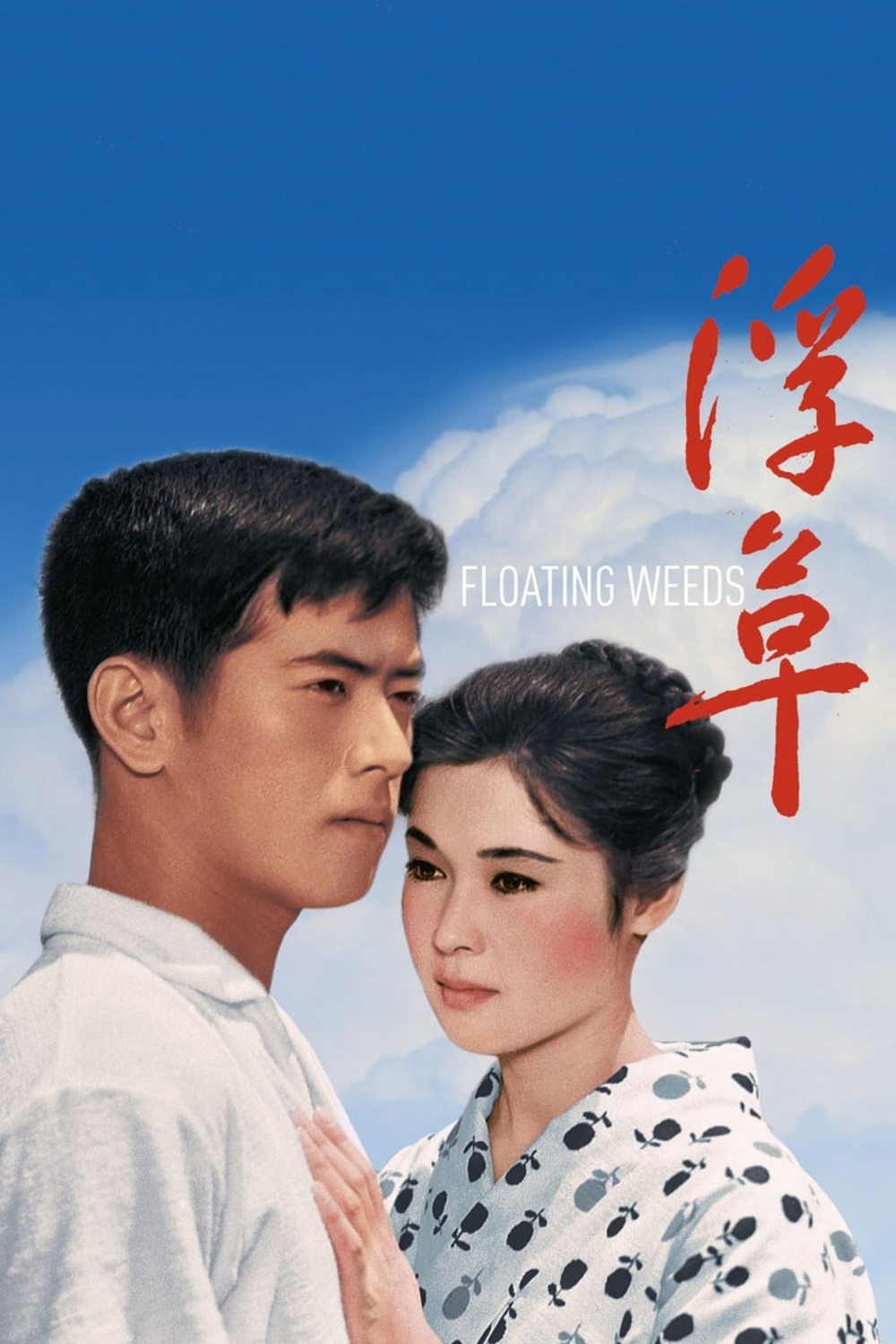
Plot Summary
The first time I encountered “Floating Weeds,” directed by Yasujirō Ozu, I was immediately struck by its gentle yet piercing manner of storytelling. Rather than plunging headfirst into melodrama, the film invites me to wade slowly into the emotional waters of a drifting theater troupe and their entanglements in a small seaside town. Kihachi Komajuro, the aging leader of the troupe, arrives in town under the guise of performance but soon reveals his double life: a secret family tucked away from the prying eyes of his troupe. Without spoiling crucial climactic turns, I will say Ozu handles family secrets, jealousy, and generational divides with a discipline that draws me in, not because of any shocking action, but because of the tension that blooms quietly between characters sharing tea on tatami mats. The story winds its way through acts of loyalty, acts of betrayal, and the heartbreak of love withheld—all while never straying far from the everyday routines and rituals that both bind and suffocate its characters. Every small gesture feels weighted with the disappointments and hopes of a life in transition. As a viewer, I found myself absorbed in the quiet beauty of human connection, as well as the loneliness that haunts it.
Key Themes & Analysis
What continues to astonish me about “Floating Weeds” is how its apparent simplicity conceals a profound meditation on family, impermanence, and the masks we wear in everyday life. Ozu’s use of static, low camera angles transforms ordinary interiors into emotionally charged arenas. His camera does not intrude; instead, it observes, giving the audience permission to see each character’s vulnerabilities. The recurring image of drifting, transient performers forges a powerful metaphor about the fleeting nature of all human attachments. The theme of the generational divide is ever-present—I sense the ache between parents and children who cannot fully articulate their needs but express them through hurtful silences and rare, tender gestures.
The juxtaposition of public persona and private self is everywhere. Kihachi’s efforts to reconcile with his son, whom he has never claimed as a father, become a tragedy of missed opportunities and stubborn pride. The troupe itself, full of actors donning costumes and roles, reflects the film’s deeper question: What is truly genuine in a world where identity is performed and constantly in flux?
From a cinematographic perspective, I am always entranced by Ozu’s color palettes—the deep reds of signage, the muted kimonos, the weathered walls. Each visual choice resonates with emotional undercurrents. His editing style, paced with deliberate, almost ritualistic calm, invites me to sit with ambiguity rather than chase resolution. I’m reminded that Ozu trusts audiences to find meaning in nuance; revelations often come not through exposition but through silence, stillness, and shadowed expressions.
On the acting front, the performances—especially that of Ganjiro Nakamura as Komajuro—are nuanced and quietly devastating. Nakamura conveys pride, yearning, and regret with only a shift of posture or an averted gaze. Explosive confrontations are rare, but their impact is amplified by the calm that surrounds them. The whole cast seems to move in concert with Ozu’s worldview: that life’s most important moments may come quietly, when no one else is looking.
My Thoughts on the Historical & Social Context
When I watch “Floating Weeds,” I cannot help but situate it within the turbulent context of late-1950s Japan—a nation still reeling from postwar upheaval, negotiating the disillusionment of modernization. I sense in these characters a society adrift, struggling between duty and desire, tradition and change. The film’s core conflict—between the old-world values embodied by Komajuro and the emergent autonomy of younger characters—mirrors larger societal anxieties about the erosion of family structures and cultural rituals that had long governed Japanese life.
The traveling troupe, with its itinerant existence, represents for me a kind of liminal status, neither fully inside nor outside mainstream society. This strikes a chord: in 1959, economic recovery was bringing optimism, but also unsettling old ways of being. The troupe’s fading relevance echoes the fate of traditional arts in a Japan moving rapidly toward western-influenced consumerism. The characters’ struggles to find belonging and maintain face are not just personal—they reflect a nation preoccupied with appearances, acutely aware of who is watching, and yet ill at ease with its own wounds.
Viewed from today’s vantage point, I find the film even more resonant. The search for authenticity, the pain of generational misunderstanding, and the desire to reconcile private truth with public presentation now seem universal. The discomfort with impermanence and the quest for acceptance—in family, career, or society—remains as urgent now as it was in 1959.
Fact Check: Behind the Scenes & Real History
My fascination with “Floating Weeds” only deepened when I explored its production history. One remarkable fact is that Ozu revisited and reimagined his own silent 1934 feature, “A Story of Floating Weeds,” for this 1959 color adaptation. This wasn’t mere repetition—it was an evolution in both technique and thematic layering. Ozu used vibrant Eastmancolor to lend the film a new visual intensity, collaborating with cinematographer Kazuo Miyagawa, celebrated for his work on “Rashomon.” The color design became instrumental in conveying the film’s emotional atmospheres—a pioneering move for the era.
I also discovered that casting Ganjiro Nakamura, a veteran of Osaka stage acting, was a shrewd, emotionally intelligent choice. Ozu wanted a lead whose real-life experience with stage performance would effortlessly permeate Komajuro’s world-weariness. Nakamura brought an authenticity that, in my eyes, grounds the entire film in lived reality rather than melodramatic invention.
An unexpected tidbit that captivates me is that the film’s depiction of a traveling kabuki troupe, while stylized, is anchored in reality. Such itinerant troupes were indeed a vanishing tradition by the late 1950s—a poignant detail that lends the film additional resonance. Ozu’s attention to the minutiae of performance rituals—from the meticulous makeup application to backstage dynamics—mirrors authentic kabuki practices, paying homage to a dying art even as it explores the pain and beauty of constant reinvention.
Why You Should Watch It
- You will experience a rare form of cinematic patience: Ozu’s methodical pacing allows emotional truths to simmer and unfold with genuine, cumulative impact.
- The film’s visual style is a masterclass in color, composition, and atmospheric storytelling—each frame is as arresting as a painting, meticulously crafted for emotional resonance.
- If you are interested in family drama, generational conflict, or the art of performance, this film feels timeless and relevant, its questions remaining potent and piercing today.
Review Conclusion
Every rewatch of “Floating Weeds” leaves me spellbound by its quiet ferocity—a film where glances and half-spoken truths carry the weight of entire lifetimes. For me, Ozu’s greatest achievement is his unwavering belief in the power of ordinary moments. He crafts a world that is simultaneously simple and profound, universal and uniquely Japanese, nostalgic yet forward-looking. Its subtle performances, keen sense of place, and emotional honesty remind me why cinema matters—not because it offers easy answers, but because it reflects the hardest questions we face when grappling with family, identity, and change. I give “Floating Weeds” 5 out of 5 stars, secure in the knowledge that its quiet brilliance will reward close viewing for generations to come.
Related Reviews
- Tokyo Story (1953, dir. Yasujirō Ozu): I turn to this Ozu masterpiece whenever I crave another intimate look at family and generational shifts. It explores similar emotional territory—unspoken regret, parent-child disconnects—with an extraordinary delicacy that deeply complements the spirit of “Floating Weeds.”
- Late Spring (1949, dir. Yasujirō Ozu): This film offers an equally nuanced meditation on the push and pull between tradition and modernity within Japanese families. Its subtle, lingering atmosphere makes it a perfect companion for those drawn to Ozu’s attention to everyday details and unhurried storytelling.
- The Ballad of Narayama (1958, dir. Keisuke Kinoshita): While it employs more overt symbolism, this film’s portrait of rural Japanese custom, familial obligation, and changing values resonates strongly with themes found in “Floating Weeds.” I recommend it for those interested in how older Japanese filmmakers negotiated tradition and transition.
- Street of Shame (1956, dir. Kenji Mizoguchi): Examining marginalized lives within fading traditional worlds, this drama about brothel workers in a shifting postwar society echoes “Floating Weeds” in both its compassionate humanism and critique of societal structures.
If you want to explore this film beyond basic facts, you may also be interested in how modern audiences respond to it today or whether its story was inspired by real events.
🎬 Check out today's best-selling movies on Amazon!
View Deals on Amazon