
Plot Summary
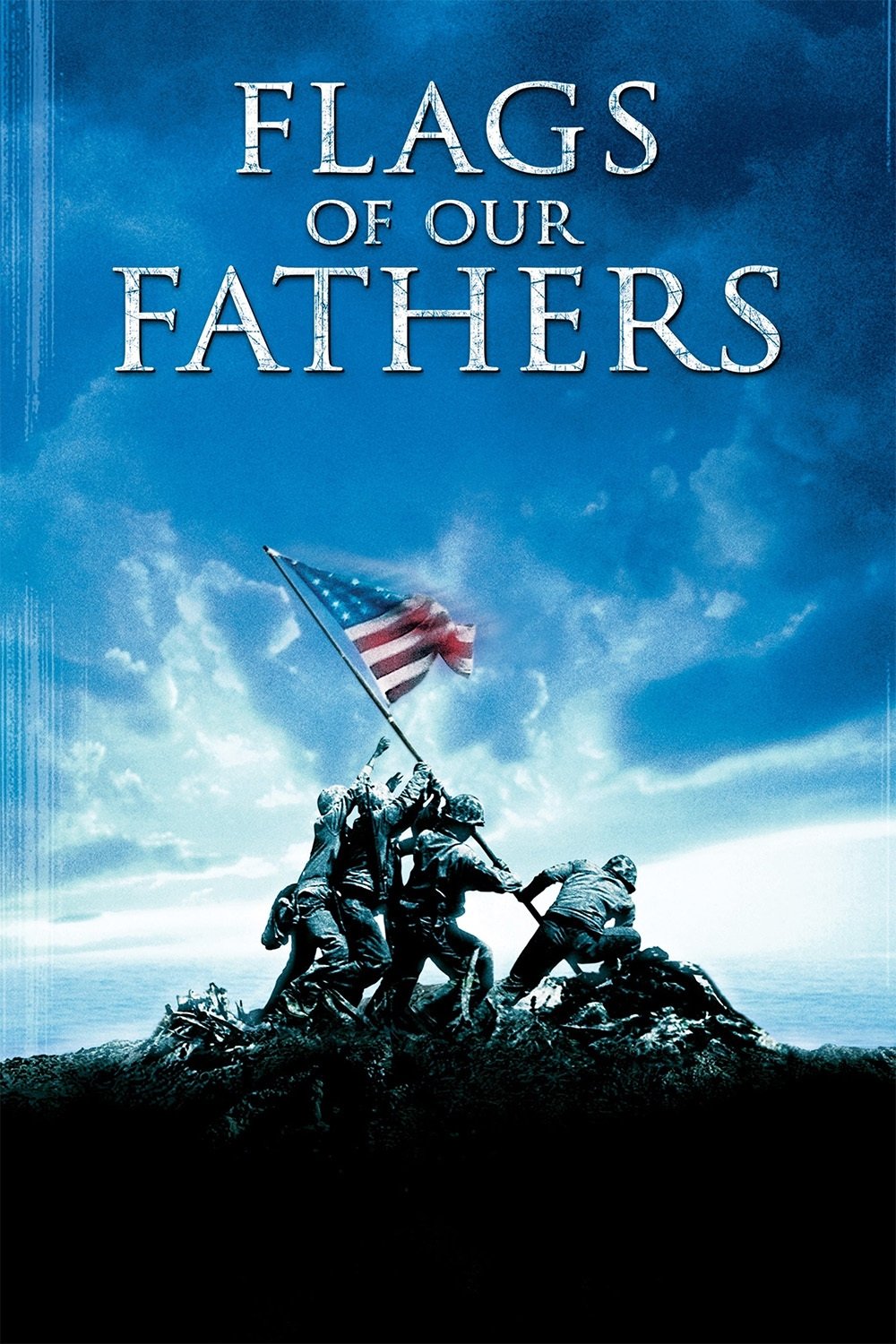
Watching “Flags of Our Fathers,” I felt swept up by the emotional complexity and haunting ambiguity that Clint Eastwood brought to this World War II epic. The film unspools across two timelines: the carnage of the Battle of Iwo Jima and the swirling aftermath that awaited the surviving flag-raisers back home. Based on the nonfiction account by James Bradley and Ron Powers, the story is told through the memories and traumas of the three surviving men immortalized in the iconic photograph of the flag atop Mount Suribachi. It’s a story I found affecting, not only because it re-creates a moment burned into the American psyche, but because it confronts the distortion and burden of heroism in gritty detail.
I appreciated how Eastwood chose to structure the narrative around flashbacks: the past collides with the present, sending the men—Doc Bradley, Ira Hayes, and Rene Gagnon—on a press tour designed to sell war bonds to a population desperate for hope. The emotional tension is palpable as these men struggle under the weight of public expectation, haunted by memories of their fallen comrades and their own survivor’s guilt. I admired the restraint with which the film handles these revelations, refusing to sensationalize the realities of war, but offering unvarnished glimpses of brotherhood, pain, and sacrifice. While I’ll avoid revealing the fates of these central figures, I will say that the film’s blend of battlefield horror and post-war dislocation is laced with both dignity and ambiguity—elements that lingered with me long after the credits rolled.
Key Themes & Analysis
What struck me most while watching “Flags of Our Fathers” was its relentless critique of the way a nation manufactures and markets heroism during wartime. Eastwood, ever the patient observer, seems intent on stripping away any sentimentality that might gloss over the cost of war. For me, the central question isn’t simply who raised the flag; instead, it’s what it means to be branded a hero by the outside world, while privately carrying guilt, confusion, and unbearable loss.
I often find war films lean into spectacle, but here, the violence carries a chaotic, disorienting quality—something that reminded me of the bleak realism Eastwood captured in his earlier works. The Iwo Jima scenes bristle with anxiety: explosions thunder unpredictably, bodies collapse in mud, smoke, and fear. I found myself genuinely unsettled, acutely aware that the camera—helmed by Tom Stern in this case—wasn’t myth-making, but rather forcing me to confront the randomness and futility of death on the battlefield. The color palette leans cold: lots of grays and muted greens, which evoke the somber nature of the film’s message.
Eastwood’s direction conveyed subtlety in moments that needed it most. His editing (in partnership with Joel Cox) lets scenes breathe; he gives space for loss to register without melodrama. I noticed how John Slattery’s performance as Bud Gerber, the PR man, walks a delicate line between patriotism and exploitation; he’s at once sympathetic and a tragic product of his times. Adam Beach’s portrayal of Ira Hayes remains, for me, the film’s emotional center: his struggle against institutionalized racism and his inability to reconcile his deep pain with public celebration left an indelible mark on my viewing.
Equally, the music—subdued, mostly strings and piano—underscored the melancholic tone. It’s not a rousing score; it’s a mournful echo, heightening the film’s meditation on memory and myth. The screenplay (by William Broyles Jr. and Paul Haggis) never shies away from exposing the gulf between how history is commemorated and its lived, traumatic reality. These elements combined to create what, in my estimation, is less a traditional war movie and more a rumination on the uses—and abuses—of collective memory.
My Thoughts on the Cultural Impact & Legacy
I’ve revisited “Flags of Our Fathers” several times since its release, and each viewing only deepens my personal appreciation for what Eastwood set out to do. I rarely see high-profile war films daring to challenge their audiences to question the narratives America builds around itself. What this film offers me is a kind of mirror: it reflects not only the trauma of a generation but also the persistent need to interrogate which stories are preserved, promoted, or erased. As a curator, I find myself repeatedly drawn to works that refuse easy answers, that force me—and hopefully, the audience—to face uncomfortable truths about the past and how it is remembered.
In terms of influence, “Flags of Our Fathers” carved a space for nuanced, anti-mythological war dramas in the 21st century. Its paired release with “Letters from Iwo Jima,” which told the Japanese side of the same battle, felt to me like a quietly subversive act—a plea for empathy and understanding in a genre too often dominated by jingoism. I believe this film sparked a wider appreciation for stories that focus as much on aftermath and ambiguity as on victory and valor. The lingering aftereffects of trauma, the corrosive nature of survivor’s guilt, and the messy ways that societies create legends: these fascinate me endlessly, and “Flags of Our Fathers” exemplifies why this kind of storytelling matters.
Personally, Eastwood’s measured, somber approach revitalized my own expectations of what cinematic war remembrance could entail. I see echoes of its influence in subsequent works, both in Hollywood and abroad, that try to grapple honestly with the ghosts of history rather than simply celebrating its moments of triumph. This film continues to resonate with me—reminding me to remain vigilant against the seduction of simple narratives, and to honor the courage it takes to remember the past in all its fractured complexity.
Fascinating Behind-the-Scenes Facts
Delving into the production of “Flags of Our Fathers” revealed a number of details that I found genuinely illuminating. For one, Clint Eastwood filmed much of the battle sequences on the sandy beaches of Iceland, rather than Iwo Jima itself, because logistical and political concerns made using the actual site impossible. I was struck by the lengths to which the production designers went; they meticulously recreated the unique black sand, even importing it by the truckload for realism. This dedication only reinforced for me how crucial authenticity was to Eastwood’s vision.
Another layer that fascinated me was in casting. Adam Beach, who gave the film’s most wrenching performance as Ira Hayes, reportedly immersed himself so completely in the role that he went through bouts of depression during and after filming. Reading about his process and struggles brought a new depth to my appreciation for his work—his haunted eyes and pained silences now linger even more intensely in my mind.
Finally, “Flags of Our Fathers” made extensive use of advanced CGI for its time, seamlessly blending digital effects with practical action to create the chaos of the Iwo Jima landings. The visual effects team worked painstakingly to match archival footage and photographs, stitching together historical reference with cinematic energy. I found it impressive how the film’s visuals managed to feel both contemporary and eerily authentic, forging a tactile connection to the real past that so many war films struggle to achieve.
Why You Should Watch It
- A profoundly honest look at the true cost of deifying heroes—one that will challenge and unsettle your preconceptions about war storytelling.
- Stellar performances, especially by Adam Beach, who anchors the movie with a raw vulnerability rarely seen in big-budget war epics.
- Clint Eastwood’s direction offers a powerful reminder that history is as much about what we forget as it is about what we commemorate.
Review Conclusion
I hold “Flags of Our Fathers” as one of those rare historical films that refuses to pander or glorify. Its patient dismantling of wartime mythology, paired with standout acting and technical finesse, mark it as a singular achievement in modern cinema. This is a movie that doesn’t just ask what happened in the past—it asks what we’re willing to see, and what we dare to remember. For me, that willingness to wrestle with ambiguity is what gives “Flags of Our Fathers” its enduring power. I happily give it 4.5 out of 5 stars; imperfections remain, but its ambition and honesty overshadow any missteps.
Related Reviews
- “Letters from Iwo Jima” – In my opinion, watching the companion film Eastwood directed the same year is essential. It explores the Japanese perspective of the battle with equal empathy and complexity, deepening both films’ resonance through their synergy and cross-cultural lens.
- “Saving Private Ryan” – If you are moved by meticulously crafted, somber depictions of WWII combat and the trauma it inflicts, Spielberg’s film offers a vision that is both different and thematically relevant.
- “The Thin Red Line” – Terrence Malick’s poetic exploration of the Pacific theater lingers on existential fear and the philosophical dimensions of war, providing a spiritual counterpart to Eastwood’s grounded realism.
- “Jarhead” – For a look at how the myth of heroism and the psychological scars of war have carried forward into the modern era, I find this Gulf War narrative sharply relevant in its focus on corrosive disillusionment.
For readers looking to go deeper, these perspectives may help place the film in a broader context.
🎬 Check out today's best-selling movies on Amazon!
View Deals on Amazon