
Plot Summary
From the moment I first immersed myself in Werner Herzog’s “Fitzcarraldo”, I found myself drawn into a fever dream of ambition and obsession, set against the breathtaking and perilous backdrop of the Peruvian rainforest. The film follows an opera-loving Irishman, Brian Sweeney Fitzgerald—nicknamed Fitzcarraldo—played by Klaus Kinski, whose larger-than-life vision is to bring grand opera, specifically Enrico Caruso, to the heart of the Amazon. I was immediately compelled by the magnitude of his plan: to fund an opera house by tapping into the lucrative rubber trade on an isolated stretch of jungle land, which has remained unreachable due to its location upriver, blocked by unnavigable rapids.
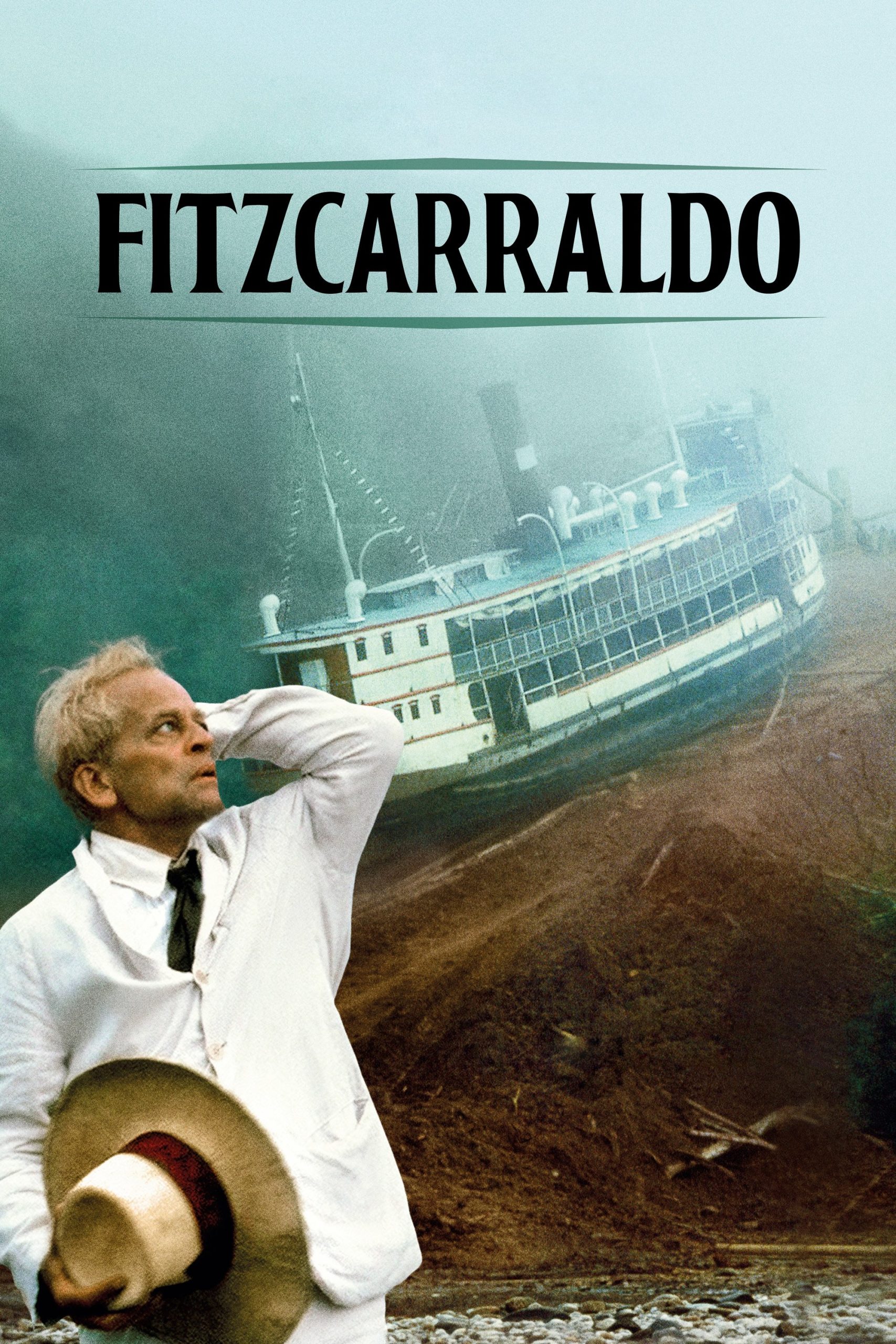
What makes Fitzcarraldo’s quest truly astonishing is his madcap solution. The only way to access this precious land is by transporting a massive steamship over a mountain separating two rivers. The ordeal that follows is as much a test of willpower as it is of physical limits—both for the protagonist and for the audience, who must bare witness to every sweat-soaked, mud-caked step of this impossible dream. Yet, the film’s greatest moments flourish in what isn’t said or resolved, as it’s not so much about whether the ship makes the journey (I’ll avoid further spoilers here), but about the audacity and folly of dreams set against the unforgiving pulse of nature.
Key Themes & Analysis
Every time I return to “Fitzcarraldo,” I’m struck by how Werner Herzog channels the agony and ecstasy of human obsession. It’s impossible to watch without reflecting on how far a person will go to satisfy a singular passion. Through Fitzcarraldo’s quest, I see a meditation on madness: the line between genius and folly blurs, and the jungle becomes a living, breathing character—both canvas and adversary to the protagonist’s desires.
The cinematography, under the masterful eye of Thomas Mauch, complements Herzog’s vision. The camera lingers on the untamed beauty and menace of the Amazon, alternating between ethereal river sequences and the close-up rhythms of exhausted men hauling the ship inch by inch. I have vivid memories of the sound design—the roar of water, the cries of the laborers, and the operatic arias that Fitzcarraldo carries with him through an old gramophone—melding the high art he adores with the rawness of his environment.
Klaus Kinski’s performance is nothing short of electrifying. His wild-eyed intensity, by turns joyful and frantic, feels primal. I find myself fascinated by how Kinski internalizes Fitzcarraldo’s mania, making his obsession palpable and contagious to those around him and to me as a viewer. There’s an element of danger in every scene he inhabits—one never knows if he’s about to erupt, plead, inspire, or collapse.
Herzog’s direction pursues authenticity at all costs. I couldn’t help but marvel at the director’s insistence on filming real events instead of relying on special effects or miniatures. The film’s legendary steamship hauling sequence, accomplished without Hollywood trickery, becomes a metaphor for both the character’s and director’s fixation—the act of achieving the impossible through relentless will.
For me, “Fitzcarraldo” isn’t merely a story about opera or colonial dreams; it’s a rumination on the collision of cultures and the cost of imposing one’s vision upon an unwilling landscape (and people). The indigenous workers in the film, whose world is upended by Fitzcarraldo’s dream, remain largely silent but are essential to the story’s emotional and ethical core. Their presence left me with complicated, unsettled questions about exploitation and complicity, especially given Herzog’s reputation for pushing cast and crew to their limits, echoing the film’s narrative struggles.
My Thoughts on the Historical & Social Context
From my vantage point, seeing “Fitzcarraldo” as a product of the early 1980s gives its story an added layer of resonance. At that time, filmmakers like Herzog rebelled against commercial filmmaking standards, and their willingness to embrace risk both onscreen and off speaks to the movie’s daring spirit. The film’s release followed the years of counter-cultural disillusionment in the West, when society was grappling with whether romantic, almost quixotic pursuits had a place in an increasingly pragmatic world. I’ve always seen Fitzcarraldo’s dream of opera in the jungle as an allegory for the creative drive against a backdrop of environmental devastation, globalization, and the legacy of colonial enterprise—issues that still echo in our world today.
When I watch the film through a contemporary lens, I notice how its themes remain urgent. The imposition of Western culture on indigenous spaces is more fraught now than ever, and the difficulties of representing those complexities respectfully have become part of the broader conversation. I often find myself wrestling with the ethical grey areas the film presents—are dreams of greatness always noble, or do they inevitably come at the cost of others? To me, this debate is at the heart of the film, making it much more than just an adventure or biopic. It’s an enduring reflection on ambition and the limits of empathy, as relevant to today’s global challenges as it was to audiences forty years ago.
Fact Check: Behind the Scenes & Real History
What I find unforgettable about “Fitzcarraldo” is how much the making of the movie mirrors its story. Herzog actually had his team haul a 320-ton steamship over a hill in the Amazon using local labor. There were no special effects, and seeing the enormity of this real-life struggle adds a harrowing authenticity that digital trickery could never match. I sometimes sit in awe remembering footage from the accompanying documentaries—this wasn’t just cinema; it was an ordeal that blurred the lines between art and reality.
Another astonishing fact involves the casting. The role of Fitzcarraldo was originally given to Jason Robards, but a severe illness forced him out halfway through shooting. When Kinski was brought on to replace him, the dynamic on set famously shifted to a kind of art-life hurricane. Kinski’s relationship with Herzog was legendary for its volatility—they fought fiercely, nearly to the point of violence, but that same energy is what electrifies the film. When I reflect on this, I feel Herzog’s willingness to accept chaos and conflict as catalysts for creative breakthroughs is part of what sets “Fitzcarraldo” apart.
Historically, I realized that while Fitzcarraldo’s story is inspired by the real-life rubber baron Carlos Fitzcarrald, many details are stylized for cinematic effect. Unlike Herzog’s character, the real Fitzcarrald reportedly disassembled his ship to carry it overland in parts, rather than hauling it intact as depicted in the movie. For me, this creative deviation is no small matter—it transforms the film from straightforward biography to a mythic, Herzogian exploration of the human condition.
Why You Should Watch It
- Witness an unparalleled blend of filmmaking ambition and narrative audacity—few films have ever attempted to match the scale of “Fitzcarraldo’s” legendary ship-hauling sequence.
- Experience an unforgettable performance by Klaus Kinski—his portrayal is as mesmerizing as it is unsettling, perfectly complementing Herzog’s vision of obsession.
- Engage deeply with questions about culture, ambition, and the cost of chasing dreams—the film’s psychological and ethical complexity offers viewers both visceral excitement and material for lifelong reflection.
Review Conclusion
Every viewing of “Fitzcarraldo” brings me face-to-face with the ragged edge of human will—its beauty, its messiness, its implications for both self and world. I marvel at Herzog’s refusal to compromise—an attitude that infuses the film with a singular, feverish energy. The lush visuals and the operatic swirl of longing and madness remind me that cinema can, at its best, reach toward the sublime. This is a film that leaves me haunted and invigorated, never quite able to resolve its contradictions, but always grateful for the journey. On my personal rating scale, that earns “Fitzcarraldo” a 4.5/5 stars.
Related Reviews
- “Aguirre, the Wrath of God” (1972): Whenever I think about films that match “Fitzcarraldo’s” blend of madness, ecological spectacle, and auteur wildness, I’m drawn immediately to Herzog’s earlier masterpiece. Also starring Klaus Kinski in a chaotic journey downriver, this film dives even deeper into themes of obsession and man’s smallness before nature.
- “Apocalypse Now” (1979): While set in a different era and part of the world, Coppola’s Vietnam epic resonates with similar artistic ambition and behind-the-scenes legend. For me, its hallucinatory descent into the unknown—straddling poetry and chaos—echoes the feelings I experience in “Fitzcarraldo.”
- “The Mission” (1986): When I crave another sweeping, morally complex tale of Western ambition clashing with indigenous cultures amidst the South American jungle, I reach for this film. Its rich visuals and focus on music’s transformative power offer a more meditative counterpoint to Herzog’s visceral style.
- “There Will Be Blood” (2007): For those fascinated by single-minded protagonists whose ambitions cost them dearly, Paul Thomas Anderson’s epic offers a modern reflection on obsession and ruthless aspiration—a soulful companion piece in a different time and place.
If you want to explore this film beyond basic facts, you may also be interested in how modern audiences respond to it today or whether its story was inspired by real events.
🎬 Check out today's best-selling movies on Amazon!
View Deals on Amazon