
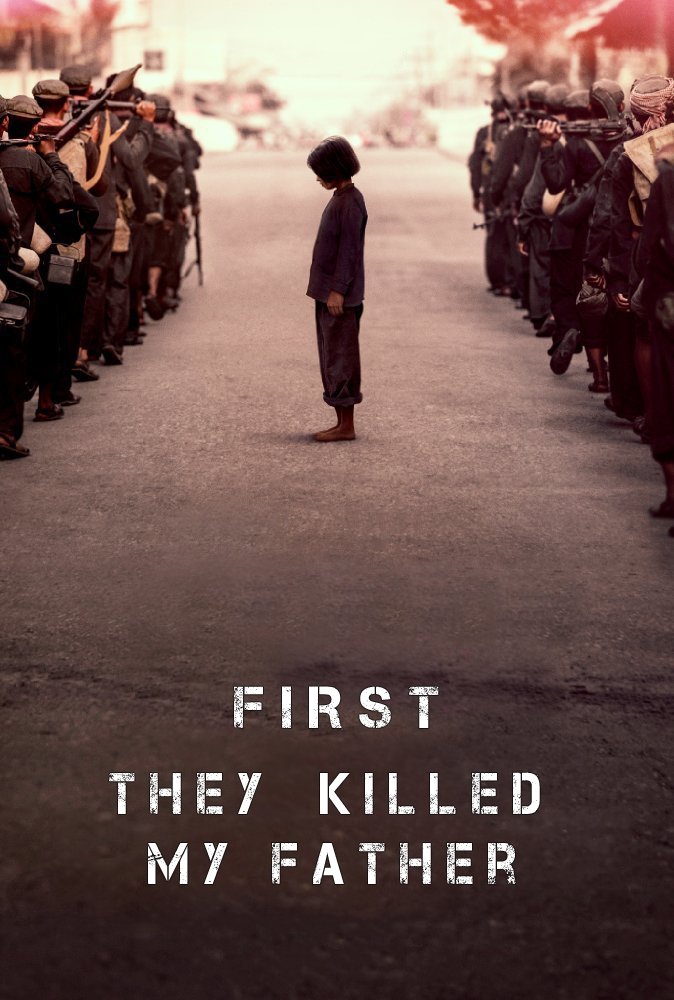
Plot Summary
From the moment I pressed play on Angelina Jolie’s harrowing drama, I felt pulled into a world I rarely encounter on screen—a child’s view of political upheaval that’s as visually stunning as it is emotionally devastating. While First They Killed My Father belongs to the war drama genre, what immediately struck me wasn’t the scale of conflict but its intimate lens, focusing on one family’s attempt to survive the Khmer Rouge’s rise in 1975 Cambodia. At the heart of the film is young Loung Ung, whose life is upended when her family is forced to flee their comfortable home in Phnom Penh and confront a new regime’s brutality. Chronicling Loung’s journey from innocence to harrowing experience, the story unfolds with a raw honesty that truly unsettled me, as it avoids melodrama and instead lets the slow drip of loss, fear, and adaptation feel unbearably real. Without delving into full spoilers, I will say that each scene immerses us in a child’s shifting interpretations of starvation, betrayal, and survival—building toward revelations I found both organic and shattering. The narrative maintains a delicate balance, revealing just enough to keep me emotionally invested while honoring the truth of Loung Ung’s memoir, on which the film is based. The result is a story that rarely flinches from pain, yet always maintains the humanity at its core.
Key Themes & Analysis
What lingers with me most from First They Killed My Father are the moments where the personal and political collide—where the tiniest gestures, like a stolen glance or a shared bowl of rice, become loaded with meaning. Angelina Jolie directs the film with a sensitivity that only deepens the contrast between childhood innocence and the systematic dehumanization unleashed by totalitarian rule. I found myself continuously gripped by the theme of lost innocence: Loung’s gaze, her confusion in the face of adult decisions, her attempts at play amid devastation—all remind me of how war corrupts even the most private, tender spaces in a child’s memory.
The visual storytelling is some of the most visceral I’ve seen in recent years. I noticed immediately how the cinematography—lush, vibrant at first, then drained and bleak as the story proceeds—mirrors Loung’s psychological transformation. The use of handheld cameras, often positioned at Loung’s eye-level, placed me directly in her shoes. It’s an unsettling perspective that jarringly evokes memories of my own childhood fears, although thankfully never so dire. The technique makes the tragic scale of the Cambodian genocide accessible without resorting to spectacle or exploitation.
As for performances, Sreymoch Sareum’s portrayal of Loung is nothing short of revelatory. There’s a preternatural restraint in her acting—every tremor, every prolonged silence becomes a site of emotion. I found myself moved to tears not at grand speeches, but at the way Loung stiffens her shoulders, or refuses to cry when she so clearly wants to. The rest of the ensemble cast, drawn almost entirely from Cambodian locals with no prior acting experience, lend such authenticity that I occasionally forgot I was watching fiction. This casting choice grounds the film deeply in Cambodian reality, making the horror and resilience alike feel lived-in, not performed.
Beyond the characters, what impressed me was Jolie’s refusal to sensationalize violence. Instead, the director’s focus is on psychological aftermath, trauma, and survival. Much is suggested rather than shown, but this restraint somehow amplifies the impact. As an analyst, I see a director intent on ceding the spotlight to those rarely heard—children, survivors, those who carry both national and personal histories in their bones. It’s artful without tipping into artifice, tough to watch but impossible to dismiss.
My Thoughts on the Cultural Impact & Legacy
Even after the closing credits rolled, I found myself haunted by what I had seen—and by what I had learned through osmosis about Cambodian history. First They Killed My Father resonates with me far beyond its runtime because it dares to center a Cambodian voice in a global dialogue often dominated by Western narratives. As someone deeply interested in how cinema can both document and heal trauma, I’m moved by the way this film reframes a nearly forgotten genocide through a deeply personal, authentic lens. Jolie’s decision to collaborate with Loung Ung and Cambodian talent ensures that the film isn’t just about memory—it’s about reclamation, too.
Personally, the film has challenged me as a curator of world cinema. Too often, genocide dramas slip into didacticism or fall prey to “outsider savior” perspectives. I deeply appreciate how Jolie’s direction refuses to let the Western gaze mediate the brutality or humanity of this story. In doing so, she advances the genre by giving survivors ownership of their own narratives. This is essential for both representation and healing. The fact that the film was shot in the Khmer language and involved survivors and their descendants in both cast and crew decisions only underscores its cultural authenticity.
Since its release, I’ve noticed its influence in the renewed interest in Southeast Asian cinema and in the way audiences approach films about historical trauma. It’s been a catalyst for crucial dialogue—not just about Cambodian history, but about the universal costs of war, especially for children. I see echoes of its empathy-first approach in more recent films exploring generational trauma and displacement. For me, it sets a gold standard: cinema as both commemoration and urgent warning. I still revisit this film when I want to remind myself of art’s power to bear witness and spark change.
Fascinating Behind-the-Scenes Facts
Diving into the production history, I was fascinated by several elements that elevate First They Killed My Father beyond the typical biopic or war drama. The fact that stands out most to me is Jolie’s commitment to authenticity—to the point of casting predominantly non-professional actors, many of whom had survived the Khmer Rouge regime or felt its multi-generational aftermath. Sreymoch Sareum, who plays Loung, was discovered in a local school audition, embodying a reality and vulnerability no trained actor could feign. Her astonishing rawness comes directly from this organic, community-driven casting process.
Another detail I found impressive was the technical hurdle posed by the Cambodian setting. The entire production team was based in-country for nearly a year, contending with language barriers, bureaucratic maze, and the need to film on actual historical locations—sometimes just miles from mass graves. Every visual choice, from costuming to set dressing, was vetted by survivors and historians to ensure fidelity. I learned that Jolie worked with Rithy Panh, a celebrated Cambodian filmmaker and genocide survivor, as a producer and advisor, which gave the set a deeply collaborative, respectful environment. This level of sensitivity is rare in international cinema and absolutely critical for a story of such gravity.
What really struck me, though, was the director’s decision to work with her own children, who are half-Cambodian, as part of the crew. Maddox Jolie-Pitt, adopted from Cambodia, served as a production assistant. This personal connection added another layer of intentionality, turning the film into both an artistic project and a deeply personal act of cultural preservation and education for the Jolie family itself.
Why You Should Watch It
- For its uncompromising, child’s-eye view of history—a perspective rarely centered on film, and even more rarely rendered with such compassion and immediacy.
- To experience an unparalleled level of cultural authenticity: The Khmer language, local cast, and on-location shooting immerse viewers in a time and place Western audiences seldom see or understand.
- Because the story’s lessons about resilience, family, and historical reckoning feel urgently relevant in a world still battling the consequences of displacement and genocide.
Review Conclusion
I walked away from First They Killed My Father shaken, enlightened, and astonishingly moved. Every choice—cinematic, narrative, and ethical—seems geared toward giving voice to those who have historically been voiceless. While the film does not make for easy viewing (I found myself pausing, reflecting, and occasionally weeping), I value it all the more for that. Its depiction of trauma and survival is unapologetically honest and devoid of exploitation, a rare feat in any genre. Between the masterful directing, the haunting performances, and the radical act of centering Cambodian storytelling, I can’t help but recommend it wholeheartedly to anyone interested in world cinema or history. My rating: 4.8/5 stars—the slight deduction only because I wish, selfishly, for more closure, though I respect the story’s decision not to offer easy answers.
Related Reviews
- The Missing Picture (2013) – This Cambodian docudrama uses clay figures and archival footage to reconstruct memories of the genocide. It’s deeply personal and innovative in its aesthetic approach, offering a meditation on loss and survival that complements Jolie’s film’s historical themes.
- Grave of the Fireflies (1988) – While animated and set in postwar Japan, this film shares a profound empathy for children enduring the horrors of conflict. The emotional resonance of its perspective on innocence lost makes it an essential companion piece.
- Beasts of No Nation (2015) – Set in an unnamed African nation, this drama explores child soldiers and the erasure of childhood under extreme violence, echoing many of the psychological and moral questions raised in Jolie’s adaptation.
- Paradise Now (2005) – Focusing on two Palestinian men recruited for a suicide mission, this film examines personal ethics and trauma within a political landscape, much like Jolie’s exploration of family and conflict in Cambodia.
For readers looking to go deeper, these perspectives may help place the film in a broader context.
🎬 Check out today's best-selling movies on Amazon!
View Deals on Amazon