
Plot Summary
Few moments in my recent movie-going experience have felt quite as electric as that first time I watched Baz Luhrmann’s audacious biopic of Elvis Presley, the so-titled “Elvis.” From the very first frame, I knew I was in for a ride quite unlike anything I’d expect from a traditional music biography. While many expect a reverent, safe retelling of a music icon’s life, what I witnessed was a high-octane, fever-dream journey through the blazing highs and crushing lows of Elvis Presley’s singular career, punctuated by frenetic editing, dizzying camera work, and a soundtrack that thumped straight through my seat.
Following the rise, fall, and cultural dominance of Elvis Presley, the film propels me into his world as witnessed through the calculating eyes of Colonel Tom Parker, his infamous manager. Even by Luhrmann’s standards, this tale is told at a breakneck pace. I watched with bated breath as Elvis, powerfully embodied by Austin Butler, transforms from a shy, soulful boy in Tupelo, Mississippi into a force of nature who ignited a revolution in music and pop culture. The film glides through the stages of his life—his Pentecostal gospel roots, explosive first performances that shocked an era, his tortured army stint, movie star years, and finally, his fraught Las Vegas residency.
Of course, I want to warn viewers intent on remaining spoiler-free: those deeply invested in the exact twists and historical beats should proceed with caution later on, but Luhrmann, for all his visual flourishes, never loses sight of the heartbreak and creative brilliance at the center of Elvis’s life. Rather than a mere cradle-to-grave recap, I was drawn into a tragic, intimate portrait of a man caught between the demands of fame and his yearning for authenticity.
Key Themes & Analysis
What lingered with me long afterward was how the movie isn’t just fascinated by the legend of Elvis, but by the deeper currents swirling underneath. I was especially struck by the twin engines propelling the story: celebrity exploitation and cultural transformation. Baz Luhrmann, in his inimitable style, explores America’s obsession with creating—and ultimately devouring—its own icons. Viewing the entire odyssey through the manipulative Colonel Parker (played with oily brilliance by Tom Hanks) underscored for me that Elvis’s story is as much about who controls the narrative as who inhabits the legend.
What I found particularly powerful was the way Luhrmann juxtaposes music as both rebellion and salvation. Whenever the film lingers on Elvis’s ecstatic communion with Black gospel, blues, and rhythm and blues, I could feel not only his electrifying artistry, but also the fraught racial dynamics that shaped American music. In these sequences, I was awed by the director’s commitment to showing how Presley’s greatness was inextricably tied to Black origins, and how that contribution was both celebrated and contested in its own time.
The cinematography washed over me almost like a music video at times—Luhrmann’s hyperstylized edits echoing the rush of early rock ‘n’ roll. Flashes of neon, archival montages, and crashing sound design make me feel like I’m not simply viewing history, but living inside the enormity of Elvis’s fame. It’s maximalism through and through, but what amazed me is how it never lost sight of the deeply personal: I was especially moved by the film’s quietest scenes, like Elvis’s solitary moments behind the stage curtain, feeling the cost of an identity shaped for mass consumption.
Austin Butler’s performance stands as the film’s linchpin. Never mere mimicry, his take on Elvis is wounded, yearning, unpredictable, and magnetic. The voice, the gaze, the nervous energy—it’s all there, but it’s in the moments of vulnerability and honesty where Butler truly dazzled me. Tom Hanks, meanwhile, vanishes into one of the most unflattering roles of his career—a near-cartoon villain whose love for money is only matched by his skill for deceit. It’s uncomfortable but unforgettable, and it deepens the film’s persistent unease about fame as a business transaction.
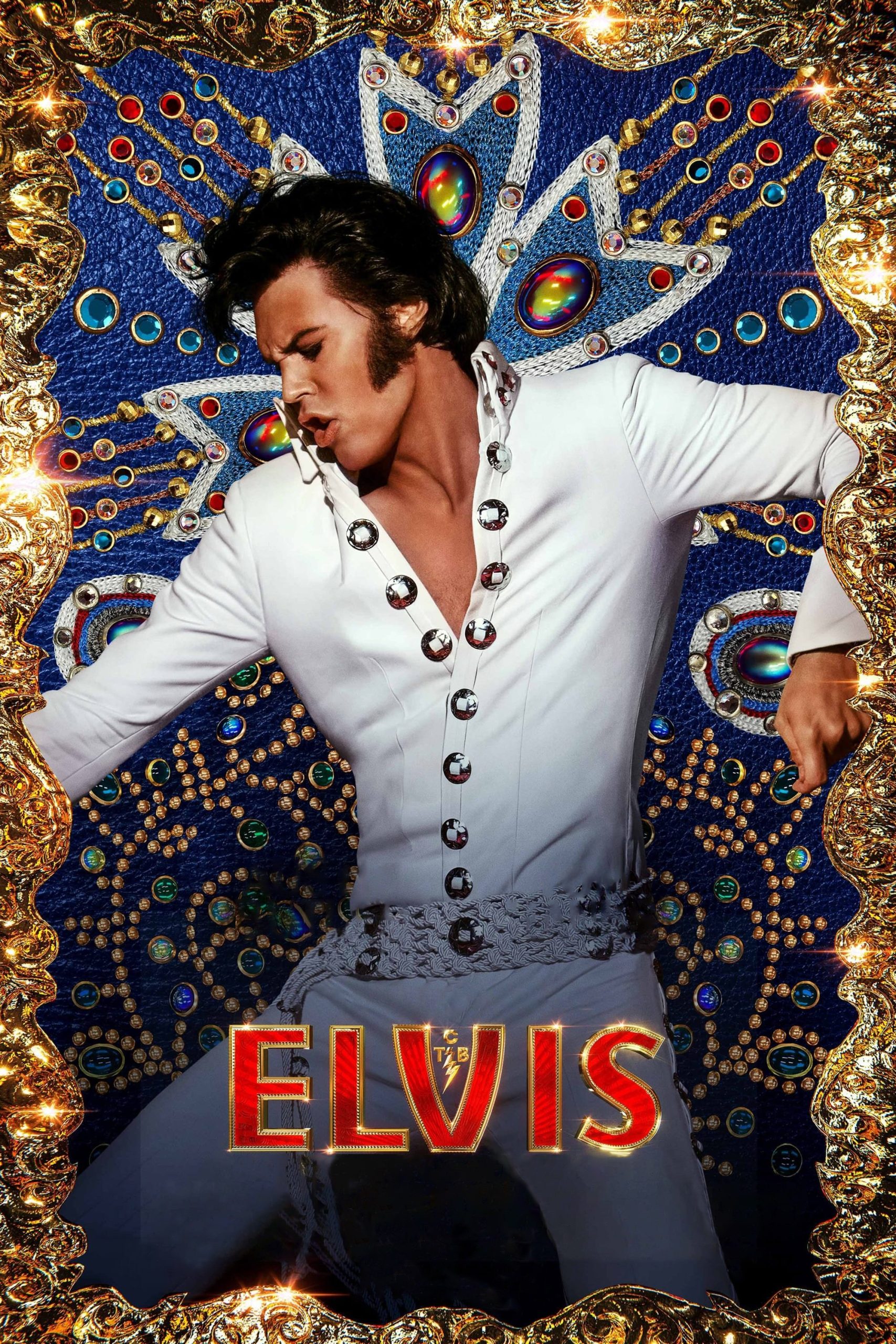
Beyond the direction, I was drawn into the film’s meticulous costuming and set design. Every sequin, every light, every swirl of ‘50s Memphis or glitter-drenched Vegas is rendered in lush detail. This commitment to sensory overload creates a kaleidoscopic portrait not just of a man, but of a country in the throes of change. I was reminded at every turn how much of the Elvis phenomenon was tied to the feverish cultural moment out of which he emerged—when music, sexuality, and politics violently collided.
My Thoughts on the Cultural Impact & Legacy
Whenever I step back and reflect on “Elvis,” I see a film that doesn’t merely rehash the well-worn facts of a superstar’s life—it reframes a giant for a twenty-first century audience, all while challenging me to consider how (and why) we remember our icons. As a film critic and cinephile, this biopic feels like a direct confrontation with the machinery of spectacle, and with the price paid for living as a cultural lightning rod. The resonance goes far beyond nostalgia: it’s a film wrestling with legacy, memory, and the seductive—and toxic—trappings of celebrity.
On a personal level, I can’t overstate how much this movie has shifted my understanding of the genre. For years, music biopics have leaned on safe, formulaic approaches. “Elvis” explodes those conventions with bravado, showing me that form is just as important as content in immersing viewers in the lived experience of a legend. It’s a valuable reminder that the movies can—and should—spark surprises, provoke strong reactions, and underline why a story endures. The sheer visceral quality of Luhrmann’s vision ensures I don’t just watch a biography, but feel the ecstasy and agony of an artist’s existence.
I find it remarkable how “Elvis” has inspired renewed interest in his discography, as well as honest conversations about his complex legacy. It’s no longer enough to see Elvis solely as the King; the film’s courage in wrestling with questions of race, appropriation, and personal responsibility makes it, for me, an indispensable modern document. As a curator, this film redefines the genre standard for what a musical biopic can achieve, raising the bar for future filmmakers. I frequently revisit its standout sequences and share them with fellow cinephiles—not because it’s flawless, but because it dares to reach for something grander than formulaic hagiography.
Fascinating Behind-the-Scenes Facts
One of the production aspects that fascinated me most was the exhaustive search for the right actor to play Elvis. Baz Luhrmann auditioned dozens of candidates, but it was Austin Butler’s raw, emotional video performance of “Unchained Melody” filmed in his bathrobe at home that ultimately clinched the part. I’ve read that Butler went so deep into his role that he continued speaking in Elvis’s accent even after shooting wrapped—his total immersion was, for me, a key factor in the performance’s authenticity.
I was also intrigued by how the film’s musical elements were handled. Unlike many biopics that rely heavily on lip-syncing, Butler performed many of the early-era songs himself, training with vocal coaches to recreate Elvis’s distinct style. What really struck me is how these performances helped ground the larger-than-life visuals, giving the concert scenes a sense of spontaneity and realness rarely captured in musical biopics.
From a technical standpoint, the team faced huge challenges recreating the intensity of crowd scenes, especially during the infamous first performances and ‘68 Comeback Special. Rather than relying exclusively on digital effects, Luhrmann’s crew meticulously built multi-level sets, filled them with hundreds of extras, and captured the chaos with handheld cameras. This hands-on approach made the depicted frenzy and adulation feel, to me, almost palpable—reminding me how much craftsmanship can elevate the spectacle.
Why You Should Watch It
- Austin Butler’s transformative performance—one of the most gripping and physically committed portrayals I’ve seen in years
- Baz Luhrmann’s dazzling, immersive style—the direction pushes the limits of the music biopic, offering a cinematic experience that’s vibrant and unforgettable
- A fresh, unflinching look at both the myth and the man—challenging and reshaping how we view cultural legends and their impact on American identity
Review Conclusion
Having watched “Elvis” multiple times, I keep returning to it not just for the spectacle, but for the jolt of energy and daring ambition that pulses throughout. It’s a film that refuses to play it safe, and, as a critic, I deeply value that level of risk-taking. Luhrmann’s operatic vision, paired with Butler’s indelible lead performance, make this biopic soar far above its genre peers. Though not without its excesses or divisive creative flourishes, I have come to regard “Elvis” as an essential, conversation-sparking artifact of our ongoing fascination with celebrity and art.
For all these reasons, I’d give “Elvis” 4.5 out of 5 stars—a near-masterpiece whose flaws are themselves part of its roaring, riotous legacy.
Related Reviews
- “Rocketman” (2019) — I recommend this film for anyone who was drawn to the heightened emotion and psychedelic visual style of “Elvis.” Like Luhrmann’s work, Dexter Fletcher’s take on Elton John uses musical fantasy to dig deep beneath the celebrity persona, offering a kaleidoscopic, emotionally raw journey through the cost—and joy—of stardom.
- “I’m Not There” (2007) — This cinematic mosaic about Bob Dylan, directed by Todd Haynes, resonates with me as another example of a genre-defying music biopic. Its fragmented narrative and audacious casting mirror Luhrmann’s willingness to experiment with form, and it’s brilliant for viewers interested in how myth and identity intertwine.
- “Walk the Line” (2005) — James Mangold’s Johnny Cash biopic feels grounded and intimate compared to the spectacle of “Elvis,” but it shares a deep focus on the inner turmoil, relationships, and cultural significance of a musical giant. I look back on it as a powerful precursor to the more radical flourishes of Luhrmann’s film.
- “Moulin Rouge!” (2001) — Returning to Baz Luhrmann’s earlier, boundary-pushing musical, I see clear stylistic echoes in “Elvis”—from bold editing to a maximalist soundtrack. If you find yourself swept away by the energy of “Elvis,” Luhrmann’s earlier work is a must-see for its genre-bending, heartfelt extravagance.
For readers looking to go deeper, these perspectives may help place the film in a broader context.
🎬 Check out today's best-selling movies on Amazon!
View Deals on Amazon