
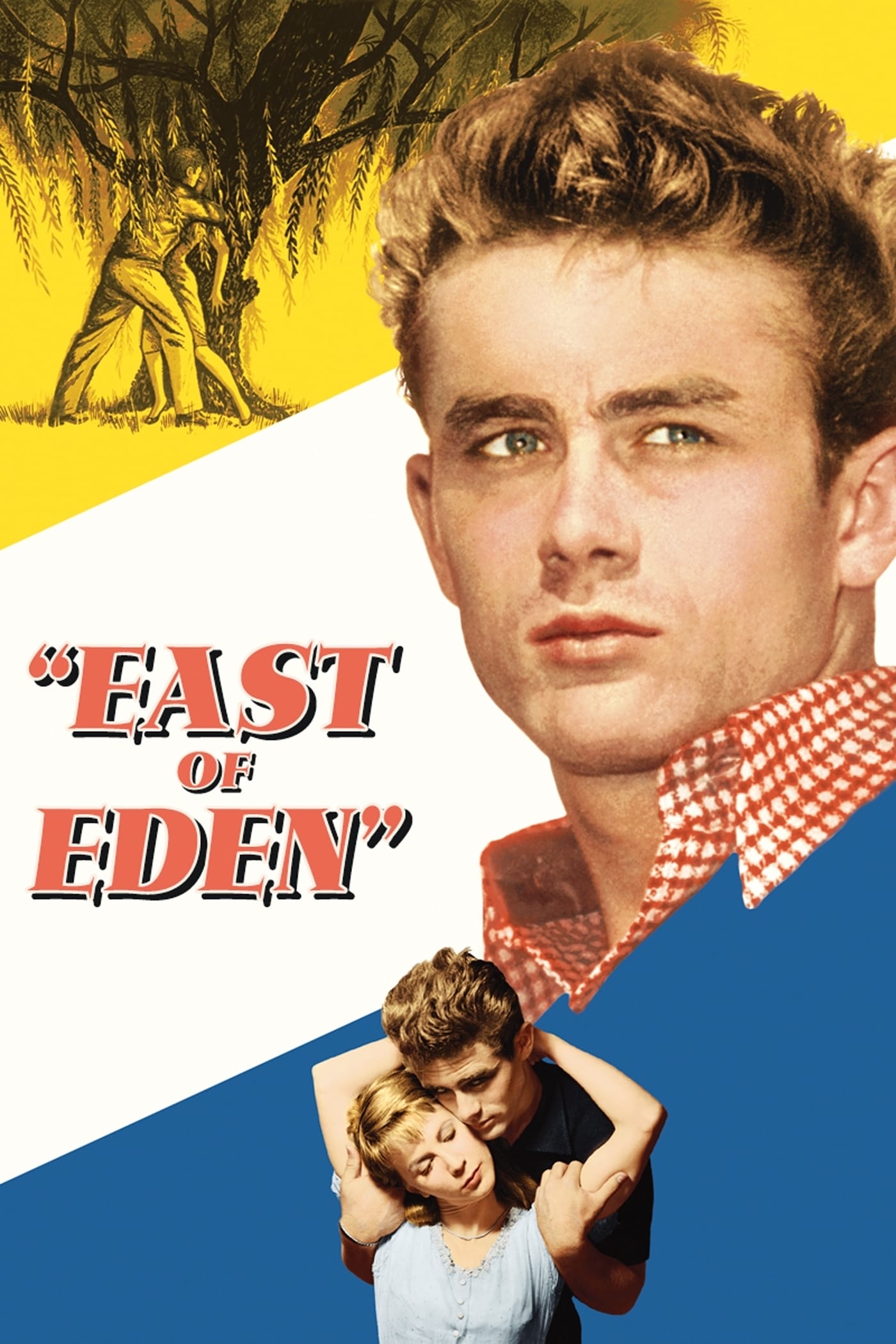
Plot Summary
As I watched Elia Kazan’s gripping 1955 drama, adapted from John Steinbeck’s celebrated novel, I found myself immediately drawn into the emotionally charged world of Salinas Valley, California. Set against the backdrop of World War I’s looming tensions, the story centers on two brothers, Cal and Aron, burdened by their own version of sibling rivalry, paternal expectations, and the search for identity. I noticed Kazan’s approach isn’t to spoon-feed details—instead, the narrative unfolds with a quiet intensity, inviting me to piece together the undercurrents of longing, jealousy, and hope.
The film’s plot hinges on Cal, whom I see as the brooding outcast yearning for the affection of his stern father, Adam. Aron, by contrast, is the favored, seemingly perfect son, while their mother’s absence leaves jagged wounds that ripple through every relationship. The story’s dramatic pulse beats strongest in Cal’s erratic journey—how he wrestles with love, guilt, and a desperate need to be seen as good. I felt deeply moved by the way Kazan teases out these character arcs, always hinting at secrets beneath the surface.
Without divulging too much, I want to caution that some powerful twists change the course of the family’s fate. If you don’t want any spoilers, I’ll just say the film navigates familial betrayal, hidden truths, and the sharp edges of forgiveness. Watching the tensions reach their boiling point, I was struck by how the smallest actions have far-reaching consequences, and how love, in families, doesn’t always follow a neat, predictable path.
Key Themes & Analysis
What grips me most about East of Eden is how it interrogates the fundamental struggle between good and evil. This isn’t the kind of morality tale that’s easy or neat; instead, I felt Kazan prompting me to question whether people are doomed by their flaws or capable of transcending them. Cal’s yearning for approval is the emotional engine of the film, embodying humanity’s perennial doubt—is love ever truly unconditional, or are we always measuring up and falling short?
Kazan’s directorial touch is unmistakable. Every frame simmers with tension—scenes rarely resolve with a tidy bow, and characters stare just a little too long, hesitate at just the wrong moment. The cinematography stands out to me for its masterful use of light and shadow. For instance, Cal’s internal conflict often shows up as sharp contrasts—sunlit fields that seem to mock his isolation, stark interiors where secrets hover like ghosts. I found the camera’s intimacy almost relentless, as if I were complicit in the emotional storms surging beneath the surface.
James Dean’s performance as Cal is nothing short of revelatory. This film cemented for me why Dean became an enduring symbol of youthful angst and rebellion. His vulnerability, the way he fidgets and stares, speaks volumes—especially in contrast to the rigidity of Raymond Massey’s Adam, or Julie Harris’s ethereal Abra. Even with the inherently theatrical touches typical of 1950s studio films, Kazan draws out moments of rawness that feel profoundly modern. Every character is given texture; their struggles with forgiveness, pride, and self-discovery feel deeply personal, even universal.
I was especially struck by the strong presence of Steinbeck’s literary themes, but not without Kazan’s cinematic flair. There’s the biblical allusion—the story riffing on Cain and Abel—but it never becomes heavy-handed. Instead, I see the film turning these old archetypes into living, breathing people. Kazan’s direction ensures the ‘good son/bad son’ paradigm stays ambiguous, never veering into melodrama. Ultimately, what lingered with me was the film’s insistence that identity can be remade, and that redemption, while elusive, is never truly out of reach.
My Thoughts on the Historical & Social Context
What fascinates me about East of Eden is how profoundly it reflects the anxieties and aspirations of 1950s America. Watching it, I felt like I was peering through time to a nation wrestling with questions of conformity, rebellion, and moral responsibility. Made in the aftermath of World War II and on the cusp of seismic shifts in American culture, the film’s characters seem to embody the nation’s collective uncertainty. The era was defined by a yearning for normalcy juxtaposed with a deep-seated fear of the unfamiliar or uncontrollable; Cal’s existential search for his place in the family and in society resonated with a generation questioning the price of fitting in.
Personally, I find it impossible to separate the film’s turbulence from the social context in which it was released. The 1950s was a decade that outwardly idolized the nuclear family and represses its shadows. Yet here, I witness a film that guts the myth of the perfect household, laying bare the messiness of love, rivalry, and parental disappointment. James Dean, in particular, seems to me like the prototype for later figures in American popular culture—the misunderstood outsider, radiating both vulnerability and defiance. It’s easy to see how this would have resonated with young viewers grappling with their own postwar uncertainties.
Today, I’m reminded how these motifs still echo—questions about identity, belonging, and the fear of not being enough remain as urgent as ever. At a moment when so many are challenging traditional roles and expectations, I see East of Eden as almost prophetic: it urges us to acknowledge our brokenness and still seek connection. It matters now because it refuses easy answers, and because its characters feel like us—messy, contradictory, striving. That’s why, for me, it still feels urgent, illuminating, and relevant.
Fact Check: Behind the Scenes & Real History
Digging into the production of this film, I uncovered details that make its achievement all the more remarkable. First, I learned that casting Cal was a battle. Director Elia Kazan fought the studio to cast James Dean—then an unknown—against the wishes of producers who found Dean’s mannerisms too unconventional. Dean’s raw, restless energy wasn’t just an act; Kazan encouraged him to bring his own vulnerability and unpredictability to the role, sometimes letting scenes take shape through improvisation. One legendary moment, where Cal impulsively hugs his father, was unscripted and so surprising that the actor playing Adam (Raymond Massey) was visibly shaken, heightening the film’s authenticity.
Second, although the story’s setting is rooted in a real Salinas, California, and inspired by actual events in Steinbeck’s family history, the film takes substantial creative license with historical accuracy. The characters are composites, their struggles amplified and stylized to highlight universal themes rather than literal fact. That’s not a flaw—I actually think this allows Kazan to distill the emotional truth of Steinbeck’s vision, creating a family dynamic that draws from real social currents but transcends any one era or incident.
What I find most fascinating, however, is the technical ambition of Kazan and his team. East of Eden was the first of only three films James Dean would complete before his untimely death, and its production involved innovative use of CinemaScope—that wide-screen format was relatively new, and Kazan used it to amplify the psychological distance between characters, as well as the expansive setting of rural California. Those panoramic shots aren’t just pretty; they reinforce how isolated Cal feels even amid all that open space, a metaphor that Kazan leverages to perfection.
Why You Should Watch It
- A singular, electrifying performance by James Dean that set the standard for a generation of actors
- An unflinching, modern-feeling exploration of family, identity, and forgiveness
- Innovative cinematography and direction that bring Steinbeck’s world to life with uncommon emotional depth
Review Conclusion
For me, East of Eden stands as a high-water mark in American cinema—not just for its historical importance, but for the way it wields timeless questions with searing emotional precision. Watching this film, I was reminded how movies can make us squirm with recognition, and how stories spun out of one era’s anxieties can resonate through the decades. If I had to sum up why I still recommend it, it’s that the film never lets its characters—nor its viewers—off the hook. It asks hard questions about who we are, what we owe to those we love, and whether forgiveness is ever really possible.
For its emotional honesty, technical invention, and enduring relevance, I give East of Eden my highest recommendation: 5/5 stars.
Related Reviews
- Rebel Without a Cause (1955): I consider this essential viewing if you’re fascinated by James Dean’s electrifying portrayal of generational angst. While it explores suburban malaise rather than rural family drama, its examination of teenage alienation and rebellion forms a powerful thematic companion to East of Eden.
- Giant (1956): For those drawn to epic American sagas tackling family legacy, social change, and identity, Giant offers a sweeping look at generational conflict and evolving values—again featuring Dean in a transformative role.
- A Place in the Sun (1951): If you’re interested in films that confront the dark side of the American Dream through complex, emotionally fraught relationships, this classic George Stevens romance-drama delivers a riveting blend of ambition, guilt, and desire.
- Hud (1963): This Western-inflected drama dives deep into fathers, sons, and the question of what it means to be a “good man” amid shifting social landscapes. In my view, Hud’s moral ambiguity and intergenerational tension make it a spiritual sibling to East of Eden.
If you want to explore this film beyond basic facts, you may also be interested in how modern audiences respond to it today or whether its story was inspired by real events.
🎬 Check out today's best-selling movies on Amazon!
View Deals on Amazon