
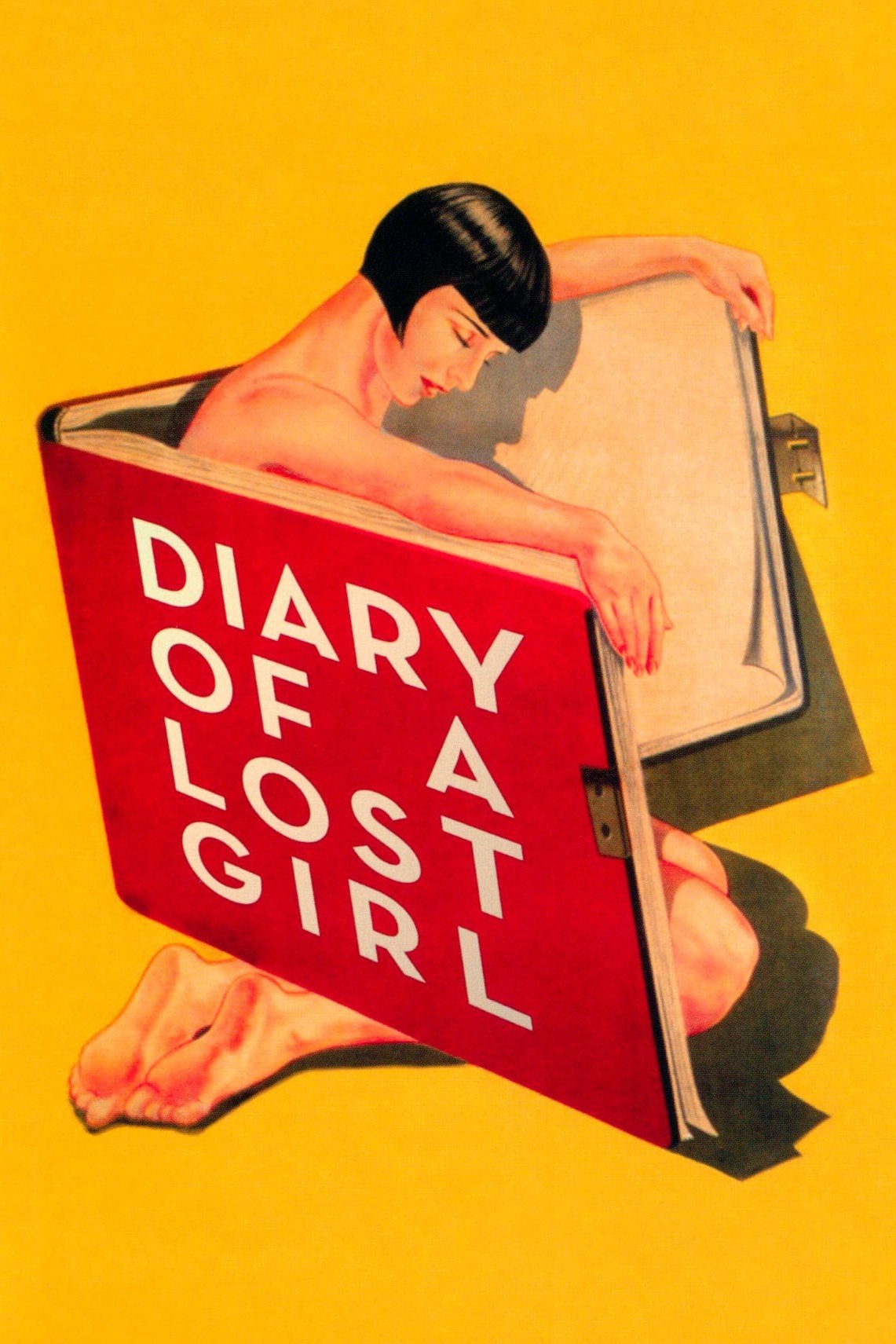
Plot Summary
Every time I sit down to experience G.W. Pabst’s Diary of a Lost Girl, I’m reminded of just how much silent film can communicate once you commit yourself to its rhythm. Pabst creates a world where every gesture, shadow, and glance feels loaded with meaning, and I find myself completely transfixed by the story of Thymian Henning, played with incomparable subtlety by Louise Brooks. Watching Thymian’s journey unfold, I felt both protective and helpless in the face of her troubles—something that to me is the mark of a narrative truly engaged with real emotional stakes.
Without diving into explicit spoilers, I want to sketch out the road that Thymian travels. She begins as an innocent young woman, sheltered within her family’s pharmacist shop. However, after a betrayal close to home, her life spirals in ways both cruel and inevitable. I was shaken by how quickly Thymian’s circumstances evolve from comfort to hardship—not because of her own choices, but because of the injustice and hypocrisy embedded in her community. This film’s plot, to me, works like a slow-building storm: at first, the breeze is gentle but ominous, but soon, the winds whip, and the consequences escalate out of control. Pabst’s gift lies in refusing to allow melodrama to override realism; every character, every setting, feels painfully plausible.
Major spoiler warning: If you haven’t seen the film and hope to avoid discovering key twists, please skip the remainder of this paragraph. By the time Thymian finds herself cast out, enduring the indignities of a reform school and eventually navigating the world of prostitution, I am always struck by how deftly Pabst sidesteps exploitation in favor of compassion. The film positions the audience as witnesses, not voyeurs; we sympathize with Thymian not as an object of pity, but as a full, complicated human being.
Moving out of plot and into the psychological terrain the film covers, I feel the narrative is less about individual “moments” and more about the long, unyielding tension between social norms and private suffering. That sense of slow, inescapable unease is precisely why the plot, even when familiar, never feels rote to me—each scene pulses with a sense of real consequence.
Key Themes & Analysis
What has always made Diary of a Lost Girl so unforgettable is how it channels the essence of German silent cinema into a vision that feels intimate and unguarded. At its core, I find the film grapples with themes of societal judgment, the illusion of morality, and the survival of empathy in a mechanized world. The hypocrisy of so-called “respectable” institutions looms over Thymian’s life—authorities imprison her while excusing themselves, and family loyalty is weaponized and withheld with devastating coldness.
What’s fascinating is how Pabst’s directorial style amplifies these themes. He favors long, deliberate takes and stark compositions—windows framed like prison bars, faces glimpsed through mirrors, corridors that taper into darkness. This visual approach, which I feel borders on expressionist but remains grounded, renders the institutional spaces Thymian inhabits oppressive and inescapable. These shots are not just decorative; every frame seems to echo Thymian’s internal dread.
Whenever I revisit the film, I’m drawn anew to Louise Brooks’ performance. She infuses Thymian with a radiant openness and subtlety that defines the entire production. In a world of grandiose silent-film acting, Brooks stands apart by doing less—her micro-expressions, her composed stillness, say more than paragraphs of intertitles ever could. There’s a resolve in her gaze that transcends words or even cultural context; it’s what makes her victimization all the more heart-wrenching and her dignity impossible to steal.
The motif of lost innocence recurs throughout the film, amplified by atmospherically charged cinematography. Shadows creep over faces, and the claustrophobic set design turns bedrooms and offices into emotional gauntlets. I particularly notice how light is rationed—sunshine peers through high windows like hope always out of reach. The aesthetic choices work together not just to make us feel something intellectually, but to actually physically situate us in Thymian’s world of uncertainty.
Pabst’s direction interrogates the era’s conventional morality with surgical precision. The reform school sequences are especially powerful to me: he refrains from sensationalism, showcasing discipline as a tool of cruelty rather than rehabilitation. The line between respectability and depravity thins to nothing, and as a viewer, I felt complicit in questioning who and what authority really protects.
Moving beyond narrative and visuals, I see the film’s true thematic force in its profound compassion. For me, this is a rare quality in early cinema, particularly when tackling subjects like sexual violence, parental failure, and economic exploitation. Pabst does not sentimentalize Thymian’s suffering but instead positions her as someone who, by surviving, disrupts the very terms under which she’s condemned. Her resilience rejects the notion that any one “mistake” spells the end of a person’s value.
For all its harshness, the movie never lets go of hope entirely. The mere act of writing her diary becomes its own radical gesture for Thymian; it’s a record not just of her degradation but of her enduring agency and her refusal to let her voice be erased. Every time I watch, I’m moved by how the film turns private narrative into public protest.
My Thoughts on the Cultural Impact & Legacy
Every time I think about Diary of a Lost Girl’s legacy, I reflect on how it carved out a space in film history for stories of women’s agency and suffering to be treated with seriousness and respect, rather than spectacle. To me, this film is not simply a relic of Weimar Germany but a living challenge to both artists and audiences. Its willingness to look directly at social injustice, especially around sexuality and gender, felt revolutionary the first time I saw it, and it continues to feel urgent today.
From a personal perspective as a curator and critic, I see this film as a foundational work that altered the trajectory of silent-era melodrama. Before Pabst, the genre tilted toward moralizing excess or sentimental catharsis; here, I find a precision and psychological realism that seems decades ahead of its time. Brooks’ Thymian stands as a quietly defiant figure—a woman refusing to collapse under the weight of collective scorn—something I rarely encountered in films of the 1920s.
It’s not just the story that pulls me back, though. The film’s impact can also be seen in how subsequent works about injustice, especially those exploring women’s social constraints, draw on its restrained but relentless depiction of institutional cruelty. Watching contemporary directors wrestle with themes of isolation, dignity, and agency, I constantly trace a line back to Pabst’s visual grammar and Brooks’ nuanced embodiment of sorrow and resistance.
Most personally, I’m struck by how Diary of a Lost Girl reverberates outside the boundaries of cinema. It forces me to examine my own reactions to stories of misfortune, to ask when empathy tips into voyeurism, or when judgment becomes its own kind of violence. This self-reflection is precisely what makes the film matter to me—not as a static museum piece, but as a live wire that continues to spark conversations about autonomy, sexuality, and the structures that so often betray the vulnerable.
This is why the film endures for me: not because audiences love “classic” cinema in the abstract, but because its moral and aesthetic innovations still shape how we depict—and empathize with—the marginalized. Pabst and Brooks invite us to see, not just watch, and to reckon with uncomfortable questions that, nearly a century later, continue to demand our attention.
Fascinating Behind-the-Scenes Facts
The more I learn about the production backdrop of Diary of a Lost Girl, the more my admiration deepens, not just for Pabst’s artistry but for the technical and personal risks everyone involved seemed to take.
One detail I find especially intriguing is that Pabst reunited with Louise Brooks specifically for this film after their collaboration on “Pandora’s Box,” another cornerstone of the silent era. Brooks was at a crossroads in her career, having turned down a lucrative offer from Paramount to stay in Germany—a move I consider a statement of artistic integrity over commercial safety. The palpable trust between director and actor manifests in Thymian’s layered vulnerability; I always sense that Pabst’s camera is “with” Brooks, not simply focused on her.
Beyond casting, I’m fascinated by the film’s innovative use of lighting and set design, both hampered and enhanced by the technological limitations of the era. The sets, particularly the oppressive reform school and Thymian’s claustrophobic home, were constructed to accentuate the psychological isolation of the protagonist. Cinematographer Sepp Allgeier devised creative methods to channel light through narrow slits and high windows, emphasizing both surveillance and longing. Shooting with heavy, unwieldy cameras, the crew had to adjust sets for each shot, giving many scenes their signature “boxed-in” feel—a deliberate mimicry of Thymian’s internal experience that I find both technically and emotionally effective.
Another piece of production trivia continues to resonate with me: the film narrowly escaped heavy censorship in Germany, a testament to its daring subject matter. Several scenes depicting the harshness of the reform school and the realities of prostitution drew the ire of censors, and key sequences were originally trimmed or altered in different national markets. The version we view today is, in part, a patchwork reconstructed from surviving prints—meaning that every time I watch, I’m witnessing not just a work of art but a historical artifact shaped by battles over artistic freedom.
Behind every frame, then, lies a web of creative problem-solving and social resistance that only deepens my respect for what Pabst and his collaborators achieved under such pressure.
Why You Should Watch It
- The film’s complex portrayal of institutional cruelty and empathy remains startlingly relevant; it invites viewers to grapple with authority, stigma, and justice in a way that feels anything but dated.
- Louise Brooks delivers a performance that still stuns with its naturalism, depth, and quiet defiance—I’m convinced her Thymian stands among cinema’s most affecting protagonists, silent era or otherwise.
- The technical mastery and inventive cinematography elevate the film, seamlessly blending intimate storytelling with high-stakes social critique—making it a visual and emotional experience unlike any other from the period.
Review Conclusion
If I had to distill my feelings about Diary of a Lost Girl into one statement, it’s that this film shattered any preconceptions I had about the limitations of silent cinema. Every frame pulses with urgency, compassion, and a modern sensitivity to justice. G.W. Pabst crafts not just a tale of injustice but a deeply humane meditation on survival under impossible circumstances. The subtlety and power of Louise Brooks’ performance anchor the film in emotional truth, and the visual strategies operate as a psychological parallel to the narrative’s intensity.
It’s not simply a movie I admire, but one I return to—each viewing shifting my understanding, prompting self-reflection, and reminding me that art can be both a mirror and a call to action. I wholeheartedly recommend this film to anyone interested in the historical foundations of feminist cinema, social critique, or just extraordinary storytelling.
My final rating: 5/5 stars.
Related Reviews
- Pandora’s Box (1929) – I’m always struck by how this Pabst-Brooks collaboration similarly explores transgression, innocence, and the dangers lurking within social conformity. If you’re moved by Louise Brooks’ performance and the way Pabst wields social critique, this companion piece is indispensable.
- The Crowd (1928) – King Vidor’s silent masterwork also examines ordinary people confronted by society’s implacable expectations. Though the tone is different, I find its empathetic lens and visual inventiveness echo Pabst’s work.
- The Blue Angel (1930) – Josef von Sternberg’s exploration of downfall and societal censure, led by Marlene Dietrich, resonates with the themes of lost innocence and rigid morality. The German milieu and emotional directness make it a meaningful thematic pair.
- Mädchen in Uniform (1931) – This film directly tackles institutional cruelty and female subjectivity in a German school setting. Its boldness, psychological focus, and critique of authority consistently remind me of what makes Diary of a Lost Girl so enduring.
For readers looking to go deeper, these perspectives may help place the film in a broader context.
🎬 Check out today's best-selling movies on Amazon!
View Deals on Amazon