
Plot Summary
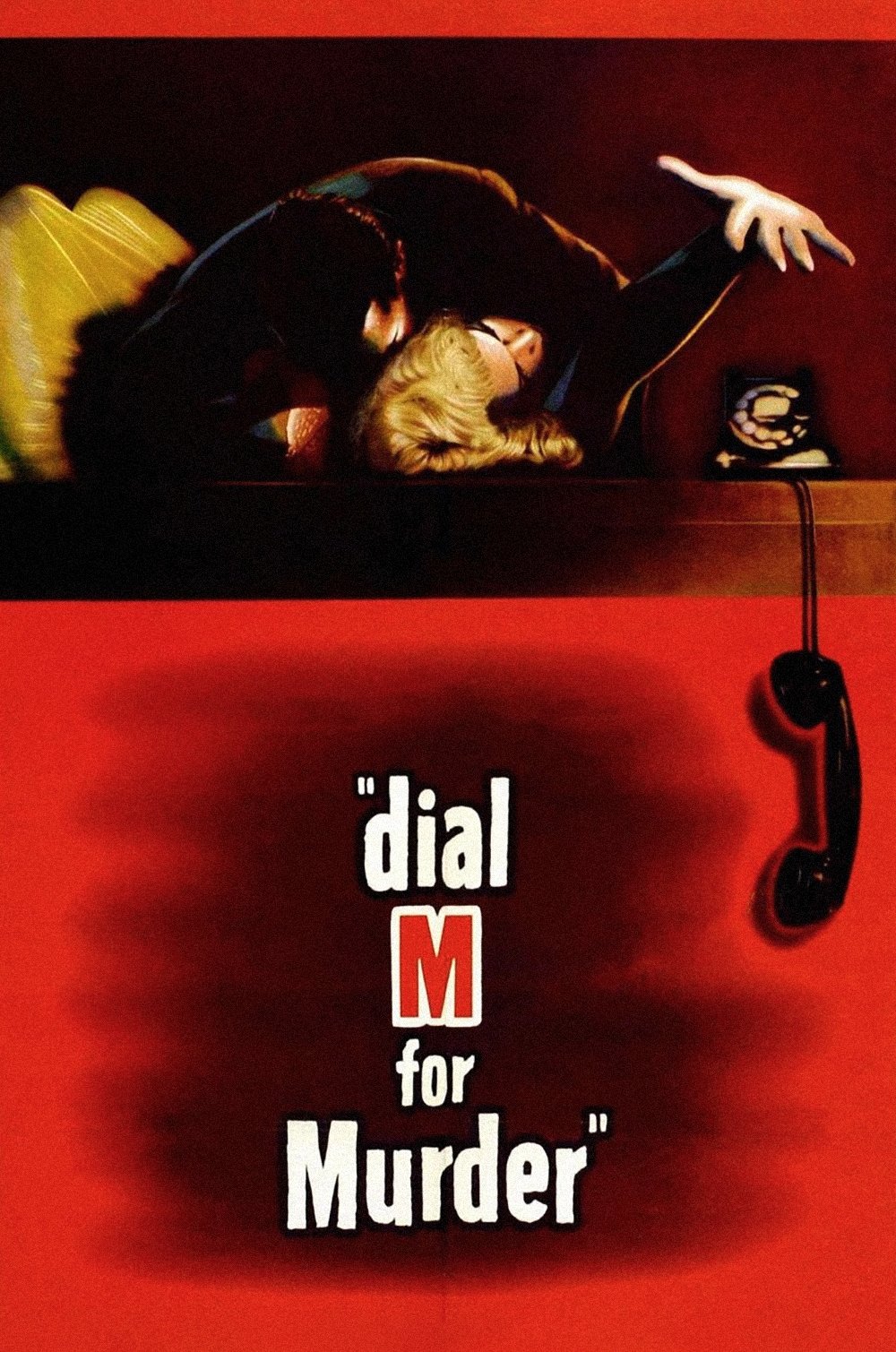
Watching Dial M for Murder always takes me back to that rare feeling of suspense I rarely manage to find in modern cinema. The touch of Alfred Hitchcock, the undisputed master of psychological tension, is everywhere. As someone deeply drawn to thrillers, I find myself held by the film’s carefully crafted web. The plot revolves around Tony Wendice, a former professional tennis player who seems outwardly charming, even to those closest to him. Beneath the surface, though, Tony hides layers of jealousy and manipulation that rapidly unfold as he conceives a seemingly foolproof plot to have his wife, Margot, murdered following his discovery of her affair with the writer Mark Halliday.
From the outset, I’m pulled into Tony’s world not as a participant, but as a deeply invested observer—watching how every calculated move threatens to unravel the precarious domestic tranquility he projects. Margot, caught between her husband’s manipulations and her own secrets, exudes the anxiety of someone trying to hold her life together while realizing she may be several steps behind in understanding what’s at stake. Mark, meanwhile, brings with him not only romantic tension but the outsider’s clarity that proves essential as events spiral out of control.
It’s one of those scripts where, as a viewer, I’m given just enough knowledge to stay one crucial step ahead of the characters—but not so much that the tension fades. The way Hitchcock engineers suspicion and tightens the narrative loop is masterful. Every scene between Tony and his would-be accomplice is a kind of dance—I can almost feel the beads of sweat on each character’s forehead. Without delving into spoiler territory, I’ll just say that the second half of the film turns the screws even tighter, with police inspector Chief Inspector Hubbard slowly connecting the dots and putting pressure on Tony’s perfect plan. It’s a film that makes the audience complicit in a dangerous game and leaves me questioning every motivation and every gesture unraveling on screen.
Key Themes & Analysis
What keeps drawing me back to Dial M for Murder isn’t just its elegant plotting, but the way it makes me grapple with issues of morality, trust, and the facades we wear in intimate relationships. I find the theme of marital betrayal at the heart of the story deeply resonant. There’s something profoundly unsettling in watching Tony’s calculated malice, spun from a mixture of pride, jealousy, and wounded ego. Hitchcock’s signature style—his almost voyeuristic camera work—makes me feel as though I’m eavesdropping on private confessions, complicit in the film’s quiet, building dread.
The confined setting—most of the action unfolds within the walls of the Wendices’ London apartment—amplifies the claustrophobic suspense. It’s a choice that, to me, shows Hitchcock’s genius for turning limitation into opportunity. The apartment isn’t just a backdrop but a silent witness to secrets, lies, and deadly intentions. Every prop—the key under the carpet, the phone, the sewing scissors—becomes loaded with layered meaning, making me hyperaware of the ways everyday objects can gain sinister significance.
As I watched, I couldn’t help but notice how the film interrogates the fragility of trust—especially within the bounds of marriage. Margot’s naivete isn’t just a character flaw, but a thematic warning about the false sense of security we often cling to in familiar relationships. Hitchcock uses lighting and camera placement to great effect, often trapping his characters in frames-within-frames, visually reinforcing the feeling of entrapment and deception. The use of shadows—Tony’s looming form contrasted with Margot’s vulnerability—constantly reminded me that nothing is quite as it seems.
The performances are a masterclass in understated acting. Ray Milland imbues Tony with a blend of sophistication and chilling emotional detachment that makes the character’s transformation from aggrieved husband to would-be murderer believable. Grace Kelly, for me, is at her most evocative as Margot, especially in scenes where she’s pushed to psychological breaking points. I was particularly struck by the physicality of her fear, the way her body seems to implode as her world unravels. John Williams, as Inspector Hubbard, delivers a performance that oozes quiet competence—never flashy, but anchored in a sense of inevitable discovery.
One of the elements that stands out every time I revisit this film is Hitchcock’s use of pacing. He allows tension to simmer rather than boil over, letting suspense grow organically from whispered conversations, sideways glances, and half-heard phone calls. For me, the meticulous arrangement of suspense, rather than sudden shock or gore, is what makes this film timeless. It demands an attentive viewer—someone willing to look for clues in the margins and interpret emotional subtext, not just wait for overt revelations. The experience is almost like reading a classic whodunit novel, with the director’s steady hand guiding me through each twist and turn.
My Thoughts on the Historical & Social Context
I can’t help but see Dial M for Murder as a reflection of the anxieties and norms of the early 1950s. The world was in a state of transition—recovering from World War II, yet marked by a return to so-called domestic stability. In my eyes, the film gently exposes the instability lurking beneath that so-called postwar “normalcy.” Marital roles were rigidly defined, and public discourse rarely acknowledged the possibility of marital dissatisfaction, much less infidelity.
As someone who loves to analyze how films reflect their times, I see the character of Margot as a stand-in for many women in that era—expected to be loving, loyal, and largely passive. Watching her fight for her own survival feels subversive even now. Hitchcock doesn’t lecture us about social roles, but I sense his subtle critique simmering beneath the surface. The plot hinges on Margot’s quiet willingness to believe the best about Tony—an attitude that both mirrors and critiques the era’s faith in traditional marriage. The film’s treatment of jealousy, control, and entitlement also resonates with the power dynamics that structured mid-twentieth-century relationships.
There’s something particularly pungent in how Dial M for Murder presents the veneer of polite society as a mask for darker impulses. The Wendices’ upper-middle-class lifestyle is immaculate on the outside, but Hitchcock directs my gaze to the growing cracks—financial stress, emotional disconnection, suppressed resentments. The film, to me, questions whether honesty and safety can really be achieved in relationships ruled by appearance over substance.
Even decades later, I’m astounded at how relevant these questions remain. We still grapple with issues of trust and betrayal, with the consequences of denying our real feelings for the sake of social order. I find the film’s refusal to simplify or moralize refreshing—it lingers in that gray area, inviting introspection rather than easy judgment. Whether seen as a cautionary tale or a suspenseful puzzle box, Dial M for Murder still speaks to our collective doubts about who—and what—we really know.
Fact Check: Behind the Scenes & Real History
Whenever I delve into the backstory of Dial M for Murder, I’m always struck by a few key production anecdotes that highlight both technical innovation and unexpected hurdles. Perhaps most famously, Hitchcock originally shot the film in the 3D process—known at the time as “Natural Vision”—even though most contemporary audiences never got to experience it this way. I find it fascinating that Hitchcock adapted his staging and blocking to play with depth, having characters reach into the audience’s space, arranging objects at varying focal planes, and integrating a vertical dimension rare for the era’s thrillers. The visual choices were directly influenced by the prevailing but short-lived 3D craze of the early 1950s.
A second detail that always intrigues me is the casting process, particularly with Grace Kelly. Though Kelly was just starting to make her mark in Hollywood, Hitchcock saw something in her that other directors apparently overlooked. It’s well-documented that he personally championed her for the role of Margot, gently mentoring her throughout production. This partnership helped launch Kelly’s later collaborations with Hitchcock, but here, I feel she was pushed to an emotional register rarely demanded of actresses at the time. Watching her performance, knowing Hitchcock’s meticulous and sometimes demanding methods, adds an extra layer for me as a viewer.
One final piece of trivia that makes me love this film even more relates to its origins. While the movie feels tightly cinematic, it’s actually an adaptation of Frederick Knott’s stage play. Hitchcock kept much of the confined, theatrical structure but used sound and camera movement to break up the staginess. The result is a film that feels both intimate and tension-filled, but always distinctly cinematic rather than a mere stage translation. For me, this blending of theatrical and cinematic language is a testament to Hitchcock’s transformative approach. The story is not based on a true crime, but its plausible step-by-step mechanics lend it an air of chilling realism—a “could this happen to me?” feeling that’s impossible to shake.
Why You Should Watch It
- This is one of the best examples of how psychological tension and character-driven conflict can outshine even the most expensive modern effects.
- If you love films that invite you to pay attention—where every gesture and line of dialogue might be a clue—this is as good as thrillers get.
- The performances, particularly by Grace Kelly and Ray Milland, are both emotionally nuanced and irresistibly watchable.
Review Conclusion
When I finish watching Dial M for Murder, I feel like I’ve witnessed a rare convergence of technical mastery and psychological depth. Hitchcock doesn’t settle for mere plot twists—he crafts an atmosphere where anxiety, suspicion, and longing intermingle in almost every frame. The film’s real genius, in my eyes, is how it uses the ordinary trappings of middle-class life to unearth something profoundly unsettling about the human psyche. I would rate it a 4.5/5—nearly flawless in execution, with an emotional impact that lingers long after the credits have rolled.
Related Reviews
- Rear Window (1954): This Hitchcock thriller shares a sharp focus on visual storytelling and suspicion within seemingly ordinary lives. Like Dial M for Murder, it challenges the viewer’s perception and draws tension out of domestic settings, with standout performances and a suspenseful mood that lingers long after viewing.
- Double Indemnity (1944): I love the way this film, a touchstone of classic film noir, delves into the darkness lurking behind polished exteriors and forbidden desire. It is equally rife with suspense and moral ambiguity, making it a must-watch if you’re fascinated by the consequences of hidden motives.
- Laura (1944): This stylish noir blends murder, romance, and psychological complexity in a way that feels spiritually akin to Dial M for Murder. The interplay of deception and investigation will likely appeal to anyone entranced by taut, character-driven mysteries.
- Blue Velvet (1986): Though from a much later era, David Lynch’s film evokes similar chills by unveiling the darkness beneath suburban tranquility. If, like me, you enjoy movies where the threat is both external and psychological, this film’s atmosphere and layered secrets will absolutely resonate.
If you want to explore this film beyond basic facts, you may also be interested in how modern audiences respond to it today or whether its story was inspired by real events.
🎬 Check out today's best-selling movies on Amazon!
View Deals on Amazon