
Plot Summary
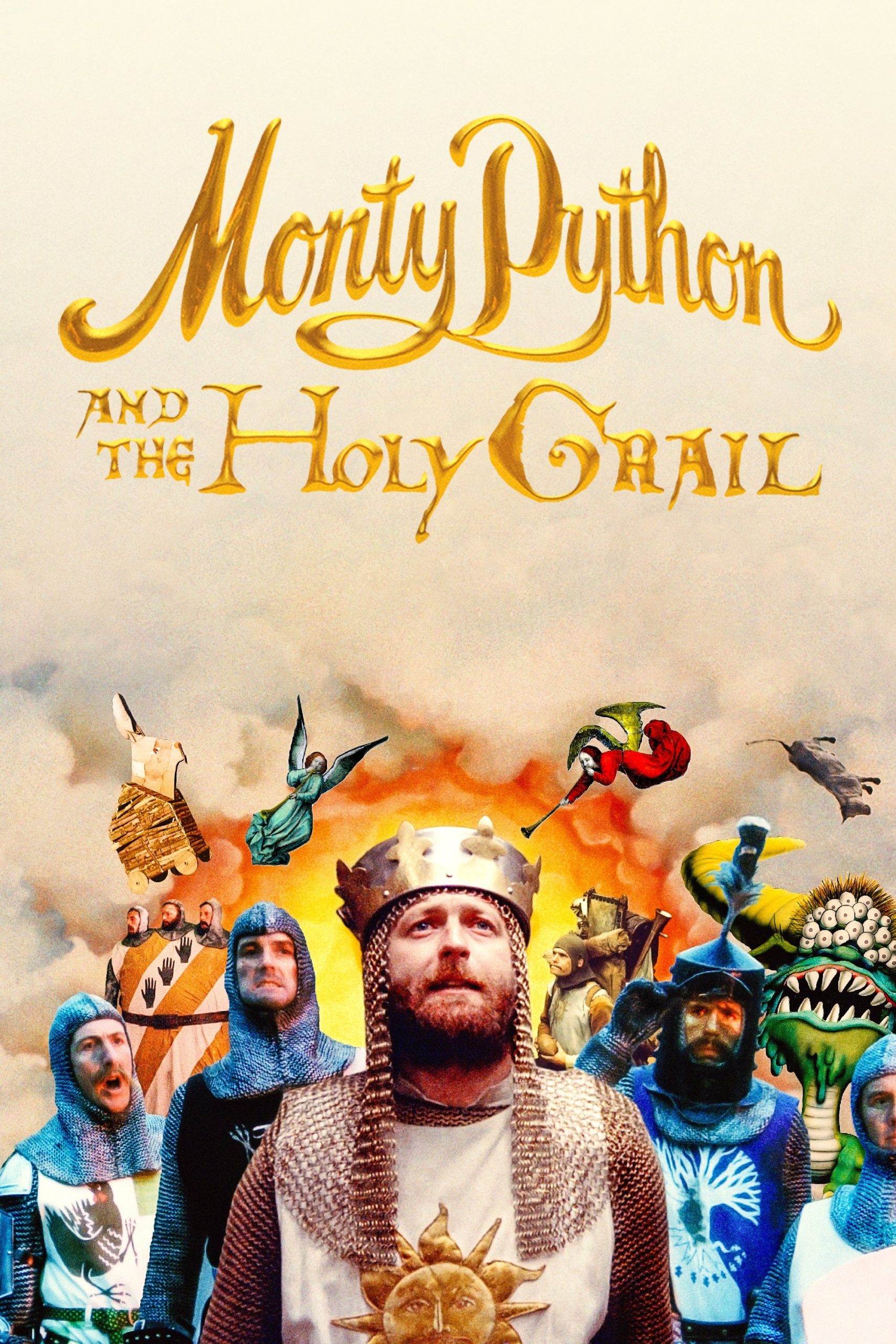
Whenever I revisit this iconic satire directed by Terry Gilliam and Terry Jones, I’m struck anew by its sheer willingness to mock everything we hold sacred about medieval legend and cinematic storytelling. Monty Python and the Holy Grail never once pretends to be a high-minded historical drama; instead, it gleefully dismantles the King Arthur mythos with a homemade sense of invention, irreverent British wit, and giddy narrative subversion. I think that’s its greatest strength: the plot is almost secondary to the film’s outright commitment to absurdity. Watching King Arthur (portrayed by Graham Chapman in what I consider a masterclass of deadpan comedy), I follow him as he recruits his ragtag band of knights—not with sweeping, noble fanfare but through comic sketches that expose the ridiculousness baked into the original legends. Sir Lancelot, Sir Galahad, Sir Bedevere, and that most hopeless of them all, Sir Robin, join him not for glory but because the film delights in poking fun at their failings, eccentricities, and overblown delusions.
Without spoiling the joy of the surprises for those yet to experience it, I can say that the group’s holy mission is a patchwork of laugh-out-loud encounters: peasants challenging feudal logic, knights who say delirious nonsense, a castle full of French taunters, and a killer rabbit that defies expectations in every possible way. Each scene is less about inching the plot forward and more about elevating the absurdity to new heights. For me, this structure feels like a series of exquisitely tied-together skits, unified by a biting commentary on authority, tradition, and the disarray of grand quests.
Yet, by the time the credits crashed onto the screen in their gloriously irreverent way, I found myself less absorbed by Arthur’s success or failure and far more invested in what each encounter revealed about the empty rituals of legend and the randomness—sometimes the meaninglessness—of heroic quests.
Key Themes & Analysis
What resonates most powerfully about Monty Python and the Holy Grail, at least in my experience, is not just the humor but the film’s willingness to subvert narrative and thematic conventions. I see the movie as a sustained assault on the solemn rituals of legend, the pomposity of “great men,” and the unquestioned authority of kings, gods, and knights. The film constantly invites the audience to question the point of legendary quests—why are these figures considered heroic? Why do we blindly follow tradition? I love how the lawyers, bureaucracy, and even historians intrude upon the so-called “epic” story, making it impossible for anyone to take the characters’ struggles seriously. There’s brilliance in the way the film’s structure feels like it’s folding in on itself: animated sequences by Gilliam regularly interrupt live-action scenes, soldiers debate political philosophy in the mud, and supernatural elements are upended by jokes that break the fourth wall.
Gilliam and Jones, with their background in sketch comedy, treat direction as both playground and laboratory. Visually, the film looks almost homemade—gloomy Scottish countryside, real castles, and those hilariously underfunded “horses” (really, it’s just coconuts). But for me, this lo-fi aesthetic doesn’t just add to the comedy; it underscores the collective delusion at play. The film’s distinctive cinematography—with handheld shots, quick zooms, and jumpy editing—keeps the energy boundlessly inventive. Whether it’s a violently abrupt cut from one bit of business to another or a dreamlike sequence in a foggy forest, I found myself always slightly off-balance, never quite sure what was coming next.
And speaking of performances: I never tire of watching the entire Python troupe (Chapman, John Cleese, Eric Idle, Terry Gilliam, Terry Jones, and Michael Palin) as they leap between roles, never letting a moment of self-importance survive more than a few lines of dialogue. Each actor’s comedic timing and delivery transform scenes that could otherwise be throwaway into iconic moments. For example, Cleese’s bravura tilt as the blood-soaked Black Knight, or Palin’s hilariously meek Sir Galahad, both reveal the elasticity of Python’s performance style. The film’s comedy is rich with repetition, irony, and sharp satirical distance—something I feel is missing from more straightforward parodies now.
Ultimately, I read Monty Python and the Holy Grail as more than a series of jokes. It’s a satire on the act of storytelling itself—a film that asks, “Why do we accept what we’re told, and who gets to do the telling?” The destabilization of narrative conventions (the infamous ending, for instance) is not just a gag, but a profound anti-authoritarian gesture. I always come away from the film inspired to poke holes in every grand narrative handed my way, cinematic or otherwise.
My Thoughts on the Cultural Impact & Legacy
Few films have managed to etch their strange, hilarious fingerprints all over the fabric of pop culture quite like this one. From my own perspective, what I find most astonishing is how Monty Python and the Holy Grail not only transformed comedic cinema in the 1970s but ushered in a new era of meta-humor and irreverence that contemporary filmmakers still borrow from, whether they’re aware of it or not. Its willingness to demolish established story structures and openly mock authority figures changed the landscape for everything that came after, especially in the satirical and parody genres.
I still remember the first time I watched it: I laughed at the surface gags, but what really caught me off guard was the depth of its commentary—the way it made me feel complicit in the absurdities of legend and politics, simply by watching and laughing alongside. It’s a template for how to lampoon the serious without losing intelligence or substance.
Looking at its influence, I see traces of Holy Grail’s comedic DNA in everything from television’s irreverent sketch shows to modern films that break the fourth wall or embrace deliberate anachronism. Cult comedies owe much of their volatile unpredictability to the blueprint established here. For me, this film doesn’t just set the benchmark for absurdist humor; it embodies the rare ability to make radical deconstruction both accessible and endlessly entertaining. That’s why it resonates with me still: every viewing feels like a masterclass in subversion, a permission slip for both artists and audiences to break rules and laugh at themselves.
As a curator, I’m always fascinated by how this film created its own vocabulary—those endlessly quoted lines, the playfully antagonistic dynamic between audience and performer, the edge-of-chaos improvisational energy that now feels essential to truly revolutionary comedy. More than anything, it gave later generations of filmmakers (and film lovers like me) the confidence to poke fun at what seemed untouchable. It shaped not only how we parody the past but also how we look at stories in the present.
Fascinating Behind-the-Scenes Facts
Delving into the production of this film has always revealed to me just how much the inventive chaos on screen reflected very real creative and logistical challenges. One of my favorite behind-the-scenes stories concerns the infamous “horses”: the film’s small budget simply didn’t allow for actual horses, so the iconic scene of characters galloping with coconuts was born out of necessity. Not only did this make for an unforgettable running gag, but it also epitomized the film’s resourcefulness and willingness to turn constraints into comedic opportunities.
Another remarkable piece of trivia is how the two directors, Gilliam and Jones, split their duties in an almost experimental way. According to interviews, Gilliam focused on the film’s visual elements—camera angles, art direction, and animation—while Jones directed the actors, handled dialogue, and managed the pacing of the jokes. This partnership resulted in a uniquely layered, unpredictable tone, giving the film both a ramshackle look and a tightly-coiled comic rhythm. I’ve always thought their creative tension is what made the final product so electric, even if it led to squabbles during filming.
I’d be remiss not to mention the challenge they faced with shooting locations. The Scottish authorities famously denied permission to shoot in most castles after reading the script, fearing their national monuments would be “defiled” by the Pythons’ antics. The filmmakers had to use just a handful of available sites, often redressing them to stand in for multiple different castles. This forced innovation lends the film both its unpolished charm and its surreal continuity. For me, these off-screen battles are as much a part of the film’s rebellious spirit as anything that made it into the finished cut.
Why You Should Watch It
- The film’s relentless, original satire of myth, legend, and authority is unlike any comedy I’ve seen—if you love bold, subversive humor, it’s essential viewing.
- The spontaneous inventiveness—both in performances and filmmaking—inspires me as a fan of resourceful, independent cinema that refuses to play by the rules.
- It’s a treasure trove of endlessly quotable lines and visual gags that promise new discoveries with every rewatch, whether you’re a diehard Python fan or a first-timer.
Review Conclusion
Whenever I hear someone claim that comedy can’t be both clever and silly, I instinctively want to point them toward Monty Python and the Holy Grail. For me, its enduring magic lies in its willingness to risk everything—narrative coherence, production polish, even audience expectations—in the service of a greater comedic truth. I’ve never seen a film more eager to bite the hand that feeds it than this one; it’s as infectious now as it was almost fifty years ago.
From its inspired performances to its cobbled-together medieval landscapes, it’s a masterpiece of controlled comedic anarchy, and every time I watch, I find some new detail to love. In my personal pantheon of essential films, it’s not just a classic—it’s the lodestar for what “unreasonable” cinema can accomplish.
My Rating: 5/5 stars.
Related Reviews
- Life of Brian (1979) – For anyone who, like me, admires the Pythons’ ability to apply scathing wit to sacred subjects, this spiritual cousin takes on Biblical epics with equal audacity and sharpness, amplifying the satirical strategies and anachronistic humor I love.
- The Princess Bride (1987) – This film blends fairytale logic with knowing self-parody and a relentless sense of play, much like Holy Grail. I recommend it for its affectionate lampooning of adventure tropes and its endlessly quotable dialogue.
- Blackadder II (BBC, 1986) – While not a film, this British series channels much of the same anarchic, clever energy as Holy Grail. If you delight in historical parody delivered with biting cynicism and comic invention, Rowan Atkinson’s turn makes it essential viewing.
For readers looking to go deeper, these perspectives may help place the film in a broader context.
🎬 Check out today's best-selling movies on Amazon!
View Deals on Amazon