
Plot Summary
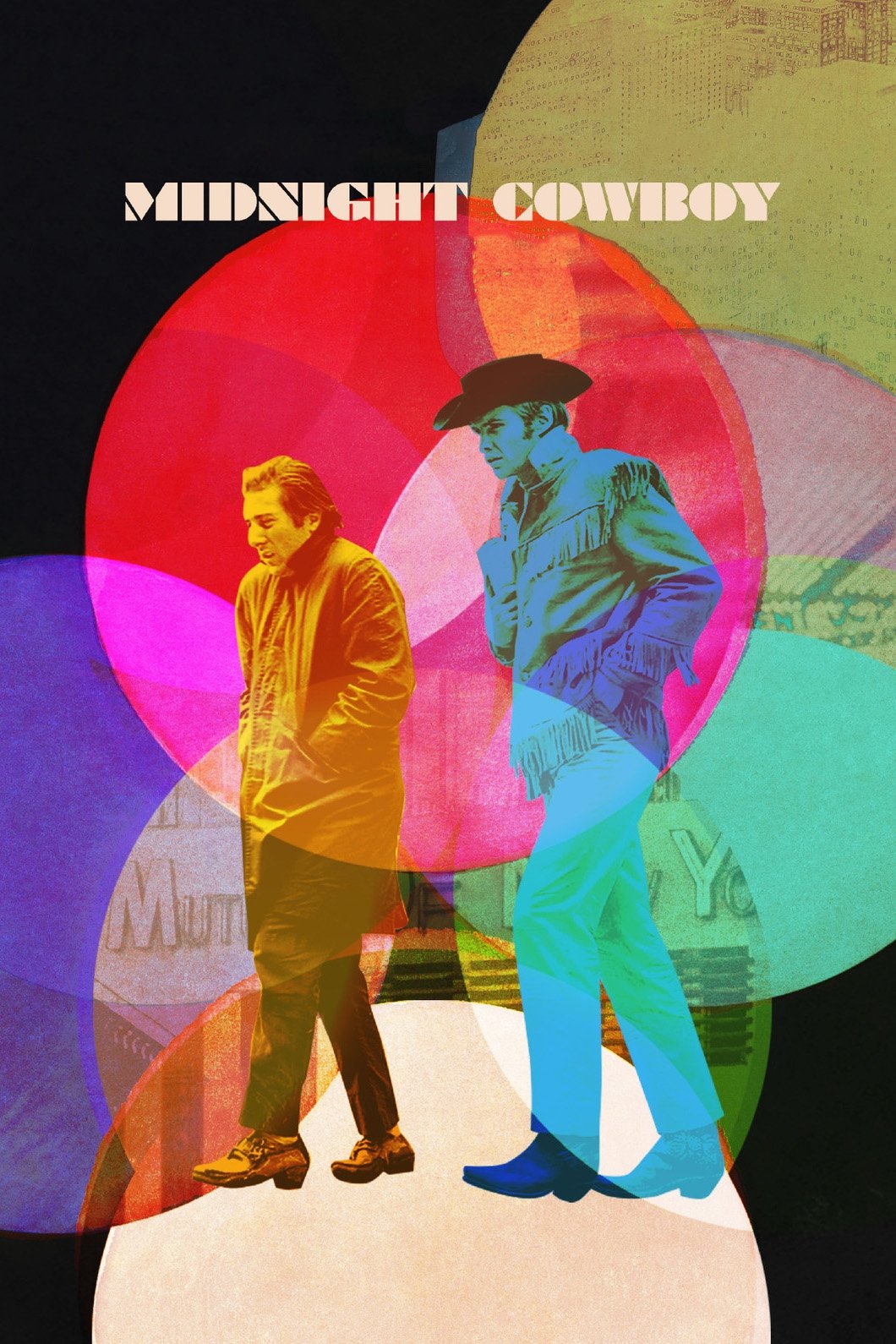
When I first watched “Midnight Cowboy,” I was struck by how the opening scenes submerged me into a world both raw and strangely poetic—a bold introduction to director John Schlesinger’s vision of the American urban nightmare. The film, a landmark of late-1960s American cinema, rides the thin line between drama and tragedy, wearing its label as an adult, character-driven story with unapologetic honesty. At its core, I followed the naïve Texan Joe Buck as he lands in New York, his fantasy fueled by old Hollywood westerns and a misplaced optimism about the city’s promise. What unfolds is not a tale of instant success, but instead a slow unraveling: Joe meets Enrico “Ratso” Rizzo, a wily, street-smart conman, and the unlikely pair begin a partnership that is both pragmatic and heartbreakingly human.
While I don’t want to give away all the twists, I found it impossible to ignore the film’s mounting tension as Joe’s dreams of becoming a successful hustler collide painfully with the city’s indifference and brutality. Their struggle for dignity—often resulting in humiliation—composes much of the film’s emotional architecture, weaving through a tapestry of seedy hotels, empty diners, and nightmarish streets. I was particularly drawn in by the film’s unflinching look at poverty and desperation—not merely as backdrops, but as unavoidable companions on the characters’ journey. The story builds toward a climax that left me reflecting on the meaning of friendship, loss, and hope in a world that rarely offers happy endings.
Key Themes & Analysis
As I immersed myself in “Midnight Cowboy,” the film’s themes hit me with unexpected urgency and resonance. The exploration of loneliness is absolutely central: Joe and Ratso, both outsiders in their own ways, drift through life on the periphery, aching for connection. Their evolving relationship becomes an anchor in an otherwise disorienting urban mess. I found this friendship to be the heart of the film—the only thing capable of piercing the cold, anonymous city.
Masculinity and vulnerability also echo throughout. Joe’s cowboy persona, built on surface-level bravado and sexual confidence, crumbles as reality shatters his expectations. The idolization of Hollywood Westerns is ironically juxtaposed with Joe’s real-life powerlessness. In those moments when Joe’s confidence evaporates, I saw a profound commentary on the ways we construct, perform, and inevitably betray our identities—a theme I still find sharply relevant today.
Visually, Schlesinger crafts a world that feels haunted. The cinematography by Adam Holender is a revelation. The film’s frequent use of jump cuts, flashbacks, and surreal dream imagery sharpened my experience of Joe’s psychological disintegration. Scenes shimmer with late-’60s grit, using handheld shots, jarring editing, and an iconic use of music (especially Harry Nilsson’s “Everybody’s Talkin’”) to transport me directly into Joe’s fractured perspective. I felt the city as a labyrinth of shadows and noise, each frame almost trembling with desperation.
The performances are the film’s engine, no question. Jon Voight, in his breakout role, imbues Joe Buck with a disarming innocence beneath the cowboy hat; I was moved by how he blended naivete with stubborn hope. Then there’s Dustin Hoffman as Ratso. Hoffman’s transformative performance absolutely electrified me—his physicality, the rasp in his voice, even the limp, all welded together to create a character both grotesque and tender. Their chemistry transcended clichés, convincingly communicating affection and mutual dependence in a context of overwhelming adversity. Schlesinger’s direction never lets the actors drift into sentimentality; every moment feels painfully real, every victory and defeat heartbreakingly earned.
What startled me was how the film doesn’t sanitize its world. Sexuality isn’t glamorized or even clearly defined; it’s transactional, confusing, and often tinged with sadness or embarrassment. That ambiguity forced me to question existing social norms—especially regarding sex, gender, and personal dignity. In this way, the film still feels radical to me, decades later, for how it refuses tidy answers or uplift in the face of relentless vulnerability.
My Thoughts on the Historical & Social Context
Watching “Midnight Cowboy” with an awareness of its 1969 release, I couldn’t help but think about how the era shaped every frame. The late Sixties were a time of enormous cultural anxiety, with old values eroding and new freedoms not yet secure. America was confronting urban decay, sexual revolution, and the fallout of postwar optimism. Within this turbulence, I see the film as a mirror held uncomfortably close to modern life; the ambivalence of its ending underscores a society in which the so-called American Dream was increasingly exposed as a hollow promise, especially for the marginalized.
Personally, I am struck by how the movie’s depiction of loneliness and outcasts isn’t just about New York in the Sixties. Its relevance persists for any era where rapid social change leaves people behind. Watching Joe and Ratso stumble through a city that sees them as invisible, I was reminded of present-day struggles—immigrants, queer youth, the working poor, anyone made peripheral by larger economic or social systems. The film’s frank look at transactional relationships and the longing for connection feels eerily contemporary to me, especially in the way it acknowledges the emotional and physical costs of survival on the margins.
The depiction of mental illness and trauma, including the ambiguous way Joe processes childhood memories, also reminds me of how, even now, mainstream culture hesitates to address these issues with nuance. Midnight Cowboy’s willingness to dwell in discomfort and ambiguity—rather than offering glib solutions—has only made it feel braver to me over time.
Fact Check: Behind the Scenes & Real History
Diving into the background of this film, I was fascinated to learn how contentious its production was. The most notorious fact is the film’s original X rating—not for explicit content by today’s standards, but for its frankness about male prostitution, homosexuality, and urban squalor. This was the only X-rated film ever to win Best Picture at the Academy Awards, reflecting both the era’s moral strictures and the studio’s willingness to take unprecedented creative risks.
Casting was another battle altogether. I discovered that Dustin Hoffman, fresh off “The Graduate,” was initially rejected for Ratso by many who didn’t see him as “grimy” enough. Hoffman had to persuade Schlesinger by appearing disheveled and embodying the character in person. The chemistry between Voight and Hoffman, so integral to the finished film, was not a foregone conclusion—a risky choice that utterly paid off in the final product. Voight, too, was a relative unknown at the time, taking the role only after many big-name stars turned it down.
The film’s gritty feel wasn’t just an artistic flourish but often a necessity due to a limited budget. Many street scenes were shot guerrilla-style with hidden cameras, capturing the real reactions of pedestrians who had no idea they were part of a movie. This technique, inspired in part by European New Wave filmmakers, helped root the film in a reality that I could feel pressing in on every character. The famous “I’m walkin’ here!” moment—allegedly improvised by Hoffman—was not in the script at all, and happened because a real taxi nearly hit the actors.
Comparing the film’s version of New York to the historical record, I found that while it leans into a lurid, almost mythic sense of the city’s dangers, it absolutely reflects the metropolis’ real social divides, rising homelessness, and decaying infrastructure of the late Sixties. The authenticity is less about specific events than about atmosphere; as I researched period documentaries and memoirs, the emotional truths of the movie still resonate more than sanitized newsreels from the period ever could.
Why You Should Watch It
- The film delivers an unflinching and honest portrait of friendship, survival, and emotional vulnerability rarely seen in Hollywood cinema.
- Jon Voight and Dustin Hoffman’s performances remain among the most transformative and emotionally raw in film history.
- John Schlesinger’s direction and the gritty, stylized cinematography create an immersive and genuinely affecting vision of urban alienation.
Review Conclusion
Whenever I revisit “Midnight Cowboy,” I come away shaken and unexpectedly hopeful. The film’s brutal honesty is offset by a profound empathy—with characters who, despite everything, keep reaching for connection in a world that often refuses to see them. The collaboration between Schlesinger, Voight, and Hoffman results in a portrait of urban struggle and friendship that is as relevant right now as it was the day it first shocked audiences. Not only does it stand as a landmark in cinematic history, it continues to challenge and move me, urging viewers to confront the parts of society—and of ourselves—that are easiest to ignore.
Rating: 4.5/5
Related Reviews
- Taxi Driver (1976): I see a clear line from “Midnight Cowboy” to Martin Scorsese’s haunting deep dive into urban decay and alienation. Both films use New York’s underbelly as a stage for intensely personal journeys. If the psychological unraveling and raw cityscape of “Midnight Cowboy” grabbed you, “Taxi Driver” provides a similarly unflinching, character-driven look at isolation and fractured masculinity.
- Panic in Needle Park (1971): Watching this Al Pacino-led drama, I was reminded of the same street-level immersion and anti-glamorous portrait of addiction and poverty found in “Midnight Cowboy.” The uncompromising realism and focus on the struggles of those living on society’s fringes make it a thematic sibling well worth discovering.
- My Own Private Idaho (1991): Gus Van Sant’s loose, poetic riff on hustler narratives echoes many of the themes I appreciate in “Midnight Cowboy”—notably friendship, outsider status, and sexual identity. River Phoenix and Keanu Reeves bring a dreamy vulnerability to a world where the search for home and belonging remains as urgent as ever.
If you want to explore this film beyond basic facts, you may also be interested in how modern audiences respond to it today or whether its story was inspired by real events.
🎬 Check out today's best-selling movies on Amazon!
View Deals on Amazon