
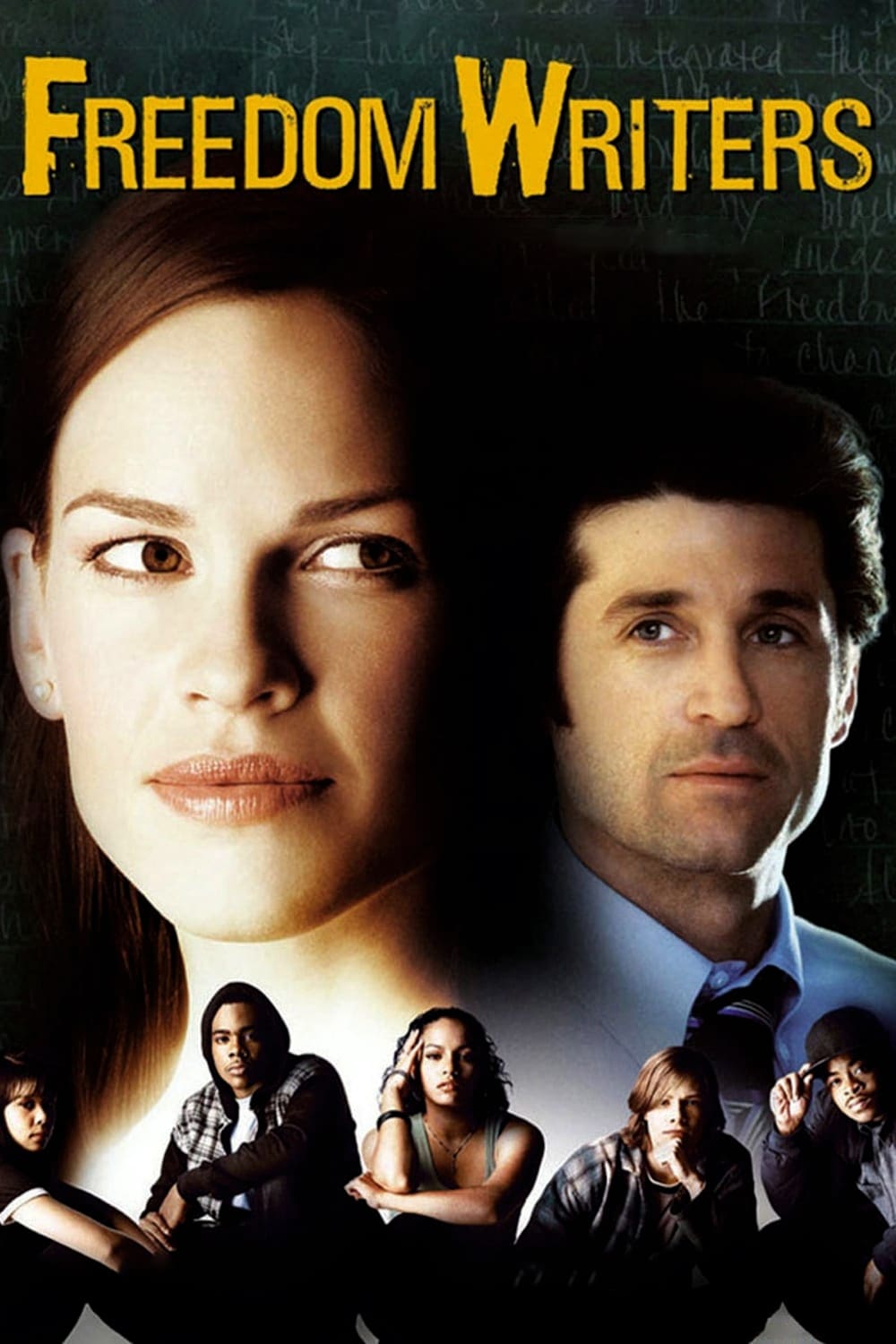
Plot Summary
As I settled in to rewatch “Freedom Writers”, what grabbed me almost instantly was the rawness woven throughout Richard LaGravenese’s direction. Framed as a drama but alive with tense authenticity, the film throws you straight into the heart of a divided, post-LA riots Long Beach. I’ll be careful not to spoil its major revelations, but in essence, the story follows Erin Gruwell—played with gusto by Hilary Swank—who steps into an English classroom packed not with eager learners, but with teens hardened by violence, racism, and systemic abandonment. I saw this not as a tale of white saviorism, but as a nuanced account of mutual transformation between teacher and students.
The narrative tracks Gruwell’s struggle to break her students out of their self-imposed boundaries. These teens, written off by the educational system, are stitched together by rivalries, trauma, and scarred hope. The heart of the film—what, for me, distinguishes it from similar dramas—is how it immerses you into their world. Instead of smoothing over their rough edges, “Freedom Writers” sits with the jaggedness, refusing to flinch away from schoolyard fights, hallway tensions, or the underlying pain fueling them. The students’ voices emerge through personal journal entries, which serve as a narrative device as well as a window into their transformation. If you’re worried about spoilers, skip ahead; otherwise, let me say that there’s a turning point when the class discovers the story of Anne Frank, igniting a sense of empathy and possibility that begins to shake their fatalism.
What stuck with me long after the credits rolled was the honest depiction of a classroom as a microcosm of fractured society. As Gruwell encourages her students to write down their experiences, the film becomes less about her tactics and more about the catharsis of being heard. The tension between the students—whether shaped by race, gang affiliation, or simply the scars of neglect—provides a compelling engine for the plot. Watching these students tentatively reach across these divides felt less like cinematic wishful thinking and more like a vivid argument for what education can be.
Key Themes & Analysis
I came away from “Freedom Writers” convinced that its core theme is the radical power of empathy. The script doesn’t shy away from showing how easy it is for people—teenagers included—to stay locked behind walls of suspicion and pain. Yet, in one of the film’s most striking sequences, Gruwell organizes an exercise in which students are asked to step forward if they’ve experienced various traumas or losses. This simple act turns statistics into shared humanity. I found it nearly impossible not to be moved as these students, previously at odds, recognize their hidden common ground.
On a visual level, I noticed how the cinematography, far from being flashy, centers intimacy: tight shots of faces during pivotal confessions, handheld camera work in moments of chaos, and an earthy, muted palette reflecting the grayness of the students’ daily battles. It’s a directorial approach that grounds the drama, making moments of hope and connection feel earned rather than manipulative.
As for the performances, Hilary Swank delivers a turn that’s energetic yet never overbearing. I appreciate how she resists playing Gruwell as a flawless hero; moments of self-doubt and genuine missteps make her journey feel more authentic. Yet it’s the ensemble of students who deeply impressed me. April Lee Hernandez (Eva), Imelda Staunton (Margaret Campbell), and other young actors filled these roles with palpable vulnerability and ferocity. Their struggles with identity, self-worth, and family expectations felt lived-in and heartbreakingly real. Watching their transformation, sometimes gradual and sometimes seismic, reminded me of my own shifting perceptions about what it takes to change another person’s trajectory.
Thematically, LaGravenese keeps returning to the idea that storytelling—both personal and historical—can heal and empower. When the class engages with Anne Frank’s diary, I didn’t see it as a mere literary device, but as a challenge: what stories carry enough gravity to help us rethink our own suffering and the suffering of those we might otherwise ignore? The film’s repeated stress on journal writing isn’t just a nod to pedagogy but a celebration of voice. In a world where these students have had so little control, being handed a pen feels radical.
One criticism that lingers for me is how the movie sometimes flirts with melodrama or simplification, especially in depicting the high stakes of gang violence. However, I give the film credit for testing the limits of what a teacher can really accomplish—and for showing that change is often incremental, fraught, and hard-fought.
My Thoughts on the Historical & Social Context
Thinking about when “Freedom Writers” was released in 2007, I can’t separate it from the broader conversations happening about education reform and race in America. The early 2000s were marked by widespread debate over failing inner-city schools, the impact of standardized testing, and the aftermath of policies like No Child Left Behind. To me, the film lands squarely in that context, exposing how institutional apathy perpetuates cycles of poverty and exclusion.
Watching it in today’s climate, I’m struck by how the movie’s themes—identity, equity, and advocacy—feel just as charged, maybe even more so. The visibility of movements like Black Lives Matter has only sharpened our collective focus on how school can either entrench or challenge social inequalities. In my view, what makes “Freedom Writers” resonate across eras is its refusal to see students merely as victims or statistics; it presses for a recognition of their layers and their potential. When I think about why I return to this story now, it’s because the struggle for educational justice remains fiercely relevant, and the idea that art and empathy can become lifelines speaks directly to ongoing cultural divides.
For me, the film is as much a product of post-9/11 cultural anxieties about “the other” as it is a critique of 1990s gang violence. Its narrative may be rooted in a specific period, but its questions about who gets heard—and who is written off—are timeless. That’s why I find its optimism, cautious though it may be, genuinely moving rather than naive. There are scenes that read like dispatches from the trenches of America’s schools, and even now, that lands with a sense of urgency.
Fact Check: Behind the Scenes & Real History
I always appreciate when a film nudges me to trace its roots back to real events, and “Freedom Writers” was no exception. The screenplay is based on the book “The Freedom Writers Diary”, a compilation of true journal entries from Erin Gruwell’s real-life students at Woodrow Wilson High School. What surprised me during my research was that the film, while compressing timelines and characters, sticks remarkably close to actual events. The classroom dynamics and emotional breakthroughs depicted weren’t Hollywood inventions but echoed the documented journeys of the original writers.
One detail I found fascinating: producers actively involved the original Freedom Writers during script development. Many diary entries adapted into the script came verbatim from the students’ journals. This input doesn’t guarantee flawless representation, but I found it lent authenticity, especially in how the student voices ring with specificity and pain.
There’s also the matter of casting: several of the young actors had personal connections to the material. For example, April Lee Hernandez drew on her Bronx upbringing to shape the character of Eva, bringing lived experience to the screen rather than merely performing a stereotype. It’s worth noting, however, that the real Erin Gruwell did not singlehandedly transform every student overnight; the cinematic arc accelerates years of difficult, uneven progress into a streamlined narrative. That’s typical for Hollywood adaptations, but after digging into the background, I’m impressed by how the film conveys the spirit of the Freedom Writers’ achievement rather than distorting it with feel-good shortcuts.
Why You Should Watch It
- An emotionally immersive look at the transformative power of education and storytelling, offering poignant lessons about empathy and change.
- Unflinching performances—especially from Hilary Swank and the young cast—bring depth and authenticity to the classroom’s struggles and triumphs.
- The film’s real-life roots and social relevance ensure that its message resonates long after the final scene, sparking reflection on issues of equity, race, and redemption in American life.
Review Conclusion
After watching “Freedom Writers” (yet again), I remain deeply impressed—not just by the power of the performances, but by the film’s fearless dive into wounds that rarely heal easily. For all its moments of uplift, it refuses easy answers, opting instead for hard-earned hope. I believe this is more than another inspirational teacher movie; for me, it’s an urgent reminder that education, empathy, and storytelling are everyday acts of resistance. With conviction, warmth, and genuine complexity, “Freedom Writers” offers a story that still matters—and still unsettles—in a world eager for simple fixes.
My rating: 4.5/5 stars
Related Reviews
- “Dangerous Minds”: Another true-story drama, this film offers a gritty take on classroom life and the challenge of reaching students written off by the system. I recommend it for its unstinting look at race and urban education, much like “Freedom Writers”, but with a distinctive 90s edge and a different cultural lens.
- “The Class” (“Entre les murs”): This French film presents a documentary-style take on cultural and linguistic divides in a Parisian classroom. Its realism and refusal to pander made me think of “Freedom Writers”—both films dig deep into the conflicts of multiethnic, urban schools.
- “The Great Debaters”: If you connect with stories about educators who champion marginalized students, this period drama adds the dynamic of debate and civil rights, tying historically-rooted struggles to personal transformation and social change.
- “Precious”: I believe this recommendation fits for those interested in complex, unsparing stories about youth facing extraordinary odds. Both films use diary-writing as a way for their protagonists to reclaim agency and voice, and both linger long after viewing.
If you want to explore this film beyond basic facts, you may also be interested in how modern audiences respond to it today or whether its story was inspired by real events.
🎬 Check out today's best-selling movies on Amazon!
View Deals on Amazon