
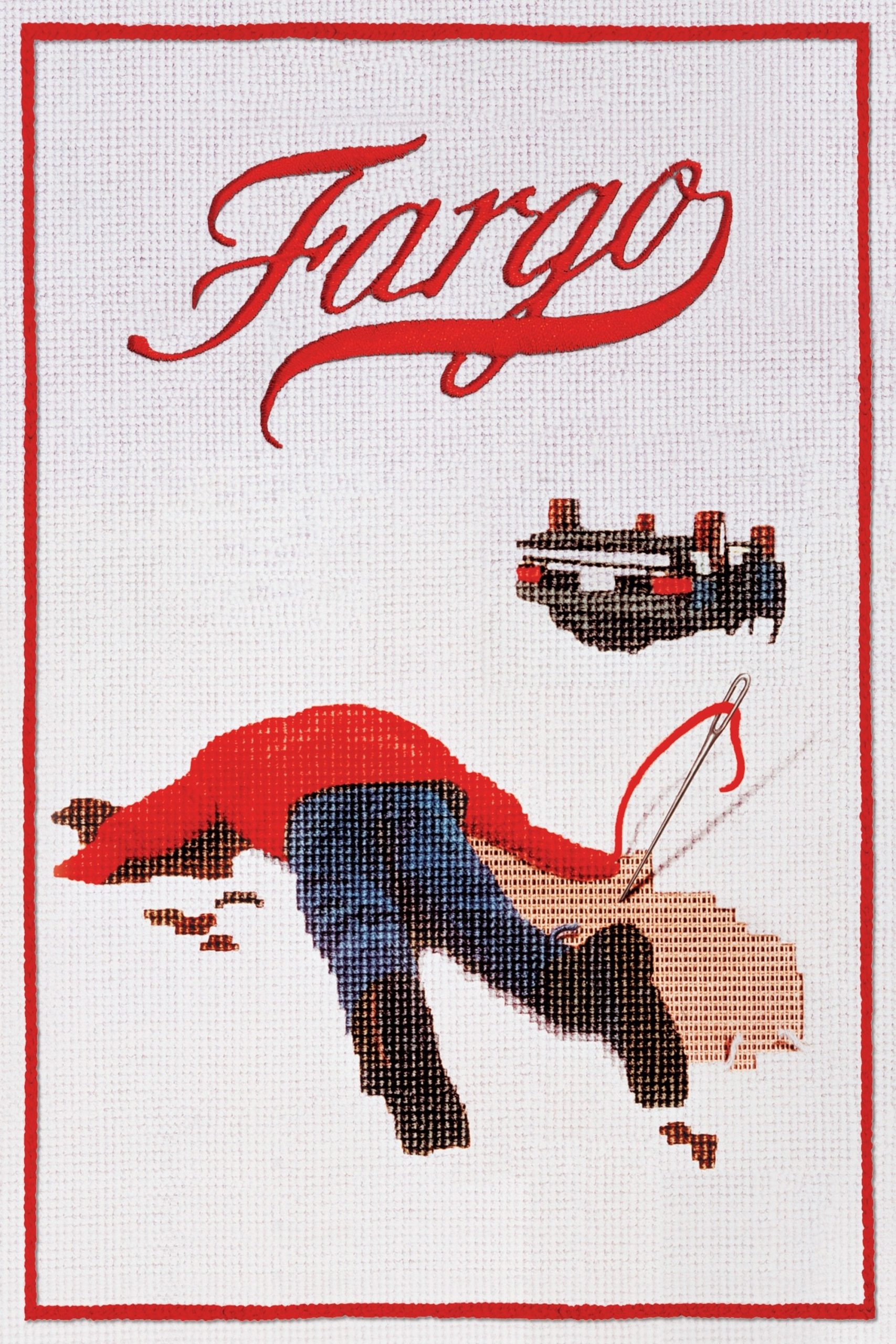
Plot Summary
When I think back to the first time I watched Fargo, I remember being lulled by its unassuming Minnesota setting, only to be pulled into a tapestry of crime and darkly comic misfortune. Directed by Joel and Ethan Coen, this 1996 film initially presents itself as a quirky, small-town detective story, but quickly upends expectations. The story centers on Jerry Lundegaard, a car salesman desperately seeking to fix his financial troubles through a plan gone awry, and the dogged, disarmingly polite police chief Marge Gunderson, who methodically unspools the case. There’s a pattern at work: each character’s decisions spiral beyond their control, infusing every scene with tension and irony.
To avoid stepping on the experience for first-time viewers, I won’t reveal the outcome of Jerry’s scheme or detail the full unraveling of the crime. Suffice it to say, the plot hinges on a series of poorly executed choices—kidnapping, extortion, and violence—that become as farcical as they are chilling. What amazed me was how the Coens generate suspense and comedy simultaneously, transforming moments of utter bleakness into wry social commentary. I found myself unexpectedly laughing at the ultra-polite exchanges, only to be confronted with bursts of brutality. That tonal ambivalence is what makes reconciling the events of Fargo so memorable for me.
Key Themes & Analysis
What struck me most on repeated watches was just how layered every theme feels under the Coens’ hands. The film explores the banality of evil and the randomness with which ordinary people tumble into extraordinary consequences. Jerry isn’t a master criminal—he’s a pathetic everyman, swallowed up by a world he no longer controls. His desperation is palpable, but more fascinating is the way the Coens depict his environment: snow-blanketed and serene, yet hiding menacing undercurrents. I see this landscape as both literal and symbolic—a canvas of moral emptiness where basic human decency keeps getting tested.
The cinematography by Roger Deakins floored me. The wide shots of an endless, icy horizon immediately communicate isolation, and when paired with the story’s escalating stakes, these visuals become haunting. Every frame feels intentional, mirroring the absurd comedy and chilliness of the narrative. I was most impressed by how the Coens and Deakins use negative space to evoke loneliness and futility. Just watch any of Marge’s drives across the snow or the way violence erupts in the most tranquil settings. The visual language speaks volumes about a world where order feels fragile at best.
I’ve always admired how Frances McDormand’s performance as Marge Gunderson anchors the story. She brings warmth and dry wit, balancing horrific discoveries with unwavering composure. Marge’s decency in a crooked universe is not only refreshing, but it also grounds the film in humanity. Steve Buscemi and William H. Macy are equally indelible: Buscemi’s Carl oozes desperation beneath his prickly exterior, while Macy’s Jerry is heartbreaking in his cluelessness. The supporting cast, often underplayed and strikingly authentic, drives home the idea that violence exists right alongside the mundane routines of everyday life.
From the director’s chair, I found the Coens’ touch unmistakable. There’s a confidence in their pacing—the willingness to let scenes breathe, the way they wring tension from silence, and their eye for the ridiculous in the ordinary. What elevates Fargo is its refusal to judge its characters harshly even as it lays bare their flaws. Instead, it provides a prism through which we see the overlap between farce and tragedy, morality and failure. That blend left an indelible impression on me as a critic and cinema lover.
My Thoughts on the Cultural Impact & Legacy
I’ve long believed that Fargo’s lasting power comes from its ability to defy strict genre boundaries. It isn’t just a crime film, a dark comedy, or a regional study—it’s all of these and more, filtered through the Coens’ unique vision. As a curator with a deep interest in genre evolution, I’m drawn to how Fargo influenced filmmaking by pushing audiences to see humor and horror as two sides of the same coin. Directors after the Coens have borrowed their blend of chilly realism and absurdity, and you can trace echoes of Fargo in shows like “Breaking Bad”, and in movies that marry violence with everyday absurdity.
On a personal level, I find Fargo’s exploration of morality and luck endlessly fascinating. It flipped the script for me as someone who grew up with conventional thrillers: evil could be petty and amateurish rather than grandiose. The film’s willingness to revel in awkward, drawn-out exchanges—Marge interviewing witnesses over coffee, mundane small talk about breakfast—reminds me how easily profound truths hide in the simplest moments. That attention to regional specificity and humor without cruelty resonates deeply with me, making every rewatch feel fresh rather than predictable.
I think it’s because Fargo locates the heart at the center of chaos. Marge’s decency isn’t presented as heroic, but as quietly revolutionary in the face of folly. There’s a humility and generosity to her perspective, a sense that being good is a choice made and remade every day. It’s transformed how I approach films and stories about crime—not seeking sensationalism, but rather the subtle personal consequences that ripple outwards. When looking at Fargo’s place in the canon, it’s clear to me that this blend of compassion and cynicism set a new benchmark, especially for films rooted in American landscapes and values.
Fascinating Behind-the-Scenes Facts
During my research and various deep dives into the making of Fargo, certain stories stick with me for what they reveal about the film’s craftsmanship. First, I was captivated to learn that Frances McDormand spent time with an actual police chief in Minnesota to perfect Marge’s mannerisms and accent. This commitment to authenticity shows in her performance, which never pokes fun at the regional quirks but instead feels genuinely lived-in.
I also find the film’s visual palette remarkable, particularly because the Coens had to chase snow throughout the shoot. The winter of 1995-96 was unseasonably warm, so filming locations were constantly adjusted. That persistent hunt for the right landscape forced the crew to move frequently—an ordeal that, to me, somehow enhanced the feeling of displacement and unpredictability present in the final film.
One final production detail that always makes me smile: the infamous wood chipper scene was wholly a product of the Coens’ dark sense of irony. The prop used during the scene was so memorable that it became a centerpiece at a Minnesota visitor center, immortalized by locals and visitors alike. For me, it’s a testament to how legendary visual ideas can evolve from on-set improvisation and serendipity—a perfect metaphor for much of the film’s accidental, ice-cold brilliance.
Why You Should Watch It
- The film’s unique blend of dark comedy and crime drama challenges traditional genre boundaries, offering a viewing experience unlike anything else
- Its performances—especially Frances McDormand’s—are astonishingly real and make the emotional stakes hit home
- The visual storytelling and authentic regional detail create a sense of place and mood that lingers long after the credits roll
Review Conclusion
If I had to capture my enduring respect for Fargo in a single thought, it’s this: this is a film that finds poetry in bleakness, laughter in tragedy, and dignity in the ordinary. Every time I return to it, I discover another layer—be it in the subtext, the performances, or those breathtaking snowbound vistas. It’s not just exemplary noir or a clever satire, but a master class in how storytelling can embrace contradiction and find meaning in life’s unpredictable messes. My rating: 5/5 stars. For those who appreciate films that stay with you, challenging your assumptions while making you laugh and wince in equal measure, Fargo is absolutely essential.
Related Reviews
- Blood Simple (1984) – The Coen brothers’ debut feature, like Fargo, is a darkly comic neo-noir crime tale set in small-town America, rife with miscommunication and moral ambiguity. I recommend it for the way it establishes the Coens’ signature tone, blending bleak violence with offbeat humor.
- A Simple Plan (1998) – I see strong parallels in this Sam Raimi drama, where rural characters stumble into crime, leading to a harrowing unraveling. The tension between greed, loyalty, and fate captures a similar sense of ordinary people thrown into extraordinary chaos.
- No Country for Old Men (2007) – For fans of the Coens’ cold landscapes and existential meditations, this later film offers a bleaker, more ruthless crime story. As with Fargo, it’s the subtle direction and powerful performances that made it one of the definitive genre touchstones for me.
- Wind River (2017) – This modern thriller echoes Fargo’s wintry setting and its focus on crime in isolated communities. I value its similarly stark cinematography and nuanced take on law enforcement in the face of tragedy.
- Three Billboards Outside Ebbing, Missouri (2017) – Like Fargo, this film finds dark humor amidst heartbreak, exploring justice, small-town life, and flawed humanity. Its sharp script and memorable characters make it an ideal follow-up viewing.
For readers looking to go deeper, these perspectives may help place the film in a broader context.
🎬 Check out today's best-selling movies on Amazon!
View Deals on Amazon