
Plot Summary
Some movies burrow so deeply into my memory that revisiting them feels less like watching a film and more like reconnecting with a long-lost friend. “E.T. the Extra-Terrestrial,” directed by Steven Spielberg, remains, to me, one of those rare cinematic touchstones that defined not just a decade, but a universal language of wonder. As someone who grew up in that era, I find the film’s blend of science fiction and family drama to be timelessly effective—blurring the lines between the ordinary and the extraordinary in ways that few films dare to.
When I sit down to watch “E.T.,” the plot instantly draws me back to suburban America in the early 1980s. The film opens with an alien botanist stranded on Earth, separated from his spaceship by mysterious government agents. I remember that feeling—not of fear, but of curiosity—as a boy named Elliott stumbles upon the gentle creature and forms an unlikely bond. What follows is a heartfelt journey of trust, adventure, and secrecy, as Elliott and his siblings do everything in their power to protect their enigmatic guest from the prying eyes and agendas of adults.
I always appreciate how Spielberg constructs suspense and wonder without tipping over into outright peril, especially during the first two-thirds of the film. The story, for all its fantastical trappings, remains rooted in everyday suburban life—messy bedrooms, pizza dinners, and the kind of sibling rivalry that anyone with brothers or sisters instantly recognizes. If you want a more detailed walkthrough of the narrative arc (including some major twists), beware: spoilers abound beyond this point. Suffice it to say, the stakes rise as E.T.’s health begins to fail and outside forces close in, pushing every character to the limit of their bravery and ingenuity.
Key Themes & Analysis
Where the film really gripped me wasn’t just in its story mechanics or creature design, but in its emotional core. Spielberg crafts a coming-of-age allegory that—through my eyes—remains one of the most nuanced explorations of childhood loneliness and the longing for connection I’ve encountered on screen. As a kid, I saw Elliott’s yearning for friendship as universal; as an adult, I consider how Spielberg uses the alien as the ultimate outsider, a silent reflection of every child’s secret feeling of not fitting in.
The cinematography, overseen by Allen Daviau, deserves endless praise in my book. The suburban landscapes glow with a kind of mythic, golden-hour magic, especially during scenes set at dusk or dawn. There’s a palpable warmth in the lighting that transforms backyards and forests into sites of adventure and discovery. I’m always struck by how Daviau frames Elliott’s world from a child’s eye level, grounding the wonder and making even the most alien moments feel intimately accessible.
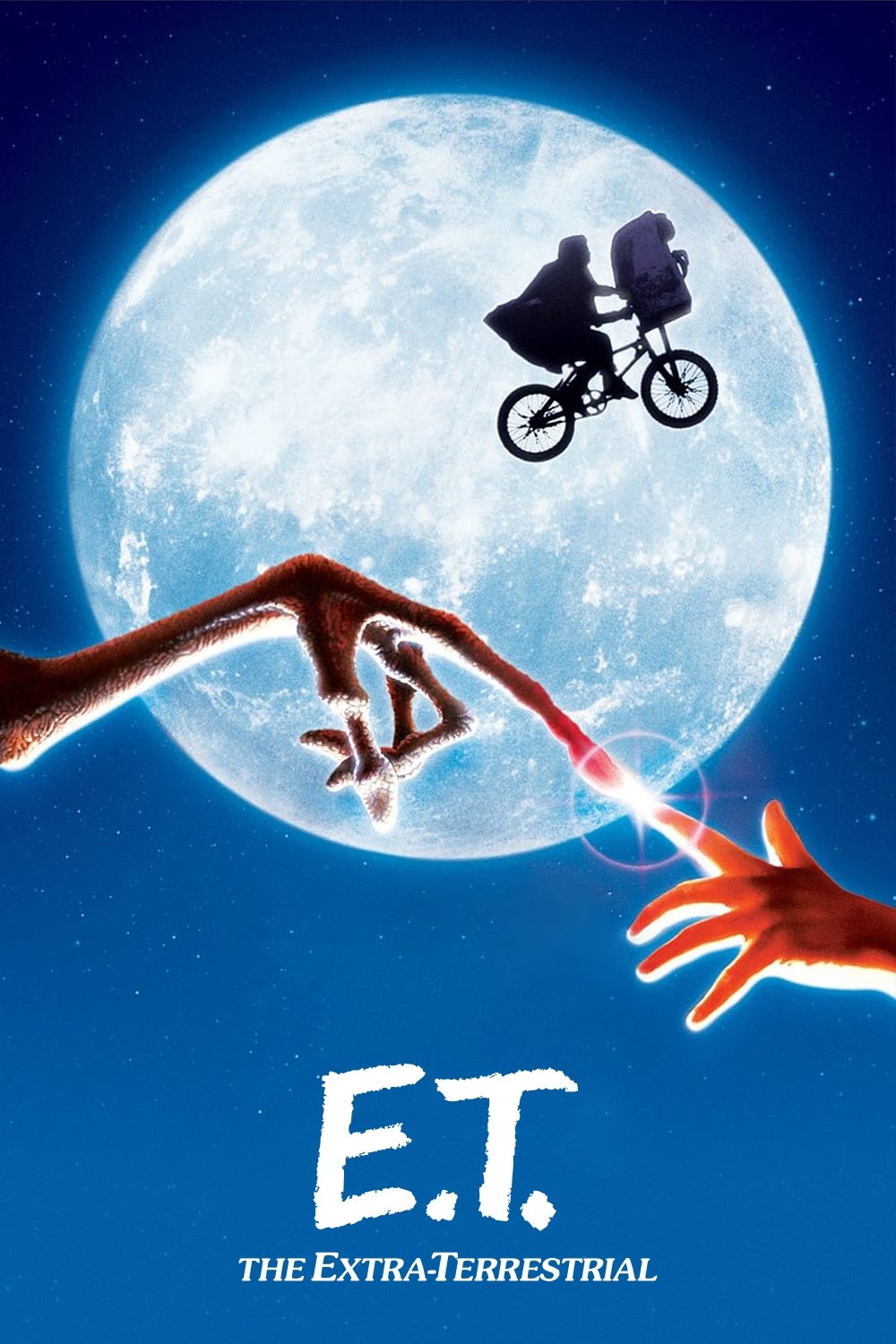
As I reflect on Spielberg’s direction, I’m reminded that his mastery lies in the careful modulation of awe and anxiety. The famous flying bicycle sequence, with John Williams’ triumphant score swelling beneath, is still pure cinematic joy for me. I can’t help but get chills every time I experience it—because it’s not just special effects or spectacle, but the culmination of trust and unity between Elliott and E.T. That sense of possibility is infectious.
Dee Wallace’s performance as the mother, Mary, is something I find increasingly affecting with age. She projects both warmth and frazzled realism, navigating single parenthood in a world laced with unseen threats. Henry Thomas’s portrayal of Elliott is one of the strongest child performances I’ve seen: vulnerable, stubborn, and intensely believable. There’s an authenticity in his emotional arc—from suspicion, through fear, to profound loss and love—that anchors the entire film. I’m also consistently impressed by how Drew Barrymore’s Gertie, with her precocious, humorous innocence, lightens the tone without ever slipping into parody.
What lingers for me, long after the credits roll, are the film’s larger questions: What does it mean to be truly seen? How do we respond to the unknown—with fear, or with empathy? The film repeatedly nudges us toward the latter. Spielberg’s vision, aided by Melissa Mathison’s sensitive screenplay, never lets the spectacle overwhelm the humanity. This, for me, is the real triumph of “E.T.”—its ability to take the cosmic and make it deeply personal.
My Thoughts on the Historical & Social Context
Sometimes I think we underestimate just how deeply the early 1980s influenced the stories filmmakers told. Watching “E.T.” again, I see it as both a product of its time and a sly commentary on the social shifts happening around it. Coming at the tail end of the Cold War, with American families anxious about government overreach and the erosion of innocence, the movie takes a clear anti-authoritarian stance: adults and authority figures are often faceless, their motives opaque, and their interventions mostly intrusive rather than supportive. That was a message I didn’t fully grasp as a kid, but one that resonates more powerfully each time I return to the film.
I always notice how the characters, especially the children, navigate a world where trust and privacy are hard-won commodities. In a country still processing the aftershocks of Watergate and widespread skepticism about institutions, Spielberg gives the power—and the empathy—to the next generation. I connect this to a broader movement in the 1980s media landscape: the elevation of the child’s point of view, which often stood as a counterpoint to the cynicism of adult society.
The social context also makes me consider the film’s subtle commentary on immigration and belonging. As I interpret it, E.T. is not just a visitor from another planet, but a metaphor for anyone—child or adult—who has felt alienated or misunderstood in a new environment. The warmth with which Elliott and his siblings embrace E.T., in defiance of adult suspicion, feels like a coded call for compassion and openness at a time when American culture was wrestling with questions of identity and inclusion. These are themes that, in my mind, only grow more urgent today, as we continue to debate how societies should treat outsiders and the vulnerable.
I find it remarkable that a film ostensibly about an alien has proven so enduringly human in its concerns. “E.T.” is still fiercely relevant to me now, perhaps even more than in its original era: in a world increasingly divided by politics, technology, and social change, its core plea—to choose kindness over fear, connection over division—remains something I’m deeply grateful to encounter onscreen.
Fact Check: Behind the Scenes & Real History
I’ve always been fascinated by how “E.T.” came to life offscreen—a creation just as magical as the story itself. Here are a few behind-the-scenes facts that have stuck with me:
- Henry Thomas’s audition was famously emotional and unguarded—a single, spontaneous tear won Spielberg over on the spot. I’ve watched this audition clip online, and it strikes me every time: the raw performance a young actor brought to the room foretold just how emotionally grounded the film would be.
- The design of E.T. was inspired by a blend of real people and art objects. I find it fascinating that Carlo Rambaldi, the creature designer, based E.T.’s face partly on elderly humans (including poet Carl Sandburg and legendary scientist Albert Einstein), aiming to give the alien a sense of wisdom and vulnerability. It’s a smart choice; every movement of E.T.’s expressive eyes and slow gestures still feels hauntingly lifelike to me.
- Spielberg’s technical innovation during production was game-changing. Instead of relying on static puppetry, the filmmakers combined animatronics, simple costumes, and real children hidden inside the E.T. suit (notably a young boy who had no legs, perfectly allowing the squat gait and small stature). That blend of technology and human presence is, I think, why E.T. never felt “fake” to me, even decades later.
It interests me that, unlike some sci-fi films which claim to be based on or inspired by real events, “E.T.” was entirely fictional—though Spielberg has said the story grew out of his own experiences with childhood loneliness after his parents divorced. That personal touch feels evident in every frame to me, lending the film its intimate sense of yearning and hope.
Why You Should Watch It
- Because it offers a profound emotional experience that bridges generations—whether you first saw it as a child or are discovering it as an adult, the film’s heart remains undiminished.
- Because its technical prowess in creature effects and visual storytelling still outshines many modern blockbusters, with seamless practical effects that foster real emotional connections.
- Because its playful, earnest spirit invites viewers to rediscover empathy and wonder; in today’s world, those qualities feel more vital than ever.
Review Conclusion
Every time I watch “E.T.,” I’m reminded why I fell in love with cinema in the first place. Spielberg’s film, to me, stands as a definitive expression of cinematic magic and emotional truth. Whether you’re drawn in by the spellbinding visuals, the indelible performances, or the timeless plea for connection, there is something in this movie that speaks to the heart of every viewer willing to embrace it. Decades after its premiere, I find “E.T. the Extra-Terrestrial” as moving, relevant, and exhilarating as ever. My rating: 5/5 stars.
Related Reviews
- Close Encounters of the Third Kind: I recommend this earlier Spielberg film for its similarly nuanced blend of science fiction and human curiosity. Both movies explore the meeting point between ordinary life and extraordinary visitors, but where “E.T.” focuses on childhood and family, “Close Encounters” interrogates adult obsession and the possibility of transcendence. If you’re captivated by the quiet awe of the unknown, this film echoes many of Spielberg’s thematic signatures.
- The Iron Giant: Brad Bird’s animated classic channels the child-meets-outsider dynamic with an emotional honesty reminiscent of “E.T.” I always think of it as a spiritual kin in its faith in compassion, depiction of Cold War anxieties, and its message about acceptance and courage. This film, too, uses the genre of science fiction to address universal ideas about difference and empathy.
- Super 8: For anyone who wants to see how a later generation of filmmakers, like J.J. Abrams, channeled Spielberg’s suburban adventures, “Super 8” draws directly from the aesthetic and emotional playbook of “E.T.” It’s a story about kids grappling with larger-than-life events, government secrecy, and the enduring bonds of friendship—all rendered in a lovingly nostalgic style that I find irresistibly familiar.
If you want to explore this film beyond basic facts, you may also be interested in how modern audiences respond to it today or whether its story was inspired by real events.
🎬 Check out today's best-selling movies on Amazon!
View Deals on Amazon