
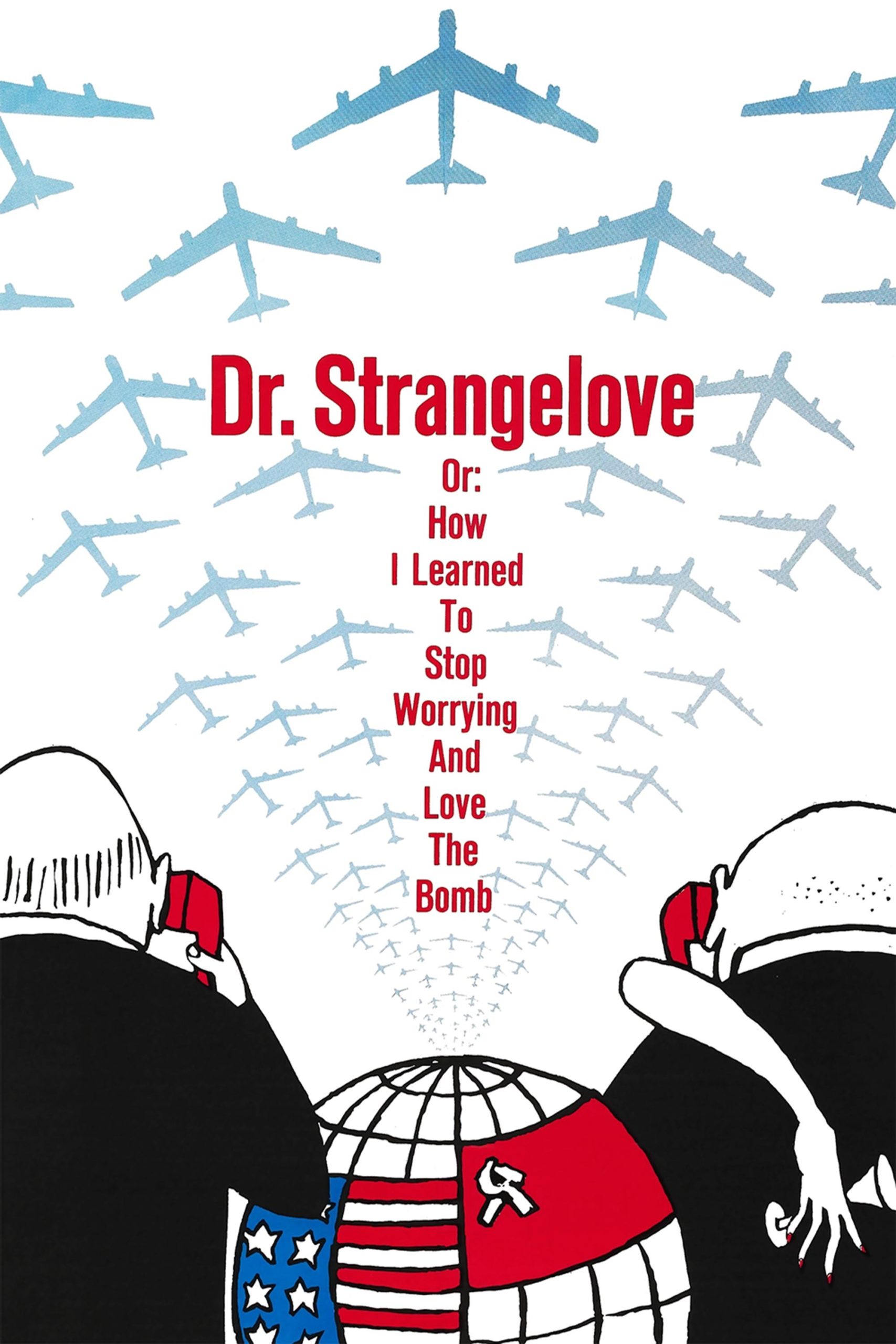
Plot Summary
From the moment I first watched Stanley Kubrick’s jet-black satire on nuclear brinkmanship, I felt like I was peering through a funhouse mirror reflection of the world I live in. The narrative of “Dr. Strangelove” unfolds within tightly enclosed, pressure-cooker environments—the War Room, a B-52 cockpit, and a general’s private office—that immediately ratchet up my sense of unease. Kubrick’s deft touch draws me right into the whirlwind of escalating miscommunication and institutional paranoia.
The set-up is tantalizingly straightforward: a rogue American general, consumed by deep-seated suspicions and a warped sense of mission, launches an unauthorized nuclear attack against the Soviet Union. What follows is a tense yet absurd juggling act between military officials, political leaders, and a gaggle of experts as they scramble to prevent global catastrophe. I admire the precise construction of the film’s ticking-clock structure—each phone call and decision layered with bureaucratic incompetence and comic misdirection.
Warning: Minor Spoilers Ahead. While I avoid revealing the film’s most iconic images and its infamous ending, it’s impossible for me to discuss “Dr. Strangelove” without mentioning the parade of outsized characters. I found myself particularly taken by the presence of Peter Sellers, who pulls triple duty as Group Captain Mandrake, the befuddled President Muffley, and the titular Dr. Strangelove—a mad scientist whose behavior flickers between chilling and hilarious. Every character, from George C. Scott’s blustering General Turgidson to Sterling Hayden’s wild-eyed General Ripper, seems drawn from a cold war fever dream. For me, the intricate power struggles, disastrous misunderstandings, and surreal banter make the unfolding crisis simultaneously terrifying and riotously funny. Rather than offering a tidy resolution, the movie deliberately leaves me with questions—and a lingering sense of dread—about the capacity of institutions to prevent disaster.
Key Themes & Analysis
What struck me most about “Dr. Strangelove” was how its comedy is rooted in the tragic absurdity of real-world military policy. Kubrick’s insistence on treating a subject as grave as nuclear annihilation with irreverence and farce felt simultaneously liberating and disturbing to me. I found myself laughing at moments that, within the context of reality, should have been horrifying—an emotional response that forced me to interrogate why these scenarios felt so familiar.
The film skewers the concept of deterrence and mutually assured destruction—the presiding logic of the Cold War era. I was left with the uncomfortable realization that it’s not the monsters at the levers of power that are the problem, but rather the rigid, impersonal systems built by fallible humans. Kubrick exposes the chilling banality of evil: phone calls devolve into awkward negotiations, procedures are followed blindly, and no one steps outside of protocol, even as the world teeters on the edge of annihilation. For me, this satire cuts deeper than traditional anti-war dramas.
Visually, I found the film captivating. Kubrick’s signature symmetry and his use of expressionistic lighting make me feel trapped within these gray institutional corridors. The cinematography, rendered in luminous black-and-white, underscores the binary opposition at the heart of nuclear standoff—us versus them, survival versus obliteration. The War Room set is nothing short of iconic; its vast, geometrically immaculate design has become an enduring symbol of cold, technocratic power. I’m consistently drawn to how Kubrick frames his subjects: powerful men dwarfed by the systems they’re supposed to command, reduced to impotence by their own creations.
The acting is a masterclass in tonal control. Sellers is miraculous, transforming seamlessly between characters with distinct physicality and energy—a formal British officer, a meek yet earnest president, and an ex-Nazi advisor whose struggles to contain his fascist impulses are equal parts slapstick and chilling. George C. Scott, in particular, left a lasting impression on me; his inspired blend of bravado and haplessness turns the War Room into a three-ring circus of machismo and bluster. Even minor characters, such as Slim Pickens’ earnest but dim-witted bomber pilot, infuse the film with layers of Americana and pathos. These performances are not just caricatures, but nuanced send-ups of very real types—politicians, technocrats, and cold warriors whose quirks have terrifying consequences.
Every time I revisit “Dr. Strangelove,” I’m reminded that satire isn’t just a tool for ridicule—it’s a form of resistance. By magnifying the absurdities of military logic, Kubrick invites me to question the wisdom of trusting our fate to institutions built on fear and suspicion. That message feels as fresh—and as funny—as ever.
My Thoughts on the Historical & Social Context
When I think about “Dr. Strangelove” in relation to its historical moment, I’m struck by the audacity of Kubrick’s vision. This was 1964—the world was still reeling from the Cuban Missile Crisis and the near miss of nuclear war. American culture was suffused with anxiety; fallout shelters were popping up, schoolchildren practiced duck-and-cover drills, and the phrase “mutually assured destruction” entered the lexicon. I have to imagine audiences at the time sat down expecting another serious anti-war tract—and instead found themselves confronted with a film that laughed in the face of annihilation.
That reversal feels, to me, both brave and necessary. Instead of offering false reassurances or simplistic moralizing, Kubrick holds up a mirror to the rhetorical and procedural absurdities of the superpower standoff. What I find most fascinating is his willingness to expose American (and, by implication, Soviet) officials as not just incompetent, but almost childlike in their faith in technology and protocol. It’s easy to see how this would have unsettled viewers in 1964, but the punchline, as I see it, is that these institutional failings are just as relevant today. With new forms of existential risk always on the horizon—cyberwarfare, climate change, AI misalignment—the questions asked by “Dr. Strangelove” still gnaw at me: Are our leaders up to the challenge of managing systems too complex to comprehend? Or are they, like Kubrick’s characters, improvising and blustering their way through history?
Personally, I interpret “Dr. Strangelove” as more than a period piece or a Cold War artifact. Its humor has, if anything, grown darker in an era defined by bureaucratic inertia and institutional distrust. Watching the film now, I find myself reflecting not only on the terrors of the past, but also on the ongoing challenges of living in a world where ordinary mistakes can have apocalyptic consequences. It’s that sense of immediacy—across decades and changing crises—that makes the experience so potent for me.
Fact Check: Behind the Scenes & Real History
One of the things I find most compelling about “Dr. Strangelove” is how the film’s comedic tone masks a meticulous attention to real-world detail, both in its conception and execution.
First, I’ve discovered that Peter Sellers was originally slated to play a fourth character—the Texas bomber pilot “Major Kong.” Due to injury and discomfort with the accent, Sellers stepped aside, and the now-legendary Slim Pickens took on the role. I’m fascinated by how Pickens, a real-life rodeo cowboy, brought such authenticity to the character that some audiences initially mistook him for a documentary subject. His final scene, in my opinion, is etched into the DNA of American cinema.
The War Room set, designed by Ken Adam, is legendary in its own right. What I didn’t appreciate until researching further is that, despite its persuasive realism, no such space actually existed in the US government at the time. In fact, I’ve read that Ronald Reagan, upon taking office, reportedly asked to see the War Room, only to be disappointed it was a Hollywood invention. The set’s design has nonetheless become a visual shorthand for crisis management—a testament to cinema’s power to shape our perception of reality.
Finally, I’m amazed by the film’s source material and Kubrick’s transformation of it. The script was loosely based on Peter George’s novel “Red Alert,” a serious thriller. Kubrick and co-writer Terry Southern made a deliberate choice to treat the subject as black comedy, believing that the horror of nuclear war could only be digested—and properly critiqued—through laughter. That’s an insight I still find daring, given how recent and raw the wounds of nuclear anxiety were at the time. The shift from “straight” drama to hyperbolic satire is, for me, what gives the film its punch and staying power.
Why You Should Watch It
- A masterclass in blending comedy and terror, with director Stanley Kubrick’s unique vision keeping me on the edge between laughter and anxiety.
- Unforgettable performances, particularly from Peter Sellers, whose ability to vanish into multiple roles raises the film to stratospheric heights.
- A satirical look at real-world issues that, despite changes in technology and geopolitics, still resonates with today’s audience and challenges me to think critically about who holds power—and how they wield it.
Review Conclusion
As a film critic and lifelong lover of cinema, I rarely encounter movies that age as elegantly—and remain as subversive—as “Dr. Strangelove.” Kubrick’s razor-sharp eye for hypocrisy and folly is undiminished by time; each time I revisit this film, I find it just as hilarious, unnerving, and thought-provoking as during my first viewing. If there is one film that embodies the idea of laughing to keep from crying during times of crisis, this is it. For me, this is as close to essential viewing as cinema gets. Rating: 5/5 stars.
Related Reviews
- Fail-Safe (1964) – I recommend this electrically tense drama due to its close release date and shared subject matter with “Dr. Strangelove.” While “Fail-Safe” takes a far more somber approach, the comparison highlights the razor-thin line between horror and satire in Cold War cinema.
- Network (1976) – I see echoes of “Dr. Strangelove” in this scathing media satire. Both films use outrageous humor and caricatured characters to confront systemic dysfunction—one in global politics, the other in television news.
- Wag the Dog (1997) – If you appreciate how “Dr. Strangelove” lampoons political gamesmanship and public manipulation, you’ll find “Wag the Dog” (with its satirical take on war and spin-doctoring) both relevant and biting.
- Brazil (1985) – The surreal bureaucratic nightmare of “Brazil” mirrors the institutional absurdities I found so unforgettable in Kubrick’s work. If dystopian satire driven by visual bravura and dark humor appeal to you, Gilliam’s film is essential viewing.
If you want to explore this film beyond basic facts, you may also be interested in how modern audiences respond to it today or whether its story was inspired by real events.
🎬 Check out today's best-selling movies on Amazon!
View Deals on Amazon