
Plot Summary
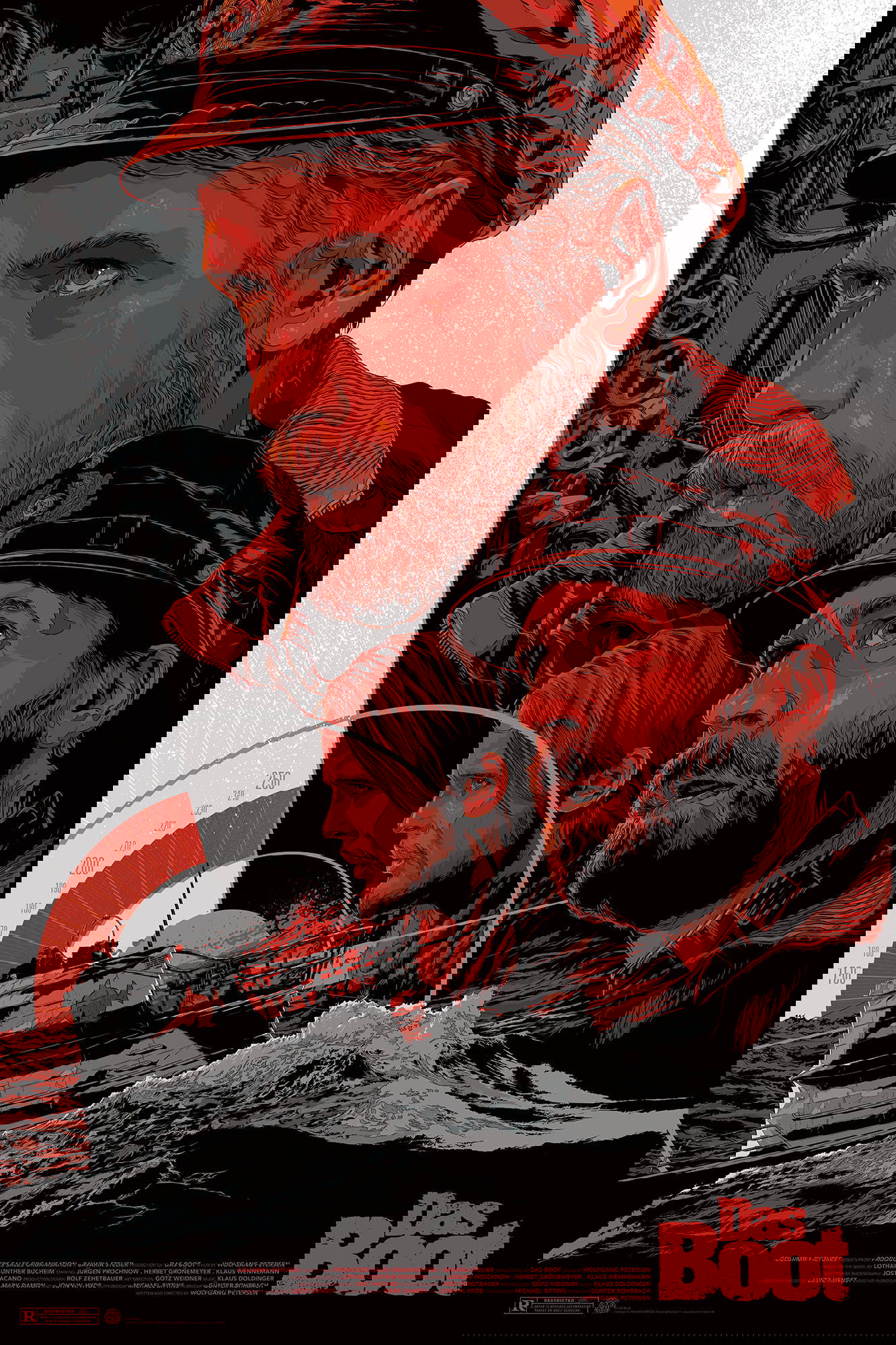
The first time I watched Das Boot, I was electrified by a sense of claustrophobia and dread that few films have ever managed to recreate for me. Set almost entirely within the cramped steel belly of a German U-boat during World War II, the film pulls me into the suffocating day-in, day-out existence of its crew. Directed by Wolfgang Petersen—whose precision with suspense and emotional tension is unmistakable—the movie charts the harrowing journey of U-96 as it navigates the perilous waters of the Atlantic.
While it starts slowly, almost lulling me into a false sense of routine with the crew’s banter and boredom, the narrative’s power lies in the way it quickly ramps up the stakes. Minor tensions between the seasoned officers and younger sailors morph into palpable anxiety as Allied forces close in. Since I’m committed to keeping this review spoiler-lite, I won’t divulge the fates of the principal characters or the ultimate outcome of their journey; I’ll just say that events spiral into a series of nerve-shredding encounters that had me glued to my seat. The film’s power comes from showing not only the dangers of depth charges and mechanical failure, but also the psychological wear that transforms the men inside the sub.
Key Themes & Analysis
Every time I revisit Das Boot, I find myself marveling at the way Petersen uses the sub’s interior as both a literal and metaphorical crucible for his characters. The central thematic throughline for me is the dehumanizing effects of war and the way it strips people down to their rawest selves. The plot refuses to lionize its characters or their mission, and that frankness is part of what I find so compelling. Instead of cardboard-cutout villains or heroes, I see a group of men grappling with fear, ennui, and longing—flawed, relatable, and achingly vulnerable.
On the technical side, the cinematography is relentlessly immersive. Jost Vacano’s kinetic camerawork feels almost documentary in its realism, weaving tightly between the sweating, grease-streaked crew. I found myself ducking imaginary pipes as the camera swoops through corridors barely wider than a human body. Candles flicker and moisture drips from bunks; every detail reinforces an atmosphere of persistent tension. The set, in fact, is so cramped that I felt as if I was intruding—experiencing claustrophobia in real time.
What makes the direction so distinctive for me is that Petersen doesn’t let us ever entirely relax. He punctuates the monotony of patrols with sudden, deafening action sequences and moments of intimate introspection that remind me of the stakes—not just survival, but the crumbling of ideals and camaraderie under pressure. The chaotic, almost balletic way depth-charge attacks are filmed had my pulse soaring with every reverberating clang. Yet, the film takes equal care with softer moments: a comrade sharing a cigarette, laughter at a private joke, the exhausted stares when the noise finally dies down.
From an acting standpoint, I was floored by how convincingly the ensemble sells the ordeal. Jürgen Prochnow as the stoic Captain brings deep gravitas and weariness to his role—his every reaction a masterclass in understated emotion. I was particularly impressed by the delicate performance of Herbert Grönemeyer as the ship’s war correspondent, whose fresh civilian eyes serve as my own narrator into this alien, lethal world. The faces I see onscreen don’t seem like actors delivering lines; they radiate fatigue, hunger, and a gradually diminishing hope in ways that stay with me long after the credits roll.
Ultimately, I believe Das Boot is more than a war film—it’s an exploration of extreme humanity under the worst possible conditions. It doesn’t ask me to sympathize with the politics of its characters, but rather to empathize with their predicament and their desperate urge to simply endure.
My Thoughts on the Historical & Social Context
For me, the significance of Das Boot lies not just in its technical mastery or narrative prowess, but in the context from which it emerged. By the early 1980s, the world’s perceptions of World War II and its participants were already complex and heavily refracted by decades of mythmaking. In Germany, any reckoning with the Wehrmacht—especially one that stripped away propagandistic triumphalism—was both bold and necessary.
When I think about why this film mattered to audiences at the time, I see it as a kind of cultural exorcism. Petersen’s unwillingness to glorify the German cause or sanitize the moral ambiguities of war was strikingly rare. While other war films I’ve seen often indulge individual heroics, Das Boot speaks about collective endurance and personal devastation. The movie pulled away the facade and demanded a confrontation with what “duty” really meant to ordinary men trapped in a system far larger—and far crueler—than themselves.
From my perspective, the film resonates today precisely because it shuns slogans and binaries. The psychological cost of warfare—the inescapable trauma, the toll on dignity, and the corrosive impact of terror and boredom—remains chillingly current. Watching it now, I’m reminded not just of historical conflicts, but of modern parallels where ideology demands sacrifice and rewards only suffering. The way the crew’s sense of isolation and powerless rage mirrors modern anxieties around senseless conflict and political manipulation hits too close to home.
In the end, Das Boot strikes me as ageless precisely because it’s less about the enemy and more about the impossible choices and accidental heroism spawned by war. It compels me to ask uncomfortable questions about how nations manufacture loyalty, and what real courage looks like when nothing is left to believe in but survival itself.
Fact Check: Behind the Scenes & Real History
While I’ve seen countless war films, the backstory of Das Boot stands out for a few reasons that fascinate me. For starters, I find it remarkable that Petersen insisted on shooting the film in sequence. Actors had to endure months of claustrophobic conditions in a purpose-built U-boat set, designed to match the exact dimensions of a real WWII submarine. The result? The grime, exhaustion, and psychological strain I witness on-screen are almost entirely authentic.
I also learned that much of the cast—including Jürgen Prochnow—suffered physical injuries during filming. Sets were mounted on hydraulics to simulate battle sequences, causing real bruises and even broken bones. That sense of danger bled into performances, making what I saw feel even more raw and believable.
On the matter of historical accuracy, what impresses me most is how the film is adapted from Lothar-Günther Buchheim’s 1973 novel, itself based on his personal experiences as a war correspondent aboard U-96. While some details were dramatized for cinematic effect, the existential terror and relentless monotony depicted holds painfully true to first-hand accounts of submarine warfare during WWII. Of course, the film telescopes several patrols and experiences into a single journey, but for me, this artistic compression is forgiven by the overwhelming sense of realism it achieves.
Perhaps the most intriguing behind-the-scenes tidbit for me is that the film was shot in both German and English to maximize its international reach—but the performances and mood are drastically different in each version. I always recommend experiencing the original German, which delivers a far more intense and honest feel than the dubbed alternative.
Why You Should Watch It
- It’s one of the most immersive and psychologically realistic depictions of war I’ve ever seen.
- The technical craftsmanship—from camera work to set design—draws you directly into the crew’s harrowing ordeal.
- It offers a rare, deeply empathetic lens on the “enemy,” refusing to glorify or demonize, but seeking to understand the costs of conflict on a profoundly human level.
Review Conclusion
If you’re like me and crave films that challenge you emotionally and intellectually, Das Boot is unmissable. Every viewing leaves me shaken, newly appreciative of the artistry that can be achieved even in the darkest settings. While it demands patience—the pace is deliberate, and the story offers little in the way of neat resolutions—the reward is an unforgettable meditation on endurance, fear, and fractured hope. On my personal scale, this is a 4.5/5 star masterpiece that continues to inform my understanding of war, cinema, and the human condition.
Related Reviews
- The Thin Red Line (1998) – Terrence Malick’s poetic meditation on the brutality and spiritual uncertainty of war often reminds me of Das Boot in its refusal to offer easy answers. It’s equally immersive and excels at portraying anxiety, beauty, and fear among soldiers on the battlefield.
- Come and See (1985) – This Soviet anti-war film devastates with its unfiltered portrayal of a young boy’s descent into chaos and horror during WWII. It shares with Das Boot a determination to center human experience over propaganda, leaving a haunting aftertaste that lingers.
- Stalingrad (1993) – Another close-up view of German soldiers, this one on the Eastern Front. Its thematic focus on camaraderie, futility, and moral ambiguity feels like a natural sibling to Petersen’s masterpiece, and it delivers similarly unvarnished realism and emotional intensity.
- 1917 (2019) – Sam Mendes’ technical achievement in simulating a near-continuous shot beautifully mirrors the relentless immersion of Das Boot. Both films use their environments not just as physical spaces but as psychological landscapes that mold, confine, and scar their characters.
If you want to explore this film beyond basic facts, you may also be interested in how modern audiences respond to it today or whether its story was inspired by real events.
🎬 Check out today's best-selling movies on Amazon!
View Deals on Amazon