
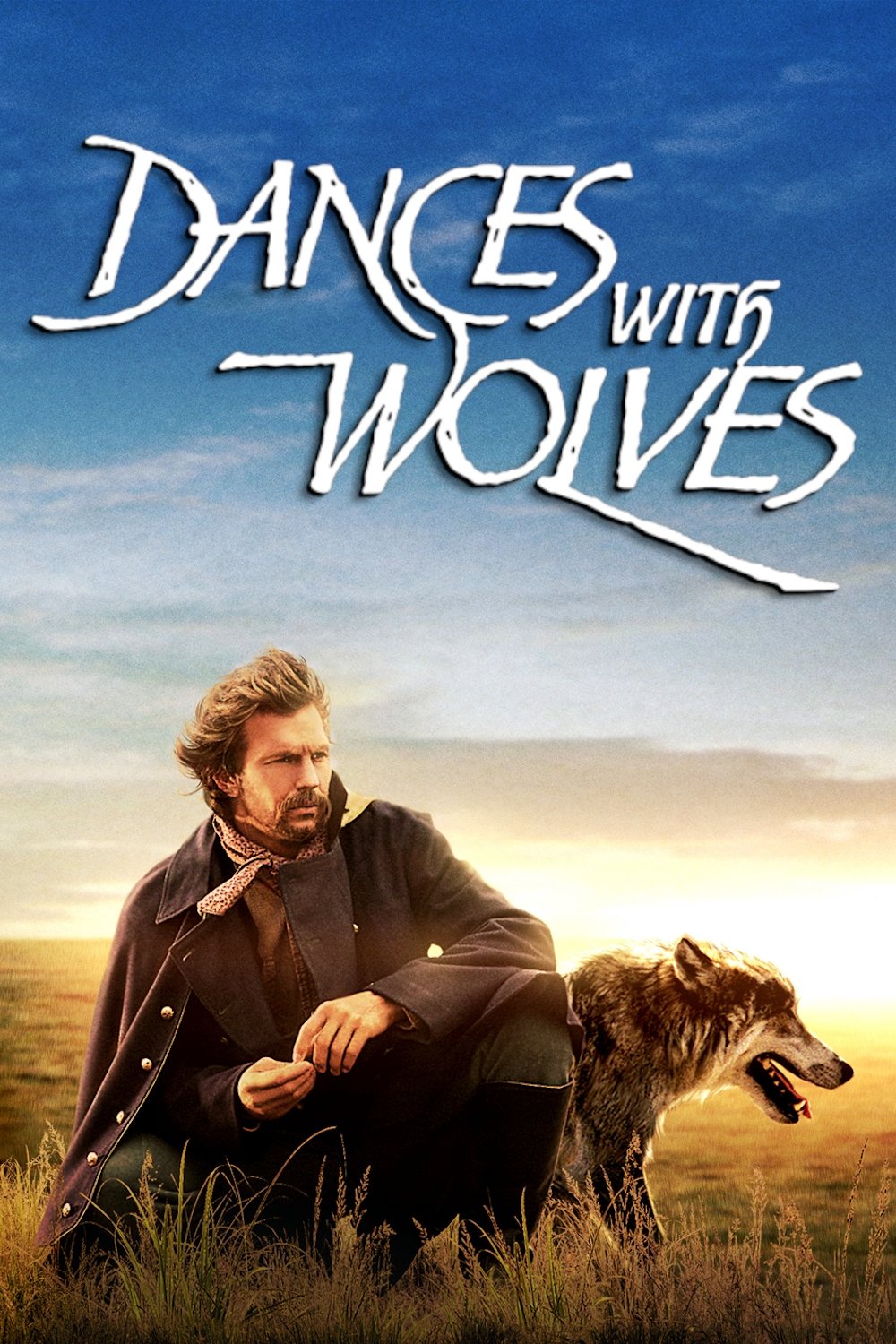
Plot Summary
When I first encountered “Dances with Wolves,” I was immediately drawn into the introspective journey of Lieutenant John Dunbar, a Union officer whose wartime experiences fundamentally reshape his view of the world. The film, directed by Kevin Costner, is much more than a traditional Western—it’s a layered, epic work that asks the viewer to slow down, listen, and bear witness as Dunbar exchanges the violence and rigidity of military life for the rhythms and relationships of the American frontier. He finds himself stationed at a remote outpost, cut off from familiar civilization and surrounded by the vast, untamed prairies of 1860s Dakota territory. While this feels like the beginning of a classic tale of isolation, what unfolded for me was a story about connection: Dunbar’s slow, tentative interactions with the land, its wildlife, and the neighboring Lakota Sioux tribe, ultimately transforming his sense of self and belonging.
I want to keep initial details free of spoilers for anyone who hasn’t yet experienced the journey. The heart of the film, for me, isn’t anchored to any plot twist but rather found in those everyday exchanges—sharing food, learning a new language, discovering cultural customs—that gradually reveal the possibilities of empathy and mutual respect. Dunbar’s growing relationship with Stands With A Fist, a white woman raised by the Lakota after tragedies in her early life, becomes a delicate bridge between worlds. The story is careful to show how understanding and trust are earned, not given, and how cross-cultural friendships can blossom against all odds. Toward the latter portions of the movie (beware: there are significant narrative turns I won’t detail here), Dunbar’s choices set in motion consequences that resonate long after the closing credits roll.
Key Themes & Analysis
What stood out most to me is how “Dances with Wolves” subverts the typical Western archetypes. Instead of centering the violence and moral dichotomies frequently found in Hollywood’s portrayal of the frontier, the film seeks to unravel those binaries. I was struck by how patiently Costner as director creates space for silence and contemplation; the sweeping cinematography by Dean Semler frames the Great Plains as both a place of daunting emptiness and spiritual renewal. The film seems to breathe with every shot, immersing me in an environment where every sunrise, every herd of buffalo, every crackling fire signifies more than mere backdrop. Nature is not a prop but a living presence in the narrative.
One of the most compelling themes is the search for identity. Watching Dunbar shed his old allegiances in favor of something altogether unfamiliar made me reflect on how malleable a person’s sense of self can be when exposed to new ways of living. Through immersive scenes of language learning, intricate Lakota customs, and evolving social dynamics, I saw the film argue for the human capacity to adapt, to grow, and to cross boundaries of culture and prejudice. The Lakota characters—played memorably by Graham Greene as Kicking Bird and Rodney A. Grant as Wind In His Hair—bring a dignity and humanity sorely lacking from earlier cinematic portrayals of Indigenous Americans. The film’s depiction of Lakota life feels, to me, like a gentle corrective—offering complexity and nuance instead of stereotype.
The acting itself is a tapestry of restraint and subtlety. Costner, in the central role, chooses understatement over bravado. It’s a performance that resonates most when Dunbar is silent, his expressions conveying wonder or sorrow more effectively than dialogue. For me, the real revelation is Mary McDonnell as Stands With A Fist. She brings strength, vulnerability, and emotional honesty to every scene—her interactions with both Dunbar and the Lakota elders provide the film with much of its heart. I found myself affected by her transformation from traumatized outsider to someone who can help bridge seemingly impossible divides.
The cinematography deserves its own discussion. The film glows in golden hour light and unspools in panoramic vistas that made me pause to appreciate sheer visual artistry. Semler’s camera constantly reminds me of the enormity of the American landscape—its promise and its foreboding. The use of natural sound and unsentimental scoring by John Barry further roots the movie in a sense of emotional sincerity. I see deliberate choices everywhere: from the authenticity of costumes and props to the respectful way rituals and language are presented, the film seems to care deeply about both accuracy and emotional truth.
What I appreciate most is how Costner resists rushing any part of the narrative. Some critics have called the pace languorous, but for me, the film’s deliberate tempo is absolutely essential. It mirrors Dunbar’s gradual awakening and lets me, as an audience member, feel the incremental changes in understanding and perspective that define genuine cultural exchange. Rather than foisting superficial revelations upon me, “Dances with Wolves” trusts that patience yields the richest emotional rewards.
My Thoughts on the Historical & Social Context
Having watched this film both as a younger moviegoer and again in more recent years, I am continually fascinated by what it meant both in 1990 and today. The early ’90s marked a period of significant reevaluation regarding representation in American media. Films like “Dances with Wolves” signaled, for me, a public appetite for stories that reframe U.S. history through more inclusive, critical, and empathetic lenses. By placing a white protagonist at the center but never making him the “savior,” the film acknowledges complex histories of colonization while still reaching for moments of reconciliation.
I can’t ignore that the very making of this film was influenced by its time. Not only was there a renewed academic and social interest in Native American rights and recognition, but the end of the Cold War seemed to foster a broader reassessment of national mythology. For me, the film’s emphasis on mutual understanding between individuals from violently opposed cultures spoke to a desire for connection and healing after decades of distrust. Watching it today, I still feel that pull—our world remains fractured by misunderstandings and prejudice, and “Dances with Wolves” is a testament to the ongoing necessity of listening to voices historically erased from mainstream narratives.
There are, of course, lingering questions about cultural appropriation—debates that have become even more urgent since the film’s release. “Dances with Wolves” was ambitious for its era, but today I wonder if a similar story would be told from the Indigenous perspective from the very start. Still, what lingers for me is the sense of honest striving toward empathy and truth, despite the film’s limitations. This movie helped open doors for Indigenous actors, languages, and stories to reach a wider audience. It mattered greatly in 1990, and I personally continue to see its effects in both the conversations it sparked and the films that followed in its wake.
Fact Check: Behind the Scenes & Real History
There’s always something fascinating about how a film that feels so timeless almost didn’t happen at all. For one, I learned that Kevin Costner struggled immensely to secure financing for “Dances with Wolves;” most major studios dismissed the project as doomed to fail due to its length, focus on Native languages, and Western genre trappings. Costner eventually decided to pour much of his own money into it—a gamble that paid off, considering how the film went on to win seven Academy Awards (including Best Picture and Best Director for Costner).
I was also struck by the sheer commitment to authenticity. Nearly a quarter of the film’s dialogue is in the Lakota language, and the production brought in tribal elders and consultants to help with both language coaching and the accuracy of Lakota customs, regalia, and rituals. This wasn’t a simple matter, as the Lakota language had rarely, if ever, been featured so centrally in a major Hollywood release. Mary McDonnell, who portrays Stands With A Fist, spent months learning her Lakota lines phonetically—something that most Hollywood productions of prior decades would never have attempted. Still, there were limitations: some Lakota speakers have noted slight inaccuracies in the dialects used, but the effort toward respectful representation was clear and significant for its time.
One aspect I found especially fascinating is how the film’s legendary buffalo hunt scene was achieved. The buffalo hunt was filmed using a combination of real herd animals (around 3,500 head) and animatronic models, often with Native American stunt riders performing dangerous maneuvers at full gallop. The scale and realism are breathtaking; knowing the behind-the-scenes logistics made me appreciate the sense of immersion all the more. And while the film takes some creative liberties with history—for example, the portrayal of inter-tribal dynamics and the military’s role—the broad strokes of cultural interaction and conflict feel thoughtfully drawn in ways that encourage me to reflect on our shared past.
Why You Should Watch It
- The film’s nuanced approach to cross-cultural understanding makes it essential for anyone interested in stories of empathy and transformation.
- Its panoramic cinematography and commitment to authenticity create a genuinely immersive viewing experience that still feels unmatched over three decades later.
- The performances—especially by Kevin Costner, Mary McDonnell, and Graham Greene—deliver emotional depth that is both rare and rewarding for thoughtful audiences.
Review Conclusion
Looking back on my most recent viewing of “Dances with Wolves,” I am deeply moved by how the film allows space for contemplation and emotional resonance. It isn’t only the beauty of its landscapes or the scope of its story that stay with me, but the way it asks us to reconsider our assumptions about history, identity, and what it means to truly listen. This is a Western that dared to unravel its mythologies, handing the narrative reins to voices and perspectives so often left out of mainstream storytelling. While it is not without its flaws—some pacing issues and the lingering question of perspective—my overall feeling is admiration for its ambition, artistry, and heart. If asked, I would unhesitatingly rate it 4.5 out of 5 stars. This remains a film I recommend not simply as a classic, but as a meaningful conversation-starter both then and now.
Related Reviews
- The Last of the Mohicans (1992) – Michael Mann’s historical epic resonates for me in similar ways, using spectacular landscapes and romance entwined with the brutal reality of colonial frontier life. The emphasis on cultural intersections and the plight of Indigenous peoples makes it a natural companion to “Dances with Wolves.”
- Little Big Man (1970) – This film explores history through the eyes of a protagonist adopted by Native Americans, blending satire and drama. I find its destabilization of Western myths and subversive humor to be both entertaining and sharply critical, much like Costner’s revisionist approach.
- The New World (2005) – Terrence Malick’s poetic retelling of the Jamestown colony is, in my view, a spiritual and cinematic cousin to “Dances with Wolves.” Its reflective style, immersive soundscape, and central narrative of cross-cultural encounter evoke similar emotional and intellectual responses in me.
If you want to explore this film beyond basic facts, you may also be interested in how modern audiences respond to it today or whether its story was inspired by real events.
🎬 Check out today's best-selling movies on Amazon!
View Deals on Amazon