
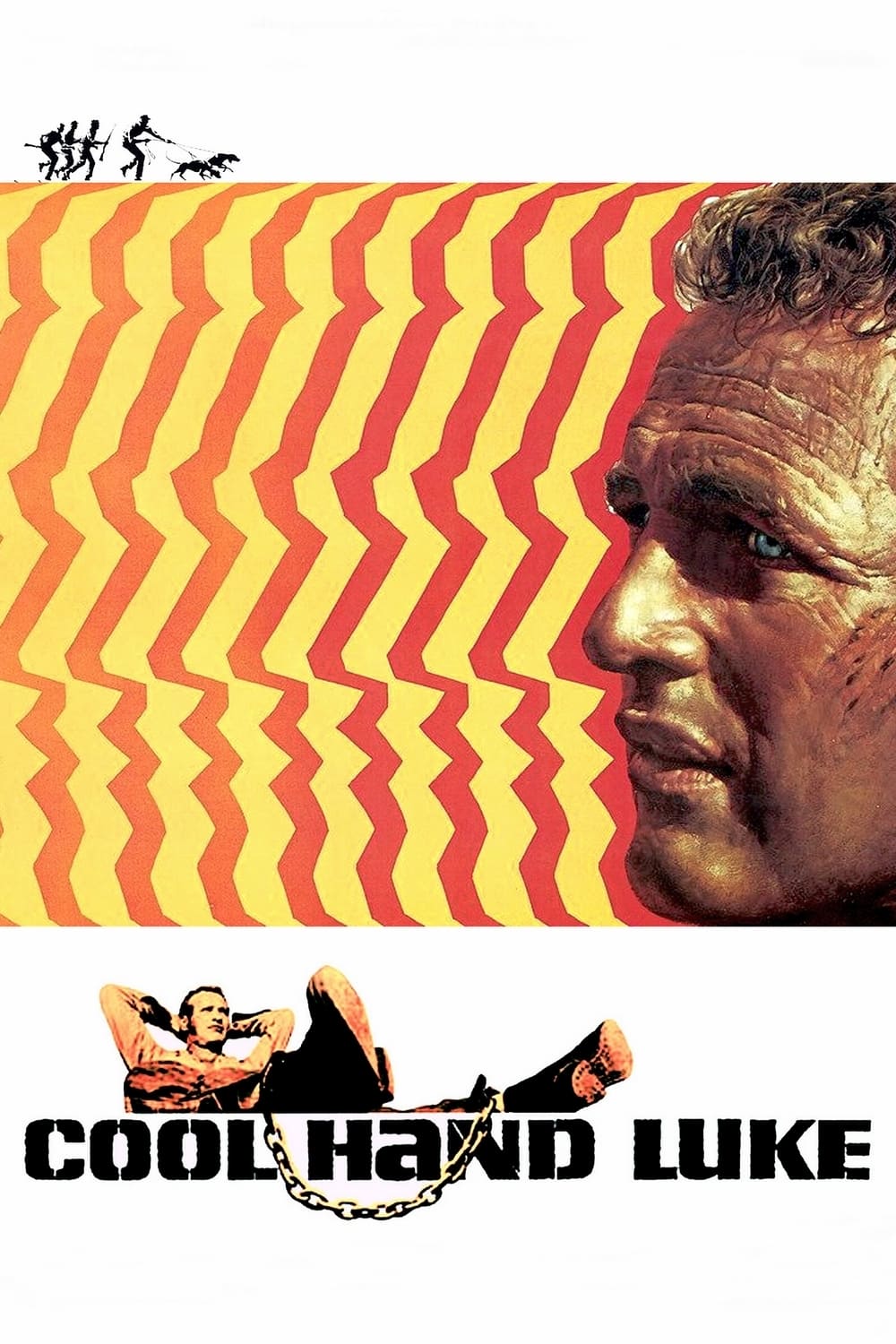
Plot Summary
From the moment I first sunk into the world of Cool Hand Luke, I was swept into the oppressive heat and the raw tension of a Florida prison farm. For anyone who finds themselves drawn to stories about rebellion and the strength of the individual, this film stretches far beyond the usual prison narrative. At the heart of the film, I followed Lucas “Luke” Jackson—played with an unforgettable blend of nonchalance and intensity by Paul Newman—as he becomes an unlikely hero among a group of chain-gang prisoners. After being sentenced for a petty crime, Luke refuses to submit to the warden’s rules or abandon his own sense of dignity, sparking a feud with both the guards and the unspoken social order of the inmates themselves.
If you’re hoping to avoid major spoilers, I’ll tread lightly here. The story weaves through set-piece scenes of defiance—none more iconic than Luke’s calm, silent resistance in face of the camp’s systematic cruelty. There’s the infamous “egg-eating” scene, which, in my view, perfectly encapsulates his blend of mischievous bravado and desperate yearning for meaning. The camaraderie, the grueling work details under the punishing sun, and the mounting tensions unfold with a slow-burn intensity that never feels dull or forced. Even as events spiral toward a climax, I always felt Luke’s journey was less about the specific plot turns than about the deeper question of what it means to remain true to oneself in a system built to crush the individual spirit.
Key Themes & Analysis
If I had to distill what truly captivated me about Cool Hand Luke, it would be how fearlessly it wrestles with the core theme of individualism versus authoritarianism. Director Stuart Rosenberg crafts each frame with such care, swirling sweat, dust, and sunlight into a tapestry that’s as much about texture as it is about plot. For me, Luke’s nonconformist charm, his sly wit, and the way he stands his ground form the emotional backbone of the film. Newman’s performance never slips into martyrdom or cliché; instead, I see a man who stubbornly clings to hope and humor, even when it costs him dearly.
Visually, I found that Conrad Hall’s cinematography transforms the merciless rural environment into a character of its own—a place of both suffocation and accidental beauty. The wide, sun-bleached shots paired with close-ups of sweltering faces provide a powerful sense of both claustrophobia and fleeting freedom. The visual motifs of eyes and windows haunt me; the mirrored sunglasses of the Captain reflect only emptiness and power, as if the system itself is watching without ever truly seeing its subjects.
Supporting performances breathe even more life into this world. George Kennedy’s turn as Dragline, the camp’s de facto alpha, shifts from brutish to almost childlike—a reflection of how oppressive environments warp human relationships. The minor characters, too, become a kind of Greek chorus, echoing societal pressures to conform. For me, these layered performances and textures never allow the film to become just another anti-authority story. Instead, Rosenberg’s direction makes every act of rebellion—be it silent, comic, or deeply tragic—feel painfully authentic. The film’s famous line, “What we have here is failure to communicate,” rings in my ears not just as a plot device, but as a deeply personal lament about the gap between the individual and those who demand obedience.
Every time I revisit Cool Hand Luke, I come away thinking more about the cost of maintaining your integrity under impossible circumstances. I don’t see Luke as a hero in the conventional sense; he’s flawed, sometimes reckless, and often ambiguous. But to me, his quiet stubbornness serves as a rebuke to all the easy answers and pat lessons so many films offer. When I watch the way Rosenberg lingers on seemingly minor moments—tossing a handful of dirt, a fleeting smile during grueling labor—I am reminded how resistance can be both grand and deeply ordinary.
My Thoughts on the Historical & Social Context
Reflecting on its 1967 release, I can’t help but view Cool Hand Luke as a flashpoint in American cinema that felt perfectly tuned to the era’s mounting unrest. The late 1960s were a time rocked by social protest, a questioning of authority, and the Vietnam War’s shadow looming large in the cultural imagination. Watching Luke rebel against a dehumanizing system, I see clear echoes of the anti-establishment spirit that was sweeping the country. To me, his struggle resonates with the civil rights movement’s demand for dignity, the hippie movement’s search for authenticity, and the pervasive sense that the “system”—whether government, military, or societal—was failing its people.
Personally, I find the film’s message even more powerful today. The tension between conformity and self-expression is hardly limited to the ‘60s. In an age where institutions—from carceral systems to corporate structures—often seem indifferent or even hostile to individual flourishing, Luke’s defiance feels remarkably current. If anything, I feel the film’s slow pace and refusal to wrap things up neatly offers a welcome contrast to today’s tendency toward easy resolution. Watching it, I’m forced to grapple with uncomfortable questions: What would I stand for under pressure? Does dignity matter if it brings suffering? It is rare that a film nearly sixty years old can provoke such contemporary reflections.
Fact Check: Behind the Scenes & Real History
One fact that sticks with me from my research is how Paul Newman’s casting wasn’t a sure thing. The novel’s author, Donn Pearce, originally pictured someone gruffer and more physically imposing for Luke—Newman’s mix of vulnerability and charisma was a creative pivot that ultimately defined the film. I imagine the impact would have been radically different had a less nuanced actor inhabited the role.
Another detail that fascinates me is the reality behind those infamous eggs. During the legendary scene where Luke tries to eat fifty hard-boiled eggs in an hour, Newman didn’t actually consume them all, though his discomfort was very real. The crew made creative use of spit buckets and careful camera cuts, but the sequence’s visceral intensity comes from Newman’s total physical commitment to the illusion. Knowing this doesn’t diminish the scene for me—instead, I admire the lengths to which actors and directors sometimes go to serve a single unforgettable moment.
Finally, I’ve often wondered about the historical roots of Luke’s story. While the novel was inspired by Pearce’s own experiences working on a chain gang, the cinematic version takes considerable liberties. The various elements of brutality, humiliation, and camaraderie reflect real conditions of Southern prison farms, but much of Luke’s mythic personality is pure invention. For me, this film walks a fascinating tightrope: it’s firmly rooted in a believable reality, yet never claims to be literal history. The blend of fact and fiction only sharpens its impact as modern allegory.
Why You Should Watch It
- The film’s unflinching portrait of rebellion, with Paul Newman delivering one of the most magnetic performances of his career, makes every scene bristle with energy and emotional honesty.
- Its exploration of the clash between individuality and authoritarian power offers insight, not only into its era but into the perennial challenges of life under any oppressive system.
- Expert direction, cinematography, and a rich supporting cast transform what could have been just a prison drama into something layered, tragic, and—at times—unexpectedly hopeful.
Review Conclusion
Every time I return to Cool Hand Luke, I’m struck by how fresh and pointed its message remains. I find myself moved by the film’s refusal to offer simple answers, by its lyricism, and by its quietly radical insistence that dignity matters—no matter the cost. Paul Newman’s performance stands as a master class in understated heroism, while Stuart Rosenberg’s direction ensures that every moment, whether cruel or compassionate, is laser-focused on the push and pull between authority and autonomy. For anyone who craves bold, thoughtful cinema that leaves you with more questions than answers, this is a film that demands to be seen again and again. My rating: 4.5/5 stars.
Related Reviews
- One Flew Over the Cuckoo’s Nest (1975): I find this Milos Forman classic shares Cool Hand Luke’s fascination with an irrepressible spirit clashing against institutional cruelty. Both films feature transformative lead performances (Jack Nicholson’s in this case) and dissect the cost of nonconformity with sharp wit and empathy.
- Bridge on the River Kwai (1957): To me, this David Lean epic connects through its exploration of prisoners’ psychological resistance under hopeless circumstances. I recommend it for its masterful direction and its own take on defying authority at a terrible personal cost.
- Midnight Express (1978): Alan Parker’s harrowing prison drama is a darker, more contemporary echo of the struggle against brutal authority. The film’s relentless tension and focus on both physical and emotional endurance make it a sobering yet vital companion piece to Cool Hand Luke.
- Paths of Glory (1957): Stanley Kubrick’s antiwar masterpiece constantly reminds me of Luke’s story, as both films pit an individual’s moral courage against the immovable machinery of authority—and both leave me haunted by their finale.
If you want to explore this film beyond basic facts, you may also be interested in how modern audiences respond to it today or whether its story was inspired by real events.
🎬 Check out today's best-selling movies on Amazon!
View Deals on Amazon