
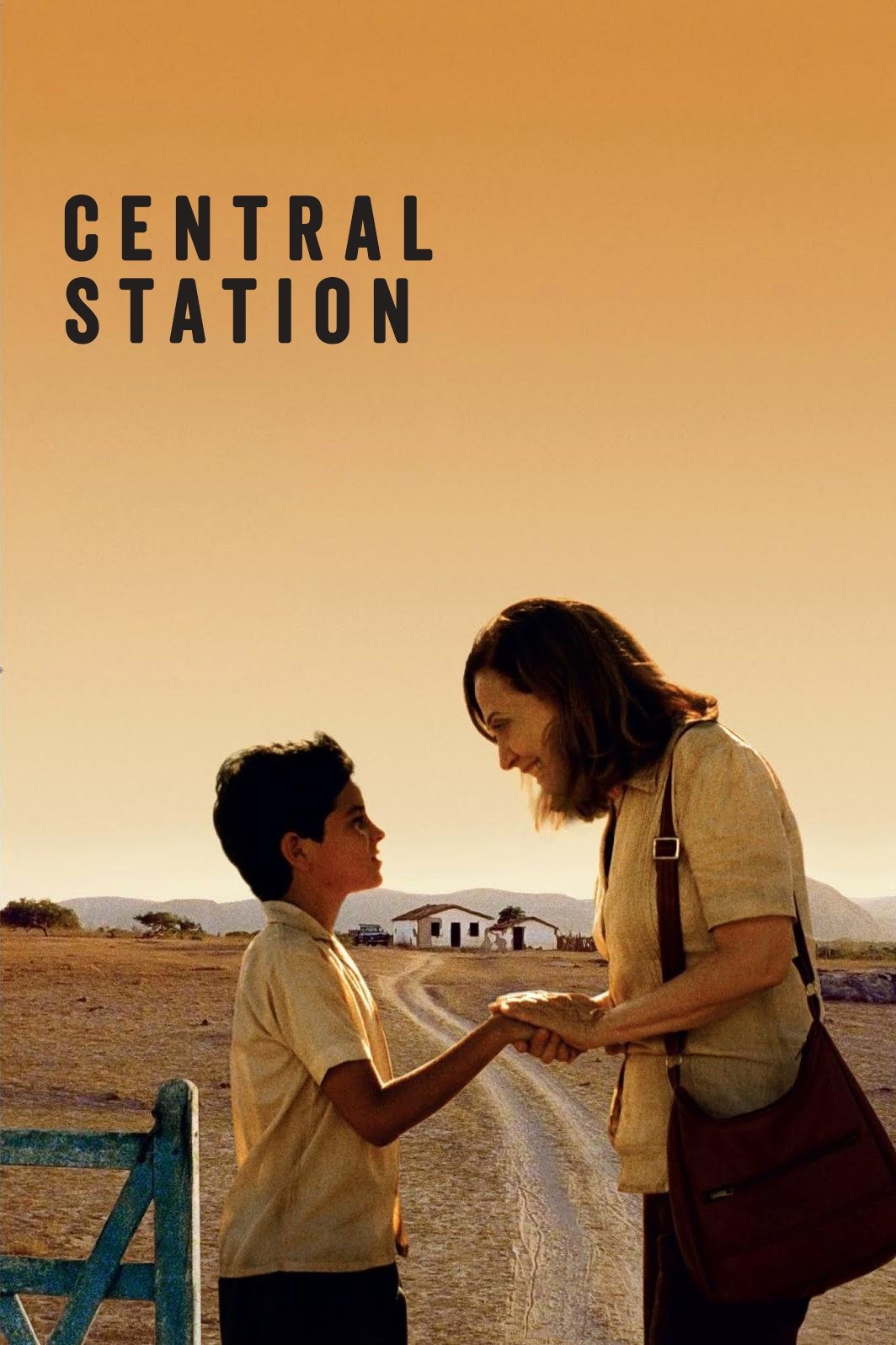
Plot Summary
When I first watched Central Station, I was completely absorbed, right from the earliest frames set in Rio de Janeiro’s bustling train station. Director Walter Salles crafts an intimate, humanistic drama that defies the boundaries of road movie and coming-of-age genres. The central story focuses on Dora, a retired schoolteacher who scrapes by writing letters for illiterate clients in the titular station. The film’s slow, deliberate pace offers a rare emotional honesty, allowing me to connect deeply with the two principal characters even as their journey unfolds along unpredictable paths.
Though avoiding major spoilers, I can say that the heart of the movie for me was the unlikely bond that forms between Dora and a young boy named Josué. After a tragic turn leaves Josué alone and vulnerable, Dora reluctantly takes responsibility for him, launching them on a cross-country search for his estranged father. What struck me in the depiction of their journey was not just the physical distance traveled, but the emotional territory covered—the film quietly and powerfully explores how two strangers, united by circumstance, can help heal old wounds.
The film refuses to paint its characters in broad strokes. Instead, Walter Salles uses their flaws and contradictions as fuel, giving Dora room to display both selfish cruelty and profound compassion. Josué, meanwhile, is neither the archetypal street child nor a wide-eyed innocent; his resilience, suspicion, and quiet longing render him entirely authentic. I found myself rooting for the pair not simply as “heroes” of a narrative, but as deeply human, relatable individuals.
Key Themes & Analysis
From my very first viewing, the film’s themes of redemption, connection, and loss stayed with me long after the final credits. Salles doesn’t simply use Brazil’s landscapes as pretty scenery; he highlights the invisible social chasms—between rich and poor, urban and rural, old and young. Each stop along Dora and Josué’s path introduces characters dealing with their own forms of displacement or yearning, serving as subtle mirrors for the protagonists’ own search for home and acceptance.
In terms of cinematography, I was mesmerized by Walter Carvalho’s lens. The visuals evoke a tactile sense of place, alternating between the cold, impersonal geometry of the train station and the wide, arid expanses of the Brazilian hinterlands. Time and again, I noticed how Carvalho frames faces in close-up, rendering emotion with the intimacy of a confession, while wide shots of the countryside emphasize the vastness of the characters’ undertaking and isolation. Every image seems handpicked for emotional resonance, rather than simple realism.
Fernanda Montenegro’s performance as Dora left a profound impact on me. She carries the film with a subtlety rarely seen in melodrama—her expressive eyes flicker with regret, hope, skepticism, and love, often all within a single scene. I would argue that the entire success of the film hinges on her ability to make Dora both frustratingly stubborn and heartbreakingly vulnerable. Vinícius de Oliveira, with almost no prior acting experience, embodies Josué in ways that never feel forced or sentimental. Their chemistry crackles with authenticity; I sensed that many moments must have sprung from real interaction rather than rigid scripting.
What struck me most is how Salles directs with a patient, almost documentary-like sensibility. The narrative breathes, allowing small moments to land with unexpected power—whether it’s the shared silence between passengers on a rural bus or the simple act of letter writing. The film’s storytelling style, gentle but unblinking, invites viewers to bear witness to the changing relationship between two broken people, and to question whether personal transformation can be possible, even late in life.
Underlying it all is an aching meditation on the power of human connection in the face of poverty, loss, and urban alienation. Salles manages never to preach or simplify, refusing easy answers or dramatic catharsis, opting instead for moments of quiet understanding. I saw echoes of the great Italian neorealists in the film’s commitment to truthful storytelling and respect for its characters’ dignity.
My Thoughts on the Historical & Social Context
Watching Central Station in the context of its 1998 release, I couldn’t ignore the way it captures the anxiety and aspirations of Brazil during a time of massive social transition. For me, the late 1990s in Brazil were years marked by economic instability and growing visibility of the stark contradictions between urban wealth and rural hardship. The film’s opening scenes—where the train station becomes a crossroads for people from all social backgrounds—embody what I see as a metaphor for the fractured identity of the nation itself.
I find that Dora represents the old Brazil: suspicious, self-protective, but not altogether unkind. Josué, meanwhile, is emblematic of a new generation—untethered, vulnerable to the whims of fate, but fiercely hopeful. The film’s journey away from the city and into Brazil’s Northeast, a region often neglected in cultural representations, brings to the surface issues of migration, disenfranchisement, and the search for belonging that feel just as urgent now as they did then.
What resonates most personally is how the film’s intimate focus on two characters is simultaneously a reflection of a society in flux. I saw in their struggles a mirror of larger questions: Who is seen and heard when a country modernizes rapidly? What is lost in the process of migration, and what new possibilities are born from displacement? These questions still echo today—not just in Brazil, but anywhere where development collides with tradition.
Fact Check: Behind the Scenes & Real History
Digging into the production history of Central Station, I came across a few fascinating details that deepened my appreciation for its authenticity and artistry. First, I was struck by the fact that Fernanda Montenegro was not initially interested in the role of Dora; she reportedly worried about the character’s abrasive, unsympathetic qualities. Director Walter Salles ultimately convinced her by emphasizing the film’s redemptive arc, and I believe her nuanced portrayal is a testament to that trust.
Another surprising tidbit is the casting of Vinícius de Oliveira, who played Josué. He was discovered by chance at an airport, shining shoes to help support his family. Salles spotted Oliveira’s natural presence and resilience, which I think translates beautifully into his grounded, unaffected performance in the film. This commitment to realism wasn’t limited to casting; several secondary characters were also played by non-professional actors to maintain the film’s neorealistic tone.
On a technical level, I always marvel at the film’s understated use of actual locations. Unlike many films that rely on soundstage recreations, the bulk of Central Station was shot on location, from the chaos of Rio de Janeiro’s Central do Brasil station to the sun-bleached countryside. This choice adds depth and tactile reality to every scene, underpinning Salles’s desire to present an unvarnished portrait of contemporary Brazil. There were real logistical challenges—such as coordinating scenes amidst real travelers—but the resulting energy and immediacy make the world of the film feel entirely lived-in.
Why You Should Watch It
- For an unforgettable showcase of two extraordinary performances, particularly Fernanda Montenegro’s emotionally layered portrayal of Dora, which anchors the entire film in startling, lived-in humanity.
- If you are drawn to cinema that bridges the personal and the political, this film explores Brazil’s evolving identity and contemporary social issues with rare empathy and finely observed detail.
- Its masterfully restrained direction and location-based cinematography provide a deeply immersive, emotionally authentic experience, making it a touchstone for world cinema and moving storytelling alike.
Review Conclusion
I return to Central Station again and again because it reminds me of what cinema can achieve when it dares not to judge, but instead invites us to walk alongside characters as they face life’s cruelties and small redemptions. The film’s greatest gift is its unblinking compassion for ordinary struggles and its timeless affirmation of the connections that sustain us, no matter how broken we might feel. Salles’s sensitive direction, Montenegro’s once-in-a-lifetime performance, and the film’s vivid sense of place combine to create a work that stands not only as one of the best Latin American films of the 1990s, but as a universal story of hope and survival.
Star Rating: 4.5/5
Related Reviews
- Pixote (1981): I find this film a powerful companion piece to Central Station—both are set against the backdrop of Brazil’s marginalized youth. Pixote’s raw, unfiltered look at the lives of street children shares the same social urgency and emotional intensity, though with an even darker edge. If you were moved by Josué’s vulnerability, Pixote will deepen your understanding of the systemic struggles faced by Brazil’s forgotten children.
- The Bicycle Thieves (1948): For me, this Italian neorealist classic resonates thematically and aesthetically with Central Station. Both focus on ordinary people facing extraordinary hardship, and both rely on natural locations and non-professional actors. The understated yet deeply felt performances and exploration of dignity amidst poverty make these two films spiritual siblings.
- Y Tu Mamá También (2001): While this Mexican film is more irreverent and adult in tone, I think it shares with Central Station a road-movie structure and an eye for the subtle ways personal journeys reflect broader social realities. Its lyrical, unsentimental approach to coming-of-age and connection offers another facet of Latin American cinema’s exploration of identity, class, and transformation.
If you want to explore this film beyond basic facts, you may also be interested in how modern audiences respond to it today or whether its story was inspired by real events.
🎬 Check out today's best-selling movies on Amazon!
View Deals on Amazon