
Plot Summary
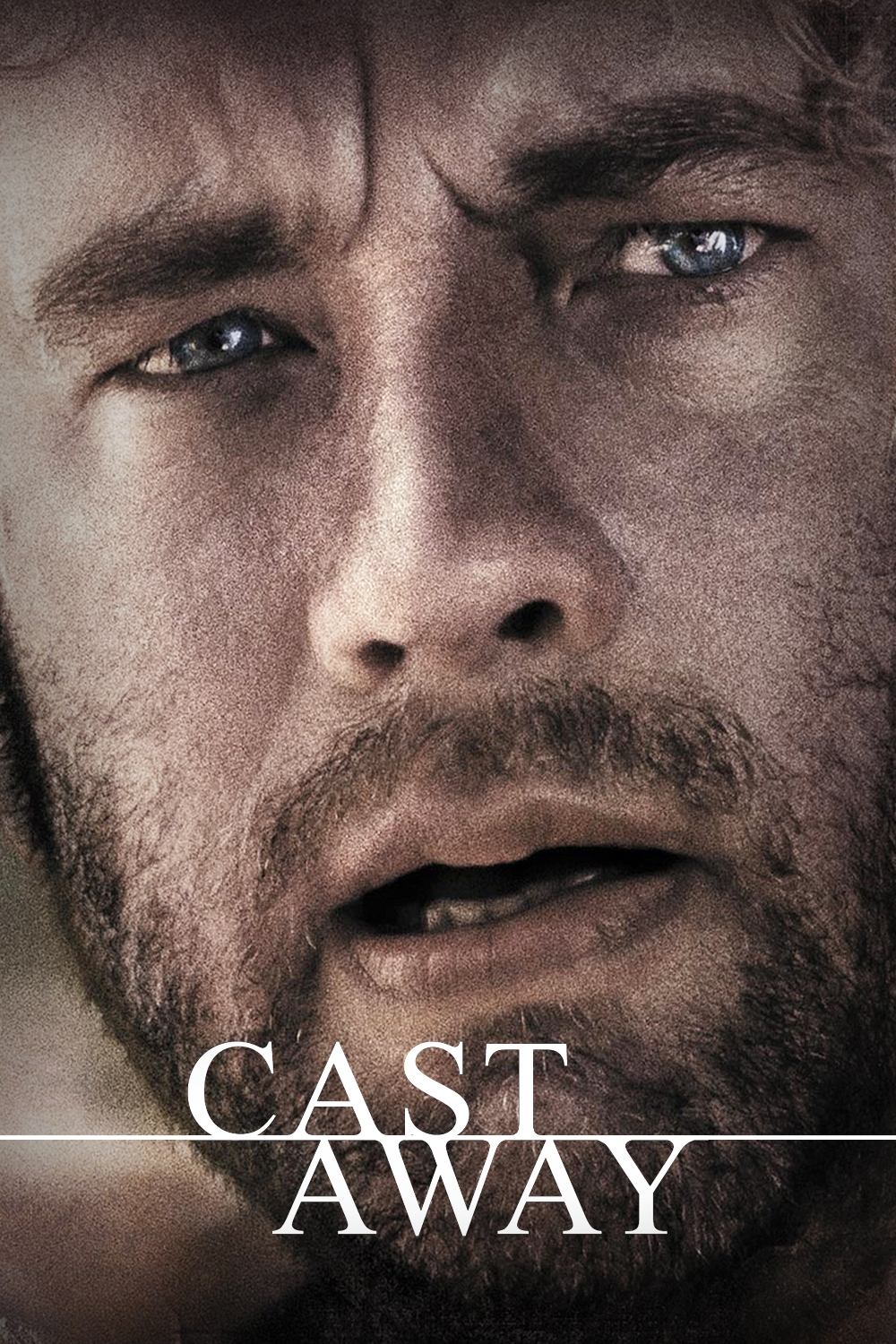
I still remember the chill that ran down my spine the first time I watched Robert Zemeckis’s survival drama—a feeling that had little to do with tropical storms and everything to do with the isolation it so deftly brings to life. “Cast Away” tells the story of Chuck Noland, played with aching vulnerability by Tom Hanks. He’s a meticulous, time-obsessed FedEx executive, whose life—carefully arranged around schedules—gets thrown into complete chaos one Christmas when a plane crash maroons him on a remote Pacific island. What follows is not so much a tale of daring rescues or high adventure, but a quiet, moving, nearly wordless study of survival, hope, and the aching loneliness of the human condition.
Throughout the film, I found myself less caught up in the intricacies of the plot than in the journey of a man stripped of every modern convenience—reduced to the barest essentials of life. Without giving away the latter half or any pivotal turns, I can say the narrative unfolds almost meditatively as time becomes elastic, and the true suspense hinges not on external dangers, but on how—or whether—Chuck will navigate the psychological and emotional battle he must fight against himself.
A major spoiler warning: Some of the most powerful emotional moments arrive in Chuck’s relationships—with people from his past and, surprisingly, with objects he invests with desperate meaning. I won’t spoil the final act or the precise heartbreaks, but suffice it to say, the film is as much about what he loses as about what he discovers within himself.
Key Themes & Analysis
From the opening scenes, I was struck by how the relentless passage of time functions as an antagonist. Zemeckis bathes the film in an uneasy tension: clocks tick, deadlines press, Chuck’s world spins at a frantic pace. It’s only after disaster strikes—when time is rendered meaningless in the vastness of the Pacific—that he, and by extension I as a viewer, start to question what truly matters. This film confronts the illusion of control, leaving us to witness a man wrestle with forces beyond his doing, with no one watching but us.
One of my favorite sequences comes when Chuck tries to light his first fire—an everyday task in the modern world becomes a trial of agony, frustration, and then, stunning elation. Here, Zemeckis and cinematographer Don Burgess lean hard into physical cinema: long, dialogue-free takes where Hanks’s expressive body language tells us everything about hope, desperation, and the tiny victories that keep us alive. The camera lingers, never looking away, forcing me to sit with his struggle as though I was marooned beside him.
I don’t think you can talk about “Cast Away” without mentioning the now-iconic volleyball, “Wilson.” Wilson is more than a prop: he becomes a sounding board, a surrogate for lost company, and ultimately, a vessel for Chuck’s sanity. The scenes between Hanks and the inert volleyball are among the most poignant in contemporary cinema, a showcase of both acting brilliance and narrative audacity. These moments force me to consider what it means to be human when all sense of civilization is stripped away and the alternatives to madness are heartbreakingly few.
Tom Hanks’s performance is the film’s anchor. I was awestruck at his transformation—both physical and emotional. The production famously shut down for a year to allow Hanks to lose weight and grow a beard, and that dedication is mirrored in every detail of his performance. Through subtle gestures, nervous breakdowns, and moments of quiet reflection, Hanks embodies the film’s central questions: How do we find meaning in suffering? How long can hope survive when all hope seems lost?
Zemeckis’s direction, so often associated with more effects-heavy spectacles, here reveals a surprisingly gentle hand. He trusts silence—in some stretches, there is no dialogue at all. The island becomes a character, its beauty and menace rendered through sun-bleached colors and vast, empty soundscapes. I felt the oppressive loneliness seep off the screen. Each scene is meticulously paced—almost minimalist—forcing me to reckon with how little is needed for a story to resonate so deeply.
What lingers for me is the way “Cast Away” becomes, by its end, a meditation on loss and acceptance. The film doesn’t deal in trite Hollywood resolutions; instead, it acknowledges the way some wounds linger, some loves are left behind, and yet life moves forward, carving new paths in streams of regret and possibility. For all its high-concept premise, it’s an intimate, bruised, profoundly human story about rediscovering hope after devastation.
My Thoughts on the Historical & Social Context
Watching “Cast Away” through the lens of Y2K anxieties and turn-of-the-millennium fears, I can’t help but think about why this film hit such a nerve in 2000, and why it remains so resonant now. At that time, technology was accelerating rapidly—cell phones, the internet, globalization. Our lives were becoming more connected, but also, paradoxically, more fragmented. Chuck Noland’s life was the epitome of this modern rush: every second accounted for, connectivity prized above all.
I see the story as a kind of fable about what happens when the scaffolding of civilization collapses. The motif of the FedEx packages, symbols of global commerce and speed, end up washed-up and useless—a darkly comic commentary, it seemed to me, on the fragility of our systems. In the wake of natural disasters and societal shifts, audiences in 2000 were grappling with vulnerabilities for which there was no manual or tracking number, and “Cast Away” gave voice to those unspoken fears. The film’s depiction of isolation speaks powerfully to our need for community, ritual, and meaning—needs that become even more obvious in their absence.
What makes “Cast Away” remarkably prescient is what it says about mental health and self-reliance. I often think about its relevance today: with the pandemic, so many of us experienced new degrees of separation, and the feeling of grasping for connection even when it seemed out of reach. Chuck’s conversations with Wilson—and the heartbreak of disconnection—felt like a metaphor for the way we hold onto fragments of normality when the world shifts beneath our feet. The film’s encouragement to keep going, to adapt even in the face of overwhelming grief or loneliness, seems as necessary now as it did when I first watched it.
I also appreciate how the film sidesteps triumphalist narratives. There’s courage here, yes, but not in the sense of conquering nature; rather, in the honesty and humility of survival. “Cast Away” offers a kind of quiet resistance to the myth of perfect self-sufficiency, suggesting that sometimes the greatest courage is simply enduring, acknowledging loss, and hoping against hope for connection again. That, to me, is what makes it feel perpetually contemporary and deeply human.
Fact Check: Behind the Scenes & Real History
There’s a fascinating mythos around the making of “Cast Away”—and, as someone who loves digging into production stories, this one totally captivated me. First off, Tom Hanks took extraordinary steps to embody Chuck’s transformation. Between the movie’s principal photography phases, the filmmakers halted production for an entire year so that Hanks could shed over 50 pounds and grow his hair and beard. During this period, director Robert Zemeckis didn’t just sit idle either—he used the time to film another movie (“What Lies Beneath”), showing just how rarely a Hollywood project puts such trust in its lead actor’s commitment. I found this dedication not just impressive, but essential, as the film’s authenticity relies on the audience believing the sheer physical and emotional ordeal Chuck endures.
Another detail that floored me: the character of Wilson really did begin as a practical solution to what I imagine was an immense narrative challenge for the screenplay. Writers realized the movie would have minimal dialogue for long stretches, so the inclusion of Wilson—a volleyball branded by the actual Wilson company—gave Chuck (and Hanks as an actor) someone to talk to without betraying the film’s oppressive loneliness. The prop became such a cultural icon that, after filming, Hanks admitted he kept one of the original “Wilsons” at home. That uncanny, almost comical relationship grew organically during shooting, and it never feels forced—a testament to the improvisational trust Zemeckis placed in Hanks.
As for realism, I was genuinely surprised to learn that the filmmakers consulted with survival experts. The fire-building sequence, among other scenes, was informed by real-life techniques. Still, some creative liberties were inevitable—the ease with which Chuck extracts water from coconuts, or the relative absence of dangerous insects, for instance—but none of these choices detract from my immersion. Instead, they make the film accessible without burdening it with unnecessary brutality.
Why You Should Watch It
- A masterclass in minimalist storytelling and acting: Tom Hanks’s solo performance is mesmerizing, offering a rare, unvarnished look at the emotional and physical toll of isolation.
- Profoundly relatable themes of resilience and hope: Whether you’re interested in survival stories or deeper meditations on what it means to endure, “Cast Away” brings both in abundance.
- Powerful technical craft and visual storytelling: The film’s use of sound, pacing, and simple imagery unlocks a suspense and poignancy that has stuck with me long after the credits rolled.
Review Conclusion
I find “Cast Away” endlessly rewarding—each revisit brings new textures to the pain and triumph in Chuck Noland’s journey. This is not just a survival film, but a profound meditation on loneliness, hope, and human tenacity in the face of a universe that is often indifferent. There are moments of unbearable isolation, flashes of humor, and scenes that made me rethink what really matters: not success or routine, but love, hope, and the simple act of surviving another day. In an age of spectacle, Zemeckis and Hanks delivered something intimate, raw, and real—a film as sparse and unforgettable as the island itself. For its lasting emotional impact and its technical grace, I rate “Cast Away” 4.5/5 stars.
Related Reviews
- “All Is Lost” (2013) – I recommend this taut, almost wordless survival tale starring Robert Redford because, like “Cast Away,” it’s an exercise in minimalist storytelling and solo performance, focusing on the elemental struggle to endure in isolation. The focus on one man’s ingenuity and emotional arc in the face of nature’s brutal indifference resonates with the existential meditation at the core of Zemeckis’s film.
- “Life of Pi” (2012) – This visually striking adaptation by Ang Lee explores solitary survival, the elasticity of hope, and the imaginative tools we use to cope with loss. Its blend of spiritual reflection and harrowing adventure provides a thematic mirror to “Cast Away’s” fusion of the literal and symbolic in human endurance.
- “127 Hours” (2010) – Danny Boyle’s riveting dramatization of real-life survival is a companion piece for those fascinated by the limits of human resilience. What links it most closely to “Cast Away,” in my mind, is its intense focus on a single, resourceful protagonist whose ordeal becomes a crucible for self-discovery and transformation.
If you want to explore this film beyond basic facts, you may also be interested in how modern audiences respond to it today or whether its story was inspired by real events.
🎬 Check out today's best-selling movies on Amazon!
View Deals on Amazon