
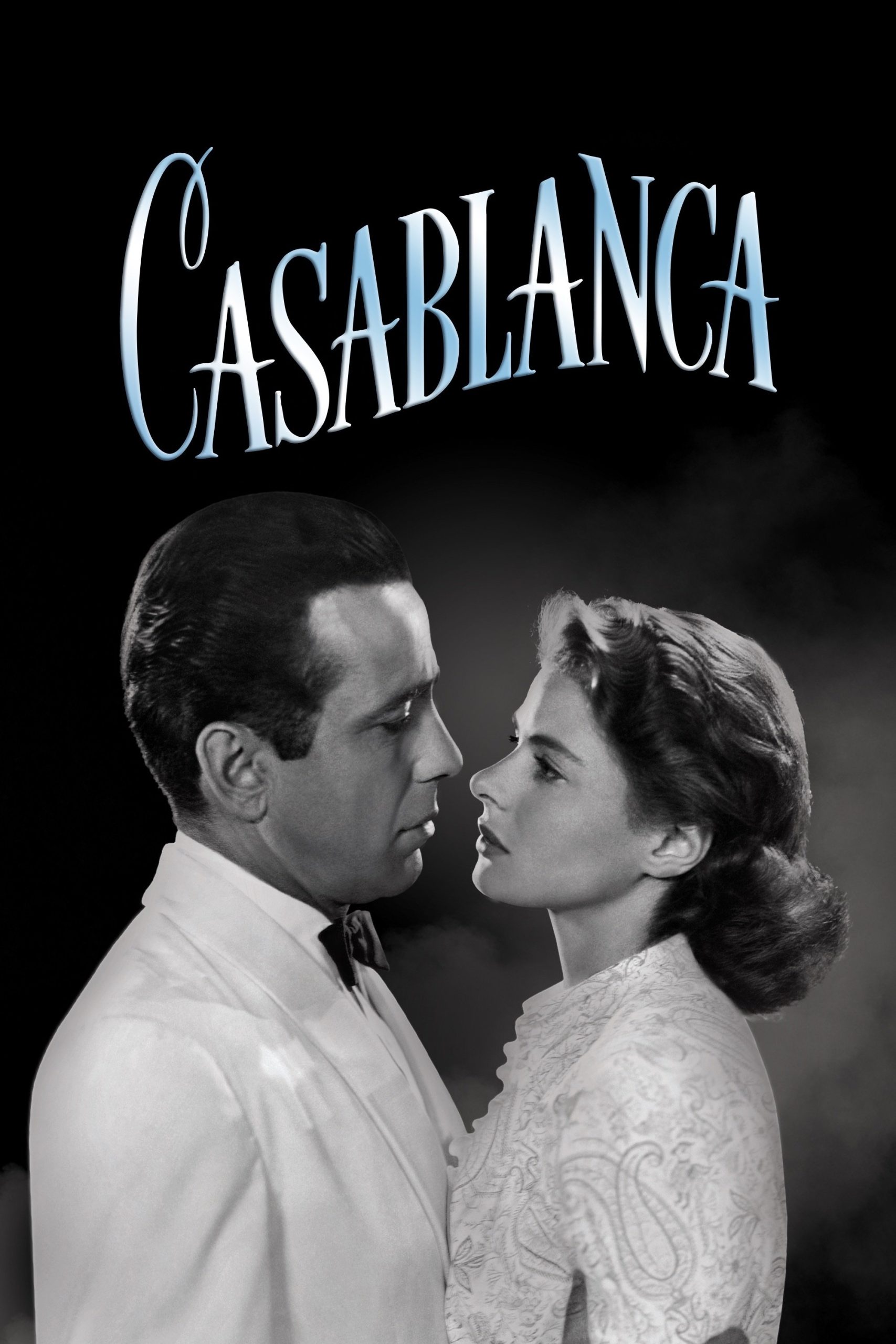
Plot Summary
Every time I revisit Casablanca, I’m struck by how effortlessly the film immerses me in a turbulent world teetering on the brink of chaos, yet anchored by the small, human dramas playing out in a Moroccan café. The story centers on Rick Blaine, whose American sensibility is layered with cynicism and deeply buried wounds. I watched as he runs his nightclub—Rick’s Café Américain—with an aloof, almost poetic restraint, serving as a haven for émigrés, refugees, and the desperate. The Moroccan city isn’t just a backdrop; it throbs with the urgency and tension of a world at war, a waiting room for souls yearning for escape.
What makes the plot so magnetic for me is its sense of moral ambiguity. The lines between heroism and self-preservation blur constantly. Watching Rick forced into emotional territory he’d rather ignore, thanks to the unexpected arrival of Ilsa Lund, reminded me how some wounds never heal, yet also how crises can spark personal transformation. Without treading into spoiler territory, I’ll just say that the relationships between Rick, Ilsa, and her freedom-fighting husband Victor Laszlo pulse with conflict—a push and pull between the past and the call of conscience.
SPOILER WARNING: If you haven’t seen Casablanca and want to experience its twists firsthand, you might want to skip over the next few lines. Ultimately, the story pivots on crucial decisions: Rick’s personal interests versus what is right; love versus duty; the hope for personal happiness versus the realities of war. This isn’t a story with easy answers. Instead, its tension stems from choices that demand real sacrifice—choices rendered more devastating through the performances and lean, smart script.
Key Themes & Analysis
Much of Casablanca’s staying power, in my experience, comes from the film’s deft exploration of sacrifice, love under duress, and the struggle between personal desire and the greater good. I’m always floored by how Michael Curtiz, the director, manages to balance such big ideas without ever losing the thread of intimate human connection. The cinematography—there’s so much to say about the interplay of smoke, shadow, and light!—visually underscores the moral murkiness Rick and the others face. Shadows seem to press in on the characters, as if the walls of the café themselves echo the uncertainty of wartime existence.
The acting in Casablanca deserves every word of praise it’s ever received. Humphrey Bogart’s Rick is, to me, the archetype of the reluctant hero: brittle with pain, but with a hint of conscience flickering beneath the surface. Ingrid Bergman’s Ilsa, meanwhile, isn’t a passive love interest; I always sense her internal wars, how she’s torn by loyalty and longing. When Bogart and Bergman share the frame, their chemistry is electric—you feel their history in every shared glance or gesture. Paul Henreid’s Victor Laszlo projects stoic, noble resistance, serving as a kind of moral compass, while Claude Rains as Captain Renault provides sly wit and ambiguity, blurring the lines between ally and adversary.
I’ve always believed the film asks: “What would you do if faced with an impossible choice?”—and by leaving its resolution so emotionally complex, it refuses the comfort of easy morality. Even minor characters bring depth: from the loyal Sam, whose piano playing conjures up nostalgia and yearning, to the motley crowd of refugees, every face in Rick’s feels like a sketch from a much larger story. The film’s dialogue is famously memorable, but it’s the subtext that lingers—how haunted and hopeful Rick, Ilsa, and even the secondary figures seem.
Visually, Curtiz’s direction guides my eye to every nuance: the fog-drenched final scene, the deliberate use of close-ups during intimate moments, and the steady pace that never feels rushed. Max Steiner’s musical score elevates everything, especially “As Time Goes By,” whose melody haunts Rick (and me) long after the credits roll. The cumulative result is a film that’s richer with each revisit—always revealing new shades of meaning or pathos I’d missed before.
My Thoughts on the Historical & Social Context
To me, Casablanca’s emotional power is deeply tied to its timing—it was made when World War II was a living, breathing reality, not an artifact of history. Viewing the movie through this lens, I’m reminded of how the story’s sense of uncertainty and desperation mirrors the anxieties of its 1942 audience. Refugees flooded neutral ports, borders closed overnight, and loyalty was a precarious thing. I get the sense that Rick’s reluctance to “stick his neck out” speaks directly to American ambivalence about joining the war, while Victor Laszlo stands in for the committed Allied resistance.
I’m personally drawn to how Casablanca transforms its historical setting into a metaphor for divided loyalties. The characters all inhabit a liminal space—not quite home, not quite exiled—waiting for a future that feels almost impossible to imagine. I recognize my own anxieties about the state of the world in these scenes: the fear, the fatigue, the way love and hope persist despite everything. At the time, audiences weren’t watching with historical distance; they were living the events onscreen. This immediacy, I think, is why the film resonates so powerfully even now. Its themes transcend time, tying together personal heartbreak and global crisis. In my view, Casablanca captures the crossroads between individual yearning and collective responsibility—an intersection I still see reflected in today’s debates: political refugees, divided nations, people struggling to choose between safety and principle.
For me, this movie is a touchstone for how art reacts to social upheaval. It never lets me forget that its iconic romance is only possible because of extraordinary real-world circumstances. When I watch Casablanca, I witness the way love and ethics intertwine with geopolitics in the most human way possible. That, to me, is why Casablanca has not only endured, but grown in meaning with each passing era.
Fact Check: Behind the Scenes & Real History
When I dug into Casablanca’s production history and its relationship to real-world events, I discovered fascinating details that transformed my appreciation of the film. One of the most compelling facts is that the movie was adapted from an unproduced stage play titled “Everybody Comes to Rick’s”. Warner Bros. bought the rights before the play ever made it to the stage, sensing that its timely setting could speak directly to wartime anxieties. I find it remarkable how seamlessly the story was reshaped for the screen—the screenplay underwent multiple rewrites, with dialog and even the ending being finalized on set.
I was surprised to learn about the casting dynamics. For instance, neither Bogart nor Bergman knew the complete ending while shooting the film; the script evolved right until the final days of production. This uncertainty, I believe, adds to the raw tension we see onscreen—Rick and Ilsa’s confusion and longing feel entirely genuine. Bergman even filmed her emotional scenes without knowing whom her character would ultimately choose, which, in hindsight, makes her performance feel all the more spontaneous and vulnerable.
Another point that fascinates me concerns how the film relates to actual wartime Casablanca. Although set in Morocco, the entire film was shot on Warner Bros. studio backlots in Burbank, yet through clever set design and cinematography, the illusion is almost seamless. Reality diverges from film in other ways, too: while Casablanca became famous for being a nexus of refugees, its depiction in the movie is more stylized than strictly accurate. The diverse, international mix of characters mirrors history, but the tense unity of the bar’s crowd and the neatness of “escape routes” are inventions shaped by narrative economy rather than reality. Still, the background anxieties of war—the fear, suspicion, hope, and longing—are as authentic to the lived experience as any documentary could be.
Why You Should Watch It
- Unforgettable performances—Bogart and Bergman’s chemistry defines what movie romance can be, while the supporting cast delivers unforgettable, nuanced work.
- Timeless themes—the film’s meditations on love, sacrifice, and moral ambiguity feel just as urgent and universal today as they did in 1942.
- Elegant filmmaking—from Curtiz’s stylish direction to Steiner’s evocative score and the atmospheric black-and-white cinematography, every technical element enhances the emotional impact.
Review Conclusion
Whenever I watch Casablanca, I’m reminded why I fell in love with cinema in the first place. The film succeeds not only as a sweeping love story but also as a meditation on conscience and courage in dark times. Its unresolved longing, pointed wit, and spot-on performances ensure that it never slides into mere melodrama. I’m always moved by how it finds grace in sacrifice, hope in heartbreak, and meaning in the small gestures that shape destinies. Artistry, historical context, and human vulnerability all converge in a film that manages to be both deeply entertaining and endlessly thought-provoking. For me, Casablanca is a benchmark of thoughtful, emotionally rich Hollywood storytelling, deserving of its reputation and deserving—always—of another viewing. My personal rating: 5/5 stars.
Related Reviews
- Notorious (1946) – I recommend Alfred Hitchcock’s romantic thriller because it blends espionage, romance, and moral ambiguity with a similarly haunting atmosphere. Much like Casablanca, its characters are entangled in global events far larger than themselves, and personal choices shape the course of history.
- The Third Man (1949) – I find this film resonates for fans of noir, postwar anxieties, and morally complex heroes. Its atmospheric style, evocative cinematography, and themes of loyalty and betrayal echo the tension and beauty I love in Casablanca.
- To Have and Have Not (1944) – This Bogart and Bacall classic is a natural pairing thanks to its war-era intrigue, snappy dialogue, and central romance that’s just as electric and unresolved as the relationships in Casablanca. I think its blend of suspense, style, and subtle political commentary makes it a must-see if you’re drawn to Casablanca’s vibe.
If you want to explore this film beyond basic facts, you may also be interested in how modern audiences respond to it today or whether its story was inspired by real events.
🎬 Check out today's best-selling movies on Amazon!
View Deals on Amazon