
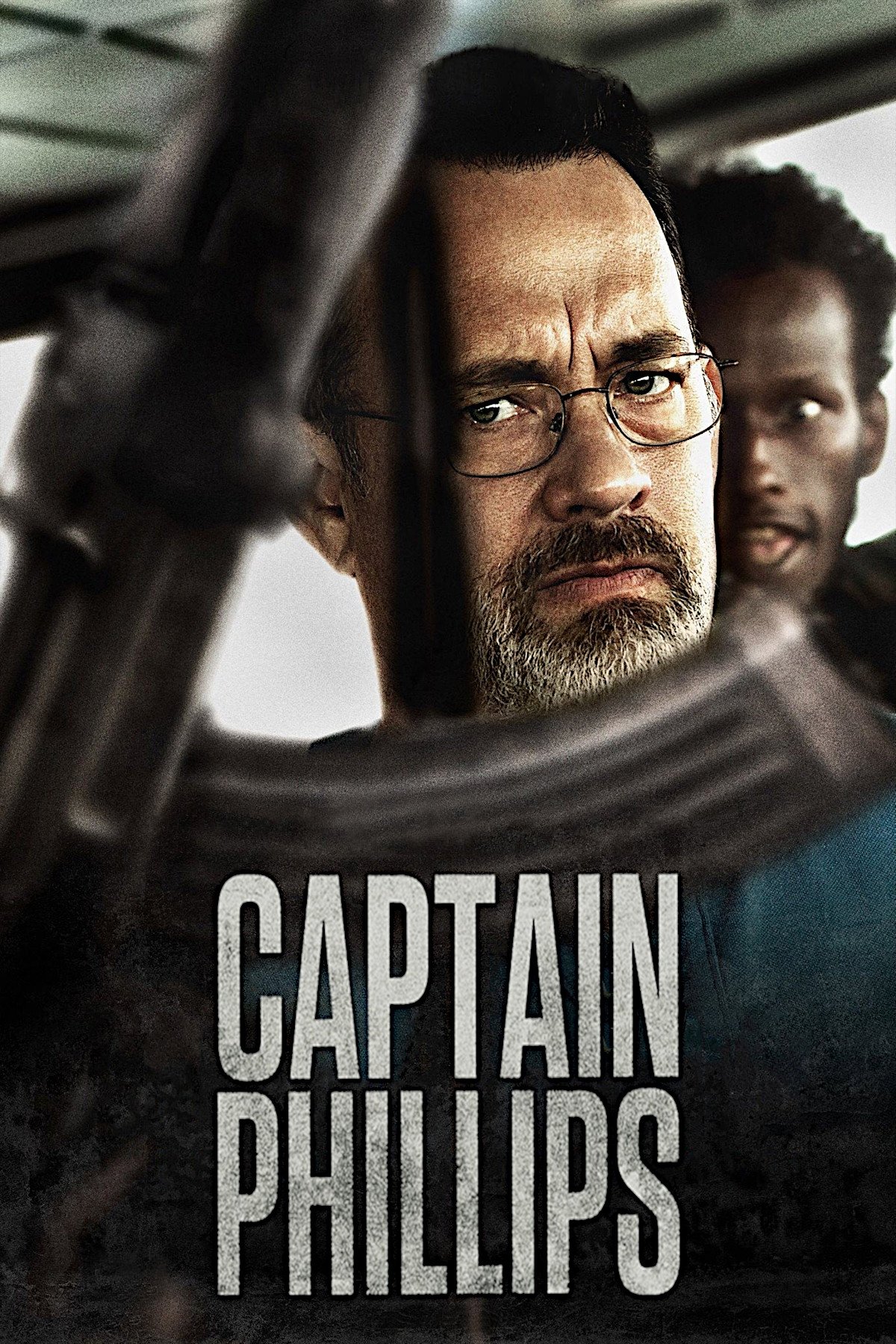
Plot Summary
From the first unnerving moments at sea, I found myself gripped by a growing sense of unease in Paul Greengrass’s 2013 thriller. “Captain Phillips” immerses me in the world of commercial shipping, where a seemingly routine voyage transforms into a hostage crisis. Set on the high-stakes expanse of the Indian Ocean, this film plunges me into the tense dynamic between Captain Richard Phillips, played by Tom Hanks, and a desperate band of Somali pirates led by Barkhad Abdi’s character Muse.
The narrative unfolds as the Maersk Alabama, captained by Phillips, is boarded by armed pirates. What begins as an impersonal threat soon becomes chillingly intimate, with the lives of the crew and the invaders intertwined by fear and survival. While Greengrass skillfully draws out the suspense—escalating each encounter with mounting dread—he also humanizes both the captives and captors, encouraging me to question where my sympathies truly lie. Without revealing the climactic details, I can say the movie delivers a white-knuckle journey that rarely lets up on its emotional intensity.
Key Themes & Analysis
Every time I revisit “Captain Phillips,” I’m struck by the film’s immersive realism and relentless pace. What stands out most to me is Greengrass’s signature handheld camera work, which transforms the ship’s narrow corridors and sparse lifeboats into arenas of claustrophobia and anxiety. It’s a technique reminiscent of his work in the Bourne series, but here, it feels even more raw and immediate—every shudder of the vessel and every drop of sweat magnified for me as a viewer.
The heart of the film, for me, lies in its exploration of human desperation and moral ambiguity. Greengrass never presents Phillips or Muse as caricatures; instead, he grounds both men in an unsettling realism. I constantly sense the pressure bearing down on Phillips, not just as a captain responsible for his crew, but as a man wrestling with choices in an impossible situation. On the other side, Muse isn’t simply a villain. The film lets me glimpse the poverty and societal collapse that drove him to piracy, illuminating the intractable cycle of destitution fueling the hijackers’ actions.
Tom Hanks’s performance is a tour de force of restrained panic and eventual devastation. In several key moments—particularly late in the film—I felt a palpable vulnerability rarely seen in Hanks’s previous roles. His eyes do the heavy lifting, conveying dread, courage, and ultimately, a broken kind of relief that lingers long after the credits. Barkhad Abdi, in his debut, is equally magnetic. His signature line, “I’m the captain now,” has entered pop culture, but what haunts me is the hollow triumph in his delivery. It’s not bravado—it’s survival, and he wears it like a shroud.
Tension and authenticity drive the entire production. The sound design places me in the midst of storm-tossed hulls and frantic negotiations. The editing is tight, with barely a moment to breathe. Greengrass’s direction refuses melodrama, pushing the story’s realism even further by refusing easy answers or clear-cut heroes and villains. Moral discomfort is part of the movie’s core—and I appreciate that it leaves me wrestling with it, long after the screen goes dark.
My Thoughts on the Historical & Social Context
Watching “Captain Phillips,” I can’t help but reflect on the anxieties of the early 2010s—an era defined by globalization, economic turmoil, and headlines dominated by piracy off the coast of Somalia. When the film was released, these real-world hijackings were uncomfortably common on news cycles, symbolizing a collision between the 21st-century shipping industry and desperate individuals from failed states. For me, the story lands hard because it doesn’t just chronicle an isolated event—it’s an artifact of a world grappling with interconnected crises.
I find that the film’s depiction of both American workers and Somali pirates as products of their environments challenges simplistic narratives of good guys and bad guys. In the post-2008 world—when many viewers felt uncertain about job security and economic stability—Greengrass’s emphasis on the daily, grinding pressures of work, duty, and providing for one’s family resonates deeply with me. It’s not lost on me that Phillips’s commitment to getting the container ship through dangerous waters isn’t all that different from Muse’s determination to bring something back to his own people. That parallel transforms “Captain Phillips” from a straightforward survival thriller into a meditation on the costs of global inequality and the invisible threads that bind distant lives.
What gives the movie its staying power, in my view, is how relevant it remains. Issues of international piracy may have faded from headlines, but the broader questions—about the intersections of poverty, opportunity, and violence—are as urgent now as they were over a decade ago. Even today, when I see Phillips’s fear and Muse’s hopelessness, I’m reminded that our interconnected world still breeds these kinds of desperate collisions. The real enemy, as the film subtly suggests, is not any one individual, but the harsh structures that drive them to such extremes. I walk away pondering not only the cost of survival, but who pays that cost and who benefits most from the world’s ceaseless commerce.
Fact Check: Behind the Scenes & Real History
One fact that fascinates me is Greengrass’s relentless pursuit of authenticity. The production team shot the majority of the film on real vessels, including the Maersk Alabama’s actual sister ship to mirror the real-life environment. This decision lends an unmistakable texture to the film—every rivet, cramped hallway, and hazard of the sea feels lived-in, not staged.
In terms of casting, what still strikes me is the remarkable backstory of Barkhad Abdi, who went from working as a limousine driver in Minneapolis to earning an Oscar nomination for his role as Muse. During auditions held in Minneapolis—a city with a significant Somali-American community—Abdi’s raw, unschooled performance stunned the casting directors. His authenticity and personal experience as an immigrant added unspoken depth to his portrayal. In interviews, he has described connecting with the character’s longing and frustration at being pushed into impossible choices, and I believe that’s why his performance is so magnetic.
Of course, as with most films based on fact, there are discrepancies between cinematic and historical truth. I learned that some crew members of the real Maersk Alabama later disputed the portrayal of Phillips as unambiguously heroic. They claimed that decisions made prior to the attack may have increased risk, suggesting a more complex leadership dynamic than what I saw on screen. This raises compelling questions about how historical figures are mythologized in movies—a reminder that Greengrass crafts drama without always adhering to the most challenged versions of events. The film’s emotional accuracy, however, remains potent, and that, to my mind, is its greatest accomplishment.
Why You Should Watch It
- For a masterclass in tension and realism, few modern thrillers match the nerve-shredding experience “Captain Phillips” provides.
- The performances—especially from Tom Hanks and Barkhad Abdi—offer a deep dive into human complexity and vulnerability, far beyond traditional hero-villain archetypes.
- If you’re interested in films that don’t just entertain but also provoke thought about global inequalities and moral ambiguity, this movie will keep you thinking long after it ends.
Review Conclusion
For me, “Captain Phillips” stands as one of the decade’s most visceral thrillers—its blend of documentary-style direction, powerhouse acting, and meaningful social commentary keeps me riveted with each viewing. I carry the film’s unease with me; the questions Greengrass raises have no simple answers, but the narrative’s emotional honesty feels undeniable. I strongly recommend it to anyone interested in cinema that both unsettles and enlightens, not least for Hanks’s unforgettable third-act performance and the brutal reflection it casts on our world. My personal rating: 4.5/5.
Related Reviews
- United 93 – I recommend this film, also directed by Paul Greengrass, for its real-time intensity and refusal to simplify complex, tragic events. Like “Captain Phillips,” it immerses me in a harrowing crisis, demanding empathy for all involved and delivering extraordinary realism.
- Eye in the Sky – This suspenseful drama dives into the moral complexities of modern warfare and unmanned drones. The tension of ethical dilemmas and the global consequences of remote decisions remind me a lot of the tightrope-walking humanity and ambiguity at the heart of “Captain Phillips.”
- Captain Fantastic – While very different in setting, I suggest this film for those interested in exploring principled father figures confronted with the limits of their control and the unpredictability of the world. It interrogates what “doing the right thing” looks like—reflecting Phillips’s own dilemmas, albeit in a radically different context.
- A Hijacking – This Danish film rooted in the world of maritime piracy precedes “Captain Phillips” and offers a slower, more psychological depiction of similar events. I found its focus on negotiation, psychology, and the toll of waiting to be a piercing complement to Greengrass’s adrenaline-driven narrative.
- Zero Dark Thirty – For viewers captivated by the interplay of hyper-realistic tension and real-world events, this film about the hunt for Osama bin Laden presents both a riveting procedural and a complicated look at the fallout of contemporary geopolitics—prime territory for fans of “Captain Phillips.”
If you want to explore this film beyond basic facts, you may also be interested in how modern audiences respond to it today or whether its story was inspired by real events.
🎬 Check out today's best-selling movies on Amazon!
View Deals on Amazon