
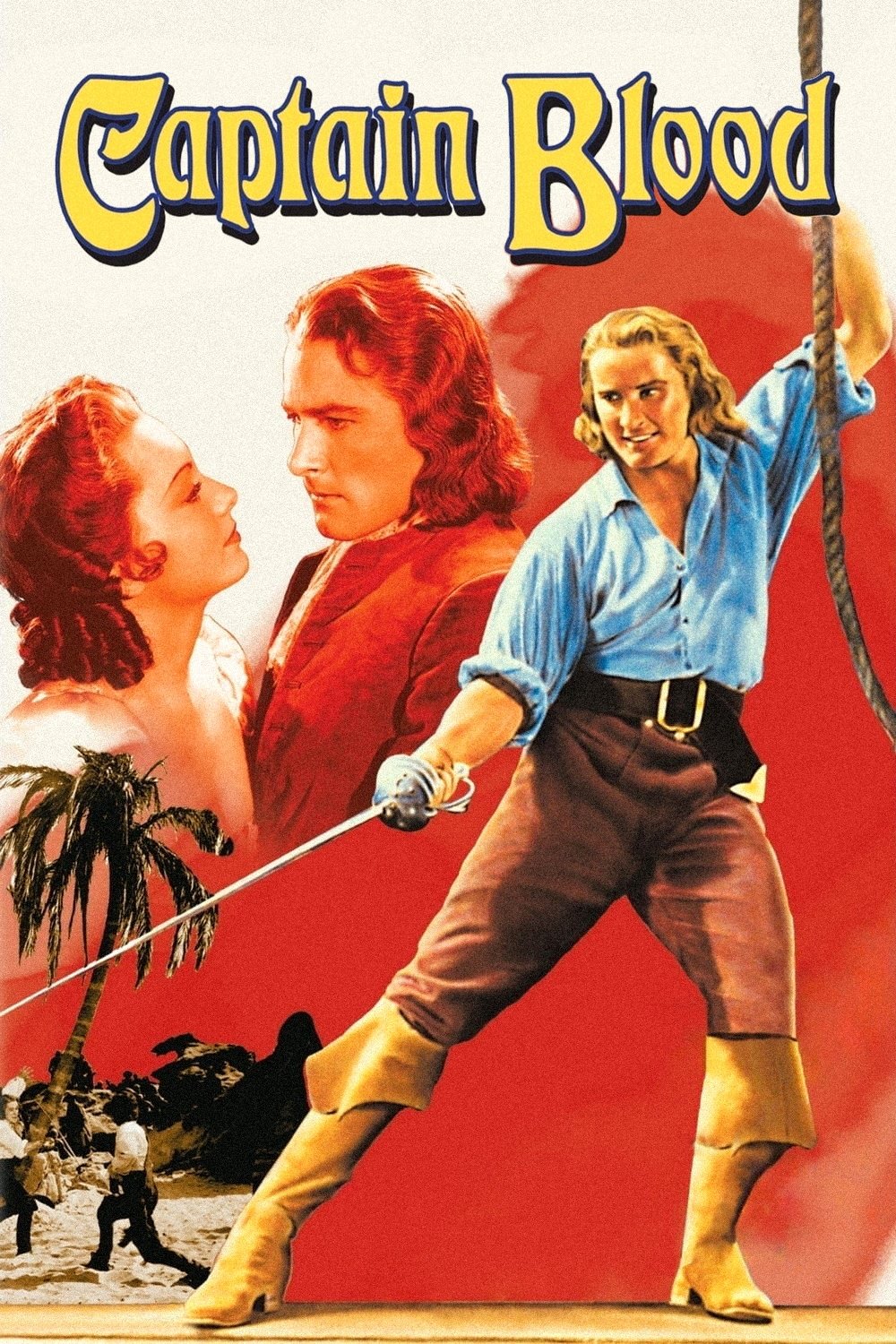
Plot Summary
The first time I watched Captain Blood, I felt as if I’d stumbled across the very template for all the swashbuckling adventures I’ve adored since childhood. Michael Curtiz, in bringing Rafael Sabatini’s novel to life, offers a tapestry that’s as exhilarating as it is heartfelt. The story centers on Dr. Peter Blood, a character whose journey from wrongly accused prisoner to legendary pirate captured my imagination from the opening sequence. Rather than simply recounting the action, I found myself drawn in by the unlikely path that leads him from the dungeons of England’s political injustice onto the high seas, where he is forced to navigate both loyalty and peril.
Every turn in the plot felt loaded with personal stakes. While I won’t spoil the major reveals or the fates of the central characters—a critical moment late in the film is particularly satisfying—I can say that the narrative never lets up its grip. What impressed me most was the delicate balance of grand adventure with intimate human drama. The film introduces romance and betrayal, but never at the expense of the protagonist’s core ethos. Even as Peter assembles a ragtag crew and confronts formidable adversaries (with Basil Rathbone’s dashing antagonist unforgettable in every glare), I felt that every duel and daring escape served a larger purpose: to ask what justice and freedom truly mean when you are forced to fight for your very survival.
Key Themes & Analysis
What struck me most about Captain Blood was its persistent questioning of authority and integrity. At its heart, I see it as a film about reclaiming agency in a world rigged against the honest and decent. Errol Flynn’s portrayal of Peter Blood struck me as both magnetically heroic and deeply human; his rebelliousness isn’t just against tyranny, but in defense of personal dignity. The film’s swashbuckling elements are exciting, but Curtis makes sure that the fights matter—to me, they underscore the emotional costs of resistance.
The theme of justice is especially prominent and resonant. In a pre-World War II context, the film’s insistence on resisting oppressive systems felt almost prophetic. I see this as Curtiz’s way of inviting the viewer to look harder at the difference between law and what is right—a choice echoed in the way Blood refuses to compromise his medical ethics, even in the face of exile and slavery. The romance between Blood and Arabella (Olivia de Havilland) isn’t just there for melodrama; to my eye, it’s crucial in exploring themes of redemption and trust. Their growing connection feels like the film’s moral compass, a glimmer of grace amid the chaos.
Visually, Curtiz’s direction continues to fascinate me. His sweeping camera movements and dynamic staging made the action seem larger than life without relying on spectacle for its own sake. I found the sword fights—shot with a clarity that’s rare in even modern blockbusters—boasted an energy that perfectly matched the characters’ emotional urgency. The lighting, classic to the Warner Bros. house style, deepens the atmosphere, spilling mood over every foggy port or candle-lit below-deck scene. Even now, decades after its release, I’m struck by how fresh and purposeful these technical choices feel.
I must also highlight the impact of Erich Wolfgang Korngold’s score; his music adds gravitas to every scene it touches, elevating both triumph and tenderness beyond what’s visible onscreen. It’s a reminder to me of how a masterful score doesn’t just accompany a film but becomes integral to its storytelling.
It’s impossible for me to discuss the film’s themes without mentioning the underlying social commentary. The enslavement and subsequent brotherhood among Blood’s crew signal early Hollywood’s attempts—however imperfect—to interrogate issues of oppression, camaraderie, and self-determination. I believe this is precisely why Captain Blood resonates strongly with audiences seeking adventure that’s not empty, but filled with substance.
My Thoughts on the Cultural Impact & Legacy
So many classic adventure films owe their existence to Captain Blood that it’s almost hard to measure. When I reflect on its cultural imprint, I’m reminded of the moment I first recognized Flynn’s Peter Blood as the blueprint for generations of cinematic heroes. What truly fascinates me is how this film didn’t just build the foundation for pirate adventures—it reinvigorated a genre and set new standards for both leading men and narrative ambition.
From my perspective as a film critic, the ripple effects are obvious in every swashbuckler that followed—from The Adventures of Robin Hood right through to modern franchises like Pirates of the Caribbean. Yet, for me as a curator of film history, its significance is even deeper. The pairing of Flynn and de Havilland ignited a chemistry that would define romantic adventure on screen for at least another decade, and Curtiz’s direction charted a new course for action filmmaking by favoring realism and high stakes over the kind of broad, cartoonish spectacle that had come before.
Personally, what resonates most is the way Captain Blood champions individuality and human decency during an era of uncertainty. In 1935, the world was shadowed by economic depression and the rumblings of a new global conflict. This film doesn’t shy away from those anxieties; instead, its story of injustice and hard-won freedom feels eerily prescient. When I rewatch it, I’m reminded of how vital it is for art to challenge the complacency of the times.
One way I feel its influence most keenly is in the evolution of action filmmaking. The film’s mix of derring-do and moral conviction provided a new template where adventure was synonymous with principle. Its sword fights, naval battles, and stirring escapes don’t just thrill—they ask us to consider the meaning of our choices. For me, that is why Captain Blood has remained relevant, not just as an artifact, but as a living force in the language of cinema.
The film’s status as a launchpad for Errol Flynn—transforming him overnight into a defining icon of the silver screen—reminds me that stardom and artistry can sometimes align perfectly. More than any isolated moment, the enduring appeal of Captain Blood for me is how it bridges the gap between spectacle and substance, offering both the rousing entertainment I crave and the philosophical depth I seek in enduring works of art.
Fascinating Behind-the-Scenes Facts
Digging into the making of Captain Blood has only increased my admiration for it. One behind-the-scenes story I find especially compelling involves the film’s casting. The lead role of Peter Blood wasn’t initially meant for Errol Flynn. Warner Bros. pursued established stars, but after several options fell through, the relatively unknown and untested Flynn—a bit player from Australia—was cast. To me, this makes Flynn’s magnetic performance all the more remarkable; he transformed not just his own career but the future of the swashbuckler with his charisma and athleticism.
Production itself was a logistical wonder. The studio invested heavily in authentic ships and grand sets. According to anecdotes I discovered, Curtiz insisted on realism even in the most action-packed scenes—sometimes to the extent that Flynn and his co-stars performed their own dangerous stunts. One daring swordfight sequence between Flynn and Basil Rathbone was filmed on location along the California coast, rather than with soundstage trickery. This dedication to authenticity and physicality gives those duels a palpable urgency and risk that I feel every time I rewatch.
Finally, the musical score also has its own bit of lore. Composer Erich Wolfgang Korngold was reportedly given only three weeks to craft the entire score after being brought onboard last minute. I find it astonishing that he managed to create such a grand, instantly recognizable musical identity for the film under that kind of pressure. His sweeping themes set the gold standard for adventure scores ever after, and to me, the film wouldn’t be half as stirring without his contributions.
Why You Should Watch It
- It delivers adventure with genuine emotional stakes—the action isn’t just spectacle but serves an exploration of justice and integrity.
- Errol Flynn’s star-making performance provides an archetype of cinematic heroism, the kind of charisma that’s both relatable and aspirational.
- Michael Curtiz’s direction and Erich Wolfgang Korngold’s score combine for a film that remains visually and sonically thrilling, even for contemporary audiences unaccustomed to classic cinema.
Review Conclusion
Looking back, Captain Blood is no mere relic—it is a vital part of film history that still pulses with life and relevance. The risks Curtiz and his cast took, both in storytelling and filmmaking technique, paid off in a way that set a new benchmark for adventure and romance. For me, its enduring power lies in its blend of swashbuckling energy, character depth, and principled storytelling. Every viewing reminds me of what’s possible when entertainment dares to take itself—and its audience—seriously. I return to it often, not just for nostalgia, but because it still feels bracingly modern in its approach and vision. My rating: 4.5/5—a near-masterpiece and a touchstone for screen adventure.
Related Reviews
- The Adventures of Robin Hood (1938) – If you’re drawn to Errol Flynn’s charm, the kinetic swordplay, and Curtiz’s dynamic visual style, this later collaboration between star and director brings even greater color and scale to the genre. I connect these two films for their shared spirit of resistance and beautifully choreographed action.
- The Sea Hawk (1940) – Another Flynn-and-Curtiz swashbuckler, but with a darker, grander sense of purpose. Watching it after Captain Blood, I’m always struck by how it builds on themes of loyalty and honor, set against the backdrop of Elizabethan naval warfare.
- Scaramouche (1952) – For fans of witty, literate adventure and duels that dazzle, this Technicolor epic offers a rich comparative experience. What connects it to Captain Blood for me is the way both films marry dashing heroics to broader questions of social justice and personal identity.
- The Crimson Pirate (1952) – If you want to experience the genre at its most exuberant and anarchic, Burt Lancaster’s athletic performance here channels the kind of joyous, anti-authoritarian energy I love in Captain Blood, but with a postwar knowingness that makes for a fascinating contrast.
For readers looking to go deeper, these perspectives may help place the film in a broader context.
🎬 Check out today's best-selling movies on Amazon!
View Deals on Amazon