
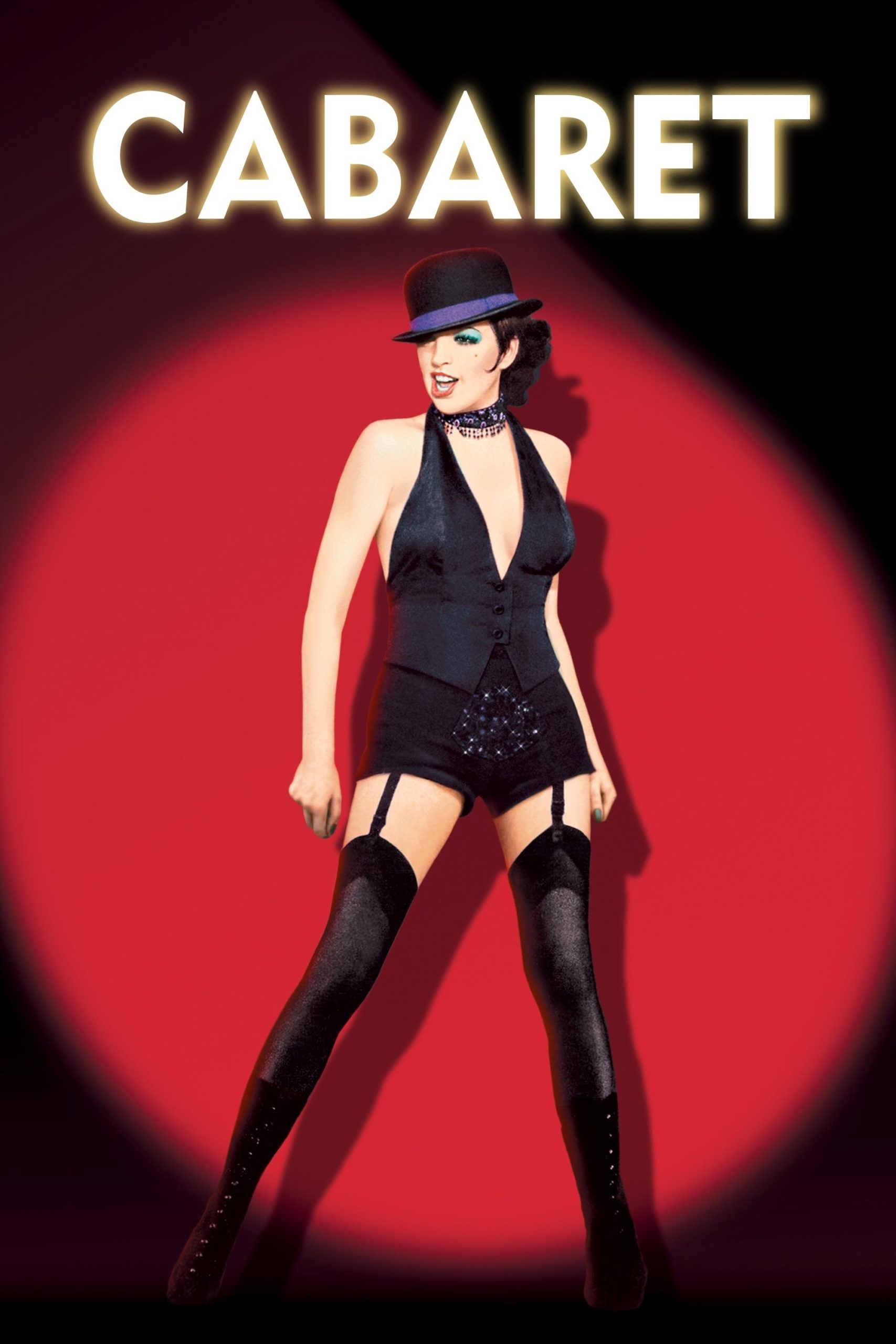
Plot Summary
From the very first time I immersed myself in Bob Fosse’s boundary-pushing musical drama, I felt transported straight into the kaleidoscopic, decadent world of pre-war Berlin. “Cabaret,” released in 1972, refuses to let you look away from its parade of hope, humor, and heartbreak, all set against the backdrop of the city’s most infamous nightclub. The film demands you pay attention not just to the story on the surface, but to the small gestures, unspoken exchanges, and the uncanniness that seeps in with every jazz number performed at the Kit Kat Klub.
What unfolds is the story of Sally Bowles—an American cabaret singer with infectious energy and a yearning for stardom—whose fateful friendship with Brian Roberts, a reserved British academic, sets the stage for a collision of worlds. The club is a microcosm, swirling with sexual liberation, forbidden romances, and uncertainty about what lurks outside its red-velvet walls. As I watched, I recognized that Fosse’s direction insists you observe not just the onstage showmanship but also the undercurrents of political tension and personal longing in Weimar-era Germany.
The musical numbers, dazzling in their execution, weave into Sally and Brian’s personal dramas, illuminating their desires and vulnerabilities without ever spelling out all the answers. Nothing in “Cabaret” is simplistic—even the humor is tinged with the unease of what’s happening just out of sight. It’s a film that seduces with surface glamour before guiding you into deeper, shadowed territory. (For those avoiding spoilers: while much of the film is about the intoxicating blur between reality and performance, I’ll steer clear of the story’s climactic turns.)
Key Themes & Analysis
What struck me most, as the curtain rose again and again on the Kit Kat Klub, was how Fosse uses spectacle not as escapism but as confrontation. Every dance, every satirical song, is charged with subtext—both a release and a pointed critique. The club’s Emcee, played with diabolical expertise by Joel Grey, hovers as a kind of trickster-spirit, orchestrating chaos and laughter with a chilling undercurrent that hints at what’s coming for Germany.
Through Sally Bowles, brilliantly portrayed by Liza Minnelli, I found a character who radiates so much life it almost creates its own gravity. Her fearless eccentricity masks a longing for meaning and belonging, and I saw, in every close-up, a reflection of all those who choose performance as a shield from the world’s indifference. What resonates for me, years after first seeing the film, is how Fosse and Minnelli never let her devolve into simple archetype—there’s a bracing authenticity in her contradictions, from extravagant joy to agonizing fragility.
As much as “Cabaret” is a feast for the senses, it remains built on contrasts: public celebrations versus private despairs, the lure of forgetting versus the cost of ignorance. The cinematography helps draw these fault lines—the club is shot in lush, almost claustrophobic compositions that make every number feel both intimate and inescapable, while the scenes outside grow steadily colder as the shadow of fascism lengthens.
The editing, which struck me as almost musical in its rhythm, keeps the energy pulsing while letting tension build organically. Fosse’s decision to confine the musical numbers to the club, rather than have characters spontaneously burst into song, keeps the drama grounded in reality—reminding me that, in this world, the stage is the only safe place left for dreams.
On the acting front, Michael York’s performance as Brian feels disarmingly honest. His transformation—from buttoned-up academic to someone swept into the city’s swirl of freedoms and deceptions—offers a perfect foil to Sally’s flamboyance. The chemistry between York and Minnelli is charged with uncertainty and affection, capturing the marvel and messiness of finding connection in a world coming apart.
What continues to draw me back to “Cabaret” is how it refuses to treat any theme—love, politics, art, sexuality—as an isolated issue. Every part of the film’s fabric is stitched together with a sense of impending crisis and fragile joy. It’s an act of thrilling, sometimes painful, honesty about the price of indifference and the necessity of art that dares to speak the truth.
My Thoughts on the Cultural Impact & Legacy
I still remember the jolt I felt when the final image faded in “Cabaret.” For days after, I couldn’t shake the sense that I’d seen the musical genre itself transformed—rewritten as something darker, braver, and more attuned to the real dangers lurking behind performance. What makes “Cabaret” enduring in cinematic history is its refusal to be pinned down: Is it a musical, a romance, a cautionary tale? For me, it’s all three, but beyond that, it’s a shattering reminder of art’s power to mirror—and sometimes predict—the world’s cruelest turns.
From a film curator’s perspective, I see “Cabaret” as a breakthrough not just for Fosse but for the entire movie musical. Before its release, so many musicals sought to whisk audiences away from history’s darkness—Fosse invited us to confront it. The film’s cultural legacy can be felt in everything from its reinvention of what musicals can accomplish to the audacity it grants to stories about sexuality, identity, and power. As someone committed to spotlighting films that refuse easy answers, “Cabaret” has shaped my understanding of how cinema can shake us awake even as it entertains.
It also means something personal to me. Every time I revisit “Cabaret,” I find myself reflecting on the responsibilities of storytelling. The film insists on relevance, daring to stare right at the dangers of political apathy and blind optimism. Its resonance endures decades later, especially as a warning about the fragility of freedom. I am deeply moved that a film so dazzling on the surface still finds ways to challenge and haunt audiences—myself included—long after its last showstopper number.
Fascinating Behind-the-Scenes Facts
Digging into “Cabaret” on a production level only deepens my appreciation. What stays with me, first and foremost, is how Liza Minnelli nearly wasn’t cast as Sally Bowles. Despite giving what I consider one of the bravest, most vulnerable performances in musical cinema, Minnelli initially lost out to other contenders before firmly winning Fosse over in early screen tests. There’s something thrilling in knowing that such a pitch-perfect casting almost didn’t happen—the world would have lost a truly iconic performance.
Another detail that fascinates me is the creativity required in adapting the original Broadway material. Bob Fosse and cinematographer Geoffrey Unsworth reimagined the entire visual approach by shooting on richly lit European sets, avoiding Hollywood glossiness to steep the film in smoky, immersive realism. The result is a Berlin that feels lived-in and dangerous, conjured through narrow spaces and atmospheric shadows that amplify the emotional stakes.
And technically, I’m constantly impressed by how Fosse used editing as an instrument. He orchestrated the musical numbers to comment directly on the action taking place outside the club—blurring fiction and reality in a way that felt revolutionary at the time. Few films so seamlessly blend performance and political commentary, and that’s down to the risks Fosse was willing to take behind the camera.
Why You Should Watch It
- It redefines what musicals can do, combining social critique and dazzling entertainment in a way that remains electrifying and relevant.
- Liza Minnelli’s performance as Sally Bowles is an acting masterclass that embodies both the freedom and disillusionment of her era.
- The film’s technical innovations—from cinematography to editing—still influence filmmakers and remain a touchstone for anyone passionate about cinematic craft.
Review Conclusion
Having spent so many hours exploring the labyrinth that is “Cabaret,” I can say with certainty that it still feels like a film ahead of its time. The combination of Fosse’s fearless direction, stellar performances, and unflinching social commentary makes “Cabaret” an essential cinematic experience—the kind of work that lingers, unsettles, and ultimately inspires. If I had to distill all my admiration and reservations into a single score, I’d give it 4.8 out of 5 stars. Even with repeated viewings, it never loses its fierce, seductive charge.
Related Reviews
- All That Jazz (1979) – In many ways, this film is a spiritual sibling to “Cabaret.” Fosse turns the camera inward, exploring the price of creative obsession and showbiz excess. I recommend it for viewers drawn to musicals that peel back the curtain on spectacle to reveal personal and societal cost.
- The Night Porter (1974) – While not a musical, this provocative drama set in postwar Europe delves into the aftershocks of fascism and forbidden desire. Its psychological intensity and willingness to court discomfort make it a compelling follow-up for those moved by “Cabaret’s” darker explorations.
- Velvet Goldmine (1998) – Anyone enthralled by “Cabaret’s” intersection of sexuality, subculture, and era-defining performance will find Todd Haynes’ glam rock opus richly rewarding. Its visual audacity and boundary-pushing storytelling echo Fosse’s legacy.
- Paris Is Burning (1990) – For viewers fascinated by performance as political and personal act, this landmark documentary about New York’s drag ballroom scene supplies electrifying resonance. Like “Cabaret,” it’s about claiming space through art in the face of oppression.
For readers looking to go deeper, these perspectives may help place the film in a broader context.
🎬 Check out today's best-selling movies on Amazon!
View Deals on Amazon