
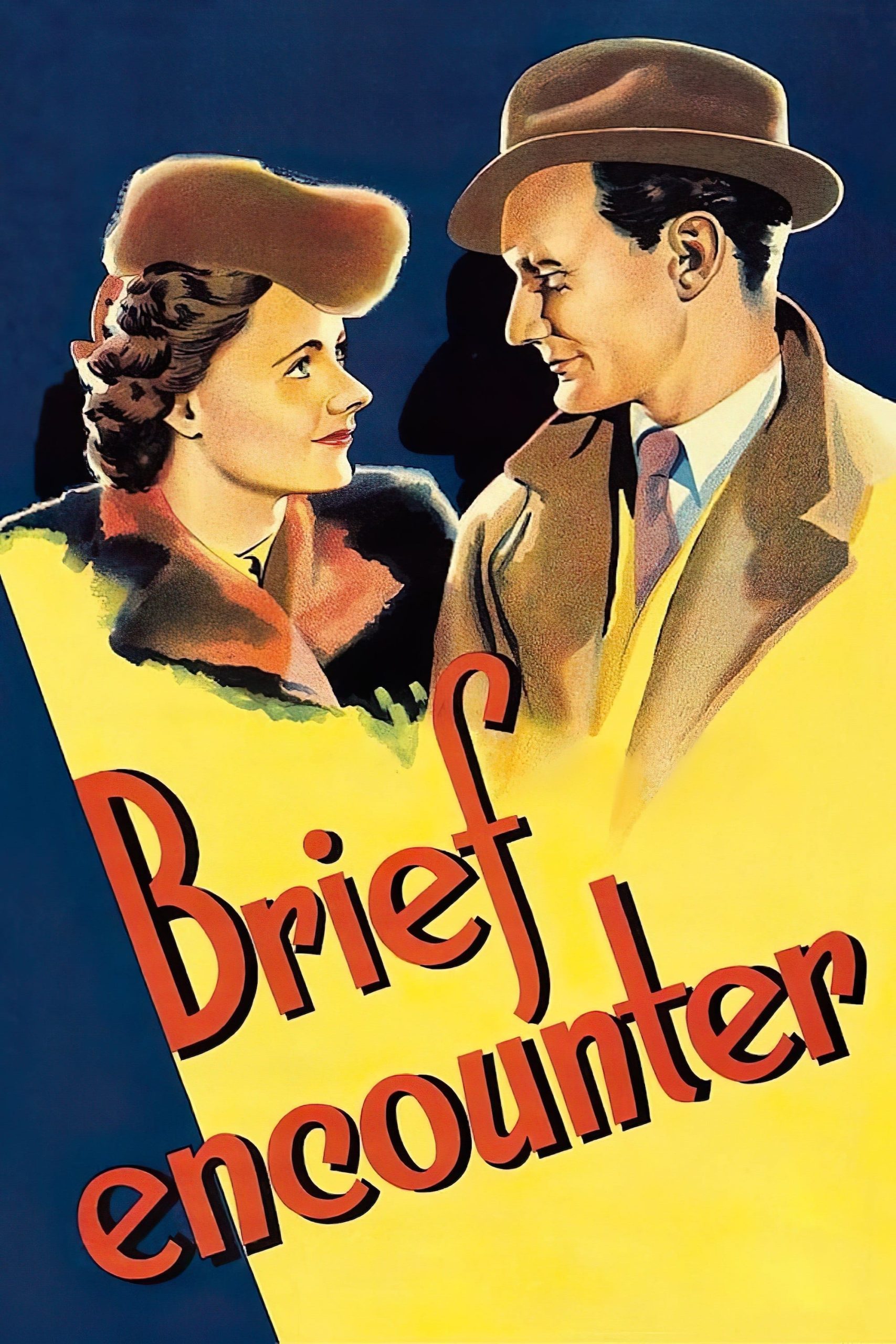
Plot Summary
From the very first frames of David Lean’s masterful romantic drama, I found myself holding my breath, not so much because of action or spectacle, but for how intimately the story drew me into the aching world of its protagonists. “Brief Encounter” tells the story of two ordinary people, Laura Jesson and Dr. Alec Harvey, whose chance meeting in a railway station waiting room initiates a tender and deeply complicated romance.
What captured me was not merely the simple circumstance—a pair of strangers unexpectedly caught up in each other’s orbit—but how quickly the film sweeps away preconceptions about love affairs. The movie is set in suburban England, 1938. Laura, a married woman, is dutiful but quietly unfulfilled, her life measured by train schedules, groceries, and the rhythms of domesticity. Alec, a kind doctor, finds himself similarly constrained by routine. When their paths cross over a piece of grit in Laura’s eye, what follows is not just a flirtation, but an emotional odyssey full of longing, repression, and bittersweet honesty.
As I see it, the brilliance of “Brief Encounter” is its ability to magnify the seemingly mundane: a handshake, a shared cup of tea, a stolen glance as a train departs. Each detail shimmers with the intensity of things left unsaid. The narrative structure, told as Laura’s confessional recollection to her unknowing husband, allows the audience—myself included—to step into her inner world, to feel her guilt, hope, and heartbreak as palpably as a pulse. I appreciated that Lean and screenwriter Noël Coward never trivialize Laura and Alec’s connection, nor do they paint it with melodramatic strokes.
Spoiler Warning: If you have yet to watch, you may wish to skip ahead, as the heart of the film lies in how it handles choices. The latter acts follow Laura and Alec as they struggle with the morality of their feelings, battling societal expectations and their own loyalty to their families. What begins as an innocent companionship evolves into something they both know must ultimately be sacrificed. Even without grand confessions or physical consummation, the emotional stakes feel as immense as any classic love epic.
Key Themes & Analysis
What struck me immediately when rewatching “Brief Encounter” was its boldness in exploring the theme of suppressed desire. To me, this is not just a love story, but a film about the cost of emotional honesty—particularly in a time and place where personal happiness is always subordinate to duty. The meticulous sound design, punctuated by Rachmaninoff’s Piano Concerto No. 2, acts as a heartbeat for the film, swelling and receding in tandem with Laura’s private turmoil.
As someone fascinated by visual storytelling, I found myself closely studying Lean’s use of light and shadow. The film’s sharp contrasts—sunlit afternoons at the café and dim, rain-streaked rail platforms—paint the tension between desire and decorum. It’s as if every coke advertisement, every bustling commuter, is an intruder on Laura and Alec’s fragile intimacy. I was moved by the ordinary British landscape, transformed into a place of clandestine rendezvous and aching goodbyes.
Celia Johnson’s performance as Laura is the cornerstone of the film’s power. Her subtle glances, shaky hands, and trembling voice convey more than pages of dialogue ever could. Each of her hesitations—her cautious delight, her mounting dread—reminded me how rarely screens capture the complexity of unspoken feelings. Trevor Howard’s Alec, for his part, matches that restraint with a warmth and decency that makes their predicament all the more heartbreaking. There is no villain here, only two people caught in a moment they can neither embrace nor deny.
I’m consistently impressed with Lean’s direction, particularly in how he orchestrates small spaces—a cramped café banquette becomes a world entire. His camera lingers on passing trains and empty chairs, objects that seem to echo the characters’ loneliness. The discipline in the script, where every word and gesture matters, raises the story above mere sentimentality. I couldn’t help but notice how Coward’s dialogue is sharp yet never caustic, instead revealing layers of vulnerability beneath British restraint.
Another core theme for me is the tension between obligation and personal fulfillment. It’s a universal dilemma, yet set against pre-war British suburbia, the stakes feel heightened by the cultural pressures of the period. Watching Laura wrestle with her conscience, I felt something close to awe at how honestly the film depicts real, flawed people. I’ve always admired how Lean draws suspense not from grand gestures, but from the little betrayals—the missed calls, the farewells on shadowed platforms.
Perhaps my favorite technical component is the way Lean employs recurring motifs—clocks, trains, the dust motes in sunlight—to symbolize the passage of time and lost possibilities. Every moment in Laura and Alec’s affair is on borrowed time, which magnifies both its sweetness and its pain. I took particular note of how the film uses the familiar rhythms of daily life to heighten the sense of risk: even the recurring sound of trains suggests a fate always rushing toward its conclusion.
Ultimately, “Brief Encounter” feels, to me, as much about the impossibility of perfect happiness as it is about love itself. In a world obsessed with grand passion, the film dares to show the quiet devastation of what cannot—and perhaps should not—be. The understated performances, deft directing, and poetic cinematography all contribute to a film that lingers in my mind long after the credits roll.
My Thoughts on the Cultural Impact & Legacy
From my perspective as a film critic and genre curator, “Brief Encounter” redefined what a romance film could be. My early encounters with romantic cinema too often led me through overwrought storylines and melodrama, but Lean’s approach here set a new standard for emotional complexity. Unlike typical Hollywood tales of the era, this film invites empathy—rather than judgment—for its protagonists. I’m particularly drawn to how the film’s legacy extends beyond its narrative, shaping both the form and content of later romantic dramas.
What I find especially resonant is the film’s continued relevance. The dilemmas facing Laura and Alec are not relics of their time. As society continues to grapple with balancing individual desire and social obligation, the film’s narrative remains a powerful touchstone. I see echoes of “Brief Encounter” in contemporary works—from Richard Linklater’s “Before Sunrise” trilogy to Todd Haynes’ “Carol”—where conversations and interiority drive the plot more than grand gestures. Whenever I recommend this film, I sense modern viewers are still moved by its rawness and restraint.
Personally, “Brief Encounter” taught me that great cinema is born from honest observation and emotional risk. Its impact on me was transformative: I began viewing not just romance films but all storytelling through the lens of what is left unspoken. I appreciate that the movie has become a touchstone for filmmakers seeking intimacy and realism in love stories, bravely prioritizing internal conflict over spectacle.
The film’s influence spreads further still. I recall reading how, for many after its release, discussions about fidelity, repression, and emotional dissatisfaction found new legitimacy. Lean’s work nudged British cinema—and audiences—toward a more nuanced, less idealized view of love. This shift echoes in contemporary storytelling where flawed, authentic love stories prompt us to question our own expectations and judgments.
“Brief Encounter” continues to matter to me because it reminds us that heartbreak and hope often walk hand-in-hand. Its legacy is not just artistic, but deeply human.
Fascinating Behind-the-Scenes Facts
Looking into the production history of “Brief Encounter” always uncovers stories that deepen my appreciation for the film’s artistry. One fact that stands out to me is that the film was shot almost entirely on location at Carnforth railway station in Lancashire. Owing to wartime blackout restrictions and resource shortages, the producers needed a site that could accommodate nighttime shooting. Carnforth was chosen because its rural location allowed the crew to work after dark without breaking city curfew regulations—a remarkable workaround reflective of the improvisational spirit of British cinema in the 1940s.
Another detail I find endlessly fascinating is the subtle interplay between the screenplay and the censors of the day. Noël Coward’s script was crafted to toe the line with British censors, ensuring the emotional affair would not be seen as a moral danger to the public. Coward’s brilliance, in my eyes, was in suggesting passion through nuance and innuendo rather than explicit action. I read that the final sequence—so iconic and understated—was meticulously written and shot to communicate everything through small gestures and expressions, trusting the audience to perceive the significance beneath the surface.
One last production anecdote that always stays with me involves Celia Johnson’s performance. She was, by all accounts, nervous about taking the role, fearing her delicate style wouldn’t translate to screen. Lean, recognizing her anxieties, would quietly remind her to tone down her projection—a result of her extensive theater background—so even the smallest facial tics or breathless pauses would be picked up by the camera. The intimacy of her acting is, I think, one of the great testaments to Lean’s instinct and Johnson’s vulnerability.
Why You Should Watch It
- The film’s emotional realism and restraint set it apart from other love stories, allowing viewers to deeply empathize with its characters.
- David Lean’s direction and Celia Johnson’s nuanced performance create a cinematic intimacy that has rarely been matched in the decades since.
- Its exploration of duty, longing, and moral ambiguity continues to influence and inspire contemporary filmmakers, making it a must-see for anyone interested in the evolution of the romance genre.
Review Conclusion
Looking back on “Brief Encounter,” I continually find new layers in its seemingly quiet storytelling. It’s a film that trusts its audience with ambiguity, complexity, and emotion—qualities that are still rare in today’s movie landscape. The interplay of understated performances, rigorous direction, and a score that aches with nostalgia makes it a film I return to, both as a critic and a student of the human heart. For its honesty, artistry, and profound emotional resonance, I give “Brief Encounter” 5/5 stars. It’s not just a classic; it’s a poignant argument for cinema’s ability to distill the heartbreaks and hopes of ordinary lives into something genuinely unforgettable.
Related Reviews
- “In the Mood for Love” (2000, dir. Wong Kar-wai): I find this film, much like “Brief Encounter,” to be a study in longing and emotional restraint. Its visual style and focus on the unconsummated relationship are a spiritual sibling to Lean’s masterpiece, making it an essential follow-up for anyone moved by the interplay of love and duty.
- “Carol” (2015, dir. Todd Haynes): For its gorgeous period recreation, lush score, and nuanced examination of forbidden love, “Carol” echoes everything I cherish about “Brief Encounter.” Both films linger on the pain and beauty of what cannot be, building suspense out of glances and silences.
- “The Remains of the Day” (1993, dir. James Ivory): This film’s meditation on regret, service, and unspoken affection resonates deeply with me as a companion piece, and its somber tone and precise storytelling make it perfect for viewers drawn to subtle, character-driven drama.
For readers looking to go deeper, these perspectives may help place the film in a broader context.
🎬 Check out today's best-selling movies on Amazon!
View Deals on Amazon