
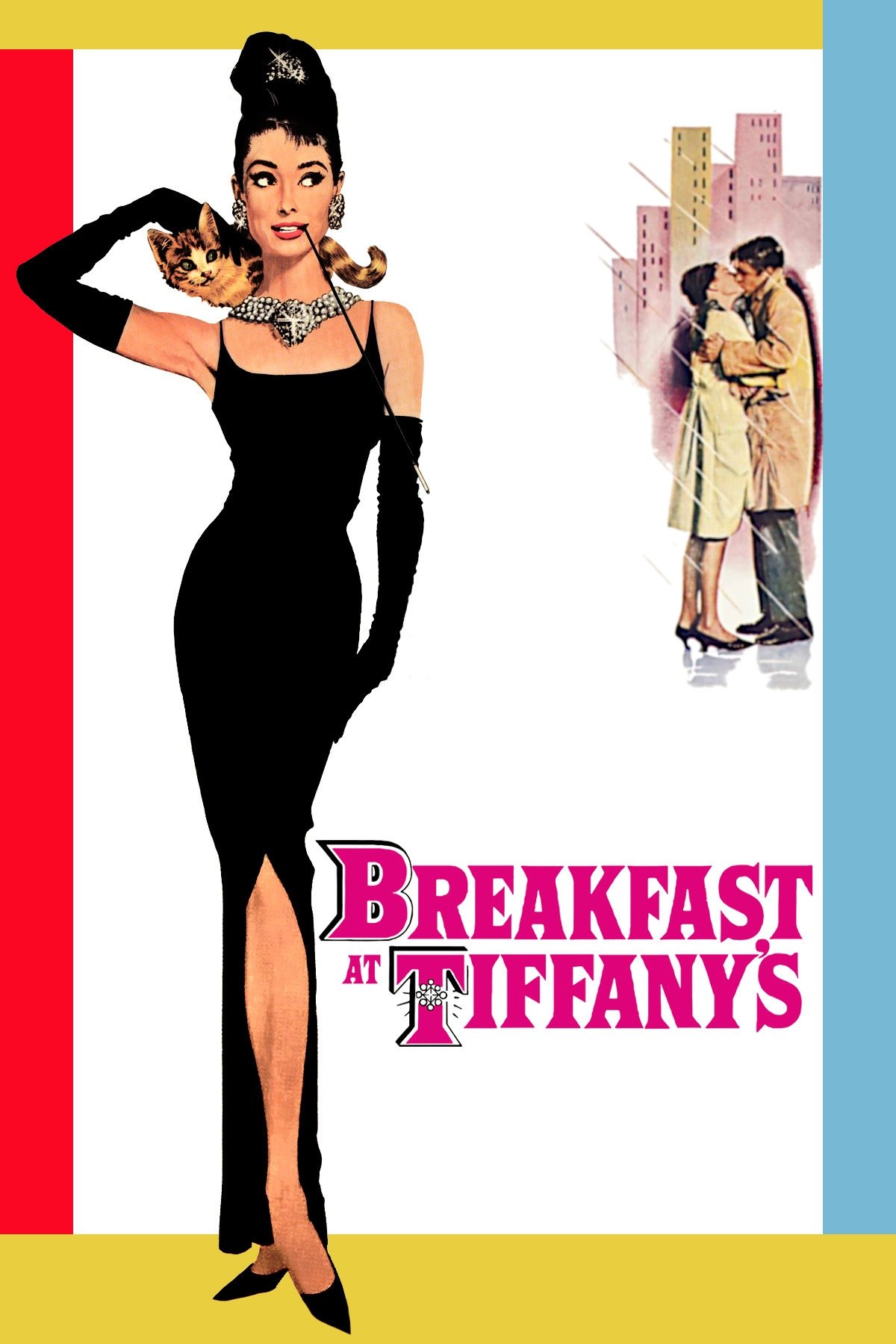
Plot Summary
There’s a particular kind of magic that unfolds every time I revisit “Breakfast at Tiffany’s,” directed by Blake Edwards—a spell spun from equal parts romance, wit, and that arch sense of longing. In my experience, the story feels less like a straightforward comedy and more like a tantalizing urban fable. I follow Holly Golightly, played by Audrey Hepburn, as she floats through Manhattan’s glittering avenues with a captivating enigma and carefully constructed carelessness. For all her dazzling parties and effortless small talk, I sense she’s always shielding herself from reality, building a delicate mythology out of her eccentric routines and dazzling façades.
Her neighbor Paul Varjak, portrayed by George Peppard, is both her anchor and her mirror—another lost soul with secrets to protect. Their lives intersect in that gorgeous, slightly melancholy way that only New York stories can, each character drawn inexorably toward the other and toward a vulnerability neither is quite prepared for. While there are a handful of comedic interludes and champagne-fueled escapades—a cat with no name, comic landlords, surprise phone calls—the heart of the film, for me, is its gentle exposure of the wounds that make us reach for connection in the most unlikely places. I’ll mention that some plot twists later on carry more gravity, but I’ll avoid specific details so newcomers can discover those sweetly melancholic surprises for themselves.
Key Themes & Analysis
I’m always struck by how “Breakfast at Tiffany’s” peels back the allure of urban glamour to reveal an undercurrent of yearning, loneliness, and self-invention. What resonates with me most is Holly’s pursuit of freedom—her refusal to be defined, her flight from commitment, and her creation of a persona that lets her survive in a world that never quite gives her a safe space. Yet beneath that façade, I sense Holly’s fear of abandonment and her fierce hope that someone will love her even after the masks come off.
The film’s core theme—searching for identity and belonging in a city that rewards reinvention—feels as alive today as it did in 1961. Hepburn’s performance masterfully captures that balance of fragility and bravado. Her wide-eyed moments of vulnerability—when Holly admits to being “a wild thing”—always linger with me, reminding me that the real magic isn’t in her wardrobe or witty banter, but in her willingness to let her guard down, if only for a moment.
Edwards crafts “Breakfast at Tiffany’s” with immaculate style and a keen sense of rhythm. I’m consistently captivated by the way the camera treats Manhattan like a character in its own right, with endless possibility shimmering behind every cab ride and fire escape. The cinematography, alternating between the lush comfort of Holly’s apartment and the cold vastness of city streets, visually underscores the distance between public joy and private sorrow.
I find the screenplay, adapted by George Axelrod, delicately dances along the boundaries of light comedy and dramatic undertone. While the narrative sparkles with clever dialogue and sly visual jokes, there’s always a bittersweet undertow: the fear of being caged, the ache of wanting attachment but not knowing how to accept it. In Paul Varjak’s gentle patience, I see an acceptance that’s rare—he becomes, in many ways, the audience’s eyes into Holly’s world, moving past her surface-level charm to discover the woman beneath.
On the subject of performances, there’s no denying the enduring force of Hepburn’s star power. She delivers a portrait of Holly that’s both heartbreakingly innocent and slyly calculating. Peppard’s restrained warmth complements her beautifully, and even the supporting cast—though some, like Mickey Rooney’s much-criticized and caricatured portrayal of Mr. Yunioshi, reflect outdated and problematic comic conventions—provide a snapshot of cinematic history, for better or worse.
My Thoughts on the Historical & Social Context
Sometimes I wonder what it must have felt like to see “Breakfast at Tiffany’s” during its original theatrical run. Released at the dawn of the 1960s, the film captures a moment of shifting social norms, especially regarding gender, sexuality, and independence. Holly’s fierce commitment to self-determination was radical in a time when women’s roles were narrowly defined. I read her not as a simple “party girl,” but as a young woman wrestling against the limitations imposed by her past and by society itself.
I can’t ignore how the era colored both the film’s possibilities and its limitations. The original novella by Truman Capote was far franker in its depiction of sexuality and personal struggles; but the film adaptation had to contend with the boundaries set by Hollywood’s sensibilities and the lingering haze of the Hays Code. This tension adds a bittersweet layer of subtext—Holly’s coded loneliness, Paul’s ambiguous political leanings, and the careful avoidance of outright scandal—that I find even more intriguing in retrospect.
In my view, “Breakfast at Tiffany’s” matters both as a product of its time and as a harbinger of change. It invites viewers to challenge received ideas about what makes someone “worthy” of love or acceptance. Today, I see Holly’s bravado and vulnerability as emblematic of anyone—regardless of era or background—who ever struggled to fit in or felt the need to reconstruct themselves for survival. The film’s tension between appearance and authenticity feels just as relevant in our age of social media personas and curated identities as it did amid the cultural revolutions of the early ‘60s. The story’s bittersweet tone reminds me that, beneath the glitter, urban alienation remains a universal human experience.
Fact Check: Behind the Scenes & Real History
As someone who delights in digging into the layers behind every classic film, I’ve found “Breakfast at Tiffany’s” particularly rich with fascinating trivia. One of the most intriguing production stories for me is the casting of Holly Golightly herself. Truman Capote famously envisioned Marilyn Monroe for the role, feeling her blend of innocence and world-weariness was ideal for Holly. Yet, the studio feared Monroe’s persona would bring scandal to the project, especially given the implications of Capote’s novella. Audrey Hepburn, then a darling of Hollywood yet not an obvious pick for such a daring part, ultimately made the character her own. I often think about how different—and perhaps less nuanced—the entire film might have felt without Hepburn’s magnetic, quietly subversive performance.
Another fact I love sharing is about the film’s iconic title sequence, scored by Henry Mancini. Mancini’s hauntingly elegant “Moon River” wasn’t just a beautiful piece of music—it was tailored specifically to Hepburn’s vocal range and understated performance style. When studio heads considered cutting the song from the film, Hepburn herself is reported to have stood her ground, threatening to quit if it was removed. “Moon River” went on to win an Academy Award and became inseparable from the film’s emotional heart. It’s hard to imagine “Breakfast at Tiffany’s” without that melody echoing through its most poignant moments.
I also want to address a real historical controversy that still prompts debate today. Mickey Rooney’s portrayal of Mr. Yunioshi, a caricatured Japanese landlord, has drawn criticism for its offensive stereotypes and yellowface makeup. Looking at this from a contemporary perspective, I can’t help but feel the discomfort and recognize the importance of reckoning with the mistakes of cinema’s past—honoring the film’s artistry while openly acknowledging where it falls short of modern standards of representation.
Why You Should Watch It
- A truly iconic performance from Audrey Hepburn—her embodiment of Holly Golightly remains unparalleled, offering a blend of light humor, pathos, and genuine vulnerability rarely captured on screen.
- The film is a time capsule of 1960s New York—every shot radiates style, possibility, and the bittersweet ache of urban loneliness, making it a visual treat even for those less interested in plot-driven stories.
- Its exploration of independence, self-invention, and the search for authentic connection makes “Breakfast at Tiffany’s” an enduring meditation on what it means to belong, giving viewers much to reflect on regardless of their generation.
Review Conclusion
Every time I settle in for a viewing of “Breakfast at Tiffany’s,” I’m reminded that true classics aren’t simply remembered for their prettiest moments or most quotable lines—they’re the stories that challenge us to wonder, to question, and to empathize. It’s Hepburn’s luminous vulnerability, the warmth and guarded pain behind her eyes, that stays with me long after the closing credits. For all its surface dazzle, the film carries a complicated emotional resonance that rewards repeated viewings. Its cultural legacy and influence are undeniable, but for me, it remains above all a story about choosing to be seen—even when the world makes that risky, even when it means letting go of what feels safe. My rating: 4.5/5 stars—a near-perfect fable of loneliness, love, and letting the city’s endless possibilities seep all the way in.
Related Reviews
- Roman Holiday (1953): I recommend this film not just for another Audrey Hepburn masterpiece, but because it similarly explores themes of independence, longing, and fleeting romance within dazzling cityscapes. Like “Breakfast at Tiffany’s,” it captures a young woman at a crossroads, balancing the tension between duty and the hope for something extraordinary.
- Lost in Translation (2003): If you were drawn to “Breakfast at Tiffany’s” for its sense of urban isolation and bittersweet connections, Sofia Coppola’s Tokyo-set drama offers a modern meditation on loneliness, accidental kinship, and the poignant spaces between people. Much like Holly and Paul’s relationship, the central bond in “Lost in Translation” is built on what remains unspoken.
- The Apartment (1960): This Billy Wilder film, released just a year before “Breakfast at Tiffany’s,” works as a brilliant companion piece thanks to its blend of dark comedy, romantic longing, and the search for dignity amid modern city life. Jack Lemmon and Shirley MacLaine ground it in emotional realism, echoing the delicate dance between hope and heartbreak I find in Blake Edwards’ film.
If you want to explore this film beyond basic facts, you may also be interested in how modern audiences respond to it today or whether its story was inspired by real events.
🎬 Check out today's best-selling movies on Amazon!
View Deals on Amazon