
Plot Summary
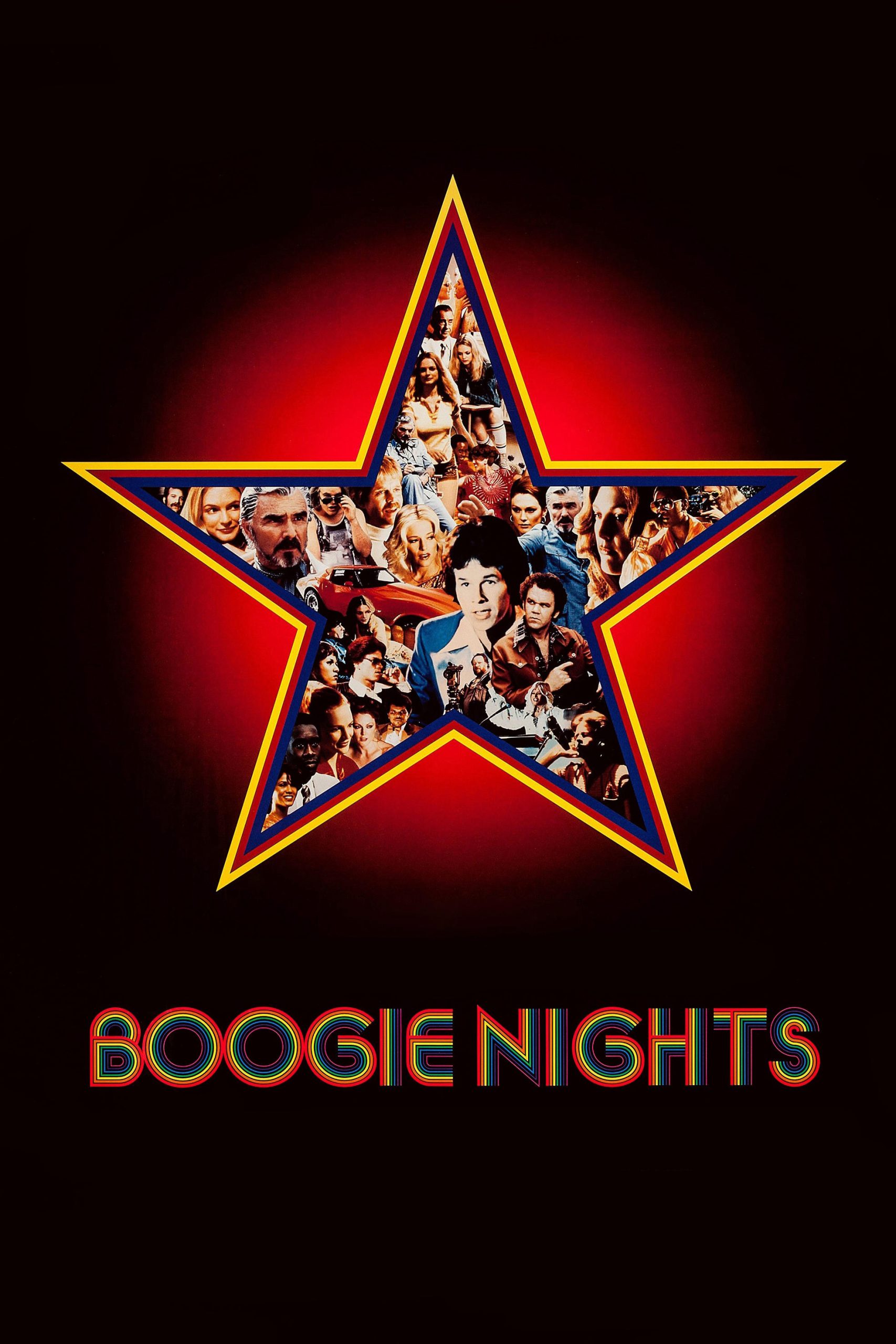
I first watched “Boogie Nights” with a kind of nervous anticipation, knowing Paul Thomas Anderson’s reputation for radiant chaos and emotionally messy characters. Thrust into the volatile world of late-1970s pornography, I felt immediately immersed by Anderson’s sweeping camerawork and vibrant period detail. “Boogie Nights” follows Eddie Adams (who soon takes on the name Dirk Diggler), a young busboy whose raw ambition draws him into the orbit of adult filmmaker Jack Horner. Jack’s inclusive but fractured family is a motley crew: the loving maternal Amber Waves, loyal but tragic Rollergirl, and a roster of eccentric industry regulars. I was surprised at how the film seduced me, not only with its bravado but with its aching humanity behind all the sex, money, and studio lights.
Anderson’s script traces their collective rise and fall, exploring the glitzy porn boom and its 1980s downturn. If you’re nervous about spoilers, rest assured — I won’t give away exact outcomes. What I can share is that the allure of fame and the American dream seductively drives Eddie, yet the cost of stardom and unconditional family comes into sharp focus as the industry changes. I found myself swept up by ensemble parties, intimate heartbreaks, and unexpected tragedy — all rendered through the kind of tracking shots and groovy soundtracks that make every scene breath under a glittering Californian haze.
Key Themes & Analysis
What struck me first: the film’s unwavering examination of chosen families, fleeting glory, and the idea of validation through commodification. I couldn’t help noticing how Anderson frames the porn world not merely as a salacious backdrop but as a space where damaged people gather to heal, wound, perform, and connect. I was moved by how the characters’ hunger for acceptance — whether maternal, romantic, or professional — drives nearly every decision.
For me, “Boogie Nights” is ultimately about the price of dreams. Dirk’s ambition isn’t unique to porn — it’s the wider American obsession with reinvention. As I watched, I recognized the universal struggle for significance, whether standing in front of a camera or cowering after a mistake. The film’s embrace of both euphoria and pathos, sometimes within the same moment, seemed to cut deeper than almost any conventional drama.
Cinematographically, I found myself in awe. Anderson’s use of long takes — like the legendary opening Steadicam shot gliding through the nightclub — felt almost like I was a guest myself, privy to every joyous, anxious detail. That kinetic camera energy amplifies the sense of momentum in the narrative, especially as it barrels from the heady high times into the cold hangover of the 1980s. This fluid style, coupled with an infectious disco soundtrack, powerfully summons the sense of a “lost era” that never quite existed as we remember it.
But what really holds the film together, in my opinion, are the performances. Mark Wahlberg, as Dirk, brought a credibility and naïveté that I found heartbreaking. He balances bravado and vulnerability so perfectly that his unraveling feels both inevitable and profoundly sad. Julianne Moore, as Amber Waves, delivers perhaps the film’s most complex turn — maternal, desperate, and quietly shattered. Burt Reynolds brings gravity and surprising sensitivity as Jack, a man whose vision is both creative and incurably flawed. Don Cheadle, John C. Reilly, and Heather Graham are all unforgettable, each representing both the hopes and limitations of dreams gone astray. The ensemble’s chemistry is among the most genuine and painful I’ve seen in any film of the 1990s.
All of this is stitched together with Anderson’s knack for balancing humor and tragedy. His willingness to linger on awkward, even humiliating, beats — rather than cut away — kept me on edge and oddly empathetic. Every technical choice, from editing rhythms to lighting, feels both loving and unflinching, letting both the thrill and the cost of these characters’ choices fully register.
My Thoughts on the Cultural Impact & Legacy
Stepping back from the screen, I realized “Boogie Nights” had done something few films manage: it made the microcosm of 1970s and 80s pornography feel like a prism for the bigger American story of reinvention, excess, and broken families. For me, its true power is in how it reframes the “adult film” industry not as a punchline or cautionary tale, but as a stage for real, complicated people striving toward community and meaning. I’ve come back to “Boogie Nights” again and again, each viewing revealing new details in how Anderson handles failure, longing, and the elusive search for home.
As a curator, I can trace clear lines from “Boogie Nights” to a cultural reevaluation of marginalized stories. By embedding empathy in depictions of society’s outsiders, Anderson invited audiences — and later filmmakers — to approach stigmatized subjects with curiosity and care rather than judgment. What endures for me is the way the film weds bravura style with an unblinking gaze at vulnerability. It’s not just about the spectacle of porn or the nostalgia of a lost era, but about how fame, family, and desperation spin together in uniquely American ways.
When I reflect on the landscape of ensemble dramas after 1997, I see Anderson’s influence all over: sprawling, flawed casts, narrative interweaving, the interplay of humor and heartbreak. “Boogie Nights” pushed boundaries in tone and form. It proved that even the most taboo settings have room for nuance and humanity. The film’s legacy for me lies in its deft balance — it can be as emotionally devastating as it is darkly funny and visually audacious. This is what makes it resonate, year after year.
Fascinating Behind-the-Scenes Facts
Each time I learn more about “Boogie Nights,” a new layer of appreciation unfolds. One of the most remarkable production stories, in my view, concerns the casting process. Paul Thomas Anderson originally wrote the part of Jack Horner with Burt Reynolds in mind, but Reynolds was hesitant — even openly resistant — to the project. The film’s subject matter, and Anderson’s then-unknown status, made Reynolds wary. Yet, Anderson’s confidence won him over, resulting in one of the most important performances of Reynolds’ career, even though he later had mixed feelings about the experience.
I’m also fascinated by how young Anderson was when he took this huge creative risk. At just 26 years old, he not only directed but also fought fiercely with studio executives over his cut of the film. This assertiveness safeguarded key sequences — including the sprawling opening shot — that were seen as unorthodox at the time but are now considered masterpieces of kinetic filmmaking.
Another favorite piece of trivia for me is the way Anderson drew from his own earlier work. “Boogie Nights” was a major expansion of his short film “The Dirk Diggler Story,” a mockumentary made when he was just 17. That teenage experiment became the blueprint for Anderson’s unique blend of satire and sincerity. For me, knowing the story started as an ambitious home movie only deepens the sense that, like Dirk, its creator was propelled by wild conviction and vision.
Why You Should Watch It
- The film delivers unforgettable, multidimensional performances that reveal both the strengths and flaws of every character.”
- It’s a masterclass in dynamic camera work and period atmosphere — you’ll be transported to another era.
- “Boogie Nights” deftly balances humor, heartbreak, and cultural critique, challenging expectations at every turn.
Review Conclusion
I walk away from “Boogie Nights” reshaped every time — a sign, to me, of truly great filmmaking. The film captures the highs and lows of ambition, family, and the cost of searching for meaning in all the wrong places, all while never losing its razor-sharp edge or underlying compassion. Anderson’s orchestration of cast, music, and camera burned itself into my memory, and I am continually surprised by just how moving, witty, and wild this story is, even decades later.
For me, this is not just a quintessential 1990s film — it’s a lasting touchstone for anyone who loves character-driven cinema with guts.
Rating: 4.5/5
Related Reviews
- Magnolia – Also from Paul Thomas Anderson, this film shares the same intricate ensemble style and bold emotional reach, but applies it to a tapestry of interconnected stories set in Los Angeles. If “Boogie Nights” hooked you with its sprawling cast and raw personal drama, “Magnolia” will deliver even further complexities and catharsis.
- Goodfellas – While stylistically different, Scorsese’s kinetic direction and deep-dive into an insular subculture mirror what drew me to “Boogie Nights.” Both films revel in period detail, moral ambiguity, and the allure and dangers of an unconventional “family.”
- American Hustle – For those who admire “Boogie Nights’” swagger, scale, and mix of comedy and tragedy, “American Hustle” offers a similarly flashy, music-driven take on ambition, deception, and a time of excess.
- The Wolf of Wall Street – I can’t help but connect these films thematically — both chronicle the euphoric highs and catastrophic lows of chasing the American Dream, filtered through charismatic antiheroes. DiCaprio’s performance and Scorsese’s dazzling narrative style will likely appeal to the same appetite for energy and social critique.
For readers looking to go deeper, these perspectives may help place the film in a broader context.
🎬 Check out today's best-selling movies on Amazon!
View Deals on Amazon