
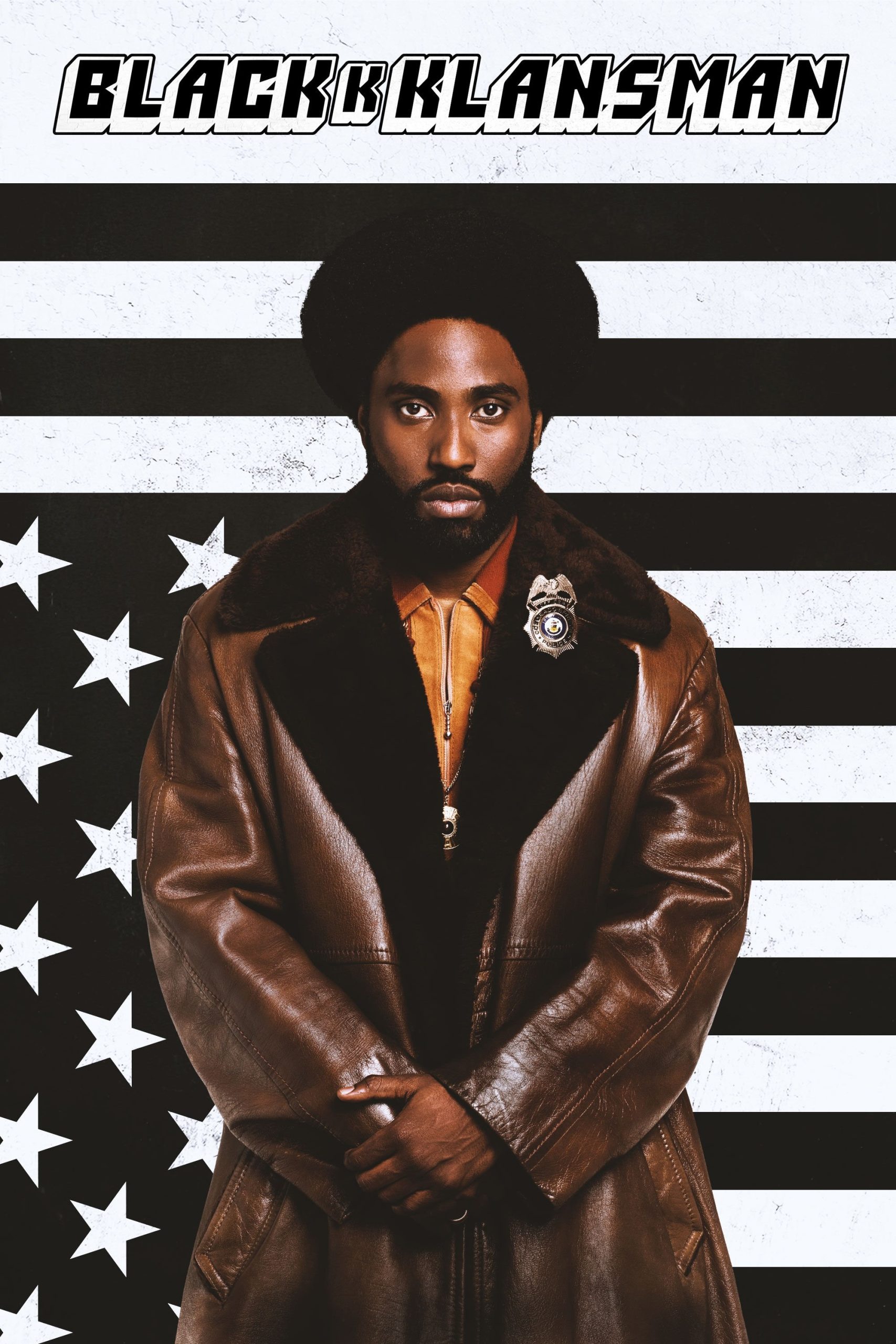
Plot Summary
If there’s one thing that lingers with me about Spike Lee’s “BlacKkKlansman”, it’s the way it takes a wild, almost unbelievable true story and transforms it into an unflinching reflection of America’s racial politics—past and present. The film, which juggles genres with Lee’s signature bravado, blends crime thriller, biting comedy, and potent drama so seamlessly that I was engrossed from the opening shot.
The narrative orbits around Ron Stallworth (played with an understated gravitas by John David Washington), the first African-American detective in the Colorado Springs Police Department. Setting the case in motion, Ron elects to infiltrate the local chapter of the Ku Klux Klan by establishing a phone rapport with its leaders, including the disturbingly affable David Duke (portrayed with chilling authenticity by Topher Grace). Paired with his Jewish colleague Flip Zimmerman (Adam Driver, in a role I found both slyly comedic and deeply poignant), Ron undertakes a daring operation where he navigates the two-facedness of American identity—literally, by existing as two different men in one role.
Without wading into spoiler territory (although readers sensitive about reveals may wish to tread carefully beyond this point), I can say that what thrilled me throughout was the constant tension—between outrage and laughter, between farce and horror. It’s not just a procedural; it’s a dance with danger, where humor becomes a weapon in the face of bone-chilling hatred. Lee’s choice to pepper the narrative with knowing winks and scorching satire made the unfolding investigation as entertaining as it was searingly uncomfortable, and I never felt safe or settled for long.
Key Themes & Analysis
I’ve watched a thousand films that tiptoe around the notion of “race in America,” but what distinguishes “BlacKkKlansman” for me is how forcefully it drags that conversation into the sunlight. Lee’s direction orchestrates a tonal symphony—there’s slapstick glee in scenes of Klan buffoonery, then almost immediately, the air sours with threat or ugly history. That concoction—equal parts humor and horror—felt to me like a uniquely American brew, and I marveled at how Lee sustains it without ever diluting his message.
What stood out most in my viewing experience is the theme of “double consciousness”. Ron and Flip are both forced to straddle complex identities: Ron, as a Black cop undercover among white supremacists; Flip, as a Jew who must suppress his heritage while infiltrating their ranks. It’s a concept made literal—as if Lee is daring us to feel the pressure and exhaustion involved in code-switching just to survive.
One directorial decision that stunned me was Lee’s meticulous juxtaposition of past with present. He interpolates silent-era films and the rhetoric of “Birth of a Nation” with contemporary news footage, collapsing timelines so that history hangs oppressively over the present. This blurring never felt like a heavy-handed history lesson; it’s more like a challenge hurled at the audience: What’s changed, really?
Cinematically, I was transfixed by Chayse Irvin’s camera work, which leans into close-ups that feel almost confrontational. These moments—lingering on faces contorted by hate, or stung by recognition—make the stakes personal for me as a viewer. Lee’s preference for vibrant, saturated color, especially in scenes depicting the Black Power movement, shouts defiance and pride. To me, the use of the split diopter and the occasional overt theatricality reminded me that I was watching a performance, but one with real consequences in the world outside the screen.
Performance-wise, I can’t forget John David Washington’s reserved determination—he crafts Ron as a man constantly navigating the boundaries of self-preservation and social subversion. Adam Driver offers necessary contrast, always teetering between skepticism and admiration for his partner. Laura Harrier’s turn as Patrice, the passionate activist, gives the film a potent heart; she is the conscience that forces Ron, and by extension the audience, to examine which institutional compromises are ever truly acceptable.
Most crucially, the film wields humor as a subversive tool. At moments when the horror of American racism might risk overwhelming or numbing me, a sardonic line or absurd detail cuts through, forcing both nervous laughter and deeper reflection. It’s a balance that only Lee, with his sharp sense of irony and anger, could achieve. Unlike some directors who use irony as a shield, Lee uses it as a scalpel—and by the closing act, every joke curdles into something much darker.
What I ultimately take from “BlacKkKlansman” is its insistence that the lines between past and present, personal and political, are often uncomfortable, fraught, and, crucially, inescapable. As I see it, the film is both a roaring entertainment and a provocation—and it’s that duality that makes it stick with me long after the credits roll.
My Thoughts on the Cultural Impact & Legacy
What I keep returning to, years after my first viewing, is how “BlacKkKlansman” didn’t just comment on history—it became a lodestar for contemporary political discourse. I watched it with a growing sense of unease, knowing that, for all its 1970s period trappings, the film’s climactic moments reverberate with urgent relevance. The montage at the end—a gut-punch linking past violence with then-recent headlines—left me shaken, surfacing the rawness that animated the social landscape in which the film was released.
As someone who curates and writes about cinema, I’ve found that Lee’s razor-sharp touch here reinvigorated the potential power of political filmmaking. He proved to me and my peers that stirring up uncomfortable conversations, and refusing tidy catharsis, could serve art as well as activism. The way the film foregrounds the camera as an instrument of both documentation and resistance is something I find myself referencing whenever I speak about cinema’s relationship to social progress.
I often wonder how audiences will discuss “BlacKkKlansman” decades from now. For me, it stands as a cultural artifact, encapsulating both a particular moment in American politics and a broader historical continuum. The energy and anger feel tactile—and Lee’s choice to refuse closure or easy comfort seems, to me, the only ethical response. I left the theater not with answers, but with a demand to ask better questions. That’s a legacy greater than almost any film in recent memory.
Personally, I see “BlacKkKlansman” as a pivotal work in Spike Lee’s career and within the genre of provocative, issue-driven cinema that doesn’t merely reflect the times—it shapes how we understand them. It’s a film that continues to resonate—every time racial injustice makes headlines, this film feels painfully prescient. For me, that’s the mark of a masterpiece, one that informs not only my own writing but also my lived experience as a moviegoer and chronicler of film culture.
Fascinating Behind-the-Scenes Facts
What I find most interesting about the making of “BlacKkKlansman” is how every production detail feels meticulously chosen for both authenticity and impact. For instance, the casting process involved a remarkable degree of family legacy. John David Washington, who plays Ron Stallworth, is the son of Denzel Washington—the very actor Spike Lee directed to iconic performances in “Malcolm X” and “Mo’ Better Blues.” Lee has spoken about the resonance of bringing Washington’s son into the fold, a testament to generational continuity in both Black artistry and political engagement. There’s a meta-textual satisfaction for me in seeing that kind of mentorship literally carried into the next generation on-screen.
Another remarkable trivia detail involves the real-life Ron Stallworth himself. Stallworth visited the set and consulted closely with the filmmakers, even providing the actual membership card he received from the KKK as a reference prop. There’s a chilling honesty to using such an artifact, blurring the boundary between dramatization and documentary. As I reflect, it’s these decisions that deepen the film’s capacity to unsettle.
What caught my cinephile eye most was Lee’s sly homage to the blaxploitation films of the 1970s in both soundtrack and style. Terence Blanchard’s score, layered with wah-wah guitars and dramatic orchestration, wasn’t just background; it was, for me, a sonic commentary on the era’s fictional and real triumphs against oppression. The fashion, the textures, even the graininess of the film stock—all of it was created with a keen eye for period accuracy, yet the effect is more than surface nostalgia. I always feel like I’m watching 1970s style weaponized against 21st-century bigotry, reminding me just how cyclical, and stubborn, history can be.
Why You Should Watch It
- Because it’s a daring blend of genres—crime, comedy, and political drama—that keeps you both thinking and on the edge of your seat.
- Because Spike Lee’s direction delivers urgent social commentary with both humor and rage, ensuring you’ll wrestle with its ideas long after it ends.
- Because the performances—especially from John David Washington and Adam Driver—deliver emotional truth and moral complexity that is rare in contemporary cinema.
Review Conclusion
If I had to sum up my experience, I’d say that “BlacKkKlansman” is a work of art that dares you not to look away, that demands engagement both intellectually and emotionally. For every laugh it offers, there’s an ache right behind it, and for every pithy observation about American absurdity, there’s a gut-level recognition of how dangerous that absurdity can be. This is the kind of film I return to whenever I want to remind myself—both as a critic and a citizen—how powerful, unsettling, and necessary the cinematic art form can be.
On my personal scale, I’d give “BlacKkKlansman” a 4.5 out of 5 stars—with only the occasional uneven pacing or didactic moment holding it back from absolute perfection. Its audacity, craft, and moral urgency land with uncommon force, and I recommend it to anyone who craves not just great storytelling, but films that leave a mark on both culture and conscience.
Related Reviews
- If Beale Street Could Talk (2018): I found Barry Jenkins’ adaptation of James Baldwin’s novel to be a poetic, intimate examination of race, love, and injustice. Like “BlacKkKlansman,” it weaves past and present, showing how systemic bias shapes everyday life. The atmosphere and emotional resonance overlap in meaningful ways.
- Get Out (2017): Jordan Peele’s breakout horror satire pulses with some of the same energy—using genre conventions to expose the insidious face of racism. I see in “Get Out” the same willingness to make the audience squirm, laugh, and reflect.
- Do the Right Thing (1989): For me, revisiting Spike Lee’s earlier masterpiece is essential; it laid the groundwork for his approach to exploring racial dynamics through urban drama, and it still feels urgent today. The thematic and stylistic DNA is shared.
- Mississippi Burning (1988): I’m always struck by the parallels in police investigation and Southern racial tensions, though “BlacKkKlansman” offers a bold counterpoint by centering Black agency and voice in a way that earlier films did not.
- Sorry to Bother You (2018): Boots Riley’s satirical take on code-switching and capitalism is a strange, genre-bending ride that echoes Lee’s willingness to push boundaries. Both films share a manic energy and an urge to confront their viewers.
For readers looking to go deeper, these perspectives may help place the film in a broader context.
🎬 Check out today's best-selling movies on Amazon!
View Deals on Amazon