
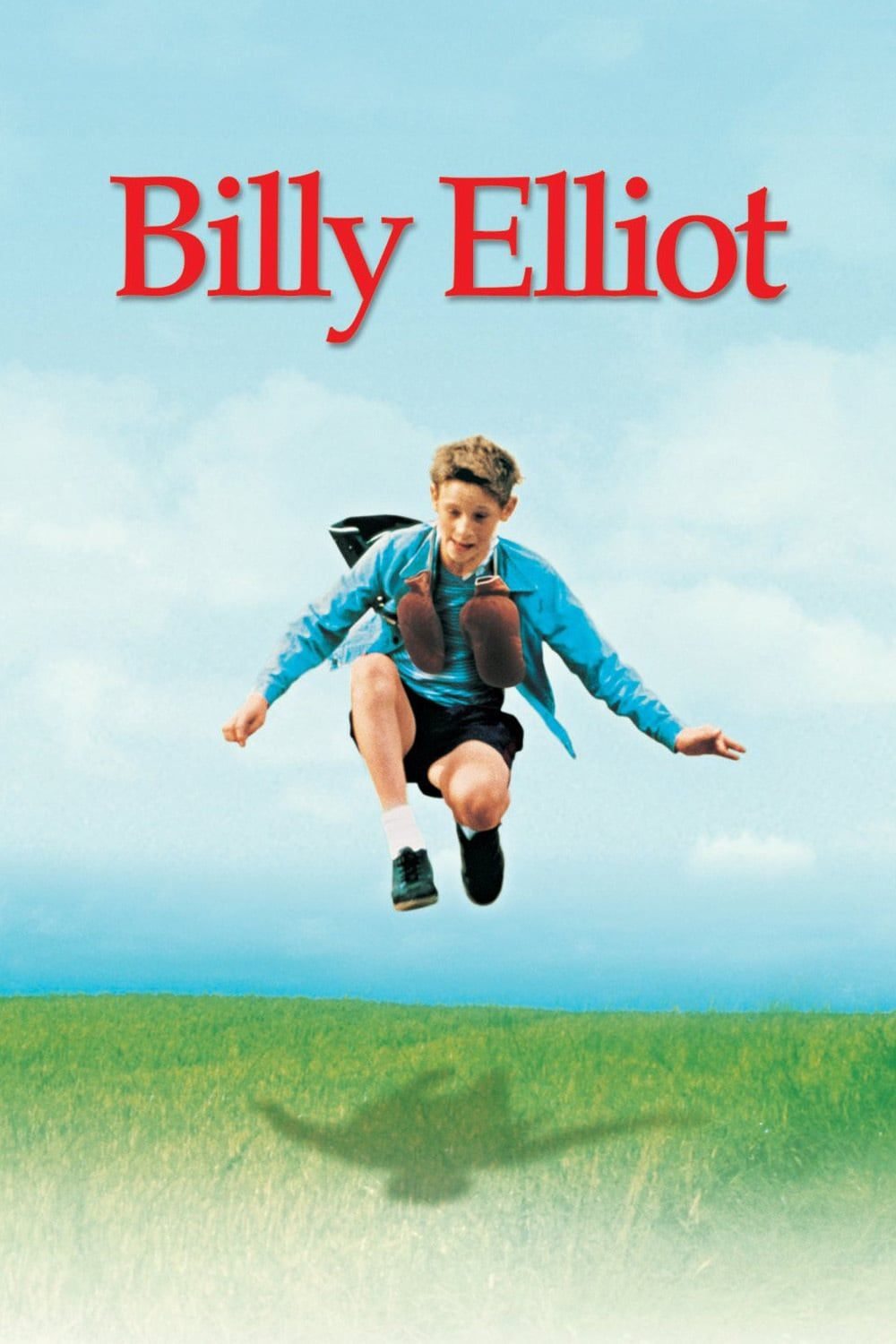
Plot Summary
When I first encountered Billy Elliot, I was struck by how deeply personal its storyline felt despite being set against the backdrop of such a tumultuous era in British history. The story, which Stephen Daldry helms with a vibrant touch, revolves around a young boy, Billy, who grows up in a northern England mining town during the 1984-85 miners’ strike. Rather than giving in to expectations that he’ll follow the traditional, masculine path of boxing, Billy finds himself irresistibly drawn to ballet. Watching his journey unfold, I felt the passion and defiance humming beneath the surface of his quiet beginnings. The film threads Billy’s growth as a dancer with the severe struggles of his working-class family, illustrating the generational clash and pain caused by economic hardship. Without diving into spoilers, I’ll simply say the narrative maintains an honest portrayal of the tension between familial love and individual aspiration—a dynamic I found captivating and heartbreakingly real. For those who haven’t seen the film, there are moments of genuine transformation and triumph ahead, so I’ll refrain from giving away the film’s pivotal scenes and outcomes, but expect a portrait of resilience as stirring as any dance number on screen.
Key Themes & Analysis
What drew me most to Billy Elliot was its raw exploration of identity, class, and the meaning of freedom within rigid social structures. I found the central theme of self-expression in the face of societal expectation especially poignant. Watching Billy’s conflicted relationship with both his passion and his family’s expectations, I felt the weight of the cultural norms pressing against him. The film doesn’t simply position ballet as “different”—it’s a symbol for any unconventional dream that doesn’t fit the mold, and Billy’s struggle felt intimately familiar to anyone who’s ever bucked tradition for something they love.
The setting—a mining town on the edge of collapse—colored every frame with a sense of bleakness that contrasts beautifully with the exuberance of dance. There’s a particular richness in how cinematographer Brian Tufano frames both the grit of everyday life and the kinetic joy of Billy’s ballet practice. I was especially taken by the film’s visual storytelling during scenes where Billy dances alone; the camera’s motion and the shadowy, industrial backdrops made those routines feel like acts of rebellion as much as art. When Billy pushes his way through the world, he isn’t just learning ballet—he’s finding his own form of defiance.
I can’t discuss this film without reflecting on Stephen Daldry’s direction, which maintains a tight balance between heartbreak and hope. He refuses to sentimentalize the hardship onscreen, but I always sensed a compassion in how he drew out the performances and placed subtle moments of connection and warmth. The film’s greatest asset, though, is undoubtedly the cast: Jamie Bell’s portrayal of Billy is, in my eyes, among the most emotionally authentic performances by a young actor I’ve witnessed. His physicality, vulnerability, and raw anger drive the narrative with palpable urgency. The supporting cast—particularly Julie Walters as Mrs. Wilkinson, Billy’s tough-love dance teacher, and Gary Lewis as Billy’s father—bring heart and complexity to their roles, showing how resistance to change can be rooted in love and fear alike.
On a technical level, I admired how screenwriter Lee Hall’s script wove humor and heartbreak seamlessly. The dialogue felt lived-in and genuine, creating a world that, for me, lingered far beyond the closing credits. What resonated most was how the film explored the costs and rewards of breaking away from where—and who—society expects us to be. As I watched Billy’s arc, I saw it reflected in countless real-world narratives where dreams knock against the walls of circumstance and tradition. This universal struggle is what, for me, makes Billy Elliot so enduringly powerful.
My Thoughts on the Cultural Impact & Legacy
Reflecting on where Billy Elliot fits within cinema and my own journey as a film curator, I find its influence to be profound and multifaceted. When the movie first made waves in 2000, I remember it opening up vital conversations about masculinity, class mobility, and artistic ambition—themes that remain at the forefront of cultural debates today. For me, the film felt like a wake-up call, not only to reevaluate what “strength” means in a working-class context, but to interrogate how we, as audiences and curators, value diverse forms of expression.
I see Billy Elliot as part of a modern British cinematic lineage that dared to tackle the complexities of socioeconomic struggle and gender norms without easy answers. Its story is rooted so firmly in specificity—1980s England, Thatcher-era unrest, the world of ballet—that I feel it grants the universal power of specificity: we care because these characters are so real, so tied to place and time. Watching this film convinced me to look for other narratives where art is not mere entertainment, but a matter of survival and selfhood. That lens has shaped my curation choices ever since.
There’s another layer of resonance for me: as someone who grew up in a working-class environment, I found the film’s recognition of small joys and bitter losses extremely honest. It eschews sensationalism for authenticity, and for that I continue to champion it whenever I consider films that challenge conventional cinematic representations of family, masculinity, and class. The legacy of Billy Elliot, both on stage and screen, transformed how stories of ordinary people daring to be extraordinary are told. It’s left a permanent imprint on the coming-of-age genre, influencing countless works that followed.
Fascinating Behind-the-Scenes Facts
Peeling back the curtain on Billy Elliot, I always delight in the production stories that give even more texture to what I see on screen. Perhaps the most remarkable fact for me is the journey of Jamie Bell, who was only 13 years old when cast as Billy. Incredibly, he’d never acted professionally before—he was chosen from over 2,000 young hopefuls after the filmmakers conducted an exhaustive two-year search for a boy who not only resembled Billy’s rawness, but could actually dance. Learning this, I felt an even greater appreciation for the emotional and physical energy he brought to every scene. The authenticity I sensed isn’t just performance—it’s lived experience, making the connection between actor and character nearly seamless.
Another behind-the-scenes detail I love to recount is the film’s shoestring budget. The production faced ongoing financial constraints, forcing the crew to get creative. One striking example: many of the film’s pivotal dance sequences had to be choreographed and filmed quickly due to tight scheduling and location issues. Instead of grand, polished stage numbers, Billy’s routines were made intentionally rough, gritty, and real. This gives the film’s dance scenes a documentary-like spontaneity that, for me, feels much more consistent with Billy’s character and his environment. It’s a testament to the way budgetary limitations can sometimes lead to more innovative and powerful choices.
Finally, one specific moment that always sticks with me comes from Julie Walters’s commitment during rehearsals. To develop the affectation and warmth her character needed, Walters spent extensive time observing real-life dance teachers in the North of England—absorbing their attitudes, mannerisms, and unique blends of encouragement and critique. I think her effort shows in every line she delivers. Knowing these details, every rewatch feels richer and more grounded.
Why You Should Watch It
- For a deeply moving and honest portrayal of following one’s dreams, especially when those dreams defy expectations and social norms.
- To experience extraordinary performances, particularly from Jamie Bell and Julie Walters, whose roles linger long after the credits roll.
- If you appreciate films that challenge notions of gender and class while providing both joy and heartbreak in equal measure.
Review Conclusion
As someone who searches constantly for films that speak both to the heart and to urgent social questions, Billy Elliot remains a touchstone in my personal canon. Every frame feels invested with lived experience, and every performance rings with emotional truth. The film’s lasting power lies in its refusal to offer easy answers, instead showing how beauty and struggle can coexist in even the harshest realities. I find myself returning to it again and again—not out of habit, but because each viewing brings fresh insights into resilience, love, and the tender power of art.
Star Rating: 5/5
Related Reviews
- Pride (2014): This British drama also explores working-class solidarity, the power of community, and the intersection of art, identity, and activism. Its balance of warmth, wit, and political insight reminds me of what I value most in Billy Elliot.
- The Full Monty (1997): Both films deal with masculinity and class upheaval in Northern England. I recommend it for its humorous yet deeply earnest take on ordinary people embracing extraordinary changes in their lives.
- Moonlight (2016): While set worlds away, Moonlight shares Billy Elliot’s themes of finding one’s true self in the face of overwhelming expectation and prejudice, delivered with exquisite visual storytelling and intimate character work.
- Girl (2018): For those drawn to narratives of young people asserting themselves through dance amid social pressure, this Belgian film provides an unflinching look at gender identity and the transformative power of the arts.
For readers looking to go deeper, these perspectives may help place the film in a broader context.
🎬 Check out today's best-selling movies on Amazon!
View Deals on Amazon