
Plot Summary
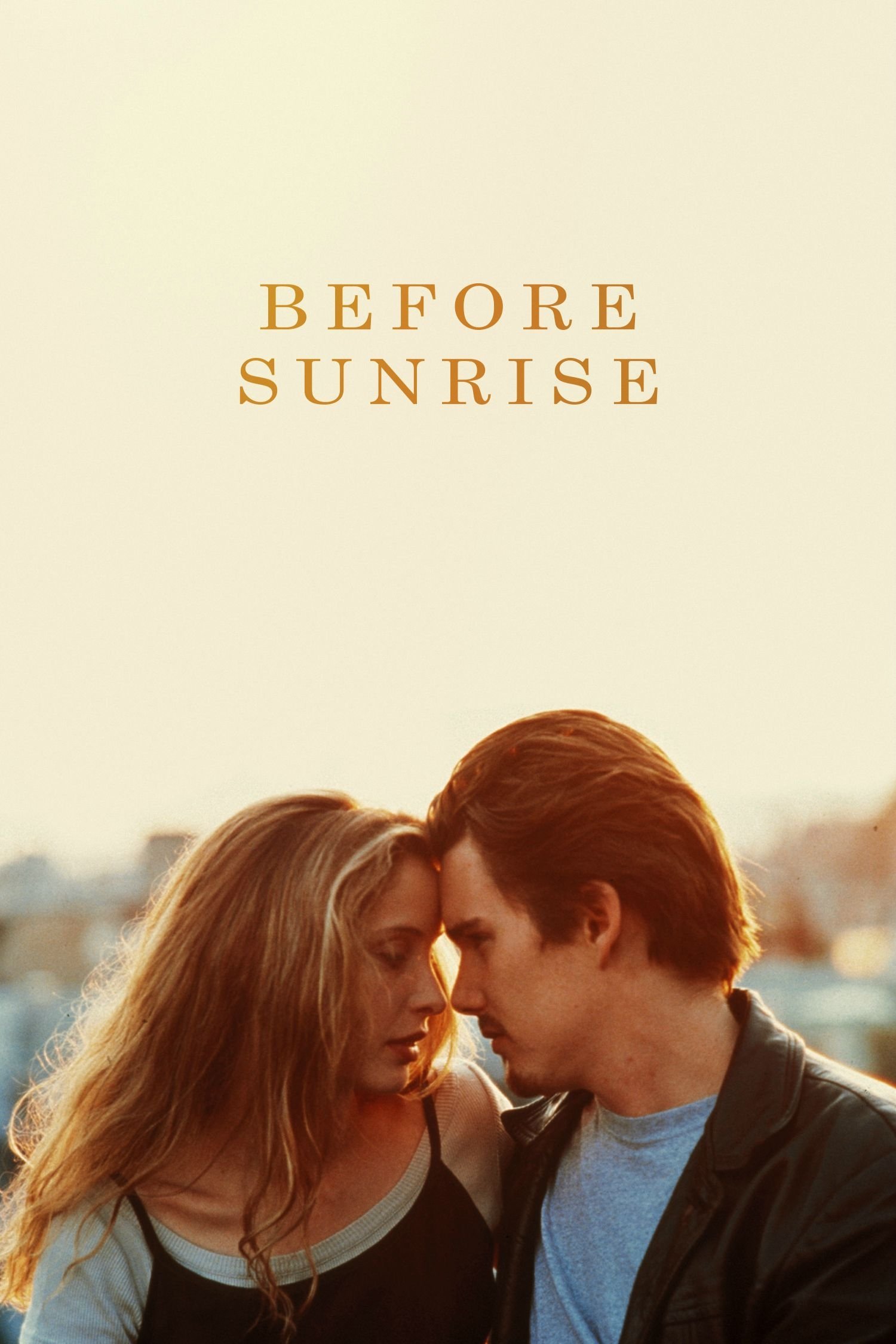
Whenever I revisit Before Sunrise, I feel like I’m stepping into a hazy dream or memory of my own youth. Richard Linklater, whose signature style is rooted in realism, draws me in with a premise that’s as simple as it is deeply affecting: a chance meeting between two strangers on a train—Jesse, an American, and Céline, a French woman—leads them to spend a night wandering the streets of Vienna, talking about life, love, and everything in between. I can’t help but be immediately invested, not because of grand events, but because every moment feels lived-in and true.
Throughout the film, I follow Jesse and Céline as they explore the city’s nooks and crannies, carrying on conversations that feel both spontaneous and eternally significant. Linklater’s script doesn’t rely on melodrama or plot twists; instead, it lets time slow down, so the real stakes are emotional and internal. That, to me, is what makes their journey so compelling. The story unfolds through a series of uninterrupted, beautifully observed scenes—park benches, record store booths, dimly lit cafes—always circling the unspoken, electric tension between two people unsure if they’re living out a fleeting encounter or the beginning of something life-changing.
The film is light on “events,” so there’s little to spoil, but for those who haven’t seen it: the magic is in the details, in the unscripted feel of their conversations, and the gentle ticking away of the hours until dawn. If you want to preserve every surprise, you may wish to approach with fresh eyes.
Key Themes & Analysis
For me, the heart of Before Sunrise is its unflinching look at human connection—how easily it can spark, how rarely it’s allowed to burn, and how fragile it can feel under the weight of life’s realities. One of the first things that struck me about Linklater’s direction is his refusal to compromise sincerity for spectacle. Instead, he trusts his actors, the city, and the rhythms of ordinary life to keep viewers spellbound. The film isn’t just about romance; it’s a meditation on time, impermanence, and the almost-sublime possibility of intimacy between strangers.
Ethan Hawke and Julie Delpy anchor the film with performances that remain some of the most convincing portrayals of young adults I’ve ever seen on screen. Hawke’s Jesse is anxious but sincere, filtering his vulnerabilities through sarcasm and wit, while Delpy’s Céline brings a graceful candor that constantly threatens to shatter his—and our—defenses. Every line, every glance between them, carries the weight of things unspoken. I find myself leaning in, desperate to catch every subtle shift in mood or meaning.
What really stays with me, though, is the cinematography. Linklater and cinematographer Lee Daniel capture Vienna not as a postcard destination, but as a living, breathing organism—one that echoes the characters’ shifting emotions. The camera often lingers in long takes, refusing quick cuts in favor of letting conversations breathe, and it bathes the cityscape in a soft, romantic light. This almost poetic visual style reinforces the film’s delicate mood, transforming familiar city streets into a landscape of possibility and yearning.
Thematically, I’m most drawn to the film’s reflections on uncertainty and possibility—how two people can create a universe out of a single conversation, despite the knowledge that morning (and real life) is always closing in. It’s less about falling in love with each other than about falling in love with the idea that, even for one night, anything feels possible. Every casual philosophical debate, coy flirtation, or quiet confession circles back to the same question: can you really know someone if you only have a fleeting moment together? And does that make the connection more or less real?
Beneath the romantic surface, I also sense a quiet melancholy—the awareness that youth is fleeting, that idealism fades, and that the best moments are often the most ephemeral. It’s this bittersweet edge, this keen sense of time slipping away, that lingers with me long after the credits roll.
My Thoughts on the Historical & Social Context
Whenever I think about Before Sunrise in the context of the mid-1990s, I find myself reflecting on the unique anxieties and hopes of that era. The early to mid-’90s were a time of transition: the Cold War had ended, borders across Europe were gradually opening, and young people—especially Americans and Europeans—were embracing a new sense of mobility and possibility. It’s no accident that the film’s central premise rests on a train voyage across a reunited Europe, or that casual travel feels both liberating and laden with risk.
Growing up in a decade before smartphones or social media, the thought of meeting someone random and spending hours together—without the constant hum of digital distraction—strikes me as almost radical now. Before Sunrise speaks to a generation that was yearning for genuine, unmediated connection, even as they struggled with emerging existential uncertainty. The conversational intimacy that saturates every frame feels even more profound knowing that it was born of necessity; these two can only know each other through words, glances, and half-remembered stories, not hidden online histories or social feeds.
At the same time, the film reflects a quiet resistance to the cynicism and irony that dominated so much of pop culture in the ’90s, at least in the US. I see in Linklater’s script a kind of romantic optimism—a belief that for all our confusion and postmodern disillusionment, it’s still possible to connect and to be transformed by the presence of another. That makes the film feel both a product of its time and subtly subversive.
Today, in an era where so much communication is digitally mediated and the notion of “taking a chance on a stranger” feels riskier than ever, Before Sunrise’s vision of vulnerability and spontaneous openness feels like a quietly radical act—one that challenges me to reconsider how I connect with others, and what I risk in holding back. The film’s relevance, for me, lies precisely in its nostalgia for a moment when possibility and proximity weren’t entirely commodified or controlled by algorithms. It’s not just a love story; it’s a wistful reminder of what we lose—and what we might still choose to reclaim.
Fact Check: Behind the Scenes & Real History
Digging into the film’s production history has only deepened my respect for Linklater’s creative risks. One thing I discovered is that the script was inspired by a real-life encounter Linklater had with a woman he met in Philadelphia in 1989; they spent a night talking and wandering the city—an experience that haunted the director and ultimately formed the movie’s emotional core. Framing the entire film around a single night wasn’t just a narrative experiment; it was a way for Linklater to immortalize this fleeting, formative experience, even as he struggled with the bittersweet reality that he’d lost touch with his muse.
Julie Delpy and Ethan Hawke were deeply involved in shaping their dialogue and character dynamics. In interviews, both actors have said they spent weeks rewriting and refining Linklater’s script, often improvising new lines or pushing scenes in unexpected directions. For me, this explains why every conversation feels so authentic, so intimate—almost as if Hawke and Delpy are living their roles instead of playing them. Their fingerprints are all over the way Jesse and Céline speak, circle around topics, and challenge each other’s ideas.
One fascinating piece of production trivia that stands out: the decision to shoot the film on location in Vienna, using the city not just as a setting but as a silent character in its own right. Unlike many movies that use European backdrops for spectacle, Before Sunrise lived and breathed Vienna’s hidden spaces—ordinary bars, parks, and side streets—lending an organic realism that only deepened the sense of possibility. This choice required tight coordination and a nimble crew, but it paid off with an atmosphere of unpredictability that was perfectly suited to the film’s ephemeral mood.
As for fidelity to real life, it’s important to note that while the story is inspired by a true night, Linklater never reunited with the woman who sparked the idea; tragically, he later discovered that she had passed away before the movie was released—a melancholy echo that makes the film’s message about seizing the moment all the more poignant to me.
Why You Should Watch It
- The film offers one of the most honest, nuanced portrayals of young adult relationships I’ve seen—relying on emotional truth rather than grand gestures.
- Its conversational structure and long takes create a sense of immersion, making you feel as if you’re eavesdropping on real, unguarded moments between two strangers.
- Before Sunrise is more than a romance; it’s a timeless reflection on making meaning out of fleeting encounters and daring to connect across differences.
Review Conclusion
I often return to Before Sunrise not for plot surprises or story beats, but for the atmosphere of possibility and the intoxicating mix of vulnerability and hope that permeate every scene. Linklater, Hawke, and Delpy have crafted something rare: a film that’s both effortlessly romantic and deeply philosophical, incisive yet gentle, melancholy yet uplifting. Each viewing reminds me to cherish the chance encounters and brave conversations that shape who we become. If you appreciate films that favor introspection over spectacle and emotional honesty over predictability, you’ll find this journey through the night in Vienna as unforgettable as I do. My rating: 4.5/5 stars—a modern classic whose quiet power only grows with time.
Related Reviews
- Lost in Translation (2003) – Like Before Sunrise, this film explores fleeting connections in a foreign city, but through the lens of loneliness and cultural displacement. I find its bittersweet tone and focus on unspoken sentiments make it a natural companion for viewers who appreciate nuanced, dialog-driven storytelling.
- In the Mood for Love (2000) – While set in 1960s Hong Kong, this film’s exploration of emotional restraint, longing, and chance meetings with strangers resonates strongly with Linklater’s approach. The lush cinematography and understated performances evoke that same sense of time slipping by, making the two films poetically connected in mood and theme.
- Once (2007) – I believe this Irish indie musical shares Before Sunrise’s spirit of spontaneous, music-filled encounters that blossom into something profound. It’s driven by ordinary people, everyday beauty, and the idea that art can bring strangers together—qualities that will appeal to fans of Linklater’s intimate style.
- Certified Copy (2010) – Abbas Kiarostami’s enigmatic drama about two people whose relationship unfolds in a single day blurs the lines between performance and reality, much like Before Sunrise. The film’s intellectual banter and shifting emotional ground make it essential viewing for anyone captivated by the ambiguities of love and identity.
If you want to explore this film beyond basic facts, you may also be interested in how modern audiences respond to it today or whether its story was inspired by real events.
🎬 Check out today's best-selling movies on Amazon!
View Deals on Amazon