
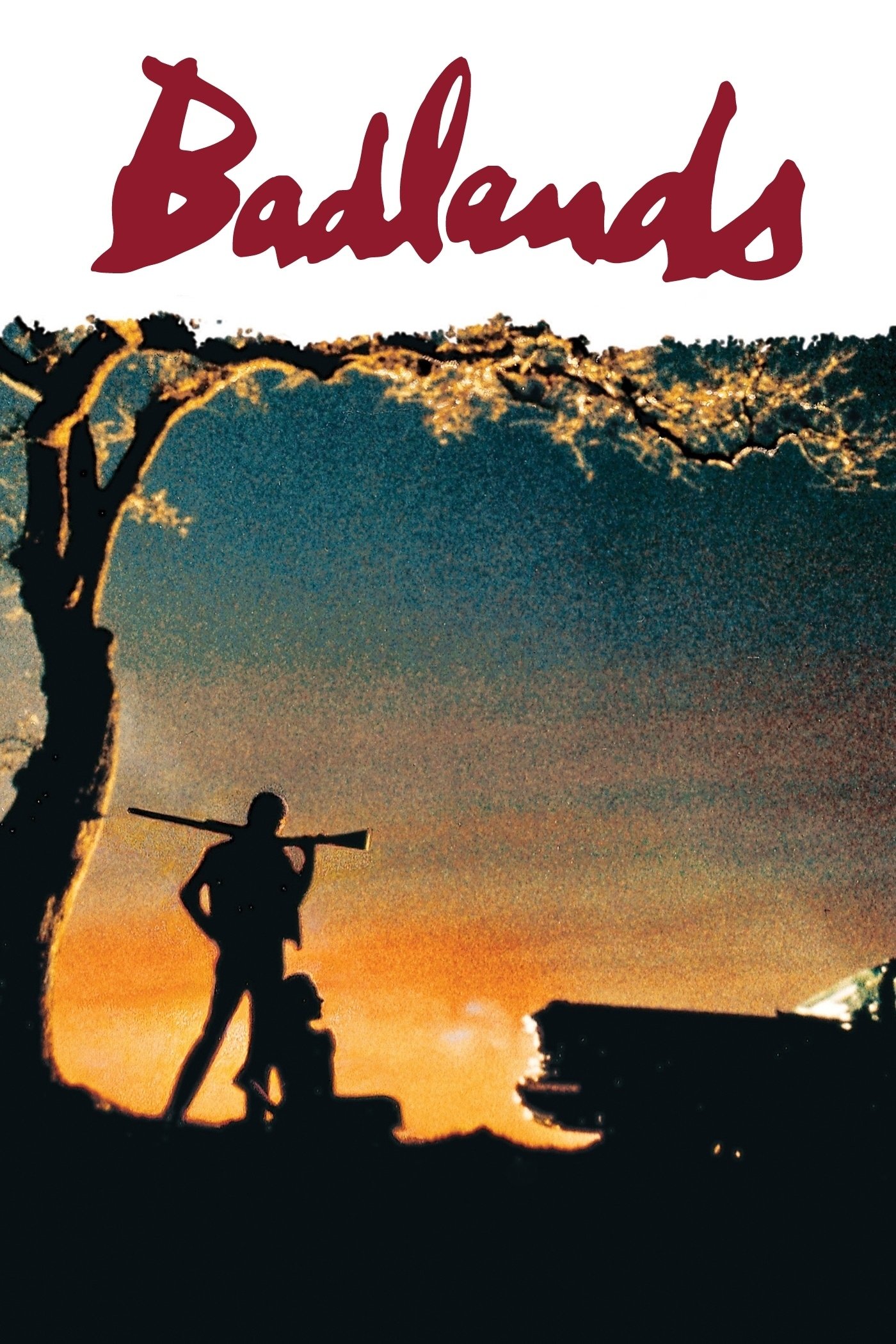
Plot Summary
When I first watched Terrence Malick’s Badlands, released in 1973 as his directorial debut, I was instantly struck by how quietly it upends the conventions of crime drama. Taking place in the dusty expanse of 1950s South Dakota and Montana, the film follows the improbable partnership of Kit Carruthers and Holly Sargis—two figures whose youth and isolation drive their choices far from the norm. Kit, a young garbage collector with James Dean flair, and Holly, an impressionable teenage girl longing for escape, embark on a romanticized, dangerous cross-country odyssey that is as mesmerizing as it is unsettling.
As I recall, what pulled me in wasn’t simply the narrative—star-crossed lovers fleeing society after a violent act—but rather the almost dreamlike disconnection with which Malick presents their journey. The events unfold with an eerie calmness; tragedy swims beneath everyday banality. The story becomes less about the mechanics of their flight and more about the emotional and philosophical emptiness that seems to drive them. The sparse dialogue only intensifies this detachment, with every new turn in their journey feeling inevitable, yet oddly devoid of melodrama.
If you’re sensitive to spoilers, I’ll simply say: the film’s violence arrives with a matter-of-factness that startled me, each consequential moment rendered almost beautiful in its stillness. The final acts take the duo from the cover of woods and shacks into the broader, indifferent landscape of the American plains. In many ways, it’s not a story concerned with suspense or action, but with atmosphere and alienation. That’s what left the film lingering in my mind long after the credits.
Key Themes & Analysis
What immediately imprinted itself on me was not the on-the-run premise, but how Badlands interrogates romantic myth versus grim reality. Even on my first viewing, I realized that Malick wasn’t interested in glamorizing violence or revolutionizing the road movie trope; instead, he was focused on exposing the emptiness of hollow dreams. Holly’s detached narration rises above each scene with almost fairy-tale naïveté, while Kit’s posturing and desire to be noticed mask a deep insecurity. The film’s meditation on American innocence—and its loss—is where I found the most resonance.
The cinematography, led by Tak Fujimoto, is breathtakingly stark. I felt a haunting tranquility in the way sun-drenched prairies, endless backroads, and shadowy woods are captured; each frame is composed as if it were a painting. This sense of visual poetry is a Malick trademark, but here, it feels especially raw and intimate. Natural light, long takes, and judicious editing serve to isolate Kit and Holly, rendering them small against the vastness of their environment. Whether it’s the golden hour lighting or the meticulous way characters are dwarfed by nature, this aesthetic choice hammers home their insignificance and misunderstanding of the world around them.
On the directorial front, Malick’s touch is both delicate and ambitious. The film may be lean in runtime, but every beat is deliberate. What stands out to me most—still—is Malick’s ability to find beauty in the mundane and horror in the commonplace. He sidesteps judgment, never instructing the audience how to feel; the result is an ambiguity that invites introspection. For me, Kit isn’t just a killer, and Holly isn’t just an accomplice: they are both children of American mythos, lost in the shuffle between pop culture fantasy and unremarkable realities.
Martin Sheen and Sissy Spacek give performances that are indelible. Sheen’s Kit is all cocksure attitude and subtle vulnerability, a performance steeped in imitation yet achingly original. Spacek’s Holly exists in a world of her own narration—her voiceover is childlike, sometimes chilling in its distance from the havoc unfolding around her. I was particularly captivated by how Spacek plays Holly’s passivity as a form of quiet rebellion—a refusal to confront or internalize anything too difficult. Both actors resist caricature; their portrayals only reinforce the film’s themes of alienation and misunderstanding.
The film’s score also deserves mention. Malick’s use of Carl Orff’s “Gassenhauer” imbues even the darkest moments with a sense of innocent nostalgia. This juxtaposition—wind chimes and murder, children’s tunes and escape—kept me off balance, always questioning whether I was witnessing a fable or a nightmare. It’s a tonal equilibrium that few films attempt, and fewer still pull off with this kind of assuredness.
My Thoughts on the Cultural Impact & Legacy
The more I reconsider Badlands, the more convinced I am that it reshaped the trajectory of American independent cinema. What was revolutionary, to me, is how Malick injected lyricism and moral ambiguity into the road movie, a genre usually defined by frenetic pacing or social commentary. After watching this film, I couldn’t watch later “lovers-on-the-run” narratives—be it True Romance or Natural Born Killers—without seeing echoes of Kit and Holly’s quiet drift through a meaningless violence.
More than just an influence on narrative style, though, Badlands introduced me to the idea that a crime film could function as a meditative, even existential work. The sense of foreboding, the emphasis on internal landscape as much as external—these would become hallmarks for the next generation of American filmmakers. From the Coen brothers to David Lynch, this blending of violence and serenity left fingerprints that, in my view, are still visible today.
On a personal level, this film invited me to question the media’s construction of fame, infamy, and the American dream. I keep returning to the way Malick’s America is both wondrous and indifferent, a place where dreams curdle into tragedy without anyone noticing. It’s rare for a film to make me feel so complicit as a viewer—enchanted by the romance, yet appalled by the consequences. I’ve recommended Badlands as a primer to friends curious about American cinema not because it popularized a formula, but because it shattered the idea that a violent story must always move at a violent pace.
As a curator and analyst, I believe Badlands continues to matter because it transforms violence into reflection, and turns a tragic historical event into a work of poetic inquiry. It’s the sort of film that still lingers in public consciousness, not because it shouts, but because it whispers. Few movies have reshaped my understanding of cinematic storytelling more completely.
Fascinating Behind-the-Scenes Facts
I’ve long been enchanted by the real-world journey behind Badlands as much as the fictional one. For instance, the production itself was profoundly shoestring. Terrence Malick, who was still virtually unknown at the time, struggled for years to finance the film, at times using his own money and calling in favors from friends and colleagues. The shoot was so low-budget that cast and crew often performed multiple duties. Sissy Spacek even noted in interviews that she painted sets and helped with costumes between takes, an almost unheard-of practice for today’s feature films.
Another standout detail for me was the casting process. Martin Sheen, who would later become a household name, was chosen for Kit after a notoriously unglamorous audition—he was working as a waiter when Malick found him. The casting was crucial, as Sheen’s embodiment of Kit is now considered iconic. In fact, Sheen later remarked that Kit was his favorite role, precisely because of the ambiguity and complexity Malick encouraged him to explore. Sissy Spacek, then another relative unknown, was actually cast before she landed her breakout role in Carrie. Watching both future stars put everything on the line, without knowledge of how their performances would resonate for decades, gave me newfound respect for the leap of faith required by independent filmmaking.
What really surprised me, though, was the way the film’s gentle, picturesque beauty belies a grueling shoot. Many scenes were shot using only natural light, which led to significant delays and technical challenges. The crew had to patiently wait for the perfect “magic hour” light that defines so many shots. These sacrifices, in my opinion, are palpable—they suffuse every frame with authenticity and immersion that no digital effects or artificial lighting could replicate. It’s no wonder the film feels so urgent and timeless all at once.
Why You Should Watch It
- If you value films that subvert genre expectations, the melancholic, poetic tone of Badlands will captivate you in ways few crime dramas can.
- For fans of stunning cinematography and visual storytelling, every frame here feels like an artful meditation, making the film a must-see on a big screen.
- Viewers interested in character studies built on ambiguity and emotional distance will find the performances by Martin Sheen and Sissy Spacek mesmerizingly enigmatic.
Review Conclusion
There’s a reason I keep returning to Badlands, and why I recommend it to anyone interested in cinema that dares to slow down and invite thought. Terrence Malick’s debut remains, for me, a defining statement on American longing, disillusion, and the gap between dreams and reality. I was drawn in by the gorgeous visuals and haunted by the moral blankness at its core. Sheen and Spacek’s performances are honest and unsettling, and each viewing invites a new layer of interpretation. For all its quiet menace and poetry, the film has never lost its ability to unsettle and awe. My personal rating: 4.5/5 stars.
Related Reviews
- Days of Heaven (1978) – I gravitate toward Malick’s follow-up for its similar poetic tone and breathtaking landscapes, along with its blend of personal longing and grand, existential themes. If you found your heart stirred by the visual rhythm of Badlands, this is an essential continuation.
- Bonnie and Clyde (1967) – Watching this classic after Badlands, I noticed the contrasting ways in which two films explore outlaws as icons and cautionary tales. The stylized violence and romanticized chaos offer useful points of comparison for viewers interested in cinematic reinventions of true crime stories.
- Paris, Texas (1984) – The sense of longing, alienation, and journey through a dreamlike American landscape carries strong echoes of Malick’s film. I recommend it for those who found the emotional undercurrents and visual storytelling of Badlands compelling.
- True Romance (1993) – For anyone who appreciated the subversive lovers-on-the-run structure, Tony Scott’s riff on the genre owes a clear debt to Malick’s vision while taking its characters in more gleefully pulpy directions. I find tracing the film’s lineage fascinating.
For readers looking to go deeper, these perspectives may help place the film in a broader context.
🎬 Check out today's best-selling movies on Amazon!
View Deals on Amazon